Voice your opinion about proposed development in Dinkytown at a public forum from 6:00 to 7:30 p.m. on Wednesday, March 20, at the Varsity Theater, 1308 Fourth Street S.E. in Minneapolis.The public forum, sponsored by the Dinkytown Business Association and Third Ward Council Member Diane Hofstede, will include exhibits on Dinkytown history, music development groups, and a “Save Dinkytown” student group.The event is a reaction to the proposed six-story Opus apartment building along Fifth Street between 13th and 14th avenues.The DBA may propose a local area study to reconsider the city and neighborhood’s long-range plan before the development can proceed.Read Bill Huntzicker’s complete series on development in Dinkytown.Coverage of issues and events affecting Central Corridor communities is funded in part by a grant from the Central Corridor Funders Collaborative. Continue Reading
Are you a spelling whiz? Try your hand at competitive Scrabble with some people who take the game seriously—or at least competitively.The tournament, called Doobie’s Rubies and Newbies for Polished Gems and Diamonds in the Rough, will begin at 9 a.m. on Saturday, March 23, in the gathering space at St. Lawrence Church, 1203 Fifth St. S.E. in Minneapolis.New competitors and curious onlookers can attend for free but about 40 serious competitors have already paid the $25 entry fee for serious players, said Doobie Kurus, the event organizer.They play the game the old-fashioned way, without computers or any technological help. Judges will be the only computer users because they will have to verify whether some entries are legitimate words.Competitive Scrabble players, like serious chess players, use a timer to keep their games moving, Kurus said.When he was a University of Minnesota student, Kurus said he watched Scrabble players meet weekly at the Station 19 restaurant where he worked. Continue Reading
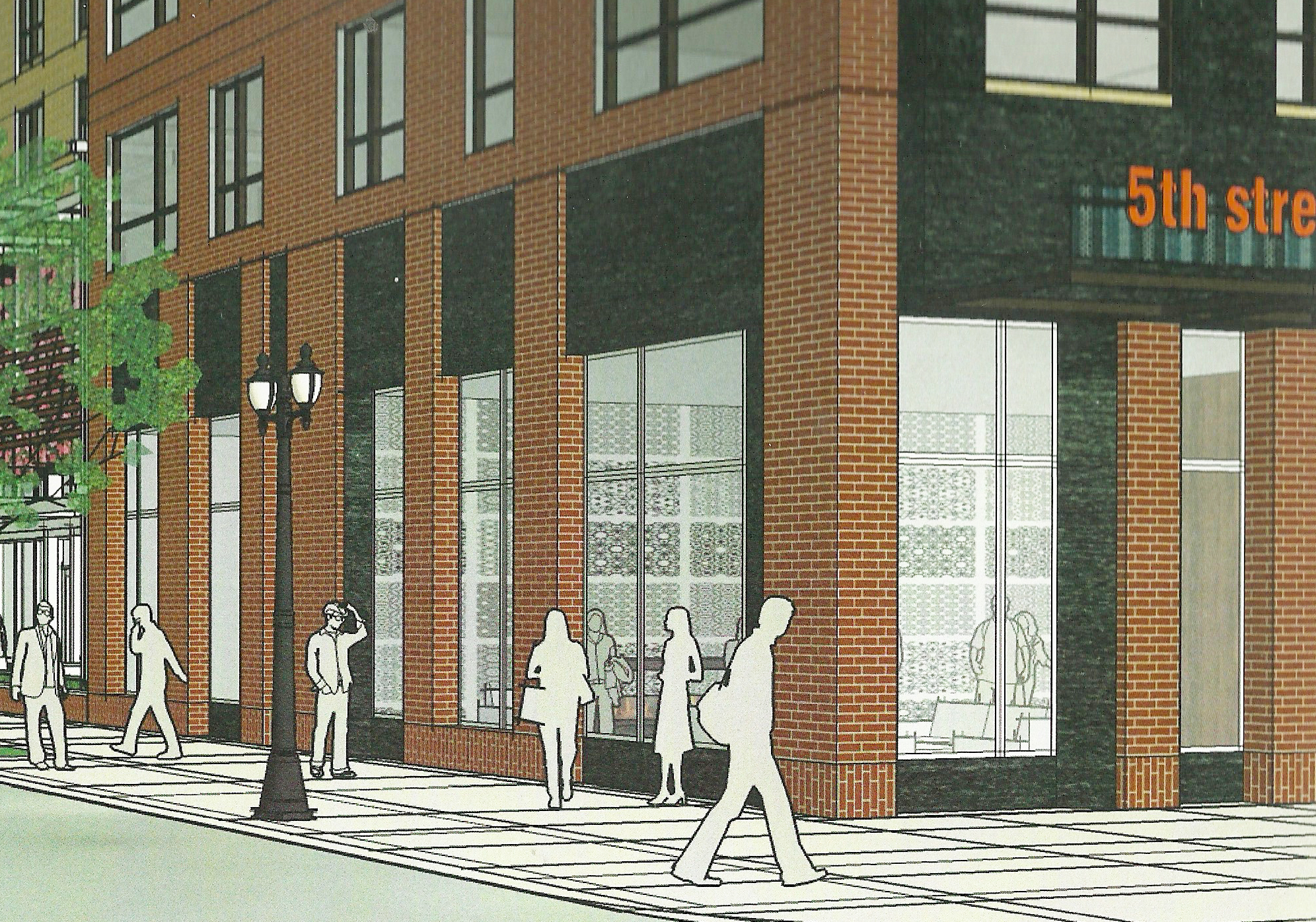
The proposed Opus mixed-use building in Dinkytown would become a “high-rise ‘Animal House’” that “is equivalent to an on-campus dormitory in the middle of a business district,” says Jason McLean, owner and general manager of the Loring Pasta Bar and Varsity Theater.McLean—whose views, in the form of a written statement, were presented by his executive assistant Lynn Nyman—and another prominent Dinkytown business owner told the Marcy-Holmes Neighborhood Association land-use committee on March 12 that the proposed Opus mixed-use development endangers their future as well as that of the entire business district adjacent to the University of Minnesota’s Minneapolis campus.The “massive loss of parking” both over the long term and during construction will jeopardize the future of Kafé 421 adjacent to the new building and the Loring Café and Varsity Theater in the next block, they said.The comments came as architect David L. Graham, a principal with ESG Architects, reviewed the latest design for the Opus Group’s proposed new mid-rise, mixed-use development that would fill nearly half a block of the four-block Dinkytown business district.The six-story Opus building includes 9,600 square feet of commercial space and 140 rental dwelling units; about 32 percent would have one bedroom, and 60 percent would have two bedrooms. Zoning would have to be changed to C3A for mixed use with variances for increased height, setbacks, and parking.Jim Sander, whose wife, Georgia, has owned Kafé 421 for 10 years, said the adjacent development would crowd out his customers.“I’m not going to sit by and silently let you do that,” Sander said. “I’m not arguing about David’s architecture. I’m not arguing about history. I’m just trying to preserve what’s here now.”Nyman, McLean’s executive assistant, said her company has already exhausted all the possible parking spaces, even with valet parking in nearby church parking lots.“We don’t have the 150 to 200 spaces of UTEC,” she said, referring to an apartment complex planned for the site of the University Technology Enterprise Center. “You can’t tell people where to park when we have a sold-out show on Friday.”McLean’s statement added, “This loss [of parking] will seriously jeopardize the future of the businesses that have made Dinkytown the thriving destination district it has become in the last 10 years.”In his presentation with illustrations, Graham said he has adjusted the building’s design to allow for more public parking and more street-level parking.“In response,” his report said, “the development has added additional street-level parking, going from 34 stalls to 42 stalls. Continue Reading
In fall 2014 the Minnesota Vikings will move into TCF Bank Stadium just as the Minnesota Gophers did three years ago—but the professional team’s impact on the surrounding neighborhoods could be greater than the stress created by the home college team, and the Vikings have not yet agreed to a plan to compensate for the impact on the surrounding neighborhoods.Five Vikings officials met recently with two University-area representatives as part of ongoing negotiations to determine how they will prepare the neighborhoods for the invasion of professional football.The Gophers, with help from the Minnesota Legislature, brought a $1.5 million endowment to create a Good Neighbor Fund to mitigate the impact on the “stadium area” that covers all the neighborhoods surrounding the University of Minnesota.The Vikings are likely to contribute to the Good Neighbor Fund, but neither of the neighborhood representatives—Ted Tucker of Marcy-Holmes and Stephen Banks of Prospect Park—will say what amount has been discussed.Tucker and Banks will advise the University of Minnesota on the appropriate amount of funding that the University should seek in their contract with the Vikings.The actual decision makers—Vikings authorities and the University’s general counsel’s office—did not return phone calls for this report.Although the Vikings may start this coming season in the TCF Bank Stadium, they have not yet signed a contract with the University. The next meeting of the Board of Regents will be May 9 and 10, and the stadium is not yet on the agenda.Tucker, who is chairman of the University District Alliance of neighborhoods surrounding the Minneapolis campus, reported to Marcy-Holmes last June that the Vikings will deal with the community through the Stadium Area Advisory Group (SAAG) that meets periodically to discuss issues.Tucker said the Vikings will provide mitigation support to SAAG’s Good Neighbor Fund and educate Vikings fans about using the LRT to get to and from games. But he did not reveal the substance of discussions since then.The fund’s management committee is a SAAG subcommittee. Jan Morlock, director of community and government relations at the University, serves as convener of both SAAG and the management committee, which reviews grant proposals.Tucker said the neighborhoods supported the stadium on condition that it would host a maximum of 12 major events a year, eight of them being Gopher games. The Vikings would add at least 11 more games for each of the two or three years.The Vikings games are even bigger, putting additional stress on neighborhoods than Gopher activities. Continue Reading
Why are many political leaders and corporate executives engaged in a war to discredit the theory of climate change? Two of the many books sending dispatches back from battlefront are The Republican War Against Science by Chris Mooney and The Inquisition of Climate Science by James Lawrence Powell. The roots of skepticism are much deeper than these critics suggest.In Debating the End of History, I assert that the theory of climate change contradicts the major metaphors that give meaning to the modern world. Courses on the history of Western Civilization declare that philosophers, including Plato, in the cities of ancient Greece were the first modern men. They imagined that individuals were trapped in traditional cultures that taught that they were interdependent with the living traditions of their ancestors and interdependent with the living nature that provided them food, clothing, and shelter. Continue Reading
Tenth in a ten-part series. Previously, part 9: Seeds of renewal.Al’s Breakfast, the narrow 14-stool, award-winning diner, makes everyone’s list of Dinkytown treasures. Al’s was founded on May 25, 1950, when Al Bergstrom purchased the small diner created by converting a storage shed between two buildings in the 1940s. A few years earlier, the space had been an alley. Al’s is part of the Schaak Electronics/Simms Hardware building that houses the Espresso Royale Caffe next door, which caters to a diverse clientele.Dan Zielske, part owner of the coffee shop, said he may be looking for new digs in Dinkytown in 2014.“I’m not necessarily one of those Dinkytowners that harken back to the days of Bob Dylan and wax ridiculously that Dinkytown won’t come back again,” Zielske said, but he admitted missing the record stores and office supply stores that have gone. “The Book House is the last remaining book shop.” And he said he laments of the loss of so many coffee shops.“I went to high school in Roseville and we’d ride our bikes here. Continue Reading
Ninth in a ten-part series. Previously, part 8: Memories and hopes.The Opus development could be the seed of renewal, said Tom Dale, a.k.a. Tom the Tailor, whose leather shop started above Gray’s Drug in 1971. He now works in his home at 1052 19th Avenue.“Unfortunately, they’re bringing down more history in the process,” Dale said. “The Book House along with the Podium and Al’s Breakfast are beloved by the community.”The “most storied and legendary” places should be preserved, Dale said, “but I just think Dinkytown has been looking for ways to exist ever since students got cars and moved off campus.”“The funny thing is that part of me wants to go back to Dinkytown,” Dale said. “I dream that I found a spot that I could afford and go back there, but I still have the customers I had in Dinkytown.” “Being upstairs of the drug store was like being at the Vatican,” he said. Continue Reading
Eighth in a ten-part series. Previously, part 7: Park it…where?Many people, newcomers and old-timers, have ideas about what Dinkytown should become.“It would be hard to say what to keep. I think there is a community,” long-time resident Walter Johnson said of Dinkytown. “I think the business people have a community there but those kinds of things come and go—develop and disappear—I don’t think anything like that is permanent.”“As far as I’m concerned,” said Walter Johnson, “I’d rather see more of a general shopping area than what it now. I think it’s patterned; it’s changed by the changing clientele. Continue Reading
Seventh in a 10-part series. Previously, part 6: Keeping the town dinky.Where did the name Dinkytown come from? That depends on whom you ask. Some have said it came from the appearance of a dinky town; another suggested it came form the name of the Dinkytown Dime, a long-standing dime store in the area. Others say a switch engine in the adjacent rail yards was called a Dinky and the workers stopped for lunch and other breaks. Continue Reading
Sixth in a ten-part series. Previously, part 5: A friendly zone.The planning process can’t solve every issue, such as the problem with small-scale businesses that don’t have deep pockets, city planner Haila Maze said.“When new space comes in, the per-square-foot rent will be higher. The new spaces are less likely to be affordable to small-scale businesses,” Maze said.Some places, like Grand Avenue in St. Paul and Uptown in Minneapolis, have managed to preserve some local character while welcoming new developments.“Grand Avenue is a very successful and prosperous commercial strip, but it has some national names like Crate and Barrel and Restoration Hardware. Dinkytown has a lot less room to work with,” Maze said.To protect the less dense traditional areas, Marcy-Holmes has proposed more intensive development along 15th Avenue going north from Dinkytown, but developers have not assembled the necessary contiguous parcels for high rises there.Planning can help with those issues, such as parking, traffic flow and public safety, that are bigger than any one project. Continue Reading