Development in Dinkytown, part 5: A friendly zone

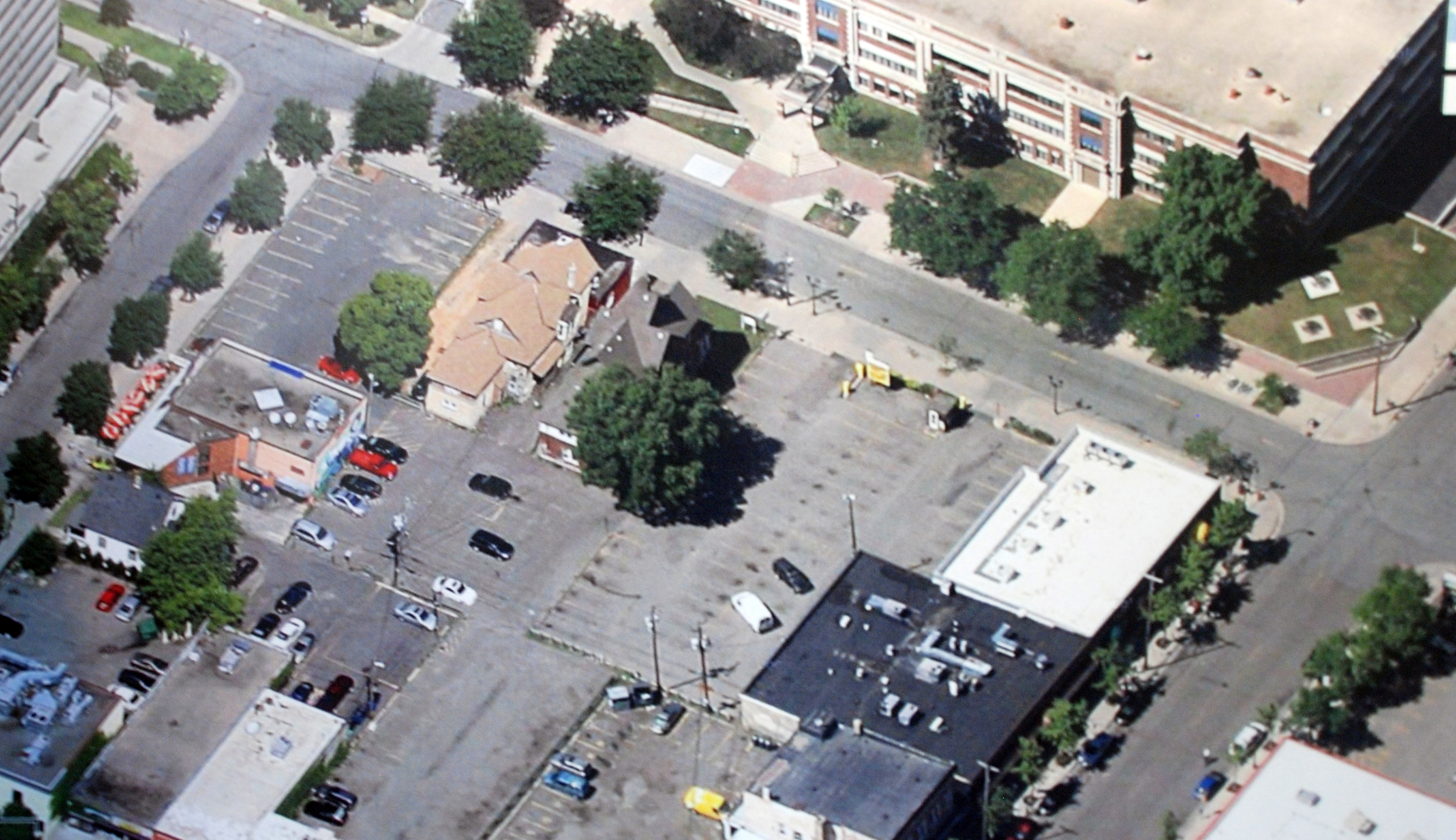
Fifth in a ten-part series. Previously, part 4: The Book House fights for its life.The current building at the Dinkytown site proposed for development by Opus is only one story because the site is zoned C-1 for commercial use to keep the business area low density. To build for more height and density, Opus would need the city to rezone the site C-3A, the same as the Sydney Hall site on the opposite corner across from Dinkytown. Opus may also need a variance from parking requirements.Other zoning categories and variances allowed the construction of higher multiuse developments on the UTEC site and the building that houses the Purple Onion coffee shop and café at 1301 University Avenue—both at Dinkytown. “There is an ability to obtain up-zoning if it’s consistent with policy and the city plan,” Maze said.Rezoning and variances were required for nearly a dozen developments already under construction or on the drawing board in the Marcy-Holmes Neighborhood within blocks of Dinkytown and the riverfront. These requirements provide an opportunity for groups, like the Dinkytown Business Association and the Marcy-Holmes Neighborhood Association, to influence the City Council on the developments. MHNA President Doug Carlson said the Opus development is the first one that gets into the commercial blocks that define the character of Dinkytown.“It could be worse,” Carlson said. “It could be an out-of-town developer. Continue Reading
Development in Dinkytown, part 4: The Book House fights for its life

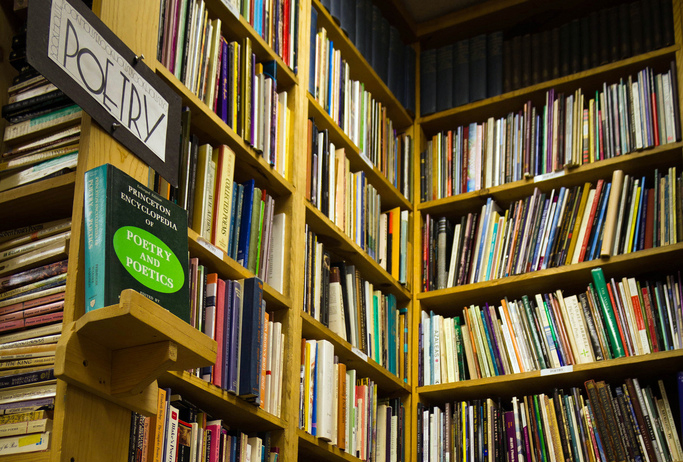
Fourth in a ten-part series. Previously, part 3: The House of Hanson and the price of convenience.Kristen Eide-Tollefson, who owns the Book House, is not happy to go. “I have spent the last three years investing heavily in preparing the store to be run by a new generation because I want the store to stay here, so the university has access to the kinds of books the Book House provides and the services the Book House provides,” Eide-Tollefson said.She said her used bookstore recycles ideas as well as books. “So this is a pretty big shock to my hopes and dreams and to me and to my staff, who are very committed booksellers,” Eide-Tollefson said. She said she has discussed relocation with the developers. “It’s not easy to relocate a store as large as mine. Continue Reading

Development in Dinkytown, part 3: The House of Hanson and the price of convenience

Third in a ten-part series. Previously, part 2: Threatened by success.Change seems to be the one constant in Dinkytown.Dylan wrote that he made three to five dollars every time he played at the Ten O’Clock Scholar, which he described as “a Beat coffeehouse” at the corner of Fifth Street and 14th Avenue. That site had also housed McCosh’s bookstore, which later moved to Fourth Street.The Scholar site became a Burger King and its parking lot; today it has a yoga center, a Subway, a Pizza Hut, and their shared parking lot.Across 14th Avenue, the House of Hanson, the Book House and the Podium may be torn down for the new Opus mixed-use, multistory apartment building with commercial businesses on the street level. Much of the space behind them is Dinkytown’s largest parking lot, the hair salon, and a pizza place that will be taken.Across Fifth Street from them, the University Technology Enterprise Center, called UTEC, is being torn down to make room for another multistory mixed-use apartment building. UTEC’s building was Marshall University High School until 1982. Continue Reading

Development in Dinkytown, part 2: Threatened by success

Second in a ten-part series. Previously, part 1: “There’s a nice vibe; it’d be easy to mess that up”The city plan classifies Dinkytown as an activity center, like Stadium Village and Uptown: a dense, busy, active business area. “The unique character of Dinkytown is in some ways intangible,” says Haila R. Maze, city planner whose responsibilities include Dinkytown. “It’s an urban small-scale commercial space that has managed to survive over the years. Having survived is a major accomplishment.”Maze said Dinkytown is a human-scale, eclectic mix of businesses with some local unique businesses. “I hope that there are ways to do infill development that can change it but keep what people value about it,” she said in a recent interview. “We should keep being a place where something is interesting and happening, but we don’t want it to be so successful that big players come and squash it,” Maze said.Dinkytown is threatened because of its success; some small businesses have succeeded and new developers seem to find it lucrative. Continue Reading

Development in Dinkytown, part 1: “There’s a nice vibe; it’d be easy to mess that up”

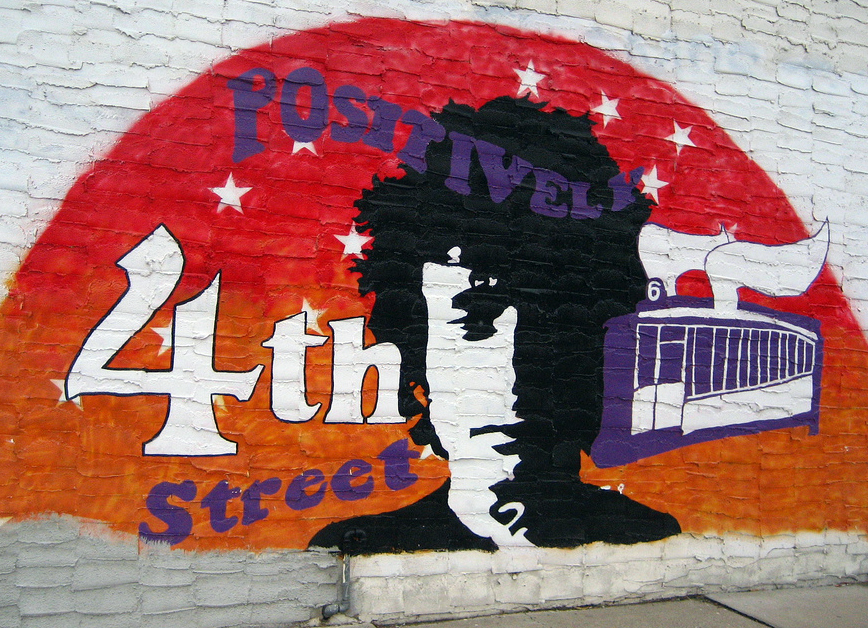
This is the first article in a ten-part series.When Bob Zimmerman moved into a fraternity house in Southeast Minneapolis, he traded his electric guitar in for a double-o Martin acoustic, browsed record stores to hear new music in the listening booths, changed his name to Bob Dylan, and listened to and performed folk music at local coffee houses—all beginning in the Marcy-Holmes neighborhood.“The area around the university was known as Dinkytown, which was kind of like a little village, untypical from the rest of conventional Minneapolis,” Dylan wrote in his memoir, Chronicles, Volume One. “It was mostly filled with Victorian houses that were being used as student apartments.” Dinkytown consists of the four square blocks that meet at the intersection of 14th Avenue and Fourth Street Southeast, said Skott Johnson, president of the Dinkytown Business Association.Dylan, who lived in the area for about 15 months beginning in 1959, rented a room above Gray’s Drug Store on that corner for $30 a month. “Above Gray’s, the crash pad was no more than an empty storage room with a sink and a window looking into an alley. No closet or anything. Toilet down the hall. I put a mattress on the floor, bought a used dresser, plugged in a hot plate on top of that—used the outside window ledge as a refrigerator when it got cold,” he wrote.None of the businesses Dylan mentioned remains in Dinkytown, and the last music and guitar store, the Podium, could be displaced by a proposed new development that may fill almost half of one of those four blocks.Opus Development Company has proposed a multistory, mixed-use apartment house that would displace several businesses, including the House of Hanson grocery.Even when Dylan lived there, Dinkytown was not the village it was 10 years earlier when Dayton’s had a Dinkytown branch, and neighborhood children attended Marshall High School in the next block. “I remember much more of a little village, a self-sustaining village than it is now,” said Walter Johnson, who graduated from Marshall High School in 1946. Continue Reading

The future of the Southeast Minneapolis Library, part 6: Bringing a community together

This is the final article in a six-part series about the future of the Southeast Library in Minneapolis. Previously, part 5: What does the community need today?The Southeast Library serves diverse neighborhoods that include minorities and international students, says Southeast librarian Eric Heideman.“University students use it a lot,” Heideman said. “It serves a very diverse group, including many different ethnic groups and cultures. There has been an increase in the number of parents with small children in recent years.”Heideman, who began as a children’s librarian in 1998, became head librarian for the building in June 2001. He continues with weekly story time at 10:30 a.m. most Saturdays for families with children ages 2 and above. Continue Reading

The future of the Southeast Minneapolis Library, part 5: What does the community need today?

This is the fifth article in a six-part series about the future of the Southeast Library in Minneapolis. Previously, part 4: A historic building.Before selecting a location for a new library, Hennepin County commissioner Peter McLaughlin said, “The first-level issue is what kind of library should we actually create. There’s an argument that would suggest that this is not your garden-variety neighborhood library. Of our 41 libraries, should this one be something different because of its proximity to the University of Minnesota?” “We need to explore that question, think about programs and think about what kind of building you need and then you get to the location,” McLaughlin said. “We will get a lot of community input on what it would look like.” Koob said the library has a “community-engagement process” to plan for each library. “We haven’t planned it yet so we don’t know what this will look like,” Kelli Koob, coordinating librarian in the Hennepin County Library’s Capital Projects Office, said. Continue Reading

The future of the Southeast Minneapolis Library, part 4: A historic building

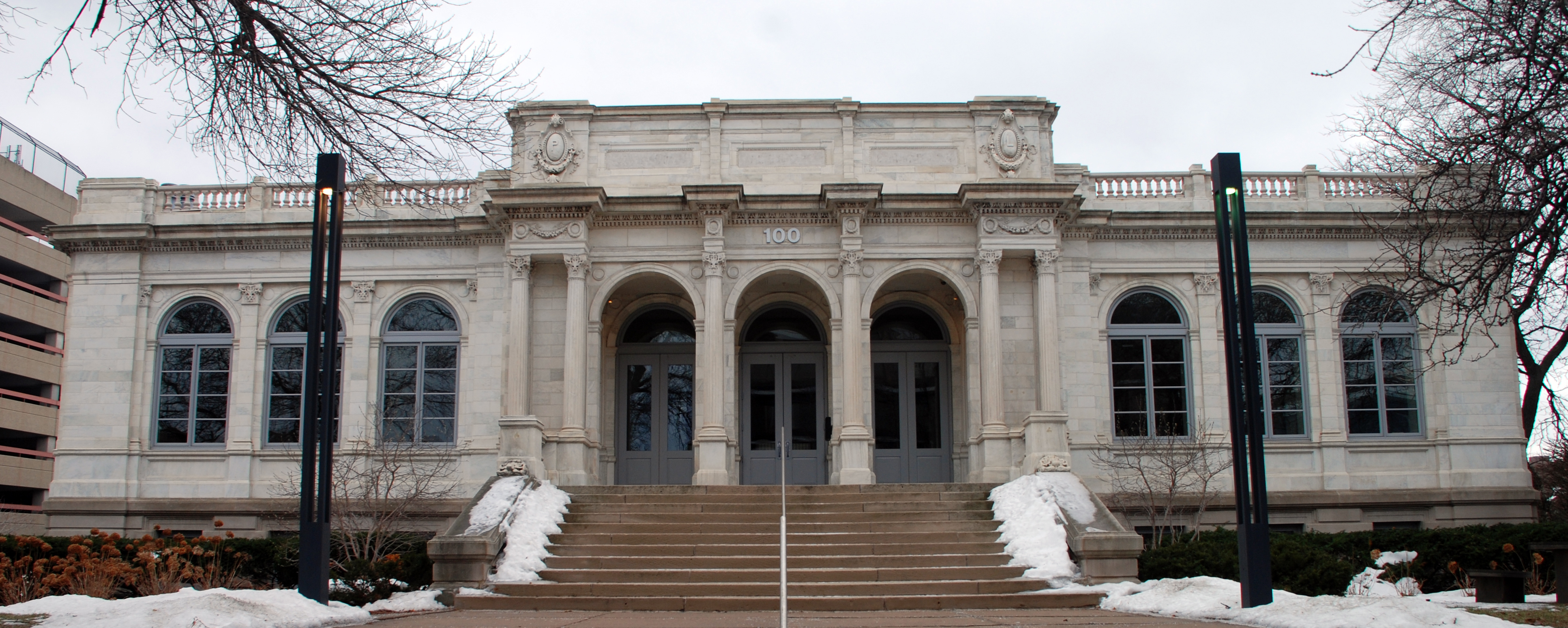
This is the fourth article in a six-part series on the future of the Southeast Library in Minneapolis. Previously, part 3: Marcy-Holmes loves its library.Some neighborhood residents have said they’d like to preserve the Southeast Library building for historic reasons as an example of the late Ralph Rapson’s modern architecture.The Southeast Library building, designed by the late Minneapolis architect Ralph Rapson, opened in 1963 as the University branch of the State Capitol Credit Union, now Affinity Plus. Four years later, the building, an example of modern architecture, became the Southeast Library around Christmas 1967.Between 1904 and 1967, the Southeast Library was in the white marble Pillsbury building at 100 University Ave. S.E. on the corner of University and Central (above). The building houses the Phillips philanthropic foundation. Continue Reading

The future of the Southeast Minneapolis Library, part 3: Marcy-Holmes loves its library

This is the third article in a six-part series on the future of the Southeast Library in Minneapolis. Previously, part 2: Design library dreams for Prospect Park.The Marcy-Holmes board passed a resolution October 16 calling for keeping the Dinkytown library in their neighborhood because “it has always been an important part of our community and because it is accessible to all the Southeast neighborhoods via public transportation and serves our neighborhood’s 10,000 residents, including students at the University of Minnesota.”The board appointed a Southeast Library Task Force consisting of residents Bean, Kathleen Reilly, Ardes Johnson, Harriet Johnson, and Mary Kay O’Hearn.Jo Radzwill, co-chairwoman of the Marcy-Holmes land use committee, said small neighborhood focus groups consistently show strong use of the library and a demand for more hours.“One student likes the Chinese-lesson videos there,” Radzwill said. “Who knew? One of the sorority house directors said her residents frequently go there to do homework because of the wi-fi access. It is a more central location than the campus library on the West Bank and it’s so close to campus.”“It’s also easy to get to. Continue Reading

The future of the Southeast Minneapolis Library, part 2: Design library dreams for Prospect Park

This is the second article in a six-part series on the future of the Southeast Library in Minneapolis. Previously, part 1: A part-time library isn’t enough.Some Dinkytown and Marcy-Holmes neighborhood residents fear that Prospect Park will compete for the location of a new Southeast Library, choosing a site that would be less convenient to residents of both Marcy-Holmes and Como neighborhoods.Dick Gilyard, an architect who lives in Prospect Park, presented a slide program last spring that proposed a library at the 29th Avenue light rail station as part of his neighborhood’s plan for the transit corridor along Washington and University avenues. Too late. “That train has already left the station,” McLaughlin said. “The station is under construction, and there is no room for a library.”Gilyard continues to advocate for a new library in the Prospect Park area, but he insists that his plan is separate from the future of the Southeast Library at Dinkytown.“That will be decided by others—the county through its community-engagement process,” he said. “We’re now talking about a different kind of library with a theme-based focus independent of what Hennepin County decides to do with the Southeast Library.”Gilyard said the Textile Center at 3000 University Ave. Continue Reading