Dinkytown’s House of Hanson to close on July 31

The House of Hanson, which has been a corner grocery store in Dinkytown for 80 years, will close on July 31, 2013, owner Laurel Hanson Bauer announced on July 22.“I was not ready to reveal my end date, mostly for emotional reasons,” she said in an e-mail. “But I am ready to pull the plug and am closing the doors for grocery sales on July 31st—yep 9 days!!!!”Earlier this year, Bauer signed a purchase agreement with Opus Development, which plans to build a six-story mixed-use business and apartment complex on the site.Since then, residents and businesses have lined up to support or oppose the development—both sides claiming they will do the most to “save” Dinkytown.The development requires approval of a number of variances and rezoning from commercial (C1) to mixed use (C3A) by the City Council, whose zoning and planning committee will hear the development proposal at 9:30 a.m. on Thursday, July 25, in City Hall. Committee actions could go the next full City Council meeting on Friday, August 2.The proposal called “5th Street SE Mixed Use; 1300-1322 5th Street SE and 425 14th Avenue SE” is listed on the zoning and planning committee’s consent agenda and three staff reports have been posted. The city’s planning commission approved the development on June 24. Kristen Eide-Tollefson, whose Book House store was evicted from Bauer’s building, helped create the Save Dinkytown organization to stop the Opus development.“Save Dinkytown will present a 3,000-signature petition opposing rezoning—1,000 handwritten and 2,100 online signatures—with hundreds of comments to City Council Member Diane Hofstede on Tuesday, [July 23]” and to the zoning and planning committee, Eide-Tollefson said.Eide-Tollefson said they will seek a public hearing at the zoning and planning committee. The city DFL convention this summer supported their position against the Opus project.Eide-Tollefson said the council could vote for the rezoning without commenting on the Opus project. Continue Reading

Marcy-Holmes Neighborhood Association protests proposed I-35W sound wall in Minneapolis

A 20-foot sound barrier wall has been proposed along Interstate 35W through the Marcy-Holmes Neighborhood, but the neighborhood association strongly opposes it.In negotiations with the Marcy-Holmes Neighborhood Association (MHNA), the Minnesota Department of Transportation (MNDOT) agreed to send a mailing to neighborhood residents and property owners and to host a public hearing set for 5:00 to 7:00 p.m. Tuesday, July 23, at the University Lutheran Church of Hope, 601 13th Avenue Southeast.The wall would run along the interstate from Fourth Street Southeast to Ninth Street Southeast.The MNDOT mailing, received by some neighborhood residents on July 13, also announced meetings at 5:00-7:00 p.m. July 18 at Van Cleve Park Recreation Center and 5:00-7:00 p.m. July 24 in Logan Park Recreational Center.The announcement said the meetings will also discuss a proposed new entrance ramp from Fourth Street South (downtown) to northbound I-35W with new lanes on the interstate from there through the neighborhood.In a statement to members, MHNA said MNDOT has restricted who can vote on the plan and seems determined to build it regardless of public reaction.“MHNA opposes the wall because it will make very little difference in the sound we are used to; it will be a huge canvas for graffiti; it will further divide our neighborhood; it will remove the trees and vegetation 400 neighborhood volunteers planted; it will provide a dark place for criminal activity; it cuts off [sight]-lines for bicyclists and motorists; it cuts off light for neighborhood gardens and dwellings; it does not fit with the historic districts it will interrupt; it cannot be guaranteed to work—nearby Prospect Park is trying to get rid of their noise wall because it just re-directed the noise uphill,” the statement said.The statement also criticized the MNDOT process, which allows absentee landlords with multiple properties to have multiple votes while some residents are not allowed to vote.“So please attend the meeting, look for the MNDOT mailing and if you are eligible, please vote. A non vote is a yes vote; MHNA encourages you to send back a NO vote,” the statement said.City Council Member Diane Hofstede will convene a meeting to discuss potential bike lanes on University Avenue and Fourth Street from 4:00 to 5:00 p.m. Tuesday, July 23, at the University Lutheran Church of Hope during the hour before the scheduled discussion of the sound wall with MNDOT.Correction 7/17: When originally published, this article misidentified the site of the proposed new entrance ramp as Fourth Street Southeast. The actual location of the proposed ramp is Fourth Street South. Continue Reading

Dinkytown update: Businesses move, residents debate as Opus development moves forward

Two Dinkytown businesses displaced by the proposed Opus mixed-use apartment and commercial building have reopened in new locations, while the Minneapolis planning commission has forwarded the Opus proposal to a city council committee.The Podium, a guitar store that dates back to Bob Dylan’s Dinkytown days in the 1960s, will open under new ownership at 4151 Minnehaha Avenue in South Minneapolis.Jeff Molde, who had owned the Podium for 14 years, announced that he would retire from the business when he was displaced by the sale of his building that also housed the Book House and the House of Hanson grocery. Molde said he tried unsuccessfully to find other viable locations to relocate.Since then, however, he sold the Podium name to a former employee who merged it with Guitar Rodeo on Minnehaha, said David Roos, who worked for the Podium for 28 years and has just started with the new business.The new owner, Jim Tordoff, worked at the Podium for more than eight years in the 1970s, Roos said. In an interview with Fox 9 News, Tordoff said he worked in Dinkytown during the Dylan era.The new store, Roos said, will have guitars, parts, strings and repairs like the Podium, but unlike the Podium, it will not offer sheet music or lessons.“It’s not Dinkytown,” Roos said about the new location, “but the parking is a whole lot easier.”He admitted that the inventory was currently much lower than it was in Dinkytown, but, he added, “That’s going to change real quick. We’ll double or triple what’s here.”Most guitars sold at the Podium ranged in price from $2,500 to $3,500 and Roos said he does not expect that to change. Guitars on the wall at the store on July 10 ranged from $700 to more than $12,000.On July 10, the Book House opened in its new location on the second floor of Dinkydale, 1316 Fourth Street Southeast, around the corner from its old site.Although the current site is smaller than the old store, customers can still browse “the best of the Book House” inventory in the main store and a rare book room across the hall. Continue Reading

“Minneapolis Madams”: New book by Penny Petersen tells the story of pioneering prostitutes

Out for a bike ride one sunny day in the year 2000, Penny A. Petersen and her husband, Ted Tucker, discovered a beautiful building that looked strangely out of place to Petersen, an authority on Minneapolis neighborhood and architectural history.She described it as “a handsome, three-story, Richardsonian Romanesque building” more appropriate to an exclusive upscale residential neighborhood than the historically grubby railroad yard, mill district, and saloon-laden Washington Avenue that once surrounded it.Petersen looked up the building permits and discovered that one electrical permit described the building at 212 South 11th Avenue as a sporting house and another called it a house of ill fame—both euphemisms for brothels.That was her first surprise: Minneapolis openly permitted the construction of a bordello in 1890.There was no surprise at learning that, after “a purity crusade,” three madams were sent to Stillwater State Prison. Petersen’s second surprise came when she learned of their pardons—signed by Gov. John S. Pillsbury and endorsed by the Minneapolis mayor, 13 aldermen, 10 of the jurors, “a majority of the officers” of Minneapolis and Hennepin County, and a municipal judge. Pillsbury had initially supported the purity crusade that put them in prison in the first place.Sending prominent madams to prison became a political mistake in Minneapolis, Petersen said in a recent interview.When major players in the sex industry were imprisoned, prostitution spread from the more clearly defined red-light districts and public houses into the public streets of the entire city, she said—and the city lost income from their regular fines and court appearances.Petersen discovered that, although prostitution was illegal, the madams appeared in court once a month, paid their regular fines, and returned to work for the month. Sometimes newspaper coverage even provided addresses of the brothels.In 13 years of research, Petersen found many other brothels and other surprises leading to her book Minneapolis Madams: The Lost History of Prostitution on the Riverfront, published this summer by the University of Minnesota Press.About 300 people attended a book-release party on June 27 at the Mill City Museum, which sold out the about 90 copies the museum store had in stock, said David Stevens, the museum’s public program coordinator.“We will never look at Minneapolis or the riverfront in quite the same way again; for that, we thank you,” Stevens said, introducing Petersen. “It’s a special thrill because this book has been a long time coming.”In a half-hour presentation followed by questions, Petersen showed maps and pictures of the three main red-light districts in Minneapolis from the 1870s through 1910 and discussed a range of issues from morality to politics and business.She avoided current issues about legalization of prostitution, saying that her knowledge ends with the official closing of the brothels around 1910. She also does not know the current very different use of the 212 building. Continue Reading

Save Dinkytown effort escalates in Minneapolis as the Book House and the Podium get ready to say goodbye

Saving Dinkytown has become complex—for both supporters and opponents of a proposed six-story, mixed-use apartment building in the four-block business district adjacent to the University of Minnesota.Both sides say they represent the best interests of the quaint, historic business district and neighborhood, even as the Podium closes and the Book House moves.“Everybody is talking about the character of Dinkytown, but nobody has defined the character of Dinkytown,” said Jo Radzwill, co-chair of the land-use committee of the Marcy-Holmes Neighborhood Association. (The Marcy-Holmes neighborhood includes Dinkytown.)“It’s a feeling we have from when we went to school there. It’s different for everyone and it depends on the era,” she said in an interview. “How do you preserve the character of Dinkytown when you don’t even know what it is?”Defining that character is a goal of Kristen Eide-Tollefson, owner of the Book House and organizer of Save Dinkytown—a movement founded to stop the proposed Opus development.Eide-Tollefson said the project should be delayed until the city completes a small area plan to guide Dinkytown development.“We are trying to make a conservation district to define and protect the character of Dinkytown,” Eide-Tollefson said. “A conservation district designation for Dinkytown will help identify what we want to conserve about the area.”“Otherwise, we will end up like Stadium Village with the loss of local businesses and layers and layers of living memory,” she said.Minneapolis city planner Haila Maze explained that a conservation district allows for preservation with fewer restrictions than a historic designation.“A conservation district is new,” Maze said. Continue Reading

“Who’s going to follow us?” Frontier historians remember Crazy Horse, look to the next generation of scholars

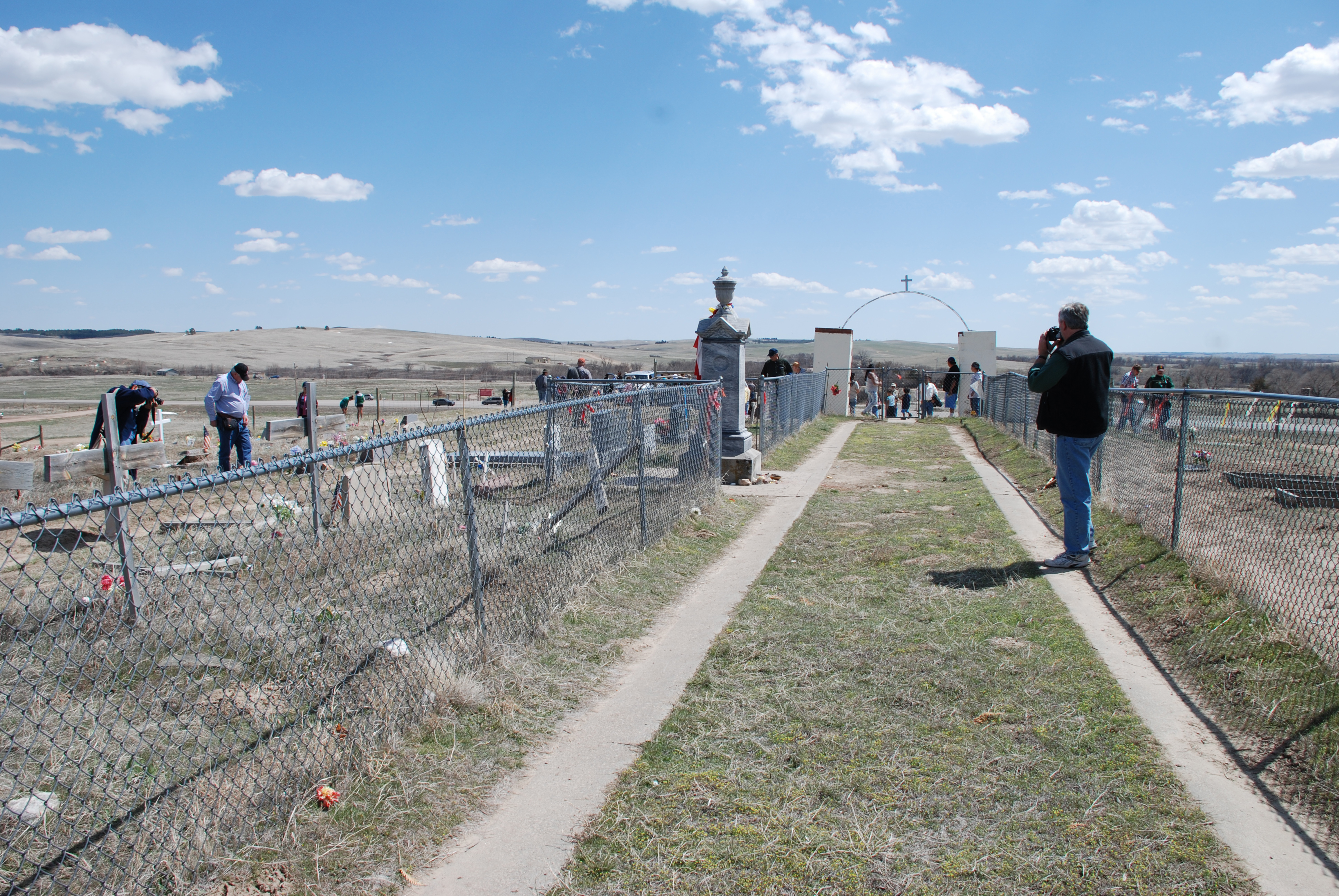
FORT ROBINSON, NEBRASKA—Standing in front of the reconstructed guardhouse where Lakota Chief Crazy Horse was murdered in 1877, author Thomas Powers reviewed the last 15 minutes in the life of the man who led several defeats of U.S. troops, including Custer’s 7th Cavalry at the Little Big Horn in 1876.Powers spoke in April 2013 at the conclusion of the ninth, and probably the last, Fort Robinson History Conference for scholars of the Indian wars at Fort Robinson, Nebraska, where Crazy Horse was killed on Sept. 5, 1877.“He was killed unnecessarily for political reasons,” Powers said, “but no one wanted him killed at that time.”Powers, who has written eight books including The Killing of Crazy Horse, drew a parallel between the intrigue among Indian factions and the conflicts among Cold War military intelligence services—subjects of his earlier books. Powers continued his narrative at the dinner concluding the thee-day conference on April 27.Military leaders in the 1870s, he said, lacked “an information loop” allowing them to determine whether they were “being played” by their intelligence sources.Lt. William Philo Clark, an officer working for Gen. George Crook, had created a network of informers that he used to get information and control over the various Lakota bands, especially those under the leadership of Red Cloud and Spotted Tail at nearby Indian agencies.Crazy Horse had gained notoriety as the military leader of Custer’s defeat, and politicians and military leaders didn’t know what to do when he offered to surrender. Lakota spiritual leader Sitting Bull had escaped with his followers to Canada.Gen. Crook was “at the heart” of these events, and he worked to divide and conquer, exploiting the jealousies among the chiefs, Powers said.“In the beginning of the summer of 1877 when Crazy Horse surrendered, Crook thought of him as a solution to a problem,” Powers said. “Crook was jealous of Red Cloud and intended to reduce his influence by raising Crazy Horse up a rung or two.”“By the end of the summer, though, he began to think Crazy Horse was a problem—someone something had to be done about,” Powers said.Working for Crook since late 1876, “Clark was smart and thought he could do anything. Continue Reading

Minnesota Vikings, University of Minnesota sign multi-million-dollar contract for use of TCF Bank Stadium

The Minnesota Vikings will cover all expenses of game-day activities and other impacts on the surrounding communities—and will contribute to the Good Neighbor Fund—when they move into TCF Bank Stadium to play for two to four seasons beginning in the fall of 2014.The University of Minnesota Board of Regents approved these provisions on May 10 as part of a contract that allows the Vikings to rent the stadium for $300,000 per game for 10 Sunday games in each of two seasons. If the Vikings remain longer, the rent will increase.In addition, the Vikings will contribute $90,000 a year to the Good Neighbor Fund created by the Minnesota Legislature to ameliorate the TCF Bank Stadium’s impact on the neighborhood and will contribute an additional $35,000 in in-kind work to improve the communities.The Regents’ facilities and operations committee took a recess from its regular business on May 9 and then reconvened with a larger media presence to approve the contract, which runs to over 50 pages.  Representatives of the University and the Vikings answered questions from the press.“The tone of this is very good,” said Regent Dean E. Johnson, who chaired the committee meeting. “We want to be good neighbors to what is one of the most popular sports teams in the nation and a valuable Minnesota asset.”Explaining the contract to the committee and the press were: Pam Wheelock, vice president of university services; Mark B. Rotenberg, the University’s chief legal officer; Lester Bagley, Minnesota Vikings vice president for stadium development; and Kevin Warren, Minnesota Vikings vice president of legal affairs and chief administrative officer.Reporters asked about the in-kind contributions.”We intend to have a volunteer network similar to what they have in downtown Minneapolis, the Downtown Improvement District, where they have folks walking around and kind of telling people where to go to ensure we’re good neighbors,” Bagley said.Bagley said the Vikings have vast social networking that can provide specific help for fans on parking and traffic. They could also promote neighborhood activities and businesses, he said.Bagley said negotiations with neighbors began one year ago after the Regents approved a resolution of intent to lease the stadium to the Vikings.One of the negotiators disagreed with Bagley’s description of what constitutes an in-kind contribution.In an interview, Ted Tucker, chairman of the University District Alliance, welcomed the idea of using the ambassadors to help fans navigate the neighborhood, but said that falls under the game-day expenses that the Vikings are obligated to provide under the contract.Nonetheless, he expressed pride in the contract—for which he and Steve Banks, a resident of Prospect Park, negotiated on behalf of the neighborhoods.Tucker agreed that building playgrounds and planting trees would be considered in-kind contributions if the neighborhoods want them. Wheelock also said beautification programs and tree plantings would help, but she said details still have to be worked out.“We believe,” Tucker said, “that a season of Vikings play at TCF places a greater burden on the surrounding community because of the following factors: more fans at each game, more games per season, more fans of drinking age, fans less familiar with the University District, and games on Sunday.”In the coming seasons, he said, “there could be no weekends without large football crowds during the fall seasons in which the Vikings play at TCF.”The agreement recognizes that the Vikings can bring “unique resources” to the district and will play only a few seasons here, Tucker said.“In crafting this agreement, the U of M listened carefully to Steve’s and my advice about community engagement and, speaking for myself, I think this is a reasonable plan. Continue Reading

NEIGHBORHOOD NOTES | In Northeast Minneapolis, it’s full steam ahead as Engine 261 comes back to life on May 10

Celebrate the return of steam to the Northeast Minneapolis railroad yards at 5 p.m. May 10 with the restoration of a 1944 Milwaukee Railroad steam locomotive.The public is invited to view the exteriors of the newly rebuilt Milwaukee Road engine No. 261 and restored passenger cars that will leave the following day on an excursion to Duluth and the Lake Superior Railroad Museum. (The excursion has been sold out.)About 1,000 volunteers contributing 30,000 hours and $1 million helped restore the train since it pulled its last excursion in the fall of 2008. Virtually every part of the engine has been rebuilt or inspected.“Instead of a bottle of champagne, we will christen the engine with a bottle of water from Minnehaha Falls—a 100-year Milwaukee Road tradition,” said Steve Sandberg, chief operating officer of the Friends of the 261.The locomotive has also been upgraded with controls to allow this steam engine to also drive attached Amtrak diesel engines and a radio to communicate with the BNSF and Amtrak.The celebration will be at the train shed at 401 Harrison Street N.E. in Minneapolis. To get there turn north from East Hennepin on Harrison or north from Central on Spring Street Northeast and right on Harrison. Continue Reading

Engine 261: A Milwaukee Road veteran gets back on track in Northeast Minneapolis

Steve Sandberg, who used to follow his grandfather to work at the Milwaukee Railroad roundhouse in South Minneapolis, today supervises his own train and crew on a 1944 steam locomotive he helped to rebuild over the past four years.Sandberg also rode in diesel locomotives with his grandfather who worked at the roundhouse from 1917 until it closed in 1970. The Milwaukee Railway yard was near Hiawatha Avenue and Lake Street where Target and Cub stores stand today.As a child, Sandberg admits, he never had a toy train.“My model is a scale of 12 inches to one foot,” he says proudly. The locomotive he runs today is 15.5 feet tall, almost 110 feet long, and weighs 460,000 pounds.The engine, Milwaukee Road No. 261, was built for the Chicago, Milwaukee, St. Paul and Pacific Railroad during World War II by the American Locomotive Company in Schenectady, N.Y.Engine No. Continue Reading

Dinkytown: “Why do you need a plan if development is already happening?”

About 100 Dinkytown business leaders, residents, and neighbors met with a city planner March 20 at the Varsity Theater to begin designing a small area plan for the business district adjacent to the University of Minnesota.Haila Maze, principal planner for the city, said the plan could be completed by the end of the year, even though a six-story mixed-use development that sparked the discussion could be under construction by then.“Why do you need a plan if development is already happening?” Maze asked rhetorically. “Sometimes you have to step back and look at the whole situation, not just look at projects piece by piece. We can be proactive.”“When change is going to happen, let’s be responsive to it,” she said.The small area plan would amend the city’s master plan and complement the Marcy-Holmes Neighborhood’s comprehensive plan, she said.The meeting and the small area plan are responses to a proposed six-story mixed-use Opus development that would fill half of one block in Dinkytown’s four-block core. An even larger new mid-rise apartment complex is already under construction at the former UTEC site on 14th Avenue between Fifth and Sixth streets.Skott Johnson, president of the Dinkytown Business Association, and 3rd Ward Council Member Diane Hofstede presided at the meeting, though Maze made the presentation and responded to the audience questions and comments.Johnson encouraged people to participate in the process by attending weekly meetings at 2 p.m. Thursdays at Burrito Loco restaurant at 418 S.E. 13th Ave.“This concept of a small area plan is not coming from the city per se,” said Lynn Nyman, executive assistant at the Loring Pasta Bar & Varsity Theater. “We are Dinkytown, mostly business people. Continue Reading