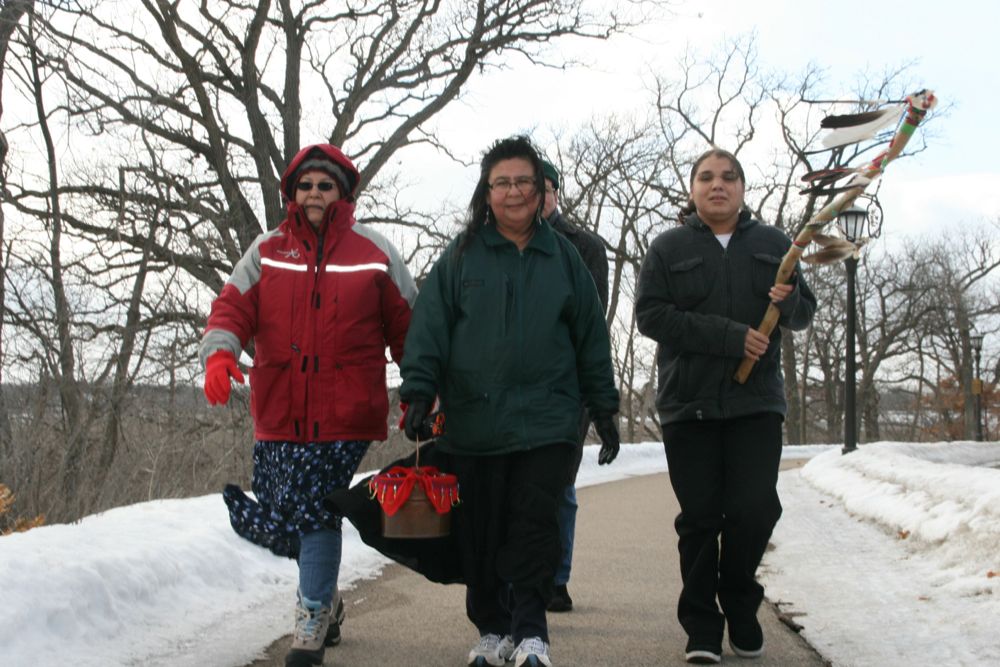
On March 1, a group of Indigenous women filled a copper pail with water from Lake Itasca and began a journey to hand carry it more than 2,200 miles, walking the length of the Mississippi River, from the spot where the river begins to where it empties into the Gulf of Mexico. On March 12, they reached St. Paul, more than two days ahead of schedule. The women are walking to bring attention to the dangers that face the Mississippi River.“The Mississippi is the second most polluted river in the United States,” said walk organizer Sharon Day. “Toxic chemicals are taking their toll on the river. Continue Reading
If you watched the Academy Awards recently, you may think that pretty much all movies are made by white men. Not true. Movies are also made by non-white women, including one whose name is…Whiteman.Missy Whiteman is a Native filmmaker and educator in Minneapolis. She’ll travel this week to Austin, Texas to speak on a panel at the hugely prestigious film festival and conference South by Southwest (known to the initiated as “SXSW” in print and “South By” in conversation. Yes, you’re cool now).I spoke with Missy about her work as she was getting ready to hit the road. Continue Reading
On Wednesday, January 9, Saint Paul’s City Council passed a resolution that will recognize 2013 as “The Year of the Dakota: Remembering, Honoring, and Truth-Telling.” The language of the resolution was nearly identical to one that was passed in Minneapolis on December 14, 2012.Saint Paul’s resolution acknowledges that the Dakota-U.S. War of 1862 and the mass execution of 38 Dakota in Mankato were events that opened a disturbing and neglected chapter of history, one characterized by the genocide of the Dakota people in Minnesota. The document resolves, from now on, to include the Dakota perspective at public events, to promote the well-being and growth of the American Indian community and to begin efforts to rectify the wrongs that were perpetrated since the Dakota-U.S. War of 1862 “a tragic and traumatic event for the Dakota People of Minnesota.” It also resolves that the year 2012-2013 will be “The Year of the Dakota: Remembering, Honoring, and Truth-Telling.”One difference from the resolution that was passed in Minneapolis is the addition of language that directs “the City of Saint Paul and its Parks and Recreation Department will work with the Dakota Bdote Restoration Consortium to identify, name, and interpret sacred Native American sites at and nearby the sacred Bdote from the confluence of the Mississippi and Minnesota rivers to Mounds Park; including listing, mapping, identifying Dakota site names in the Great River Passage Plan, and participating in on-going collaborative research to further describe, dually name, publicize, and interpret significant Dakota sites in the Great River Passage Park Implementation;”St. Paul, also known as Imniza Ska–a Dakota place, is full of sites that are sacred or historic to the Dakota people. The recent book Mni Sota Makoce: The land of the Dakota by Gwen Westerman and Bruce White describes the special history of the Dakota people in St. Paul.In Minneapolis, Councilperson Cam Gordon worked with members of the Dakota community to pass the resolution on December 14, 2012. Continue Reading
MPR (Minnesota Petroleum Radio?) WCCO, KSTP, Star Tribune or any of the other corporate media have not seen fit to informing you, the people of Minnesota on this issue. So I felt the need to do so.Free Speech ZoneThe Free Speech Zone offers a space for contributions from readers, without editing by the TC Daily Planet. This is an open forum for articles that otherwise might not find a place for publication, including news articles, opinion columns, announcements and even a few press releases. The opinions expressed in the Free Speech Zone and Neighborhood Notes, as well as the opinions of bloggers, are their own and not necessarily the opinion of the TC Daily Planet.The Tar Sands which is a horrifyingly dirty and environmentally distructive way to obtain energy has led to a movement. Activists are now opposing it in every way that they can. Continue Reading
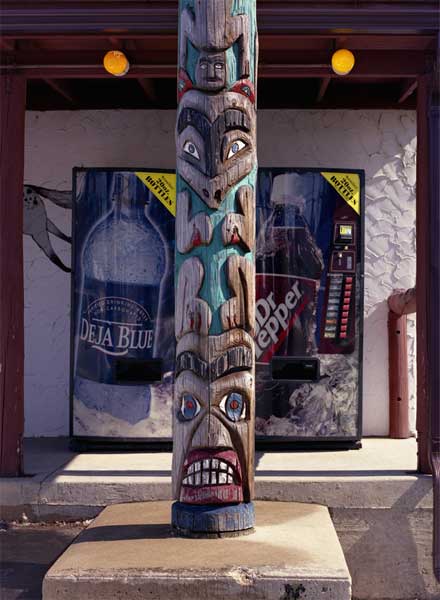
The images are well known: totem poles, tomahawks and feathered headdresses are symbols we associate with American Indian culture and, more disturbing, with the essential identity of American India Continue Reading
CORRECTION 12/20/2012 – On Tuesday, Jay Thomas Bad Heart Bull was named president and CEO of the Native American Community Development Institute (NACDI). That very same day, the Greater Minneapolis Council of Churches announced that Patina Park would become executive director of its Division of Indian Work (DIW).NACDI’s board of directors has been seeking a new president and CEO since that organization’s founder, Justin Huenemann, departed earlier this year. DIW has been involved in a similar search process. Its board had set a goal of having a new executive director hired by year’s end.Jay Thomas Bad Heart BullRobert Lilligren, Minneapolis City Council vice president, serves as NACDI board chair. He praised Bad Heart Bull as a “strong, dynamic leader,” and “a young, positive member of our community who has the skills and experience to take NACDI to the next level.”In announcing the selection of Park, Noya Woodrich, president and CEO of the Greater Minneapolis Council of Churches, cited Park’s “stellar” organizational management and fundraising abilities. Continue Reading
In 2012: The Musical, New Native Theatre (in collaboration with Bedlam Theatre) takes a look at our current society, and the state of Native American people, through the eyes of future generations. It’s an ambitious work that mixes broad physical humor, hope, sarcasm, and some great music. Written by Rhiana Yazzie with Inez DeCoteau and Andrea Fairbanks—and featuring original music by Marisa Carr—the play is directed by Yazzie and Maren Ward, with musical direction by Peter Morrow.
Deanna StandingCloud, a parent coordinator with the Minneapolis Public Schools, said that getting parents involved at Anishinabe Academy, a school focused on using Native language and culture to support academics, can be tough. Sometimes, parents ask not to meet at the school, due to mistrust of schools and institutions in general. “There’s not a sense that the school belongs to us,” she said. That’s in addition to other factors such as parents being really busy, and other issues like transportation.The distrust of schools, and perhaps the feeling that traditional school settings don’t understand or value the unique identity of Native students are reasons some parents choose to send their children to Anishinabe Academy.Among the many atrocities inflicted on American Indian people in the United States, perhaps one of the most devastating is the role of Christianity and religion in the missionary work and boarding schools that sought to destroy Native culture. Historical texts and oral histories tell us gruesome stories of how children were ripped from their homes, and forced to give up their traditional values, language and beliefs.Though boarding schools, thankfully, are a thing of the past (at least in Minnesota), many American Indian social workers and academics talk about the role of historical trauma in creating societal problems even generations after the abuses occurred.StandingCloud herself has two kids who attend the school — one in eighth grade and one who attends High Five, a new all-day Pre-K program using Ojibwe and Dakota language immersion. Continue Reading
ByMatthew Loges, Taleeyah Vizenor, Aaron Thomson, Christopher Barney, and Alicia Richards (MN Videos) |
This documentary is about the Dakota War of 1862 and the 150th anniversary. There are interviews with Dan Spock, Director of the Minnesota Historical Society. Continue Reading