MN VIDEOS | Past present future
|
This video is about the history of how the Minneapolis American Indian community started and how it was formed by our Native Elders after relocation. Continue Reading
Twin Cities Daily Planet (https://www.tcdailyplanet.net/tag/indigenous-community/page/7/)
This video is about the history of how the Minneapolis American Indian community started and how it was formed by our Native Elders after relocation. Continue Reading

On a beautiful and sunny Saturday afternoon on September 15th, the Minneapolis Central Library invited artist and historian Scott Seekins to display and discuss his latest work in response to cultural and religious aspects of the 1862 Dakota War. This presentation helped to promote a challenging view of the government policies, practices, and behavior of religious organizations through the artwork and media releases, such as Governor Ramsey’s public attempt at Genocide against Native Americans in Minnesota. The main presentation and description of this ‘theme’ in his art was insightful and helped this author explore more detailed facts of the racism and hostile causes of this inevitable and tragic war. As we take time to ‘celebrate diversity’ after more than 150 years of Statehood we are reminded of our continual struggles for unity still happening today in “A very polarized city” (Scott Seekins). As I spoke with the artist, my own ignorance of Little Crow, The Concentration/Prison Camp at Fort Snelling, Native American “War-Brides” and other facts became more and more evident. Continue Reading
Some bad news – KFAI recently had its board meeting & just hired a new Director who used to work for Minnesota Public (corporate) Radio. They have taken First Voices Indigenous Radio off the air & replaced it with a Chican@ community program on Sunday afternoons…Free Speech ZoneThe Free Speech Zone offers a space for contributions from readers, without editing by the TC Daily Planet. This is an open forum for articles that otherwise might not find a place for publication, including news articles, opinion columns, announcements and even a few press releases. Tiokasin Ghosthorse’s program needs to come back to KFAI, because he addresses imperialism, not just the surface issues! In his excellent book on media, Dr Bob McKesnie famously said that by the late 1920s resources of mediocrity have begun to make their influence felt in radio. In the early 20’s, Radio Showed its unlimited potential for good. In fact the first lecture ever given on the air was in 1921. Thus 90 years ago we realized that broadcasting could be a force for good. But by the late 20’s, commercialism began to rear its ugly head. Even though we had many decades and many examples of excellence in broadcasting, there was always the danger that we would be pushed backward & downward by greed, the race to the bottom, the lowest common denominator, call it what you will… In our own time, here in the Twin Cities, we are engaged in such a struggle. Continue Reading
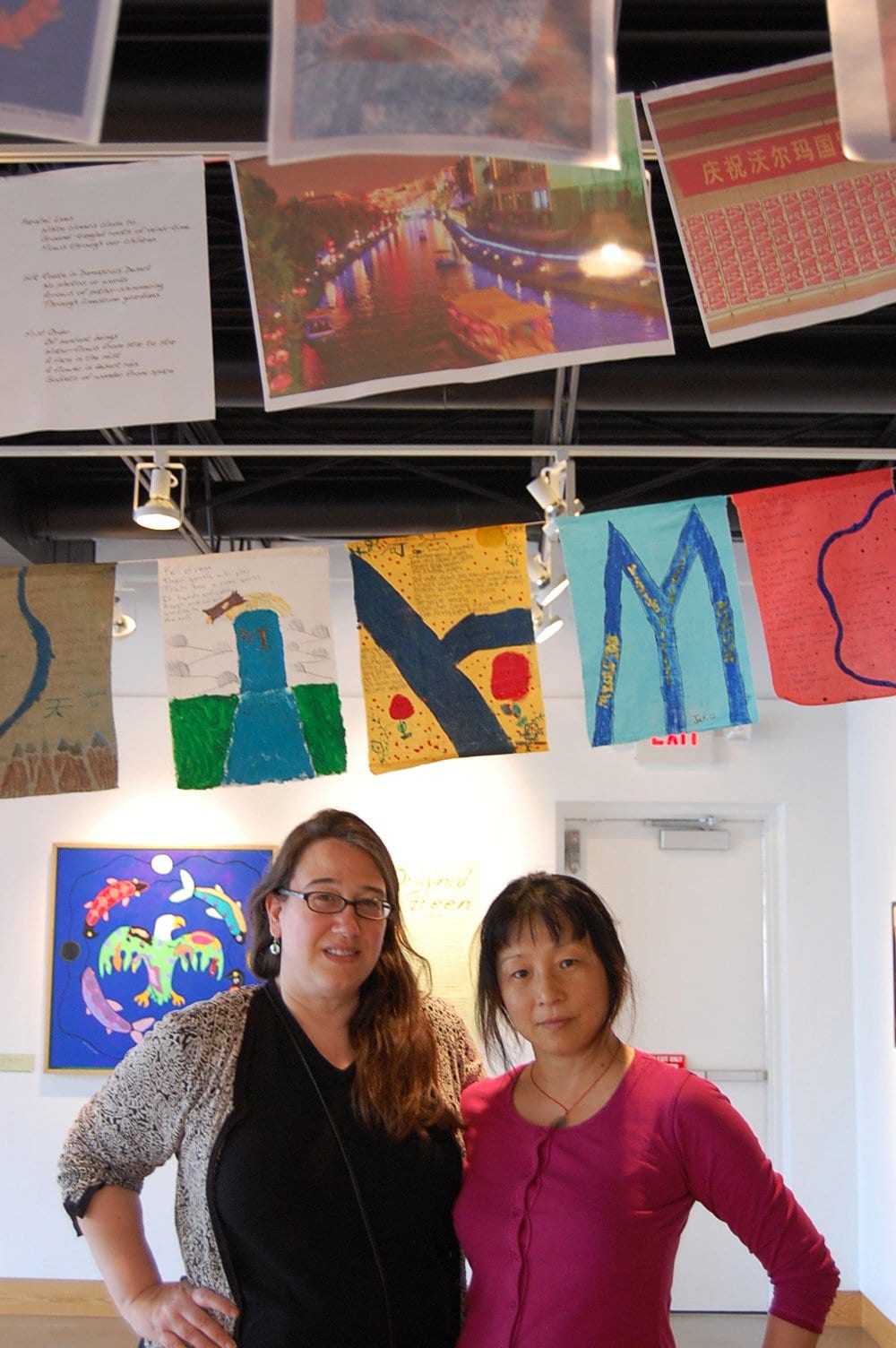
There was a confluence of river artists on Friday, May 13 at the All My Relations Art Gallery on Franklin Avenue in Minneapolis.

The room hums with the sound of mechanical kidneys beeping, whirring and buzzing. Archie Shinaway is hooked up to one of the dozen hemodialysis stations at FMC Dialysis Clinic in Ashland, Wis. He is among many regulars at the clinic from the nearby Bad River Indian Reservation, home to 1,500 members of the Bad River Band of Lake Superior Chippewa, along Lake Superior.
Part 2 of 3 articles. Like others sitting back in the vibrating, heated easy chair for the draining four-hour dialysis treatment, Shinaway’s kidney failure is a consequence of type 2 diabetes. Shinaway’s only hope of ending this debilitating process is a successful kidney transplant. Continue Reading

This time of year kids in the Twin Cities typically celebrate the end of school with a field trip to Valley Fair amusement park or the Minnesota Zoo. But for the past two years many American Indian students, teachers, and community members have forgone those outings in favor of the Mde Maka Ska Canoe Nations Gathering, an event that combines traditional teachings about the waters with hands-on canoe experiences.The gathering, according to its organizers, is a meant to seed the resurgence of Native canoe culture in a region with a rich history of water-based peoples. “This is a way to reattach ourselves to our culture,” says LeMoine LaPointe, Director of Healthy Nations at the Minneapolis American Indian Center, coordinator of this year’s gathering. “If we never make these health giving connections, we may never again associate ourselves with those elements, such as water, which are essential to our culture.” Mde Maka Ska is Dakota for White Earth Lake, the original name of Lake Calhoun, one of the lakes in the Minneapolis chain. Continue Reading
It started as a peaceful, passionate rally against Arizona law SB170 in support of Hispanic Minnesotans and in support of the Dakota people claim to Fort Snelling. One group left from the Whipple Building on the airport grounds, the other came across the bridge from Mendota. After the rally a group entered the visitor’s area of the Fort and refused to leave. There was no violence. Outnumbered by police officers and threatened with confinement over the long weekend, the group left and promised to return. Continue Reading

May is American Indian Month. This may or may not be a meaningless exercise (why just one month to recognize the contributions and issues facing many of our communities of color?), but the Native community here is making the most of it with plans for the American Indian Cultural Corridor. (Audio File below.)
But events are just part of life in the city for our Native Americans brothers and sisters – some good, some far too challenging for many to survive the poverty and racism that still mitigates against tribal cultures’ attempts to remain sovereign and self-sufficient. TTT’s ANDY DRISCOLL and LYNNELL MICKELSEN talk with a few local Native activists and city officials about Indian life in the urban core and prospects for a prosperous future. • LAURA WATERMAN WITTSTOCK (Seneca) – Writer/Consultant; Retired Executive Director, Migizi Communications; Co-Producer/Host, First Nations Radio (Sundays on KFAI)
• GARY SCHIFF – Minneapolis City Councilmember (Ward 9)
• MICHAEL GOZE (Ho-Chunk) – CEO, American Indian Community Development Corporation (AICDC)
• JUSTIN KII HUENEMANN (Navajo) – President/CEO,Native American Community Development Institute (NACDI) Continue Reading

The room is baby friendly. It has carpeted ramps for babies to crawl on and explore. It has lots of toys and a small pit filled with soft, brightly colored balls to roll in. The lower walls are lined with mirrors to gaze at; the upper walls have murals of birds and stars. Most important, there are plenty of adults playing at kid level. Continue Reading