When Sal Kravik became a vegan 12 years ago, she didn’t eat the way she does now.”When I first changed my diet … there were so few options,” Kravik said. “Vegan cheesecake was not a thing.”Now Kravik volunteers for Compassionate Action for Animals (CAA) and wants people to understand that living the vegan lifestyle doesn’t mean eating bad tasting food. And the word is spreading.The nonprofit, which advocates empathy for animals and a move towards plant-based diets, held their third annual Twin Cities Veg Fest on Sept. 28 at the University of Minnesota with record high attendance. About 2,300 people attended the festival, which hosted a variety of vegetarian and vegan vendors.The Herbivorous Butcher, which creates vegan substitute meat, made their debut at Veg Fest this year. Continue Reading
A new study this week from the Institute for Women’s Policy Research shows that more than a third of Minnesota’s workforce still lacks access to paid sick days.The study, which gathered and analyzed data from government surveys like the 2012 National Health Interview Survey and the 2012 American Community Survey, revealed that 41 percent of Minnesota’s workers lack access to paid sick days. According to the report, low-income workers, part-timer workers, Hispanic workers and service industry workers have the lowest access to paid sick leave in the state.“Sixty percent [of] Hispanic workers lacked access to paid sick days versus the 41 percent for the state average,” said the report’s lead author Jessica Milli. “That’s a huge disparity right there.”Milli said the data they analyzed revealed large disparities between different occupations and categories, with service industry workers having the lowest rate of access.According to the study, only 35 percent of service industry workers in Minnesota have paid sick day benefits, while 84 percent of workers in computer, engineering and science fields have access to paid sick days. The management, business and financial fields also share high rates of access with 80 percent of those workers having paid sick leave benefits.Service industry jobs include ones like food industry, daycares, and personal service and accommodation jobs, Milli said, which is particularly problematic when it comes to lacking paid sick leave benefits since those workers are the most likely to spread illness.“Not only do 40 percent of workers in general lack access [to paid sick leave],” she said. “But those workers who lack access are predominately workers in service occupations with frequent contact with the public.”It’s common that service industry workers come into the workplace sick, she said, because they can’t afford to take the day off, and it puts their customers and other employees at risk of getting sick too.The study also shows disparities between different income levels. Continue Reading
When it comes to food shelves in Minneapolis, halal food is hard to come by. But a group of Somali women want to change that. Isuroon, a local nonprofit that works to develop the health and empowerment of Somali women, is asking the city to help develop a new food shelf that provides healthy, ethnic food to the Muslim community living in South Minneapolis. The nonprofit, along with dozens of community members, are asking the city to allocate $150,000 to fund the new food shelf as a start-up. “As a Somali community, we cannot use some food shelves,” said Isuroon member Waris Mohamud. Continue Reading
The Minneapolis City Council unanimously passed a resolution and an ordinance change on Friday allowing businesses to have gender neutral, single-use restroom facilities. The issue was raised by the Minneapolis Transgender Issues Work Group.
Think you don’t need to worry because you already have health insurance? Think again: insurance companies keep changing the game. Three stories give reasons to think twice about your insurance: Preferred One’s pull-out, higher costs with “automatic” renewal, and sneaky drug price increases. Continue Reading
According to the 2010 U.S. Census the eight largest Asian American populations in Minnesota are the Hmong, Asian Indian, Chinese, Vietnamese, Korean, Filipino, Laotian, and Cambodian communities. Specifically, 27 percent of the total population identify themselves as Hmong, 15.5 percent are Asian Indian, 11.7 percent are Chinese, 11.1 percent are Vietnamese, 4.9 percent are Laotians, and 3.9 percent are Cambodians (Figure 2). Continue Reading
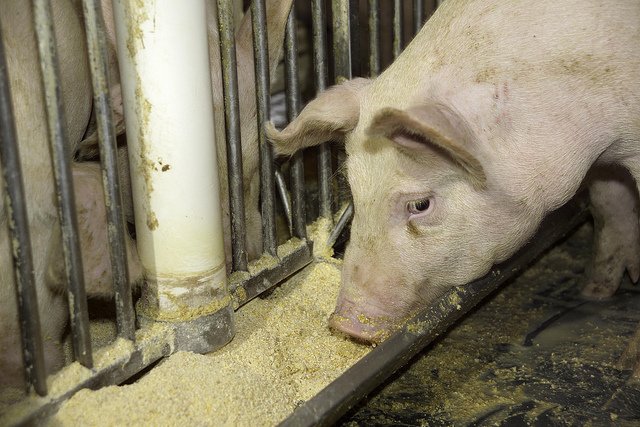
How much would you pay for a pork chop that was two percent leaner? Would you eat such a pork chop if nanoscale minerals were mixed into the hog feed to achieve that two percent reduction? Such questions are before the Food and Drug Administration (FDA) as it considers what to advise the animal feed and mineral supplement industry about their efforts to incorporate atomic- to molecular-sized materials into feed. Continue Reading
As the number of Ebola cases in West Africa continue to increase to more than 2,000 according to the World Health Organization (WHO), the Minnesota African Taskforce Against Ebola, formed by the African community on Aug. 5, is gathering medical supplies and equipment to ship to West Africa.
Not everyone thinks about their food as art, but one St. Paul artist is using art to spread awareness about food access issues in his neighborhood. When artist Seitu Jones looked out the window of his apartment in Frogtown, he noticed many people in his neighborhood were buying their groceries from the local convenience store. It was a revelation to him, and he decided he wanted to do something about it. On Sept. Continue Reading