Changing lives, one mom at a time

Deb Avenido’s 15-year-old client faced big problems. “She was homeless with her mom and her brother through her whole pregnancy. They would stay at a family shelter for a month – that’s as long as they could stay there. Then they’d go to a motel or to a friend, and then back to the shelter.” Continue Reading

TCE lawsuit inches on, Southeast Como organizes outreach

While Southeast Como neighborhood residents’ concerns about harmful vapors in their homes continue to linger, a lawsuit against General Mills is moving forward.On Friday, the U.S. District Court for the District of Minnesota heard the case against General Mills, in which a few neighborhood residents claim the company put locals’ health and the value of their homes at risk by dumping TCE, also known as trichloroethylene, in the area for 15 years.At Friday’s hearing, General Mills argued that it was not the only company that previously dumped toxins in the neighborhood, noting that the site was an industrial area when the company occupied it in the mid-1900s.The residents’ lawyers said at the hearing they aren’t looking to prove that the company’s dumping was the only source of the TCE pollution, but instead that it was the main source.The three residents are seeking a class-action lawsuit, which would unite all residents who live in the affected area with the same claim. If approved, the lawsuit could include nearly 400 homes, and residents would have the option to opt out.The case’s judge, U.S. District Judge Donovan Frank, will make the decision of classifying the case as a class-action lawsuit, along with choosing which homes are included in the case, based on expert testimonies.The decision will come in 60 days, he said at Friday’s hearing.If the case doesn’t receive class-action certification, residents wishing to sue will need to pursue individual lawsuits. But Michael Hayes, a lawyer representing the residents, said that option would be too expensive for most residents.Additionally, General Mills asked that the judge dismiss two expert testimonies on Friday, citing that their methods of research on the area were “unreliable.”Though the residents will continue with the case, Frank encouraged both sides to settle outside of court.“Let’s find a way to save time and money without the court,” he said at the hearing.Neighborhood leaders hear resident concerns Nearly a year after the state’s department of health and the Minnesota Pollution Control Agency sent letters to Southeast Como residents informing them of the potentially harmful vapor intrusions in their homes, permanent cleanup efforts haven’t started.Ward 2 City Councilman Cam Gordon, who represents parts of the University area and Southeast Como neighborhood, said residents have continuously expressed concerns about their health and the value of their homes and are asking when permanent cleanup will begin.“[Residents] want to see the big solution, where they actually get rid of [TCE vapors] permanently,” he said.Last week, the Southeast Como Improvement Association held its first TCEducate lecture series in hopes of increasing residents’ knowledge about the issues surrounding the TCE contamination.SECIA neighborhood coordinator Ricardo McCurley said the lecture series will cover topics like cleanup tactics and the legal process of class-action lawsuits.He said the discussions aim to help educate residents and make them feel more comfortable about the situation.“Something like this that is affecting your home, your health [and] the health of your loved ones is a very difficult thing to talk about,” McCurley said.SECIA will hold its next lecture late next month.The Minnesota Pollution Control Agency is currently reviewing General Mills’ plan to clean the area and find the source of TCE. The working plan, which includes opportunities for residents’ input, doesn’t include cleanup strategies until late 2015.McCurley said SECIA wants residents to have sufficient information about the work plan so that they can make educated comments on it. Continue Reading

The difference a prosthetic can make

I am well aware that if I had been born in a different time or place my life would not be what it is. I might point to my eyeglasses and reference my very poor unassisted vision as one way my life would have been quite different if I’d been born a few hundred years ago. But I think that my prosthetic arm is the more obvious tie to the modern era that I rely on regularly. Continue Reading

Minneapolis mulls gender neutral restrooms

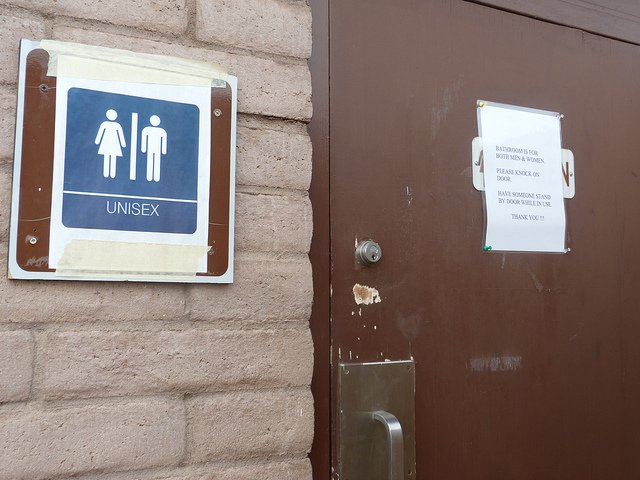
An antiquated Minneapolis code relating to the service industry forces many businesses to have gendered restrooms, but a policy change passed by a city committee could change that.At the Health, Environment, and Community Engagement Committee meeting on Monday morning, community members voiced their support for change to city code that would allow businesses to make their facilities more accessible for transgender customers.Tom DeGree, owner of Wilde Roast Cafe and Matties on Main, testified about the challenges his business has faced as it has expanded.DeGree noted that ten years ago when he and his partner opened Wilde Roast Cafe, a LGBT coffee shop in northeast Minneapolis, the business was able to have two nongender bathrooms.“A lot of the transgender community found us as a safe place, and from an economic stance, it’s best to have people have a safe place,” he said.But as business grew and they opened Wilde Roast in a new location on the riverfront, the business bumped up against the city code.The new building “had two predetermined bathrooms. A lot of people from the transgender community didn’t feel as comfortable and voiced their concerns.”When DeGree opened Mattie’s on Main earlier this year, they decided to buck the city code.“We were told by the city that we had to have very specific bathrooms that had male and female on them,” he said. But the business decided to go ahead with gender neutral bathrooms. “When we opened up and went forward with business in May, we just did it.”Council member Cam Gordon quipped, “I don’t think anybody [from the city] is going to come after you.”The proposed city changes would mean non-gendered, single-user restrooms can be put in place of gendered facilities for small businesses.Many testifiers noted that making restrooms trans-friendly actually makes them friendlier for just about everyone.Dylan Flunker, a transgender parent of a 3 year old, noted, “Before I was able to medically transition, I had a lot of uneasy bathroom experiences.”“When using the appropriate bathroom for your gender, people would say, ‘What are you doing?’” Flunker said it was “a very uneasy 3-4 year period of my life where I did not use public restrooms.”Now, as a parent with a 3 year old, Flunker notes that single use, gender neutral facilities are great for parents.“When 3 year old has to go, she has to go and single stall bathrooms are the easiest for us to access.”Claire, male-to-female transgender woman, relayed her experiences.“With obvious issues of me being transgender and using gender specific bathrooms… I have been accosted and threatened in male bathrooms, and questioned and peaked on in female bathrooms. Technically, I’m not allowed in anybody’s bathrooms.”Claire noted that many of Minneapolis’ suburbs allow for gender neutral restrooms. “I think it’s time Minneapolis caught up with the suburbs and do what needs to be done.”She also noted that she has three children with disabilities and one is a teenager. That makes it difficult to use gendered facilities.The proposed changes passed the committee unanimously. They were proposed by City Council member Andrew Johnson of the 12th Ward. He’d been working on the issue accessible restrooms before he ran for office.Johnson said, “It’s a great ordinance…. Continue Reading