Daniel Lattier: It’s time to decentralize our schools

When I discuss the problems in Minnesota’s education system with others, I frequently reference one telling statistic more than any other.No, it’s not proficiency scores; and it’s not graduation rates.It’s the fact that, over the past 70 years, the number of school districts in Minnesota has decreased by 96 percent! In 1947, there were 7,607 school districts in Minnesota. Today, there are just 328.This is a Community Voices submission and is moderated but not edited. The opinions expressed by Community Voices contributors are their own and do not necessarily reflect the opinions of the TC Daily Planet.The 96 percent decrease in Minnesota school districts roughly mirrors the trend toward educational centralization that happened across America over the last century.Presumably, a desire for efficiency drove this dramatic effort to centralize Minnesota’s and America’s education systems. Districts were increasingly consolidated (and they’re still being consolidated today) under the guise that we could better assure the education of our youth.But here’s the thing: centralization is not synonymous with efficiency. Sometimes centralization results in greater efficiency; other times, it acts as an obstacle to efficiency.And today, our increasingly centralized education system is more often than not a beacon of inefficiency. Continue Reading
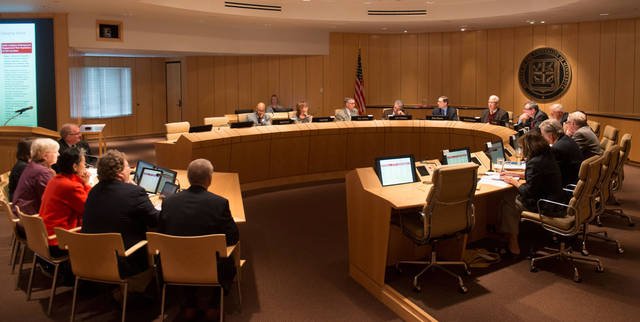
In the interest of whom?

September is the time I miss teaching the most. It is the time when hope reigns, or at least makes itself felt. It is the time when students vow to try harder, teachers bring summer ideas for their classrooms, stay until after their own family’s dinner hour to set up something new. Some years this feeling continues until June, with parents who help out, families who pitch in and a good principal. It will never be perfect. It will never be precise. Teaching is an art, learned the way all arts are learned through trial and error, instincts honed over time, and with practice. I have been reading Mike Rose’s book The Mind At Work: Valuing the Intelligence of the American Worker. I see similarities in our struggles as classroom teachers and aides with those who work in service professions: waiting tables, clerking in an office, serving as a receptionist, or delivering packages. In many ways teachers do all those things, and at times, do them simultaneously. In addition to organizing a classroom, we teach thirty to forty human beings, many times in five different classes each day. By the afternoon we have seen between one hundred and fifty to two hundred students. We have guided them to their desks, laughed with them while standing by their chairs as they devise a marvelous question, picked up books for them at the library, kept track of their work and participation. In some classrooms we play music to welcome them, in others we are at the door, shaking hands, commenting on new hairstyles, a great game the night before, a fine essay written for college admissions. After they have left we have sat at our desks grading papers. Continue Reading

Waiting for superpolicy

One of the themes running through 2010’s Waiting for “Superman” and many branches of education reform rhetoric is the notion of a “sense of urgency.” It’s the idea that the issues in our school system (whatever the speaker may have diagnosed them as being) are so pressing and so immediately hurting kids that we must change them dramatically and as quickly as possible. But can that be counterproductive? Is it true, as Matt DiCarlo of the Shanker Institute has written, that “kids can wait for good policy making”? Continue Reading

Four school stories to follow: What were they thinking?

A no-bid contract for $375,000 between Minneapolis Public Schools and an organization that barely exists. Programs that actually work to close the achievement gap. A change in St. Paul school start times. A strategic plan that is neither strategic nor a plan. These stories-in-progress involve our kids and our money, which is reason enough to start following them. Continue Reading

Hiawatha Academies acquiesce to parent pressure; new school to open next fall

When Cynthia Smith was told Hiawatha Academies wouldn’t be opening their high school until 2019, she felt deceived. With her daughter entering eighth grade, Smith needed to know her child had somewhere to go next year — something she said Hiawatha had promised to provide when her daughter first enrolled there.But ramped up parental pressure has led Hiawatha Academies, a network of public charter schools, to work quickly toward opening a new high school in time for the inaugural class that just started eighth grade to attend. Hiawatha Academies announced last month that their new high school, Hiawatha Collegiate High School (HCHS), will open next fall. It will be the fourth charter school in the network. Officials have yet to pick a location for the school.“When I found they wouldn’t have high school, I was upset,” Smith said. Continue Reading

Photo essay captures bizarre phenomenon of college move-in week

Last week photographer Wendy Schreier witnessed something many college students overlook entirely. Her latest photo essay captures the bizarre phenomenon of move-in week.Originally from Northeast Minneapolis, Schreier moved to the Marcy Holmes neighborhood last April and was astounded by just how much furniture, clothing and general household items littered the streets and curbsides last week as University of Minnesota students moved into their new homes.“It was just a funny transition to see because I grew up in Northeast and lived in Roseville for a really long time,” Shreier said. “And unless you live in this neighborhood you don’t know that this happens, and it’s crazy. The whole neighborhood moved at once.”Schreier said she became frustrated with how much seemed to be going to waste despite seeing several signs for university programs aimed at recycling old furniture and reusable household items. So, she set out on foot and documented the discarded couches, mattresses and televisions in a photo essay she titled Left Behind – A neighborhood moves.But not all those items went to the dump.Last year, Pack & Give Back recycled almost 70,000 pounds of household items from students living on and around campus, said sustainability coordinator for University Services Stacey White. The University of Minnesota program, which works with the city of Minneapolis, collects reusable household items in Marcy Holmes, Southeast Como, Prospect Park and Cedar-Riverside neighborhoods, and then redistributes them for free to students who can use them.The program collects the discarded items before the city collects its trash, White said, but not all the items can be used. Continue Reading