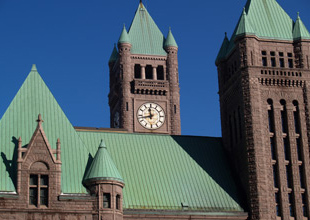
Dynamics of the Minneapolis mayoral race
|
If Minneapolis Mayor RT Rybak decides not to run for a fourth term, 2013 is going to be an interesting year in our fair city. Otherwise, not so much. Continue Reading
Twin Cities Daily Planet (https://www.tcdailyplanet.net/category/corrections/page/17/)
If Minneapolis Mayor RT Rybak decides not to run for a fourth term, 2013 is going to be an interesting year in our fair city. Otherwise, not so much. Continue Reading
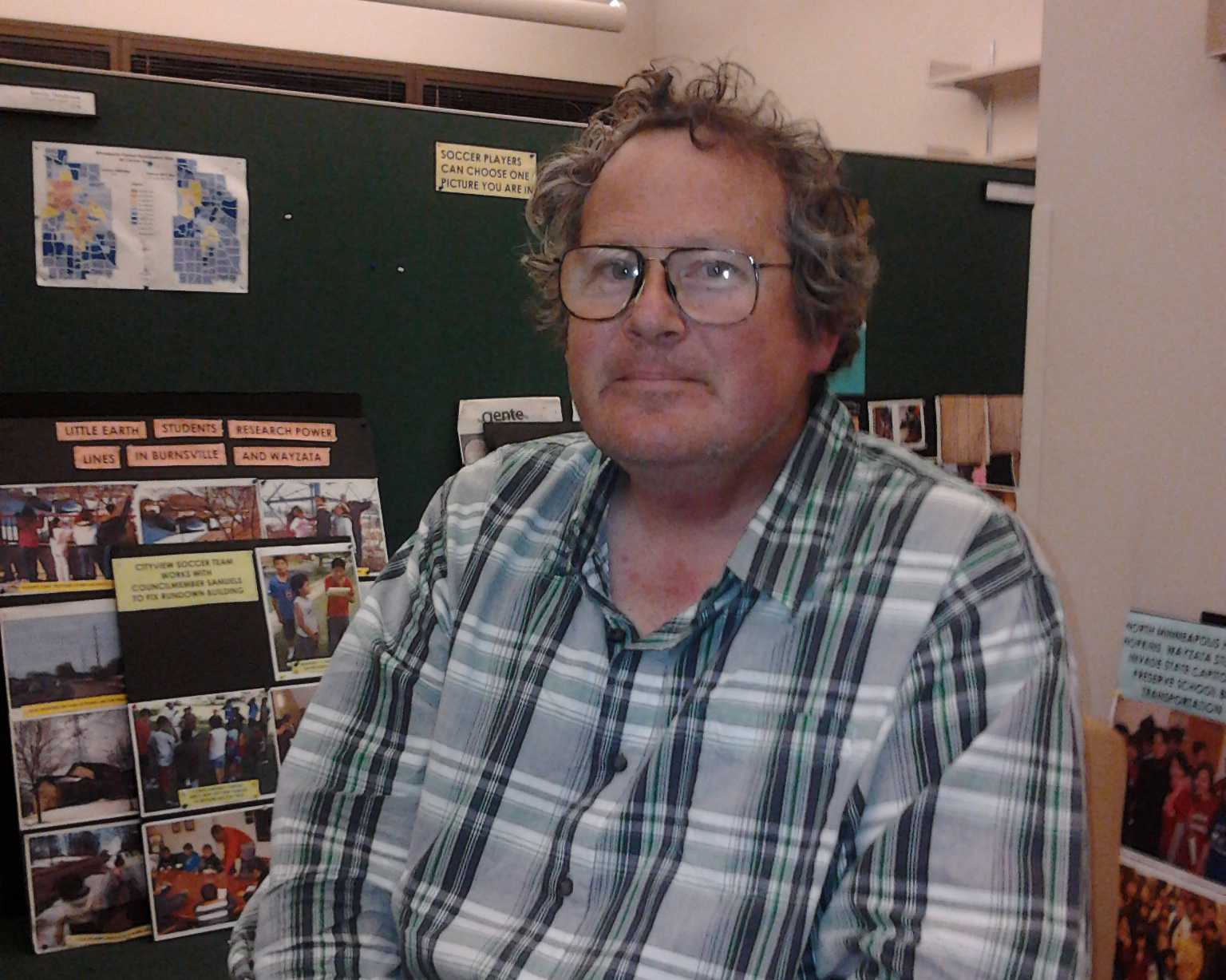
Jay Clark, the Director of the Minnesota Center for Neighborhood Organizing (MCNO), a program of the University of Minnesota’s Center for Urban and Regional Affairs (CURA), thinks that everybody should be involved with their neighborhood group, whether they are rich or poor. “It’s so American and so needed and not done in a lot of contexts,” he said. As opposed to other kinds or organizations, where people are preselected depending on their ideology or belief, neighborhood groups allow a voice for every person. “We need it badly,” he said. “There are too many forces that pull us apart.” Neighborhood groups “work on issues that affect your life,” Clark said, “as well as huge issues.” Whether you have a drug dealer next door, or a missing stop sign at the end of the block and people are getting into accidents, neighborhood groups work on those important issues, and get people involved who aren’t normally involved. Clark decided to become a community organizer when he was attending graduate school at the University of Chicago, studying history, and living in Hyde Park. Continue Reading

Shelly Martin handed her cell phone to her 9-year-old niece. On the other end was her father, who had been waiting in line to use the only available phone. They greeted each other and began to talk — perhaps he asked how school was and she asked when she would see him next. Then conversation ended abruptly. Her niece cried, “Why did daddy hang up on me? Continue Reading

One of the first things you notice are the tats: 42 of them in all – and more to come for, as Danny Klecko explains, “Being Polish, I don’t always share my feelings and I guess that’s my way of doing it.””As my wife will tell you – when I’m pissed off, I head to the parlor.”Polish or no, these days Klecko, the CEO of St. Agnes Bakery in St. Paul, has found a whole new avenue of personal expression: poetry and literary publishing. He still maintains his other careers: celebrity baker — among other gigs, he’s appeared on Martha Stewart’s radio program — social entrepreneur and founder of the St. Paul Bread Club, and author (his most distinctive tattoo is the ISBN of his book of dog biscuit recipes, K-9 Nation Biscuit Book: Baking for Your Best Friend, published by the Minnesota Historical Society.)Conversation in Silenceby Danny KleckoI took you to the playground at nightSo you could have the swing set to yourselfYou said – Push me higherPush, me higherAnd I didThe chains began to creakYour body became a blurSilhouetted against the starsA tiny frame whooshing like a cometThere’s going to be hell to payWhen Grandma discovers our adventureExplanations will be pointlessYou said – Push me higherPush, me higherAnd I didBecause nothing is more beautifulThan the glowing faceOf a granddaughterWho smiles backAt the moon“I like to tease him that he embodies both humility and self-reflective qualities with being a megalomaniac,” says Alison Aten at the MHS, who met Klecko when she publicized his book and went on to become personal friends with him. Continue Reading

On an unseasonably warm November Saturday, participants in the 2012 Dakota Commemorative Walk traveled from their lunch stop at the Treaty Site History Center, just north of St. Peter, toward Henderson. The grass at the side of Highway 169 was drained of color, dry and crunchy underfoot. A steady hum of traffic shot by the procession of marchers and slow moving cars on one side while the Minnesota River was visible on the other. On the horizon, bare branches of oak and cottonwood trees stood out against blue sky.The Dakota Commemorative Walk remembers and honors the 1,700 Dakota women, children and elders who were forcibly marched 150 miles by U.S. military troops from the site of the present-day town of Morton to Fort Snelling. Continue Reading
November 9, 2012: The final three Minneapolis precincts have been counted and reported, and the winner of the District 4 school board seat is Josh Reimnitz. The unofficial but complete count came in on Friday, after a hand count of three precincts where a defective border on the ballot prevented machines from counting the ballots. The tally was 12,241 for Josh Reimnitz and 11,512 for Patty Wycoff, as posted on the Secretary of State’s unofficial results page. According to the Secretary of State’s website, state and district vote totals reported on the site “are unofficial until the state canvassing board meets on Tuesday, November 27, 2012 . County results are unofficial until canvassed by the county. Municipal and school district results are unofficial on this site.” x x x x x x x xNovember 7, 2012: In the Minneapolis school board contest, while initial results on the Secretary of State website showed Teach For America alum Josh Reimnitz winning, that may not hold. Continue Reading

The morning after: Obama has four more years, but he’ll still be contending with a Republican House of Representatives. Governor Mark Dayton, however, faces the remainder of his term with a DFL House and Senate — a complete turnaround. Minnesotans rejected both the Marriage Amendment and the Voter ID Amendment by convincing margins. Except for Rick Nolan’s defeat of Chip Cravaack in the Eighth Congressional District, incumbents held their places, though Michele Bachmann’s narrow win in the Sixth may mean a recount there. What do you think about the election results? Share your responses in a quick video here. It’s easy! Continue Reading
CORRECTION 10/31/2012 – Confronted with a short deadline, my adventures into ethnic food took me to foodways of my ancestors (at least some of them).

As an Asian, I am always enthusiastic about Asian food. Living in Minneapolis for two years, I saw many Chinese, Korean, Japanese, Indian, Vietnamese, and Thai restaurants around the metro area, but I had not seen or even heard of any Hmong restaurant. I know there is a large Hmong population in Twin Cities. So, I wondered, what do Hmong people eat and where do they eat?
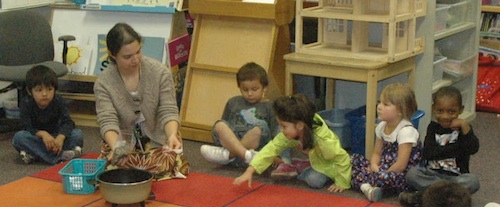
Deanna StandingCloud, a parent coordinator with the Minneapolis Public Schools, said that getting parents involved at Anishinabe Academy, a school focused on using Native language and culture to support academics, can be tough. Sometimes, parents ask not to meet at the school, due to mistrust of schools and institutions in general. “There’s not a sense that the school belongs to us,” she said. That’s in addition to other factors such as parents being really busy, and other issues like transportation.The distrust of schools, and perhaps the feeling that traditional school settings don’t understand or value the unique identity of Native students are reasons some parents choose to send their children to Anishinabe Academy.Among the many atrocities inflicted on American Indian people in the United States, perhaps one of the most devastating is the role of Christianity and religion in the missionary work and boarding schools that sought to destroy Native culture. Historical texts and oral histories tell us gruesome stories of how children were ripped from their homes, and forced to give up their traditional values, language and beliefs.Though boarding schools, thankfully, are a thing of the past (at least in Minnesota), many American Indian social workers and academics talk about the role of historical trauma in creating societal problems even generations after the abuses occurred.StandingCloud herself has two kids who attend the school — one in eighth grade and one who attends High Five, a new all-day Pre-K program using Ojibwe and Dakota language immersion. Continue Reading