The Method Gun, the work by Rude Mechs that’s currently opening the Walker Art Center’s 2013 Out There series, is a mockumentary-style tribute to the fictional theater guru Stella Burden. Like the films of Christopher Guest (This is Spinal Tap, Waiting for Guffman, Best in Show, A Mighty Wind), The Method Gun both pokes fun at and pays tribute to its subject—in this case, collaboratively created theater.Burden, we’re told by the Rude Mechs performers, was an American theater artist who developed a cult following in the 1960s, then abruptly disappeared in 1972, leaving her troupe in the midst of a nine-year rehearsal period (Burden believed in giving a production plenty of time to find itself) for the single 1975 performance of what was to be their final show: Tennessee Williams’s A Streetcar Named Desire, performed without the characters Stanley, Stella, Blanche, or Mitch. The Method Gun includes descriptions of Burden’s method as well as recreations of both the rehearsals and performance of Streetcar.The show’s title refers to a loaded pistol that Burden habitually kept in the rehearsal space “to remind us that we could all kill each other at any moment.” Just how literally she meant that is a question that becomes highly pertinent near the end of the show. It’s one of many absurd theatrical devices imagined by playwright Kirk Lynn and portrayed with energy and dry humor by the five (or six, depending on how you count) performers onstage. There’s a dance with packing tape, an all-cast crying practice, and an unforgettable moment involving nudity and helium balloons.The Method Gun culminates in a vignette of virtuoso theatricality, precisely choreographed by director Shawn Sides. Continue Reading
The most useful and popular of our theater, music and film critics arguably see and reflect on too much stuff too frequently. A reviewer’s fatigue-fogged lens and carpal tunnel syndrome can both mug a great play or canonize a pile of digital kitsch on an IMAX screen. As a suburban cul-de-sac dweller, I don’t see much and am not vulnerable to these trap doors. Because some of the few live performances I have seen are very notable but have slipped through cracks, I here provide, for your consideration dear possums, my 2012 list of memorable performances including a one act play, a DFL banquet, a funeral service, music ensembles and a video. ZEITGEIST / NIRMALA RAJASEKAR, 2/11/12, St. PaulThe new music ensemble, Zeitgeist, regularly teams up with other inventing and accomplished musicians in their Lower Town, Saint Paul performing space, Studio Z. On the recommendation of my colleague and Zeitgeist Board Member Craig Sinard, my wife Carol and I attended a Zeitgeist concert-seminar of sorts in February featuring composer Nirmala Rajasekar. Rajasekar is an internationally acclaimed virtuoso and teacher of a 7-string, plucked, South Indian, classical instrument called a Saraswati veena. We arrived a bit late, which in Minnesota – home of the crowded back pews – means that the tardy get the front row seats. Such was the case that evening. We quietly maneuvered into forward positions about seven feet from Ms. Rajasekar who was positioned cross-legged on the floor with the large, lute-like instrument. A menagerie of instruments and Zeitgeistians Heather Barringer and Patti MCudd (percussion), Pat O’Keefe (woodwinds) and Shannon Wettstein (piano) fanned out behind her.The ensemble’s sound was at once exotic, tropical, familiar and fun. The veena family of instruments, we learned, is counterpart to the sitar of Northern India, but evolved from a South India Carnatic tradition with distinct rhythms and human voice-like harmonics and tones. The veena played by Ms. Rajasekar has a large, carved wood resonator – a large bowl set on the floor against her right thigh, that tapers into a hollow, 4-foot long neck. The neck supports a 24-fret, fingering board and a smaller gourd-shaped resonator that rests on top of the left thigh. An ornate, down-curving tuning box culminating in a dragon’s head, and a rank of 4 main strings and a rank of 3 “drone” strings stretched over their respective bridges complete the instrument. The Saraswati veena, we learned, is named after the Hindu goddess of knowledge, music, arts and science. Hearing the waves of ethereal, pulsing, darting and swooping music above sustained harmonically rich chords produced by Ms. Rajasekar – and at one point her daughter Shruthi, e goddess must be very pleased. A mere mortal like myself was mesmerized. When jamming with improvising marimbas, drums, blocks, chimes, saxophone and piano the experience became illuminating, liberating and spiritual. The experience was nourished by both east and west and was something new. I rank my visit to the jewel box of Studio Z with the hour I spent absorbing, from only 15 paces, Leonard Bernstein rehearsing the New York Philharmonic one summer afternoon on the southwest flank of the Great Lawn in Central Park.Video: Nirmala Rejasekar ensemble on TPT’s Minnesota Original – http://www.youtube.com/watch?v=nziy-dBBJn0 LORIA PARKER, 4/26/12, New YorkMy good friend Peter Brownscomb and I had cabbed it from the East Village to 69th Street and Lexington Avenue to find a recital hall perched inside Hunter College, There we would find Loria Parker, another long time friend, who we hadn’t seen in years. Loria had the title role in a one-act musical sponsored by the Ziegfeld Society, a non-profit group working to put fading Broadway traditions back on the boards. “America’s Funny Girl – Fanny Brice,” crafted by Society President Mark York was premiering in the austere setting of the Lang Recital Hall that none-the-less was filling up with what appeared to be long-retired showgirls, cane-in-hand gents, Yiddish theater patrons, and friends of the cast. The chatter of elderly, opinionated New Yorkers produced a wondrous, concerto of gab one cannot get in Minnesota – where I’ve spent the last two decades — not even on Seinfeld reruns.Back-story: In the 1980’s Loria Parker and I had intersected in Manhattan’s cabaret circuit. At the time I was producing show bizzy, Phantom Agent segments for WNEW-TV’s PM Magazine. I became friends with her father, the sly and vinegary effervescent, comedy writer, Coleman Jacoby (Bilko, Hope, Gleason) and her stepmother, Gaby Monet, an Oscar winning, documentary producer (HBO and Concepts Unlimited).I hadn’t heard Loria perform since a gig at Jan Wallman’s Cabaret about 1988. That show featured one of her father’s songs and, on opening night, her presentation of a Hebrew National Salami to TV legend, Steve Allen – a recurring bit from his 1950’s run on The Tonight Show. Steve and Coleman, both Friars Club elders, loved the tribute. Loria’s strong, rounded alto, expressive personality, timing, and easy command of her dad’s bouncy lyrics and Sondheim’s tongue-twisting angst were remarkable. This level of talent in 1978 had won Loria (as Catherine Jacoby) a singing role as Fanny Brice in the made-for-TV movie, “Ziegfeld: The Man and His Women.” It is my understanding that Loria and Barbra Streisand are the only actresses to portray Brice in major films. Mark York heard of the film, located Loria, cast her in the title role and recruited her husband Gerry Janssen (a retired vocal coach) to operate the spotlight. By long distance phone before the show, Loria confessed to me that she hadn’t been on stage in years; explaining that she had been building an image consulting firm, reviewing plays for the web publication TheaterScene.net and caring for family members. The Canary, in other words, had the jitters. But the personable flare that had won her bouquets in cabaret and regional theater were in full bloom at Hunter. For sure, the audience came pre-loaded with affection; they were, after all, informed society members. Fanny had been the Ziegfeld Follies’ biggest star. Some, I figured, had heard Brice on the NBC Radio series “The Baby Snooks Show.” Snooks – an impish, four-year old brat, who bested all grownups, had become Brice’s signature character in spite of decades of star turns on vaudeville and Broadway stages. Projecting the charismatic and comic flash of the seasoned trooper that Fanny Brice must have been in 1950, near the end of her still active life and the time frame of the play, Loria Parker delivered the full package. She was ably supported by Jeffrey Scott Stevens and Jeff Dickamore in multiple roles including a butler, a stage manager, Eddie Cantor, Irving Berlin and Nick Arnstein – foils that served as brackets for Parker’s singing and York’s piano accompaniment for such Brice standards as “My Man,” “Second Hand Rose,” and “More Than You Know.”Although York builds his play on a fictional encounter between Brice and a college newspaper reporter – one with a gnat’s grasp of show biz history, he respects the factual record of the beloved comedienne’s life and garnishes the libretto with her actual words. For example, the reporter asks Fanny what it’s like to be an overnight success with the Baby Snooks character. Parker, as Fanny, quips,”Listen kid, I’ve done everything in the theater except marry the property man. I’ve been a soubrette in burlesque, I’ve acted for Belasco and I’ve laid them out in the aisles at the Palace. I’ve doubled as an alligator and I’ve worked for Ziegfeld and the Schubert, and I’ve been joined in the holy bonds to Billy Rose. Continue Reading
On Wednesday, January 9, Saint Paul’s City Council passed a resolution that will recognize 2013 as “The Year of the Dakota: Remembering, Honoring, and Truth-Telling.” The language of the resolution was nearly identical to one that was passed in Minneapolis on December 14, 2012.Saint Paul’s resolution acknowledges that the Dakota-U.S. War of 1862 and the mass execution of 38 Dakota in Mankato were events that opened a disturbing and neglected chapter of history, one characterized by the genocide of the Dakota people in Minnesota. The document resolves, from now on, to include the Dakota perspective at public events, to promote the well-being and growth of the American Indian community and to begin efforts to rectify the wrongs that were perpetrated since the Dakota-U.S. War of 1862 “a tragic and traumatic event for the Dakota People of Minnesota.” It also resolves that the year 2012-2013 will be “The Year of the Dakota: Remembering, Honoring, and Truth-Telling.”One difference from the resolution that was passed in Minneapolis is the addition of language that directs “the City of Saint Paul and its Parks and Recreation Department will work with the Dakota Bdote Restoration Consortium to identify, name, and interpret sacred Native American sites at and nearby the sacred Bdote from the confluence of the Mississippi and Minnesota rivers to Mounds Park; including listing, mapping, identifying Dakota site names in the Great River Passage Plan, and participating in on-going collaborative research to further describe, dually name, publicize, and interpret significant Dakota sites in the Great River Passage Park Implementation;”St. Paul, also known as Imniza Ska–a Dakota place, is full of sites that are sacred or historic to the Dakota people. The recent book Mni Sota Makoce: The land of the Dakota by Gwen Westerman and Bruce White describes the special history of the Dakota people in St. Paul.In Minneapolis, Councilperson Cam Gordon worked with members of the Dakota community to pass the resolution on December 14, 2012. Continue Reading
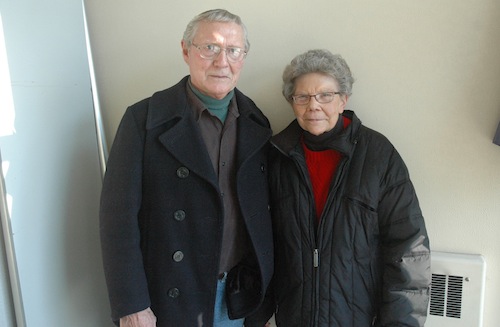
Bob and Pat Tammen rolled into the Twin Cities in their sturdy mobile home on January 5 to attend the Parents United for Public Schools legislative kickoff. They planned to stay in town over the weekend so that they could head to the capitol to make some noise about an issue that both of them care deeply about: making sure Minnesota doesn’t go ahead with a land swap deal that would open up national forest land to mining companies in exchange for funding for Minnesota public schools. The Land SwapBill H.R. 544 was initiated by former Congressional representative Chip Cravaak last May. The bill directs the U.S. Secretary of Agriculture to complete a land exchange between state-owned land within the Boundary Waters Canoe Area and federally-owned lands in Lake Superior National Forest. The deal would allow revenue gathering activities (read: copper mining) to benefit the public school system. Though it passed the house, was killed in the Senate in September. Continue Reading
If you look closely between the two ‘No Trespassing’ signs on the outside of Penn Gas Stop, an improved addition is advertised on another sign — fresh produce. As a part of the Healthy Corner Store Project, the station located on the corner of Penn and 26th Avenue N. in Minneapois has just ramped up its supply of healthy “grab and go” options.“We wanted to do this for a long time and I just think we needed a little push, “ said store manager Fouad Bazzine. “There was an incentive too, because most people ask for fruits and vegetables all the time anyway.”Penn Gas Stop is one of more than a dozen corner stores in North Minneapolis taking part in the project, which kicked off January 4 at this location. The Minneapolis based Appetite for Change program, the City of Minneapolis Department of Health and Family Support and the West Broadway Business and Area Coalition teamed up to create the initiative, which encourages healthy eating in communities with minimal access to healthy foods.“Now we have things that we haven’t had before. It’s like a store. Continue Reading
On December 21, Revenue Commissioner Myron Frans held the second of two minority business tax forums at African Development Center in Minneapolis. It was part of an effort by the Minnesota Department of Revenue to “get as much feedback as possible about tax reform and how the tax code impacts small businesses to ensure [Frans] is giving the best advice to Governor Dayton as he puts together his tax package for the 2012 legislative session,” according to a department of revenue community invite.Present at the meeting was also Minnesota Human Rights Commissioner Kevin Lindsey. Commissioner Frans said that Minnesota’s current tax system is out of date and too complex. He also admitted that a simpler tax system is needed. However, the business people told the commissioner that any tax reform must keep people of color in mind.“We are more than happy to pay our fair share,” admitted African Development Center (ADC) Executive Director Hussein Samatar whose organization works with the state’s African immigrant communities. Continue Reading
CORRECTIONS 12/19/2012 – Two researchers at University of Minnesota Center for Sustainable Building Research are setting up a new website that will help developers and consumers identify green building strategies. They are working to make the website, the Minnesota Sustainable Housing Initiative, MNSHI for short, as user-friendly as possible.William Weber, senior research fellow and Minnesota Sustainable Housing Initiative project manager; and Dan Handeen, a research fellow at the campus Center for Sustainable Building Research described the project at a noontime CURA forum on the status and future of “healthy, durable, and energy-efficient homes” on Friday, December 7. In addition to students, faculty, local developers, and regular citizens were in attendance. The forum was hosted by CURA and moderated by William Craig, acting director of CURA. “Our goal (through the sustainable building program) is to ensure that future generations have access to clean air, water, and resources that we do and utilize today,” said Handeen.Weber and Handeen’s group targets the early stages of building development, in the hopes of helping developers to plan and construct a smarter building, one that satisfies the resident, yet is also energy-sound and better adapted to the immediate and future variations of climate.”This is about identifying opportunities to maximize energy potential while optimizing” early construction tools, such as site selection, Weber said, in response to an audience question about the sustainable building objective.The MNSHI website, which has been on line since 2007, is currently developing new tools that will be accessible in late January. After the first publication of this article, Weber emailed to clarify and provide additional information about the Upstream tools and curriculum: The Upstream tools and curriculum are intended to help non-profit developers make better decisions early in the development process in order to reduce long term impacts. Continue Reading
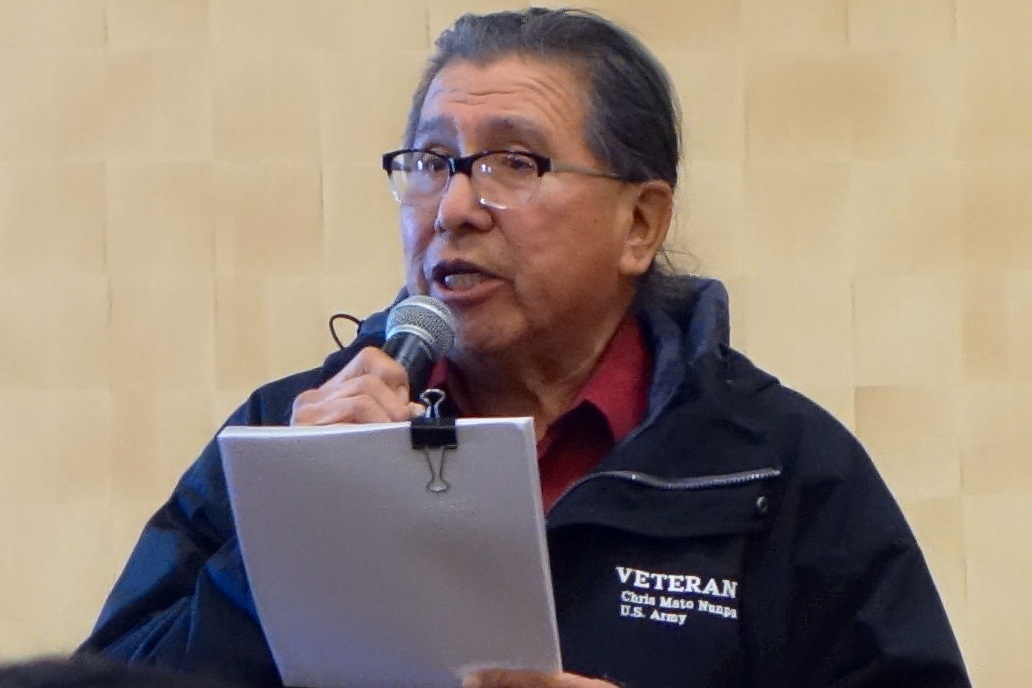
CORRECTION 12/20/2012 – On Tuesday, Jay Thomas Bad Heart Bull was named president and CEO of the Native American Community Development Institute (NACDI). That very same day, the Greater Minneapolis Council of Churches announced that Patina Park would become executive director of its Division of Indian Work (DIW).NACDI’s board of directors has been seeking a new president and CEO since that organization’s founder, Justin Huenemann, departed earlier this year. DIW has been involved in a similar search process. Its board had set a goal of having a new executive director hired by year’s end.Jay Thomas Bad Heart BullRobert Lilligren, Minneapolis City Council vice president, serves as NACDI board chair. He praised Bad Heart Bull as a “strong, dynamic leader,” and “a young, positive member of our community who has the skills and experience to take NACDI to the next level.”In announcing the selection of Park, Noya Woodrich, president and CEO of the Greater Minneapolis Council of Churches, cited Park’s “stellar” organizational management and fundraising abilities. Continue Reading
Alan Shilepsky likes talking, especially about politics and books. You can sit hours and hours with him in a good coffee shop and discuss politics and the world without getting bored. Shilepsky has strong opinions and does not hesitate to share them. He knows that he puts people’s backs up but it seems not to bother him.I first met Shilepsky before the election to discuss the Voter ID Amendment, which he supported. In his years as an election judge, he always appreciated when people would show an ID, especially when they had complicated names. Continue Reading
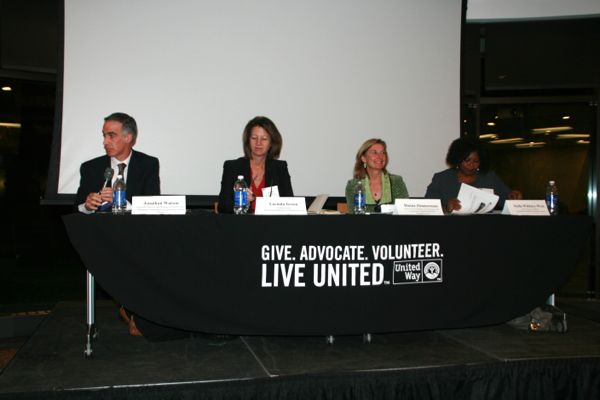
CORRECTED 12/11/2012: Minnesota may have a head start when it comes to putting the Patient Protection and Affordable Care Act(ACA) into practice, according to a panel of experts speaking at a forum sponsored by Greater Twin Cities United Way and held at the Amherst H. Wilder Foundation in St. Paul.But, they admit, there are still a lot of questions to answer about the program, created in 2010. that has become known as Obamacare. The chief among these is how social services and health care agencies can provide the best health care for the least expense for the thousands of newly insured Minnesotans who are expected to sign on to the new system during the next two years.Currently, there are about 485,000 Minnesotans without any kind of health insurance, according to the Minnesota Association of Community Health Programs. The number is expected to drop to 210,000 when the ACA takes full effect beginning next year. During the coming session, the Minnesota legislature will have to find ways to apply the new programs, making up the rules and regulations that, the experts hope, will result in a trouble-free transition. Continue Reading