Anti-Sharia legislation — and the dangers of such legislation — brought a crowd of hundreds to a forum at the University of St. Thomas October 23. Professor Robert Vischer of St. Thomas School of Law and Professor Abdulwahid Qalinle of the University of Minnesota Law School spoke on the growing efforts in various states, including Minnesota to approve an anti-Sharia law aimed at prohibiting any legal recognition of any aspects of the Muslim religious law known as Sharia.
U.S. Representative Keith Ellison (D-MN) was among a group of panelists speaking October 19 to a crowd of people in Minneapolis about the danger of attacking Iran and the “catastrophic effects” an invasion could have on the world.
As millions of Americans fixed their eyes on television screens for the second presidential debate October 16, several hundred Latino-Americans assembled in south Minneapolis in celebration of Latino Heritage Month.
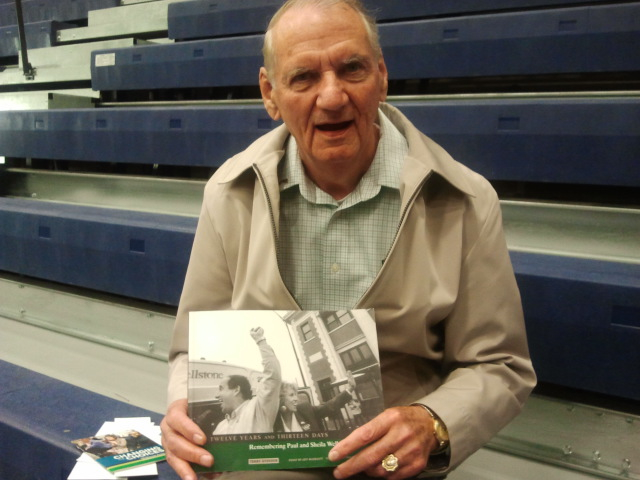
Paul Scott, former driver of the late Democratic Sen. Paul Wellstone of Minnesota was among several hundred people at Macalester College in St. Paul October 10 to commemorate the death of Wellstone, who was killed in a plane crash a decade ago this month at the age of 58.The event was highlighted by Minnesota political heavyweights, including Gov. Mark Dayton, who spoke of the enthusiasm and honesty Wellstone brought to politics during his two terms — 1991 to 2002 — in the U.S. Senate. Dayton said that Wellstone would probably have run for president if he had lived.“I personally believe, without any evidence, that he would’ve felt duty-bound to try,” Dayton said. “And I have no doubt that he would’ve been a far better presidential candidate in 2004 than the Democratic senator [John Kerry] who won the nomination and lost only narrowly to President Bush.”The 80-year-old Scott, though, had more personal stories to tell about Wellstone when we talked after the event.For 12 years, Scott drove Wellstone’s famous green bus, which he said the senator used to call the “Lean Green Campaign Machine.”“I missed him terribly,” said Scott, who is now a driver for Transit Tec in St Cloud. “I’ve driven a bus for my entire life for different companies, but the funnest job I had was working with Paul Wellstone.”On Friday morning, Oct. Continue Reading
Mai Overly stood tall before scores of anti-war protesters, who assembled Sunday afternoon in the Uptown area of Minneapolis, as she spoke of the direct effect the 11-year-old war in Afghanistan ha
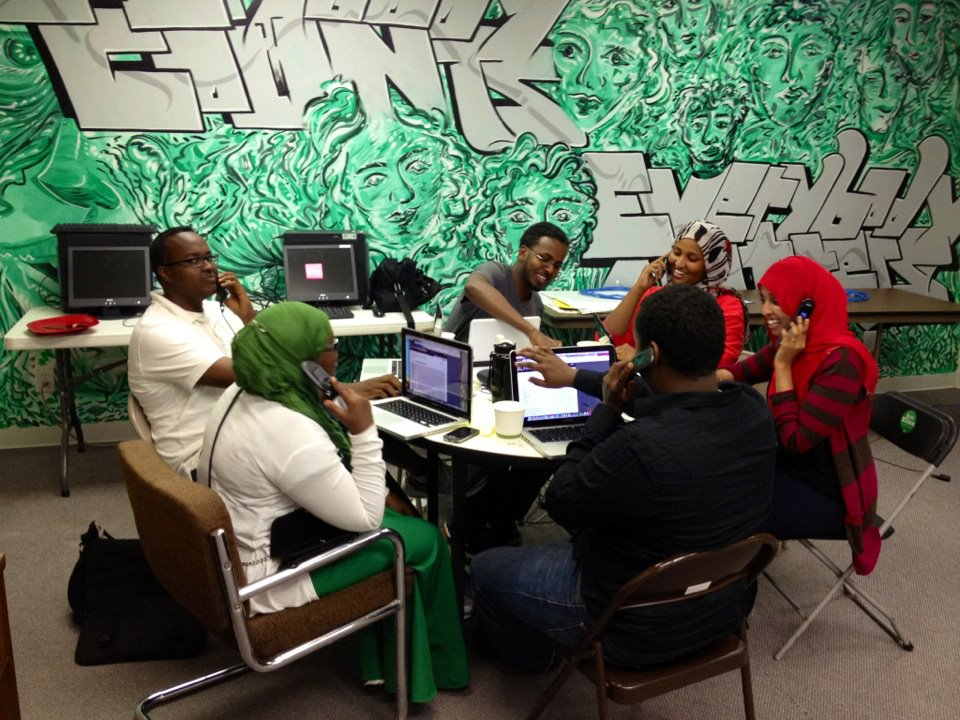
“We aren’t just guests in this country,” said Hashi Shafi, Executive Director of the Somali Action Alliance. “We’re Americans, and we need to make our voice heard.” Shafi, who has been trying to engage voters for more than ten years, is targeting Somali voters, hoping to bring them all out to cast their votes. “It doesn’t matter whom they vote for,” Shafi said. “We just want them to vote.”
The couple of hours of observing and speaking with Somali business people at Karmel Square mall in Minneapolis were enough for Kurt Eliasson and his delegation to be satisfied that their trip all the way from Sweden was made with good reason.
A Minneapolis-based non-profit organization that answered the calls of hundreds of thousands of famine victims received a big prize and recognition for their humanitarian aid efforts last week.The American Refugee Committee was the recipient of a $100,000 first-place prize for engaging the global Somali diaspora and organizing them under “I AM A STAR” for Somalia campaign, which raised money and awareness for the organization’s humanitarian response team in Somalia.The award-winning “I AM A STAR” had its roots in Minneapolis before it gained international attention last year, said program manager Said Sheik-Abdi.“This is a great day for Somali-Americans and the ARC staff, who worked so hard in making this humanitarian effort possible,” he added.The ARC’s “I AM A STAR” program improved the lives of hundreds of thousands of people in Somalia, providing them with clean water, sanitation and healthcare, according to the Drucker Institute release, which announced ARC the winter of the 2012 Peter F. Drucker Award for Non-profit Innovation on September 25.“This is social innovation at its best,” said Drucker Institute Executive Director Rick Wartzman in a statement. “A country’s global diaspora is not a lost resource but, rather, the greatest asset available in building a humanitarian response in that country.”When famine hit war-ravaged Somalia in the summer of 2011 and tens of thousands of people died of starvation, the Somali community in Minnesota wanted to offer its ideas and resources to help those suffering at home.Local aid organizations, however, struggled to gain the trust of community donors. They decided to join internationally recognized humanitarian organizations including the ARC and Feed My Starving Children, among others who want to help out with humanitarian crisis.Ever since the United Nations declared famine in Somalia in the summer 2011, many ARC Somali volunteer members left from the Twin Cities, Europe and Canada to help provide smooth implementation of the program in Somalia.Those who couldn’t leave engaged in local projects, which raised hundreds of thousands of dollars. Some of these projects that sought money from the community included a carwash, a “walk for hunger” and others.Raqiya Mohamed, of Minneapolis, was one of many young volunteers, who played a significant role in raising money and awareness for the program. She organized and participated in several projects, including Poems for Poverty, a carwash and Hoops for Hunger, which was basically a basketball tournament.The money raised from these projects went to the ARC, which then delivered it to the needy people in Somalia.“The people of Somalia were waiting for my help,” said Mohamed, who left the country when she was three years old. Continue Reading
St. Paul voters will see a levy referendum question on the November 6 general election ballot that asks for approval of more than $30 million in annual funding for school technology and programs.Officials from St. Paul Public Schools say the money will be spent to maintain smaller class size in secondary math and science classrooms, to fund pre-school and all-day kindergarten, and to continue funding programs for special education students and English language learners. It will also be used to help with technology for classrooms.“Technology has become the way to go these days,” said Louise Seeba, a member of the SPPS Board of Education. “By integrating technology into more aspects of the classroom, our students will be able to achieve the skills to be successful.”St. Continue Reading