The struggle for transparency in the U.S.-EU trade deal

IATP is a member of the Transatlantic Consumer Dialogue (TACD), a U.S.-European network of about 80 nongovernmental organizations, founded in 1999 on the premise that public policy will be improved by a frank discussion of policy documents disclosed to NGOs, just as they are to corporate lobbyists. TACD meets with U.S. and European Union officials yearly, alternating between Washington, D.C. and Brussels, Belgium, to discuss TACD resolutions. This year’s annual meeting focused on regulatory issues in the Transatlantic Trade and Investment Partnership (TTIP) negotiations between the U.S. and the European Union, formally launched in June. Continue Reading
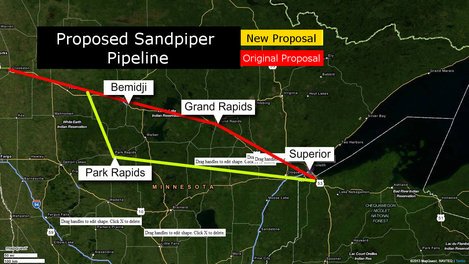
The Sandpiper pipeline: Enbridge profits and the destruction of local farms and livelihoods

On the morning of September 29, North Dakota farmer Steven Jensen discovered a gurgling pool of oil in his wheat field. From a quarter-inch hole in the pipeline, 865,000 gallons of crude oil from the Bakken oil field leaked into his fields. It was 11 days before there was any public notification of the spill. In the last two years, North Dakota has had over 300 pipeline oil spills that were never publicly reported. Continue Reading

Don’t stop at the seed: Going beyond non-GMO

Next week the state of Washington will vote on mandatory labeling of Genetically Modified Organisms (GMOs) in food products. This is an important election and moment in the battle over GMOs, but in many critical ways, it is increasingly obvious to me that GMO opponents have already won. Continue Reading

Tar sands a dirty outcome of free trade failures

As controversy over TransCanada’s Keystone XL pipeline has captured most of America’s attention, Minnesotans have been dealing with a different pipeline carrying tar sands bitumen to the United States. On July 17, 2013, the Minnesota Public Utilities Commission (PUC) granted Enbridge, L.P. a 120,000-barrel-per-day (bpd) capacity increase to line 67, the “Alberta Clipper”, from 450,000 bpd to 570,000 bpd. Continue Reading

Genetically modified American chestnuts—the next golden rice?

Golden rice’s recent re-emergence in the news reminded me of how long the biotech industry has been touting this “wonder” crop in order to gain approval for genetic modification more broadly. It appears we’re now seeing a similar tactic with the proposed introduction of genetically modified (GMO) American chestnut trees. Once stretching across the eastern part of the United States and memorialized in countless stories, songs and poems, few trees evoke more nostalgia for America’s past than the Chestnut. However, the American chestnut now mostly lingers in our memory, as the more than 4 billion trees—equaling around a quarter of all hardwoods in the Eastern seaboard—were almost completely wiped out when a disease swept through the country in the early 1900s. Continue Reading

No food stamps, no farm program

One of the last acts of the Republican majority of the House of Representatives before the August recess of Congress was to propose to cut funding for the food stamp program by $40 billion in the fiscal 2014 budget. These cuts were proposed even after the U.S. Department of Agriculture reported that the inflation adjusted value of food stamps had declined seven percent between 2009 and 2011. Continue Reading

Searching for the Farm Bill

Farmfest is the largest farm show in Minnesota, bringing farmers together to talk about and see the latest in tractors, seeds, and other farm-related equipment. But Farmfest also brings out the politicians to talk about what is happening with agricultural policies and markets. With no farm bill in place, the question understandably on everyone’s minds at this year’s policy panel was “What’s next?” While the policymakers in attendance did a pretty good job of explaining how we got where we are today, the future of farm policy was left unclear. Continue Reading