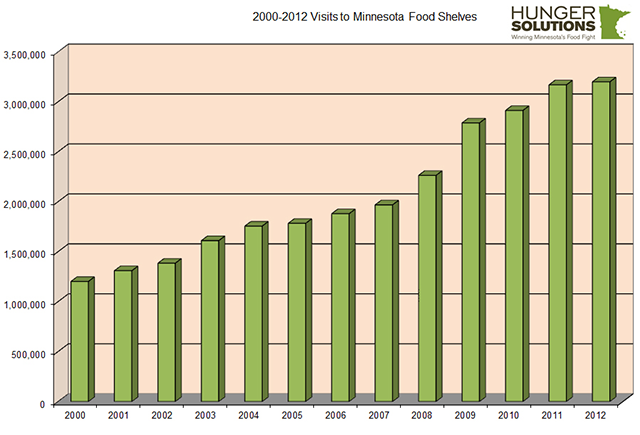
Despite improving economy, demand at food shelves remains high
|
You could say Byron Laher is more sensitive than many to the needs of the hungry.
Twin Cities Daily Planet (https://www.tcdailyplanet.net/author/cynthia-boyd/page/7/)
You could say Byron Laher is more sensitive than many to the needs of the hungry.

Elsie Elaine Fairbanks worked throughout her life to better the lives of American Indians, from mothers-to-be to those struggling with alcoholism to those just plain struggling.

Lately, we’re hearing a lot about the benefits of early childhood education — especially for poor kids.In his state of the union speech Tuesday President Obama spotlighted the benefits of money spent on quality early childhood education: “…the sooner a child begins learning, the better he or she does down the road…” and proposed working with states to make “high-quality preschool available to every child in America.” He is expected visit a pre-kindergarten class in Georgia today to promote the White House plan, which includes public preschool funding for any 4-year-old whose family income is 200 percent or less of the federal poverty plan. In Minnesota, Gov. Mark Dayton has proposed spending $44 million for early-learning scholarships for poor kids.But critics, including conservative columnist Katherine Kersten, have their doubts that these kinds of programs are worth the money and question whether the economic returns — at the high end, $16 gained in the future for every $1 spent in early childhood — they promise are believable.Community Sketchbook focuses on the economic and social challenges facing communities, especially low-income communities and communities of color, and how people are trying to address them.It is made possible by support from the John S. and James L. Knight Foundation, The Minneapolis Foundation, and some Minneapolis Foundation donor advisors.Community Sketchbook articles may be republished or distributed, in print or online, with credit to MinnPost and the foundations.They point to what some call the “fade-out” factor: some research showing that high-quality programs do help kids early on in life but the academic benefits fade as the children continue their schooling. In other words, despite the boost of early learning programs, poor children face so many other significant barriers to success — chaotic homes and neighborhoods, low-quality schools and one-parent, non-supportive families – that those early benefits don’t last.Is there anything to the criticism?Rob Grunewald, an economist and early childhood education expert at the Federal Reserve Bank of Minneapolis, took on the question at a forum last week sponsored by the Achievement Gap Committee, a grassroots citizen group that’s been working for years to even the educational playing field between students of color and whites and between poor and middle-class kids. (Their second forum on early childhood education is Friday.)Anyway you look at it, Grunewald argues, there is a “high rate of return” for investing in early childhood education. Research proves early learning is a strong foundation for lifetime success, he says.Head StartGrunewald concedes that a Head Start program analysis in 2012 demonstrated that gains there fell away, but counters that researchers using other methodologies showed kids in these programs grew up to graduate from high school at higher rates and were less likely to commit crimes.Grunewald adds that the federal government is also “re-bidding” lower-performing Head Start programs around the country — that is, searching for early childhood education providers with better academic track records.Also, he says, kids who haven’t attended early learning programs can “catch-up” to their peers — at least in terms of reading and math scores — if good quality elementary schools shower them with educational resources.Still, Grunewald and other early childhood education proponents argue that early childhood programs provide lasting gains.The early-learning edge persists in another measure: youngsters’ mastering of “executive function” skills, he says.Life skillsThese are learned skills which allow children to practice self control, pay attention, control their emotions, wait their turn, follow directions and listen to teachers. Continue Reading

Megan Gunnar is a familiar face at the state Capitol. Already this session she’s testified three times before legislators to share research on early child development conducted by her and her colleagues at the Institute of Child Development at the University of Minnesota.
President Obama and a bipartisan group of U.S. senators want to overhaul the nation’s immigration laws with a path to citizenship for more than 11 million undocumented people, a proposal that could change the lives of up to 95,000 immigrants in Minnesota.
Awhile back I shared a story from memoirist Kao Kalia Yang who wrote about the first Hmong coming here in the winter of 1976. They saw Minnesota’s cold, leafless landscape and assumed it dead, the victim of chemical warfare.
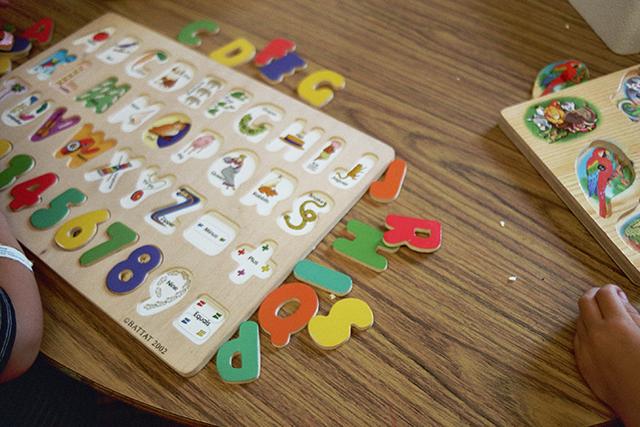
Buried in Gov. Mark Dayton $37.9 billion proposed budget is a creative idea to improve the lives of the state’s most educationally vulnerable children: state-funded scholarships for preschoolers from low-income families.It’s an idea early on proposed by Art Rolnick, former research director at the Federal Reserve Bank of Minneapolis, pushed by advocates for the poor for years and that has shown to be successful in a limited pilot program.Dayton on Tuesday asked legislators for $44 million over two years for the early-learning scholarships for preschoolers, a move that’s drawing praise from an education-reform group and advocates for the poor.Community Sketchbook focuses on the economic and social challenges facing communities, especially low-income communities and communities of color, and how people are trying to address them.It is made possible by support from the John S. and James L. Knight Foundation, The Minneapolis Foundation, and some Minneapolis Foundation donor advisors.Community Sketchbook articles may be republished or distributed, in print or online, with credit to MinnPost and the foundations.“This is farther than we’ve seen any governor in recent history go,’’ said Anita Patel, vice president racial justice and public policy at the YWCA of Minneapolis.Ericca Maas, who heads Parent Aware for School Readiness, said she was happy to see Dayton’s budget included scholarships, which she described as a proven idea and pointed out that children are waiting. She stressed the need for high-quality programs “to make sure we get maximum return on taxpayer investment.”Still, the numbers in the governor’s budget fall far below the need, say advocates, who want quality learning opportunities for all the state’s needy 3- and 4-year-old children.The importance of early childhood education has long been recognized, but the political will and financing to implement programs for all children in Minnesota is building slowly.“First we want to say how happy we are that the governor took this step and recognized the need for early childhood education,’’ said Frank Forsberg, chairman of the Executive Committee of MinneMinds, a statewide coalition of foundations, non-profits and businesses banded together to ask for a learning boost for preschoolers whose families are at or below 185 percent of the poverty line.“Definitely a step in the right direction,’’ concluded Daniel Sellers, executive director of MinnCAN, an education reform group that is also a member of MinneMinds (pronounced minnie-minds).Missing an opportunityBut the experts agree the governor’s proposal doesn’t come close to meeting the needs of Minnesota’s low-income preschoolers – MinneMinds sought $185.2 million over the biennium – and some argue the state is missing an opportunity for big payoffs later.They cite research that shows that for every $1 spent on high-quality preschool programs, $16 is saved down the line because youngsters enter school ready to learn rather than falling behind the learning curve. Advocates point to a Minnesota Early Learning Foundation report released in 2011 on the benefits high-quality preschool programs and emphasize that up to 90 percent of brain development occurs by age 5.With proper preparation, they say, children are more likely to graduate from high school and college, acquire good jobs and become good citizens.That’s why Sellers’ organization is standing by the coalition’s initial request. “By investing more now we can have even bigger returns,’’ Sellers said.Support for the idea has been growing for years. In the early 2000s, representatives from business and nonprofit leaders formed the Minnesota Early Learning Foundation (MELF) to research how to cost-effectively prepare children for kindergarten, relying in part on the work and recommendations of Rolnick and Rob Grunewald in a Federal Reserve Bank of Minneapolis report, which supported early learning scholarships. Continue Reading

As a native who has long believed this state one of the most progressive in the nation, I’m surprised at this: 19 states have minimum wages higher than the federal minimum wage – and Minnesota is not among them.
If you’re going to ask the Legislature for heaps of money to send poor children to preschool and otherwise help prepare them for kindergarten, it sure doesn’t hurt to give your coalition a name that pulls at the heart strings.
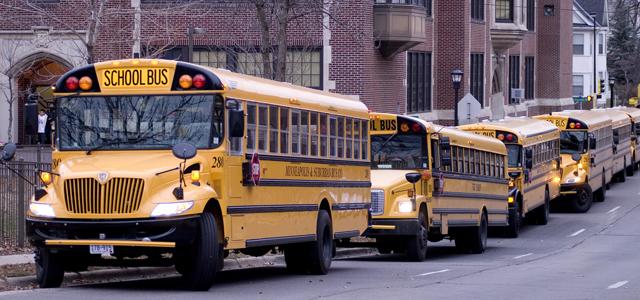
A state program intended to help integrate school districts and balance academic opportunities for children of all races has actually resulted in increased racial segregation.