Advocates for the poor couldn’t help but notice the ketchup bottles sitting on luncheon tables at their gathering Thursday, an odd condiment for the pasta salad on the menu.
Fresh U.S. Census data shows Asians to be the fastest growing ethnic group in the state, their numbers driven by immigrants pursuing high-tech jobs and young families having babies.Minnesota’s Asian population increased 3.4 percent between 2011 and 2012, an increase of 7,750 persons in a single year.What’s unique about the Asian population is its “tremendous diversity’’ on many fronts, explains state demographer Susan Brower. Take, for instance, the fact that 82 percent of Asian Indian Minnesotans have bachelor’s degrees or higher compared to 14 percent of Hmong, the largest Asian group in Minnesota, Brower said Friday.Community Sketchbook focuses on the economic and social challenges facing communities, especially low-income communities and communities of color, and how people are trying to address them.It is made possible by support from the John S. and James L. Knight Foundation, The Minneapolis Foundation, and some Minneapolis Foundation donor advisors.Community Sketchbook articles may be republished or distributed, in print or online, with credit to MinnPost and the foundations.Income closely follows educational attainment, with about one-third of Hmong Minnesotans living in poverty compared to about 3 percent of Asian Indians. “A large proportion of our Asian population is facing some pretty serious barriers,’’ Brower says.The long-term trend, she stresses, is that the state will continue to see growth among populations of color.Migration began in 1970sMinnesota became more diverse beginning in the 1970s with the migration of Chinese, Japanese and Filipinos, and then Southeast Asians in the late 1970s and 1980s, including Hmong, Lao, Cambodian and Vietnamese. For the past couple of decades refugees from Tibet, Burma and Thailand have made Minnesota home.About 6.9 percent of Minnesotans are foreign-born, according to data posted on Minnesota COMPASS, and about 17 percent of Minnesota’s residents, according to the Census Bureau, are minority — a significantly smaller portion than the rest of the nation at 30 percent. Blacks make up the state’s largest minority group, followed by Hispanics, Asians and American Indians.“We do well as a group,’’ says Sia Her, new executive director of the Council on Asian Pacific Minnesotans. Continue Reading
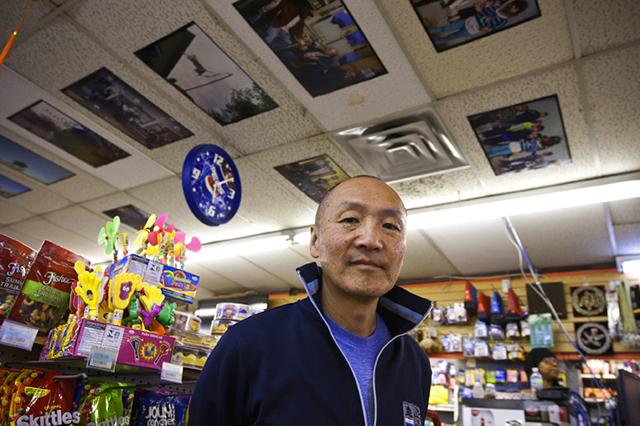
Take the concept of “other.’’Really, I’m asking you to consider the word, what it means and how it divides, as does Wing Young Huie, an intriguing Minneapolis photographer and documenter of everyday life.Huie, a native Minnesotan and the first non-immigrant in his family, uses his camera to coax people to think of “otherness” in America, a society polarized by differences in race, gender, age, sexual orientation, wealth and well …lots of things.Community Sketchbook focuses on the economic and social challenges facing communities, especially low-income communities and communities of color, and how people are trying to address them.It is made possible by support from the John S. and James L. Knight Foundation, The Minneapolis Foundation, and some Minneapolis Foundation donor advisors.Community Sketchbook articles may be republished or distributed, in print or online, with credit to MinnPost and the foundations.Born to parents who came to the United States from China and growing up in Duluth, he knew firsthand “otherness.’’ People would ask him, “Where are you from?” and he’d answer, “Duluth.’’But they’d persist, “Really, where are you from?”Social catalystHuie, 58, uses his photography of south Minneapolis as a social catalyst, a way to build community along and on Chicago Avenue, a racially diverse area perhaps more often known as a symbol of what people lack rather than what they have. Poverty runs high here by government standards.With his pictures, Huie (pronounced “huey”) draws together blacks and whites, Jews and Muslims, the healthy and the ill, young and old, friends and strangers. His art helps people break through barriers, or as he calls them, “bubbles,” of otherness, he says.To that end 100 of his photographs are posted in 19 businesses fanning out along a 10-block stretch of Chicago Avenue from 32nd Street to 42nd Street in a public art exhibit called “We Are the Other.” A similar effort includes his “University Avenue Project,” a public art project in 2010 along the light rail line in St. Paul.His work is one spoke in a wheel of the bigger Arts on Chicago initiative involving a slate of artists and designed to foster and develop community in four Minneapolis neighborhoods: Powderhorn, Central, Bancroft and Bryant. A community celebration with a series of events is planned for June 8.Gap between perception and realityA shooting on a neighborhood street corner drew negative media attention in April.Say Huie: “Often these urban neighborhoods are viewed by crime rates. Continue Reading
The Legislature just approved $33 million in funding for housing and homelessness-prevention programs and the state has a new director to prevent and end homelessness.
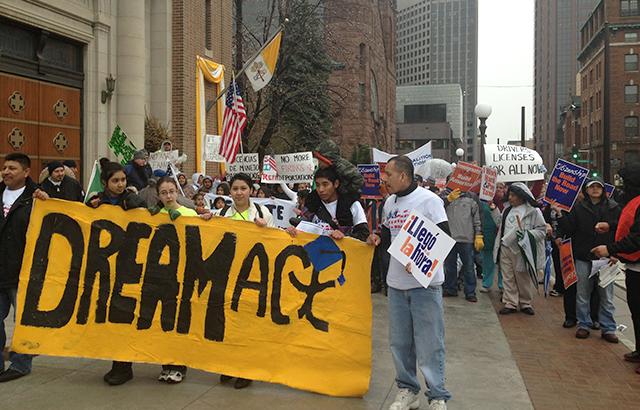
Wednesday was the third time over the years that the Minnesota Senate has passed a bill that would allow Minnesota’s undocumented college students to pay in-state tuition. Before, similar measures have died for lack of support outside that body.This time is going to be different, says Sen. Sandy Pappas, DFL-St. Paul, author of this and similar bills for more than a decade. The prospects of the bill becoming law, she said, is “looking really, really good.’’The Senate vote was 41-23.Community Sketchbook focuses on the economic and social challenges facing communities, especially low-income communities and communities of color, and how people are trying to address them.It is made possible by support from the John S. and James L. Knight Foundation, The Minneapolis Foundation, and some Minneapolis Foundation donor advisors.Community Sketchbook articles may be republished or distributed, in print or online, with credit to MinnPost and the foundations.Pappas says the strategy this session is to add the tuition bill – which also includes a provision allowing qualified immigrants students to apply for state money to help pay college tuition — in conference committee as members of the House and Senate hash out differences in their omnibus higher education bills.Gov. Mark Dayton also supports the measure.The chances of its becoming law are helped by the fact Pappas been named to that conference committee. And, Pappas says, there are signs powerful House members of the committee are behind the measure.If the measure is enacted, Minnesota would become the fourth state in the country to offer undocumented students financial aid and the 16th to offer in-state tuition.Variously called the Minnesota Dream Act and the Minnesota Prosperity Act, supporters include a broad coalition of organizations, from Education Minnesota to the Citizens League, from the Minnesota Chamber of Commerce to the Minnesota Private College Council, as well as immigrant and faith groups and labor.State higher-education officials have said the cost would be an estimated $539,000 a year, about 0.03 percent of the State Grant, Minnesota’s student aid program. Continue Reading
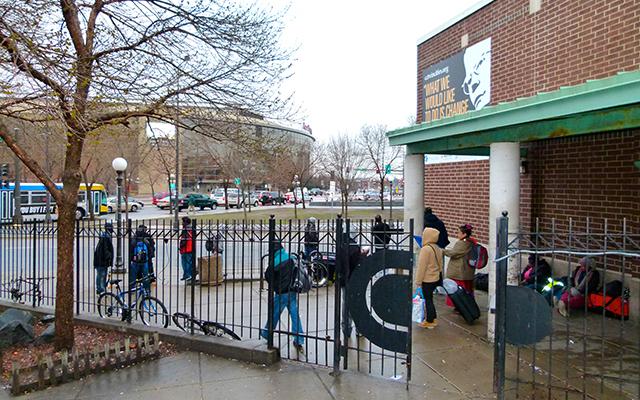
Many cities have familiar gateways: St. Louis, has its Arch; San Francisco, the Golden Gate Bridge; New York City, the Statute of Liberty.St. Paul? A wrought-iron fenced courtyard and a modest building where the hungry and homeless gather in lines outside seeking food and shelter.Run by Catholic Charities of St. Paul and Minneapolis, the Dorothy Day Center has long been an esteemed fixture in downtown St. Continue Reading
You likely don’t know Thalia Estrada or Karen Salas Ramirez, but they’re the kind of young students who can strengthen Minnesota’s economic future.[EDITOR’S NOTE: The Minnesota Senate passed the bill discussed in this article today, May 1.]Estrada is 17, a senior at Central High School in St. Paul with a 3.5 GPA and the dream of becoming a neurologist. And having testified before the Minnesota Legislature three times already, she has the sophistication of a 25-year-old.Ramirez, 20, lives on hope and hard work, and that’s the message she’ll bring to her fellow classmates at Riverland Community College in Austin, Minn., in her graduation address this spring from the two-year school, trusting that, somehow, she can find the money to finish a four-year degree.“My dad has always said, ‘Education is basically the way to be successful,’’’ Ramirez told me, the very philosophy my father instilled in me.Community Sketchbook focuses on the economic and social challenges facing communities, especially low-income communities and communities of color, and how people are trying to address them.It is made possible by support from the John S. and James L. Knight Foundation, The Minneapolis Foundation, and some Minneapolis Foundation donor advisors.Community Sketchbook articles may be republished or distributed, in print or online, with credit to MinnPost and the foundations.Yet unlike me and other native borns, Estrada’s and Ramirez’s futures and that of many other capable but undocumented students across the state lie in part in the hands of Minnesota legislators.Both young women are so-called DREAMers, undocumented immigrants who have received from the federal government temporary deportation relief and work authorization and the chance to stay in the United States legally for at least two years. Still, under current Minnesota law, they don’t have the same rights as students with citizenship.A bill scheduled to go to the state Senate floor May 1 would change that. The measure would allow undocumented immigrant students who meet certain qualifications to pay resident tuition at public post-secondary institutions around the state and to apply for state financial-aid grants.Outlook in SenateSen. Sandy Pappas, DFL-St. Continue Reading
“In the beginning, I was just hoping it wasn’t an immigrant.’’ Those are the words of Katherine Fennelly, professor at the University of Minnesota’s Humphrey School of Public Affairs and an expert on immigration and public policy, reacting to the revelation last week that the two Chechen suspects in the Boston bombings came to the United States from Kyrgyzstan and were granted asylum here.Buried under the shadow of recent tragic events in Boston is the fear by Fennelly and others that the bombings and murders might derail or delay immigration reform.Community Sketchbook focuses on the economic and social challenges facing communities, especially low-income communities and communities of color, and how people are trying to address them.It is made possible by support from the John S. and James L. Knight Foundation, The Minneapolis Foundation, and some Minneapolis Foundation donor advisors.Community Sketchbook articles may be republished or distributed, in print or online, with credit to MinnPost and the foundations.Does what happened in Boston reflect badly on immigrants in general and on the immigration-reform proposal in the U.S. Senate in particular?Could that “foreigner” or “immigrant” label spark widespread anti-immigrant sentiment and actions, as happened in 2001 following 9/11?There are signs that the events in Boston are changing the discussion. Kentucky Republican Sen. Rand Paul and a bevy of conservative critics called this week to put the brakes on the proposed changes in immigration laws.In response, proponents of immigration reform, including members of both political parties, argue the makeover would enhance national security.But Fennelly doesn’t think that questions of assimilation and immigration status are relevant in the Boston case. The heinous bombings at the finish line of the iconic race, she says, are more similar to the horrendous shootings at the Aurora theater in Colorado or at schools around the country.“To me what motivated it and why is not likely to have much to do with being an immigrant or being assimilated or not assimilated as much as something else we don’t understand well — certain psychological triggers or barriers to close relationships” that have appeared in other mass, unprovoked killings, Fennelly says.Ruslan Tsarni, uncle of the two suspects, seemed to consider the accused different from most immigrants. Speaking in heavily accented English from his Washington, D.C., area home, Tsarni called his nephews “losers” and praised the United States for giving immigrants from all over the world a shot at success.Tsarni accused his nephews of not being able to fit into American society and of having “hatred toward those being able to settle themselves.’’Immigrants assimilate fasterFennelly, who has long studied and written about immigrants in the United States and policies surrounding their status, has made a case many times over about the value of foreign peoples to this country. She further stresses that most immigrants of the 21st century learn English and in other ways assimilate faster than did those of the 20th century.Just look at the measures of assimilation, she says: home ownership, median income, educational attainment. Continue Reading