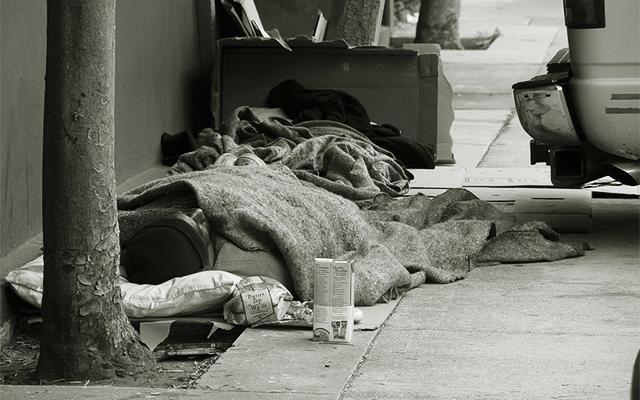
Like peeling the skin off an onion, analysts at Wilder Research are slowly revealing the people behind the numbers of Minnesota’s homeless counted last fall. They’re digging deeper into the data.Among some 5,000 homeless households across the state are youth moms with babies, single adults with drug problems and two-parent families and their children. Some are employed. Nearly half (46 percent) are children themselves — that is, age 21 or younger — and three out of 10 of those are parents.Race is a factor. African Americans and American Indians are disproportionately represented in the tallies.African Americans and American Indians disproportionately affectedAfrican Americans and American Indians are disproportionately represented in tallies of Minnesota’s homeless. Continue Reading
Despite recent DFL leadership calls at the Legislature for $150 million in cuts in the proposed health and human services budget, there appears to be a bipartisan effort afoot to increase assistance for needy Minnesota families.
Getting a grasp on state budget numbers is at least as mind-boggling for most of us as trying to understand just how far Earth is from the sun — 93 million miles, btw.
With emergency shelters swamped last fall, an advocate for the homeless suggested to me the lack of affordable housing in our community could get so bad the homeless might be left to pitch tents.
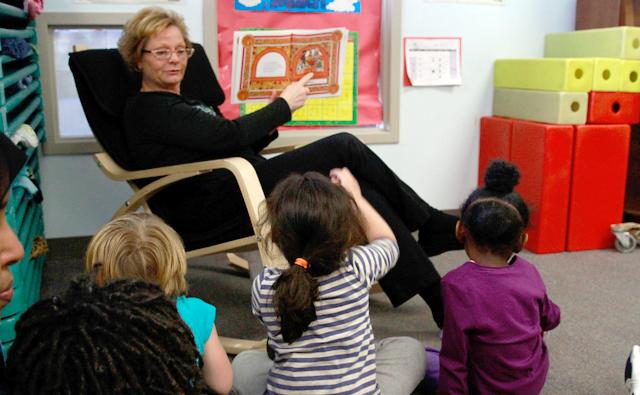
There once was a woman named Ka Vang who had hair like polished black granite and a love for stories and many things Hmong.And so she wrote a story in the Hmong folk tale tradition about a dragon and a little Hmong girl who grew up in a place called Frogtown in St. Paul, a launching point for generations of immigrants.Only, unlike the folk tales her mother told her as a child, Vang’s story not only celebrates her heritage, but also may help toward bridging the academic achievement gap between Caucasians and children of color.Recruiting authors and illustrators to create culturally relevant books to keep children reading is the idea behind the Reading Together Book Project spearheaded by the Minnesota Humanities Center and the Council on Asian Pacific Minnesotans and supported by Minnesota taxpayers through the Arts and Cultural Heritage Fund.Community Sketchbook focuses on the economic and social challenges facing communities, especially low-income communities and communities of color, and how people are trying to address them.It is made possible by support from the John S. and James L. Knight Foundation, The Minneapolis Foundation, and some Minneapolis Foundation donor advisors.Community Sketchbook articles may be republished or distributed, in print or online, with credit to MinnPost and the foundations.Thanks to that program, author Vang paired up with book illustrator Aimee Hagerty Johnson to produce “Shoua and the Northern Lights Dragon,’’ a chapter book geared for third grade and older children. So did May Lee Yang, who wrote “The Imaginary Day,’’ which was illustrated by Anne Sawyer-Aitch.“If people see themselves reflected in a book or movies or music, they’re more engaged,’’ says Vang in explaining why she wrote her story about a little Hmong-American girl who — not unlike its author – struggles to preserve her heritage yet yearns to rise above traditional gender roles in the Hmong culture.Engaging childrenThe more engaged children are, Vang continues, the more they read and the better readers they become. We all know how important reading is to learning.The 2012 literature project, which resulted in the publication of 1,700 soft-cover books of each title, was designed to reflect the culture, heritage and pride of Asian Pacific Minnesotans, explains Casey DeMarais, director of programs at the Minnesota Humanities Center. The books were donated to elementary school classrooms earlier this year, but copies are available print on demand through Lulu for about $5 a copy.The winning writers and illustrators for the 2013 Reading Together Project will be announced soon. Continue Reading
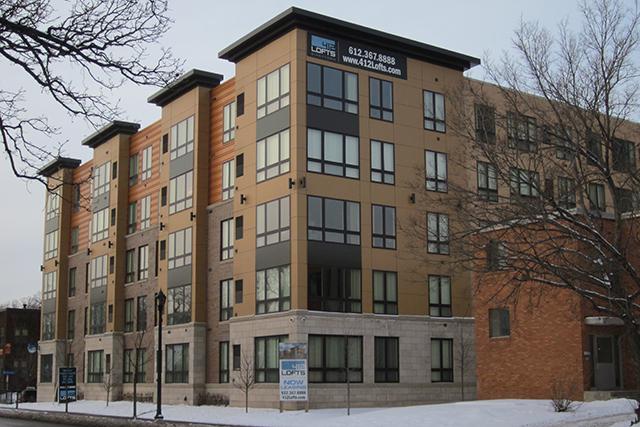
For Rich Evans, his own place at Nicollet Square is a far cry from the days he waited in line for a bed at a downtown Minneapolis homeless shelter.Instead of a mattress on the floor among a sea of strangers, the formerly homeless young man rents a 380-square-foot studio in a new, 42-unit building with large windows and strikingly modern furniture.“It’s my own spot. It gives me a chance to be independent and a place to go when I want to be alone,’’ Evans, just 22, told me as he mused about his past and dreamed of a future return to college.Community Sketchbook focuses on the economic and social challenges facing communities, especially low-income communities and communities of color, and how people are trying to address them.It is made possible by support from the John S. and James L. Knight Foundation, The Minneapolis Foundation, and some Minneapolis Foundation donor advisors.Community Sketchbook articles may be republished or distributed, in print or online, with credit to MinnPost and the foundations.With round-the-clock security, it’s also a safe place for him to come home to after work at the nearby Salvation Army Thrift Store in his south Minneapolis neighborhood.It’s housing as well as services to help homeless youth find jobs and build better lives that advocates are arguing strongly for at the Minnesota Legislature this session.And why they cheered Gov. Mark Dayton when he included in his two-year budget, released March 14, a request for $5 million in funding for youth homelessness prevention that includes shelter and other services.Though a spectrum of advocates united in a Homes for All Campaign this session are asking for $8 million for the Homeless Youth Act, they see the administration’s funding request as a giant step forward from the current $238,000 funding level.“Making sure young people in need have a safe place to sleep and the help they need to get back on their feet is critical to creating a Minnesota where everyone has a fair chance at life,’’ said Minnesota Department of Human Services Commissioner Lucinda Jesson, pointing to the scarcity of beds and services for homeless youth.Whether the funding is there is a matter still being considered by the DFL-controlled Legislature, but the need certainly is.Few servicesIn some areas of the state there are few or no services or housing for homeless youth, DHS officials say. Currently, services for unaccompanied homeless youth across Minnesota include six homeless drop-in centers, 108 emergency shelter beds and about 600 units at transitional living programs and permanent supportive housing.The most recent — though preliminary — count of unaccompanied youth coming this month from Wilder Research’s triennial statewide homelessness study, tallied 1,151 youth 21 and under on their own across the state. That’s about a 10 percent decrease from the last count of homeless persons in fall 2009 — perhaps due to a better economy or new youth housing programs.Yet those who work with homeless youth maintain that the group is typically undercounted. In 2009 Wilder researchers and other experts estimated the real number is closer to 2,500 any given night. Continue Reading
Among the crowd of 4-year-olds pulling on warm jackets and stuff like Spider Man gloves and fluffy pink scarves for outdoor play Tuesday at the Early Childhood Education Center at the Midtown YWCA in Minneapolis were two antsy little boys with energy to spend.
Even as the state’s jobs numbers get sunnier and the Dow hits an all-time high, the numbers of Minnesota’s homeless are rising as well — though not as fast as a few years ago.
Among the hundreds released from immigration detention facilities nationwide as federal budget cut kick in today is a Honduran woman we’ll call Delores.
A young Honduran immigrant — in Minnesota illegally but seeking asylum in the United States — couldn’t believe her good fortune Tuesday afternoon when she was released from jail in Sherburne County after 22 months detention.Stepping outside, she marveled at the snow and worried about sunburn.In an under-the radar-move to prepare for federal budget cuts scheduled to kick in Friday, Immigration and Customs Enforcement (ICE) officials are releasing several hundred people from immigrant detention facilities around the country this week. It’s not clear how many will be released in Minnesota.“They told her, ‘It’s very expensive to hold you here,’’’ explained the Honduran woman’s attorney, Sarah Brenes of The Advocates for Human Rights, translating her clients’ words from Spanish to English. The woman talked only if we did not use her name.Community Sketchbook focuses on the economic and social challenges facing communities, especially low-income communities and communities of color, and how people are trying to address them.It is made possible by support from the John S. and James L. Knight Foundation, The Minneapolis Foundation, and some Minneapolis Foundation donor advisors.Community Sketchbook articles may be republished or distributed, in print or online, with credit to MinnPost and the foundations.The releases were unexpected.Hearing unsubstantiated reports people were being released from detention, John Keller, executive director of the Immigrant Law Center of Minnesota in St. Paul, messaged some 300 immigration attorneys in Minnesota and the region Tuesday morning asking his colleagues what they knew. Several answered they’d seen their clients released.“Who knew the sequester could be good news?’’ said Keller, referring to the across-the-board budget cuts Congress has put in place in an effort to come up with a deficit reduction plan.Limited resourcesThe Huffington Post last night was among the first to report the releases, which began Monday. Continue Reading