We are entering into a cultural reformation in our community, where our values today don’t quite align with our culture. For quite some time now, our values and our culture have clashed, which has created social upheaval and alienation in the Hmong community. “What does it mean to be Hmong?” seems to be the the question that every Hmong American goes through; it’s a rite of passage for those growing up in two seemingly opposing cultures. With the majority of the Hmong population now made up of youth, this questioning of the Hmong culture is inevitable. Why are things the way they are? Why has it always been done this way? Continue Reading
From October 18-20th, the Hmong 18 Council 1st Annual National Conference was held at the Hmong American Partnership (HAP) building. This effort was organized by the Minnesota Hmong 18 Council (H18C), which consists of Hmong leaders who represent one of the eighteen last names, and was sponsored by a variety of groups and organizations such as Hmong Village and Hmong American Partnership (HAP). The purpose of the conference was to bring “all community members throughout the nation to discuss many topics, including preventing and stopping poverty in the Hmong community by making decisions to standardize two important economic impacts in the Hmong community: Hmong funerals and bridal dowry.” Although the idea of this conference was to include different leaders in making these important decisions, when it came to the content of the conference, it was nothing but confusing and contradicting.Bo Thao-Urabe, who has extensive experience in community engagement which includes serving as the Executive Director for the Women’s Association of Hmong and Lao in Minnesota and Hmong National Development in Washington, delivered an informative and inspiring presentation about inclusion and the state of the Hmong population in the United States. As a young Hmong American woman myself, it was a relief to see that women were able to present views and perspectives that challenged that old structure that governed entities like the H18C at the conference.But the next session, right after Thao Urabe had spoken, would provide testimony to the sexism and inequality that stills exists in the Hmong 18 Council and in the Hmong community.In the Hmong Bridal Price Policy session, which was chaired by H18C’s Culture Chair of Minnesota, Cha Yeng Cha, a 20 page document of the bylaws of the bridal dowry was passed out with the council saying that they would take suggestions; 20 minutes later, the Culture Chair announced that they would be voting on it that very day. With the majority of the conference participants relatives, friends, and supporters of H18C, it was no surprise that the initial vote for the first dowry price was approved 94 to 5, with many abstaining to even raise their hand to vote. Continue Reading
A well known organization in the Hmong community has been undergoing a large change since March 2013, and it’s being spearheaded by a group of six young Hmong women who just recently graduated from college. Under Lao Family Community of Minnesota (LFC), the Hmong Higher Education Scholar Program (HHESP) was developed to encourage educational attainment and leadership in the Hmong community. Not only does this signal a change of direction for the organization, but a change of leadership.Lao Family Community of Minnesota (LFC) is a 30-year-old organization that was founded in 1977 to lift the Hmong refugee community, coming from Thailand and Laos, up by providing social services, educating the Hmong population on American culture, and also providing cultural activities. Today, youth make up the bulk of the Hmong population, gender norms are changing, and refugee issues are no longer ‘issues.’ But in recent years, instead of being known for its leadership or community activities, LFC has come under fire for charges of corruption, clan politics, election fraud, and struggles to maintain relevance in the Hmong community.“I guess from the beginning I didn’t know we had an option to work with Lao Family,” said Ka Lia Lor, a member of HHESP. “It’s never really been that kind of community organization where you just walk in and contribute your ideas. Continue Reading
On June 13th, authorities seized hundreds of pounds of cyanide, steroids, opiates and other mislabeled or unlabeled drugs from more than 15 vendors at a Hmong market in St. Paul. While some of the drugs were out in the open, they also found pills, syringes, and other drugs under curtains, inside baggies, and in unmarked containers. For years, the Federal Food and Drug Administration Office of Criminal Investigations (FDA-OCI) warned these vendors, but they still continued to sell these illegal drugs. Not only did this investigation make headlines in Minnesota, but the drug raid that happened at the Hmongtown Market this mid-June put into question the issue of the Hmong culture and legality in the United States. Continue Reading
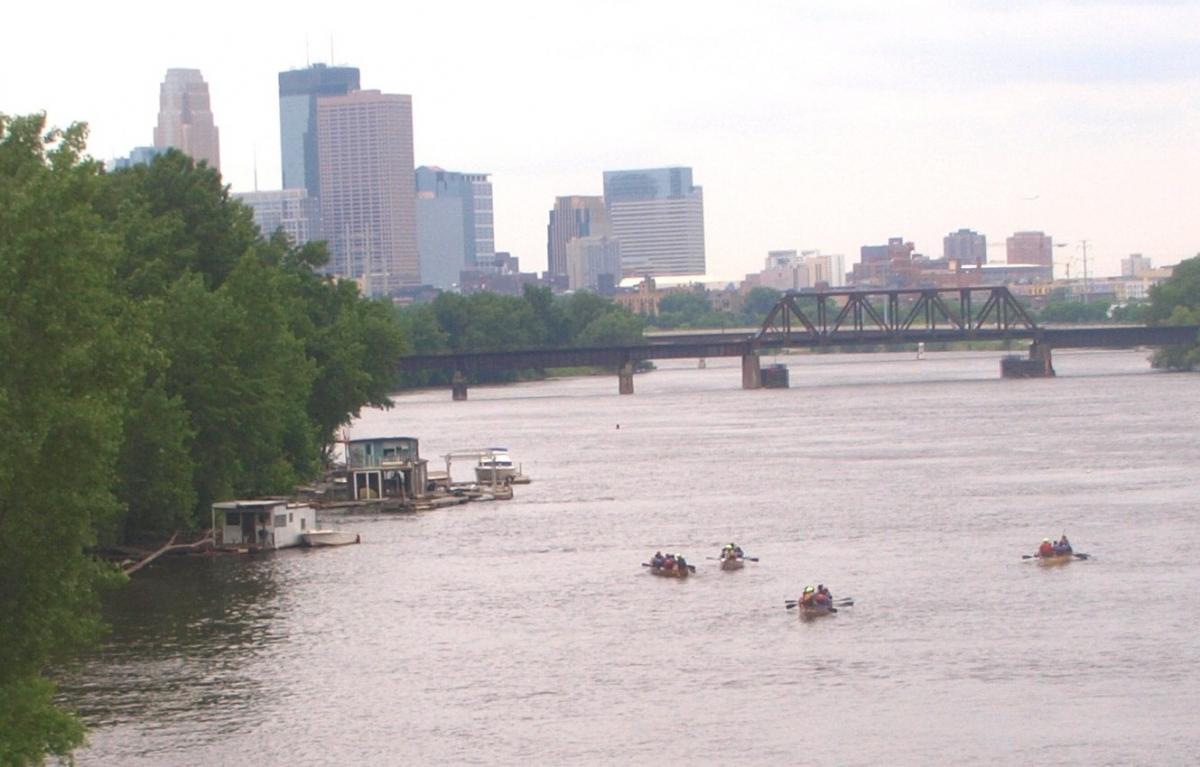
On June 14, 20 Hmong refugee students took a canoe trip down the Mississippi river. The trip began at Brooklyn Park’s River park, and ended at Minneapolis’ Boom island.Hmong canoeists heading towards downtown MinneapolisLearning how to paddleAlong the way, they saw bald eagles, heron rookeries, and turtles and snakes.Pushing offThey made a stopoff at North Mississippi Regional Park, where they learned more about the Mississippi river’s wildlife and ecology.Passing under the I-694 bridge over the Mississippi riverMost of the Hmong students came to the United States between 2004 and 2006 from Thailand’s Wat Tam Krabok refugee camp. All the Hmong students live in North Minneapolis, and all play soccer for Farview park. Many had never set foot in a boat before.Canoeing past the XCel power plant in northeast MinneapolisThe students had a great time, and many said they hoped to take more canoe trips and see more of Minnesota’s nature in the future.CelebratingThe canoe trip was sponsored by the Pohlad Foundation, and guided by Wilderness Inquiry. Continue Reading
“On a normal day, I get up at 5 in the morning. After getting dressed I reach my shop, open the oven and start preparing the meat at around 7 to 7:30 a.m. depending on the traffic,” explains Chai, seated at the dining area near the restaurants at Hmongtown Marketplace. “I try my best to get everything ready before customers arrive at around 9.”Chai is the co-owner of Chai’s Cooking, one of many Hmong-owned restaurants at Hmongtown Marketplace. She runs the restaurant with the help of her husband Cha, who works at the Boston Scientific Corporation for about 8-9 hours daily. Together they opened the restaurant in September last year as Chai wished to co-own a shop with her husband. Continue Reading
When you think about what is going to be the happiest day of your life, what comes across your mind? Many will say that it’s their wedding day: a pure perfect ceremony with families and friends feeling joyous for you and your significant other. Jokes and laughter fill buffet tables, people are dancing, and it is supposed to be the happiest day of your life. But this dream does not apply to Lenda Xiong, who is a Hmong lesbian woman.“Being Hmong, knowing how it is to live in America amongst all the other races, I wonder how I can balance my Hmong and American cultures without the American side tipping down,” said Xiong. Even today, Hmong elders and parents still tell their teens to get married at a young age. Continue Reading
The Hmong 18 Clan Council held an open community forum on Tuesday, April 8 to address recent incidents of violence that have alarmed the Hmong community. The forum, conducted in both Hmong and English, was attended by members of the St. Paul Police Department, the Sheriff’s Department, and Senator Foung Hawj, who joined more than 75 members of the community at Hmong Village in St. Paul.Kevin Vang, President of the Hmong 18 Clan Council, began the forum by holding a moment of silence in remembrance of the victims of the recent crimes. On behalf of the council, Vang issued a strong statement against domestic violence. Continue Reading
Walking into a collection of red modest-looking warehouse buildings in Frogtown — one of Saint Paul’s most diverse neighborhoods — I was immediately transported to the setting of a Southeast Asian street market. The aura of the location brought back childhood memories of weekly trips to the local Indian street market and the aroma of exotic delicacies and freshly baked sesame bread tingled my tastebuds and made my mouth water. An intricate crisscross of shops selling everything from Hmong music, pretty embroidered dresses, utensils, toilet paper and fresh meat, with roughly a third of the stalls dedicated to food immediately greeted my eyes.This cultural and food haven is known as the Hmongtown Marketplace, located only a few blocks from the Minnesota State Capitol at 217 Como Avenue in St. Paul. Built out of a converted lumberyard, the marketplace not only caters to the Hmong population but also to other locals who are interested in Hmong culture and cuisine.Minnesota has one of the largest Hmong communities in the country, with more than 66,000 Hmong residents, according to the 2010 census. Continue Reading
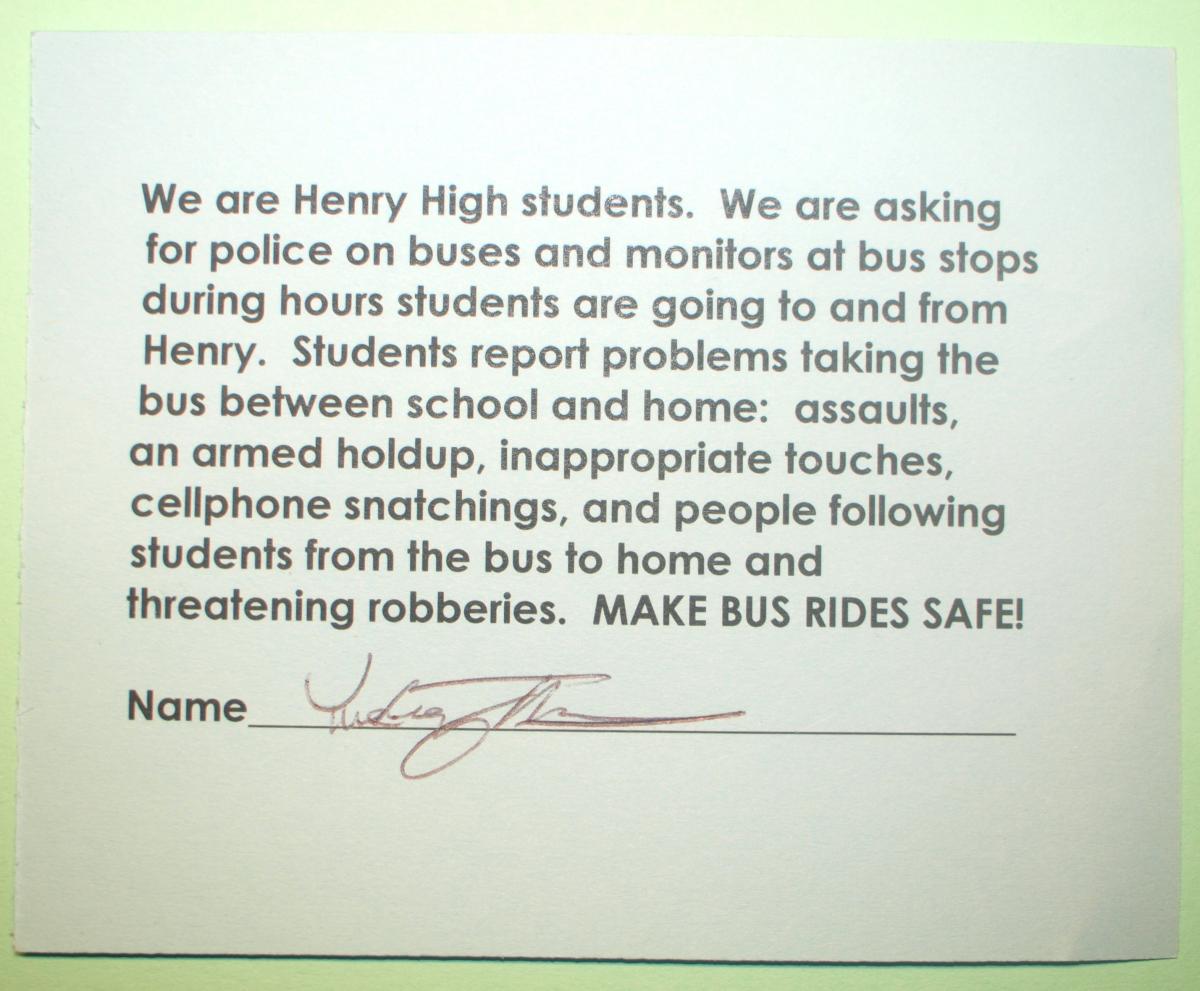
Earlier this week, another Henry High student was attacked while using the city bus Go To card to travel from school to home.The assault took place on Tuesday.The mom reported that her son was coming home from school on the 19 bus line. He got off at a stop that he usually does not get off at because he missed his usual stop. About 2 blocks later he noticed 2 teenagers following him. When he got to the middle of 23rd Ave N and Russell they attacked him in the middle of the street. One went in front of him and asked him for his ipod, one was in back of him with what he said was a gun to the back of his head. They threatened to kill him. Continue Reading