Minneapolis Urban League in trouble

Two weeks ago we wrote about the confusion regarding those who say the Minneapolis Urban League (MUL) is now close to death’s door (see our blog entries of April 1 and April 6), just as the St. Paul Urban League died three years ago, and current leadership who say all is well, and will get even better with more government and nonprofit funding. What do we make of the April 13, 2015 Star Tribune headline: “Minneapolis Urban League accused of potential double dipping,” and the April 16, 2015 headline: “Legislative auditor to investigate Minneapolis Urban League.”Even more troubling is that the concern seems to be the double dipping, not the fact that the programs are not working. Had they not double dipped they could have gone on, business as usual.The hard work of the MUL was once identified by Vernon Jordan as one of the most respected affiliate stars in the Urban League movement in meeting the challenges of the 1920s and on through the 80s. The decline began in 1990, right after the last “State of the MUL in 1989” (see Chapter 14 of The Minneapolis Story, “The Role of Minneapolis Black Organizations”). Continue Reading

Columbus Statue Celebrates Genocide and Should Be Removed

Native American activist groups in Minnesota would like people to learn the real history of Christopher Columbus and quit putting him up on a pedestal at the State Capitol.“We all know in 1492 he sailed the ocean blue,” said American Indian Movement Chair Mike Forcia. “And in 1493 he stole all that he could see.”For more than 83 years a statue of Columbus has gazed from the Capitol toward Minnesota’s Justice Center. For Forcia, real justice would be removing the statue.“We need to deport Columbus,” said Forcia. “We can’t be celebrating genocide anymore.”Genocide isn’t a word most history books associate with Columbus, but he enslaved Native Americans. As governor of the large island he called Espanola (today Haiti and the Dominican Republic), Columbus’ programs reduced the native population from as many as eight million at the outset of his regime to about three million in 1496.Minnesota’s legislature is considering a bill that would change the engraving on the statue from “Discoverer of America” to “Christopher Columbus landed in America.” A co-sponsor of the House bill includes Rep. Dean Urdahl (R-Grove City), who taught high school government classes 35 years.That change misses the point, say Native Americans who marched through downtown St. Continue Reading

Black Folk: Cause for a Different Type of Reporting

Attorney, Jeff Hassan is Executive Director to the African American Leadership Forum. The mission of AALF’s Executive Director is to create full employment, build wealth, close the achievement gap, affect legislative policy and promote healthy living in the Twin Cities African American Community. To accomplish these tasks, Mr. Hassan must first address an age old issue that affect the thought process of every day Minnesotans, especially those who read the Star Tribune. These thought processes could very well inadvertently affect legislation and funding crucial to change necessary in the African American community. As a father is to his child and as a leader is to his tribe —Mr. Hassan is the Alpha Male, and he is very protective of African American leaders and passionately demonstrates this in his open letter to the Star Tribune today. Continue Reading

White Earth constitutional reform stalled by infighting

“The people of White Earth voted for a new constitution, and a judge upheld the validity of that referendum. So why don’t we have a new constitution at White Earth?” For Lorna LaGue, White Earth’s Director of Constitutional Reform, the question is rhetorical. After all, she’s had a front row seat to the clash taking place on her reservation between those who support the new tribal constitution and those oppose to it. Both sides are polarized, passionate, and deeply entrenched after years of infighting which surfaced in conjunction with the first White Earth Constitutional Convention in 2007.The latest dust-up — between White Earth Chairwoman Erma Vizenor, who supports the new constitution as “the will of the people” and those who oppose her efforts — has taken place in the pages of White Earth’s newspaper, Anishinaabeg Today.In the December issue Vizenor used her monthly column to explain that a gag-order had been imposed to prevent the tribal newspaper from printing information about constitutional reform efforts.“The White Earth Tribal Council voted to censor the press from printing any more information or updates on the Constitution of the White Earth Nation,” Vizenor wrote. “The vote took place on Nov. Continue Reading

Nano Days: Exposing Sabathani youth to nano technology

On Saturday, April 4, 2015, the Sabathani Community Center, in collaboration with the Bakken Museum, the Science Museum, the University of Minnesota, and S.E.L.F. International, Inc., hosted the fourth annual Nano Days. By definition, a nano is one one-billionth of something.For example, a nano meter is one-billionth of a meter and is so small that it can’t be seen on a macro scale. It requires a nanoscale to be seen. Scientists must use special tools when working with atoms and molecules at the nanoscale. Nano research is leading to new technologies that are dramatically changing and improving modern medicine, computers, cell phones, energy production and manufacturing.Photo by James L. Stroud, Jr.Bonnie Everts (far right) with Nano Days participantsIn fact, one demonstration during the Nano Days event showcased a waterproof, stain-resistant material used to make khaki pants and rain coats. Continue Reading

Latino renters allege mistreatment in Lyndale

Inquilinos Unidos por Justicia (United Renters For Justice), along with several leaders of the Lyndale Neighborhood Association (LNA), gathered outside the Q.T Properties office on Hennepin Avenue  to protest the numerous fines and alleged mistreatment levied by the building owners. The associations wielded letters from tenants, and a petition demanding better conditions, demanding management to come outside and negotiate. Some were holding signs, and all were holding a sense of frustration.For the past year, there have been frequent complaints of mistreatment and deterioration of conditions at the buildings from Latino renters, along with difficulties in resigning their leases.“Every other moment they have letters saying we’re going to be fined, for their children playing in the hallway, for using the common area outside the apartment spaces, for leaving shoes or bicycles in common areas. These are things people should be able to do in their living spaces, and not have to fear for retaliation,” said Natasha Villanueva, LNAAs each speaker went up to list off their complaints, a common theme was clear: The heavy fines and shifting lease agreements seem designed to push them out. Most of the latino renters are working-class families who can’t afford to take time off work to deal with management, and the persistent fines are taking a toll.“They fined my car twice, which cost me $700. Continue Reading

The Cut: A film about the Armenian Genocide and its Minnesota connection

Editor’s Note: This is second in a series of Minneapolis Saint Paul International Film Festival “citizen reviews”. This one comes on the 100th anniversary of the Armenian Genocide that took place in the waning days of the Ottoman empire in Turkey. The review of The Cut comes from Lou Ann Matossian, who has been working to raise awareness about Armenians who survived and the events leading up to the Armenian Genocide. She also helped director Faith Akin scout locations here in Minnesota, where some of the events in the film take place. In this article, Lou Ann explores the film’s Minnesota connections“Once upon a time / Once upon no time”—the opening words of The Cut evoke a storyteller’s traditional formula in both Armenian and Turkish. Continue Reading

Sing Our Rivers Red raises awareness of missing and murdered Indigenous women

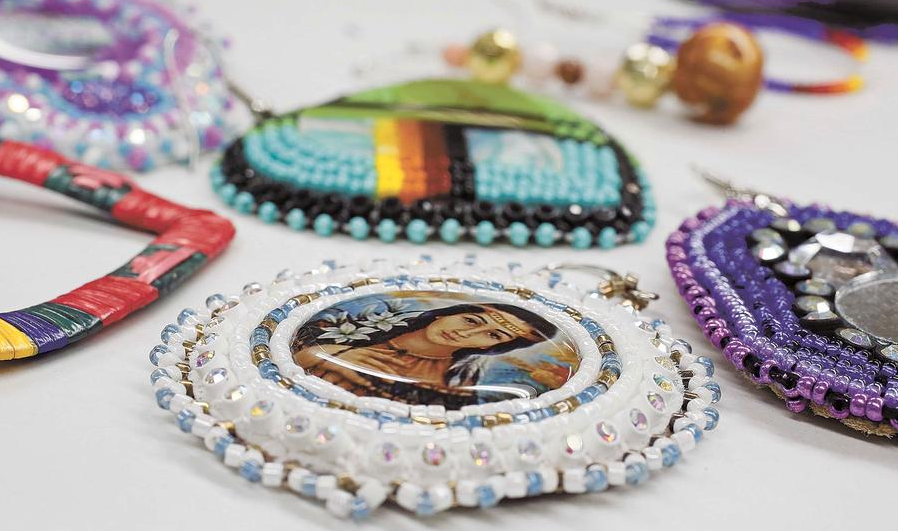
The smell of roasting espresso and justified indignation greeted visitors of the Pow Wow Coffee shop, and adjoining All My Relations art gallery on Friday, April 10th. In collaboration with the Sing Our Rivers Red (SORR) foundation, All My Relations Arts and the Native American Community Development Institute are asking people to donate earrings a part of the SORR Traveling Earring Exhibition. SORR is a foundation dedicated to raising awareness for missing Native American women in Canada and the U.S. Event organizer Susan Horne detailed an example in the death of “August Osage County” actress Misty Upham.“She went missing, and the police questioned her personal state of mind more than they spent time actually looking for her. When the coroner finally released the report, it was ruled a homicide due to blunt force to the back of the head.“Since then, they haven’t covered that it was a homicide, that she was ultimately killed. And it’s stuff like that… this is a Native American woman, 32 years old, goes missing, nothing is accounted for. Continue Reading

Seward Coop names new manager for ‘Friendship’ store

In the United States over the last four decades, more and more people in general and people of color in particular have gradually become familiar with the benefits of healthy eating and health food coops. Simultaneously during that time period, according to the USDA, Minnesota has developed into the second-largest food coop state in the nation.Seward Coop founded their first store in 1972 on Franklin Avenue in South Minneapolis. In their long history, much like many of the Minnesota food coops, very few people of color, including African Americans, have worked in their stores as managers. Currently, after over 40-plus years, Seward Coop has hired Raynardo Williams, a 35-year-old African American born and raised in St. Paul, to manage their second location, which is under construction on 38th Street across from Sabathani Community Center in South Minneapolis.The MSR spoke with Williams (RW) about his vision for the new location and his execution plans for that diverse area. Continue Reading