Star Tribune’s article on Minneapolis Urban League intentionally misleads

The April 13 article by Star Tribune Reporter Alejandra Matos, “Minneapolis Urban League Under Fire for Potential Double Billing” was intentionally misleading and failed to share the true facts. We were quite disappointed to read Ms. Matos’ final product after spending hours with her and providing her with copies of contracts and reports. We even offered to make available students and program participants to tell the tremendous impact that the Urban League Academy Alternative School and the Urban League 13th Grade Program has had on their lives. Ms. Matos rejected our offer and ignored the pages of material we presented documenting our great work with these programs. Sadly, she chose to present a biased and cynical fairy tale masquerading as a news story. The bottom line–The Minneapolis Urban League did not break any rules, did not “double bill”, and has not been “under fire” for violating our contracts with either Minneapolis Public Schools or the Minnesota Department of Education. This purposefully vague article ignored our positive outcomes that have been officially recognized by both the Minneapolis Public Schools and the Minnesota Department of Education. Fact: The Urban League Academy is a 40-year partnership between the MUL and MPS. Continue Reading

U, tribe aim to improve Native diets

Health problems tied to poor diets and nutrition have persistently plagued Native American communities across the country.  To help alleviate this issue, the University of Minnesota is partnering with the Shakopee Mdewakanton Sioux Community in its $5 million “Seeds of Native Health” campaign to improve the health and nutrition of indigenous people nationwide. Research has shown that poor nutrition has led to increased rates of obesity, diabetes and chronic health problems in Native communities. Diabetes is one of the leading causes of death among American Indians and Alaska Natives, according to the U.S. Department of Health and Human Services’ Office of Minority Health. The campaign will address these issues by improving health programs that are already in place and funding new research to identify what types of programs could be createdto alleviate the health disparities, said SMSC secretary and treasurer Lori Watso, who championed the idea for the campaign. She said she hopes individual Native communities will then use the programs and apply them to their specific health needs. Watso said her background in public health and education, along with the work she’s done related to healthy food in her community, has given her an insight into the health issues Native communities are facing, especially regarding their diets. “Through all of that work, I’ve seen firsthand the detrimental effects of poor nutrition,” she said. “I’ve really come to believe that our nutrition is the foundation for everything.” Lori Watso said SMSC selected the University as a partner because of the school’s work in related research and ability to better understand issues at a national level. College of Food, Agricultural and Natural Resources Sciences Dean Brian Buhr said the college has worked with the Shakopee Mdewakanton Sioux Community in the past. The school has also done nutrition-related research and programming across diverse populations, and Buhr said he hopes CFANS can use that research as a starting point in the partnership. He said the University’s role in the campaign will likely be to research strategies to improve Native nutrition and assist in planning a series of annual conferences on the topic. Though Buhr said the partnership’s specifics are yet to be defined, he said the  University has started identifying and uniting people who are doing similar research.  “[Change] does require true partnership,” Buhr said. “I think that’s the exciting part — is to have that opportunity to think about how we can really work together to create some solutions to this.” In addition to partnering with the University, SMSC is working with nonprofit organizations First Nations Development Institute and the Notah Begay III Foundation. Both have a history of working to solve nationwide Native health issues. First Nations Development Institute President Michael Roberts said his Colorado-based organization has a large portfolio in food systems initiatives and a history of research and policymaking. In 2012, the nonprofit gave out $905,000 in grants to organizations aimed at improving health in Native communities. SMSC secretary and treasurer Watso said she’s hopeful that the campaign will finally begin to address some of the issues that have been present in Native communities for many years. “Native people are so disproportionately affected in all health and socio-economic indicators,” she said. Continue Reading

What is the future of the Council on Black Minnesotans?

It is a poorly kept secret that racial disparities exist in Minnesota. In literally every measurable aspect, education, income, housing, employment, etc., people of color lag behind their white counterparts. This in spite of the efforts of many to make and keep Minnesota an all-inclusive place to live, that provides equal opportunities.One of those efforts was the creation of the state ethnic councils. Created by the legislature in 1980, “The Minnesota state councils were created by the legislature to represent and advocate for Minnesota’s communities of color, women, and disability communities. The councils include: Chicano Latino Affairs Council, Council on Asian-Pacific Minnesotans, Council on Black Minnesotans, Minnesota Indian Affairs Council, and Minnesota State Council on Disability and the Office on the Economic Status of Women,” according to the councils’ website.But obviously, even though the councils have existed for 35 years, racial disparities and conflicts remain.The newest race-based conflict is over competing bills in the legislature.The bill at the center of the dispute is HF 1353, whose description reads “Minnesota ethnic councils governing laws revised” and whose lead author is Minnesota State Representative Carolyn Laine, DFL.“The Office of Legislative Auditor in his report last year said that they [the councils] weren’t clear on what their duties were—their duties need to be fine-tuned and clarified,” Laine explained as her reason for drafting the proposed bill.“There was some fine tuning around the edges,” Laine said. Continue Reading

Notes from the Diversity Panels at AWP 2015

It’s about listening and humility.At the AWP conference this past Saturday, I made it a point to attend as many discussions about diversity as I could.  The conference is aimed at writers not librarians–I only dream of calling myself a writer–but I found the perspective quite valuable.  I attended panels that featured writers of color discussing their work and their experiences in the publishing world, and the conversations kept coming back to listening and humility.Can you write outside of your own experiences, including those of race, culture, and gender?  Sure.  But be aware of the complexity there. Continue Reading

BU (Beautifully United): a step to eliminating colorism

Race has been the forefront of conversations for a long time. However, recently with the efforts of #BlackLivesMatter and several of the racist incidents that have been picked up by mainstream media, it seems like there has been limited to no progress in racial politics. Skin color has been a topic of debate amongst African Americans since slavery.Colorism has also been recently covered in the popular documentariesDark Girls (2011) and Light Girls (2015). The skin of Africans has been on display and marveled at for centuries. It has also been ridiculed and demonized for about the same amount of time. Continue Reading

Aar Maanta: a voice of the Somali diaspora

“To me, being a Somali is a blessing because there’s so much richness artistically. And I say it’s a blessing because most of us don’t actually realize how rich our heritage and our culture is.”

-Aar Maanta


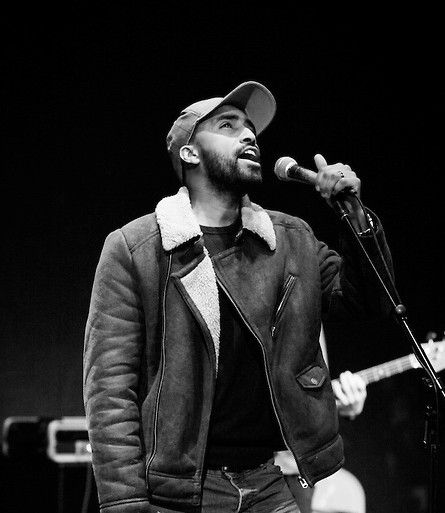
“Somalia was always known as the nation of poets,” Aar Maanta said to the small audience at the West Bank’s People’s Center, during a relaxed Q&A session. An afternoon “mini-performance” and discussion was attended by mostly Augsburg students & faculty, as part of Aar Maanta’s week-long residency in Minneapolis, a joint effort hosted by Augsburg College and the Cedar as part of their longer Midnimo series. Aar Maanta promised to play an additional song if the audience danced, and by the last song of the lunchtime concert, the majority of them were on their feet and dancing. Aar Maanta, born Hassan-Nour Sayid, has returned to Minneapolis this week for the first time since his 2012 performance at the Cedar. Continue Reading

Mizna hosts evening of Arab American poetry and performance

 Arab American Soundscapes: An Evening of Music, Poetry, and Performance lit up the Cedar Cultural Center. Presented by St. Paul-based Arab American arts organization Mizna, the program highlighted live readings and performances from eight different poets–some local and some national, but all identifying in various ways as Arab American. The event was one of the many offshoots of this year’s massive Association of Writers and Writing Programs (AWP) conference.A video projection of a rippling Euphrates River and digital music from local artist Naj Bagdadi served as the backdrop of the evening, both literally on stage and more symbolically as cultural and historical touchstones. (The video was an original Mizna commission, by Iraq-based video artist Ali Al-Tayar.) Opening the evening were poets Hedy Hebra, Glenn Shaheen, Trish Salah, Philip Metres, and Ahimsa Timoteo Bodhrán. Continue Reading

Twins’ new season comes with new Black coach

The Minnesota Twins earlier this week opened its 2015 season with a new manager and its first Black coach since 2012. Butch Davis was hired in January as first base coach.Photo courtesy of the MN TwinsButch DavisDavis worked for 20 seasons in the Baltimore Orioles organization as a minor league coach after eight seasons as a major league baseball player (1983-1994). This is his first major league coaching job.“I’m very easy to get along with,” said Davis during a conference call with reporters, including the MSR, shortly after his hiring.Twins General Manager Terry Ryan said he brought Davis on board for his base-running teaching expertise.When asked, Davis downplayed the fact that he is the team’s only Black on staff. “I’m not adding to the diversity,” he told the MSR. “I like to think I am just one more staff member. I just want to be on the staff to help make the Twins better.”Ryan, however, didn’t shy away from the question when asked later: Having more diversity on the staff “was one of the objectives to make sure that we covered all the areas,” responded the Twins GM. Continue Reading