Writers of color showcased at Gazillion Strong’s AWP event

Through poetry, fiction, memoir, and spoken word, 11 literary artists took part in Gazillion Strong Presents: Writers of Color Showcase, at Aster Cafe in Minneapolis on Wednesday, April 8. Co-sponsored by Boneshaker Books, Moon Palace Books, and Gazillion Strong, a Minneapolis-based nonprofit organization, the event is one of several free, off-site events being held in conjunction with the 2015 Association of Writers & Writing Programs (AWP) Conference, April 8 through 11. More than 12,000 writers, teachers, students, editors, and publishers are expected to attend the national annual event in this year’s host city, Minneapolis. To the delight of a packed house, Kao Kalia Yang, acclaimed author of The Late Homecomer: A Hmong Family Memoir, read an excerpt from her forthcoming volume, The Song Poet, a memoir about her father, Bee Yang, a Hmong man working in the factories of Minnesota. The Song Poet will be published by Metropolitan Books in 2016.Kao Kalia YangOther highlights included readings by Los Angeles-based Nicky Sa-eun Schildkraut and Rachel Rostad, a Macalester student and recipient of an Academy Of American Poets Prize, both of whom explore their exaperiences as Korean American adoptees, among other themes, in their poetry and other genres. Nicky Sa-eun SchildkrautMatthew Salesses offered a sample of his forthcoming novel, The Hundred Year Flood, the story of a young man who escapes to Prague in the wake of his uncle’s suicide and 9/11.Matthew SalessesKeno Evol, a poet, educator, spoken-word artist, fashion designer, revolutionist, dancer, and director rocked the stage with a dynamic spoken word performance. Evol has developed curriculum for Crack The Page. Shift The Stage. Continue Reading

Somali students protest hostile racial school climate

Somalis are under attack in St. Cloud because of their race (they are Black), their religion (they are Muslims), and their immigration/refugee status (they are perceived to be untrustworthy aliens).In the 1990s Somalis began to trickle into the city, and now they are probably the largest Black ethnic group, surpassing the number of Black Americans. Like Black Americans, they also experience intense racial and cultural animus. As compared with the White population, Somalis are sharply different in four categories: race (White European vs. Black African), religion (Christian vs. Continue Reading

Two students work for more Native Americans in the sciences

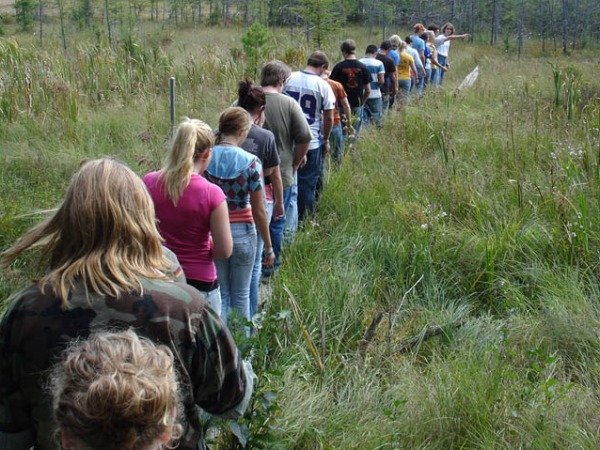
Two students work for more Native Americans in the sciencesByEthan NelsonApril 07, 2015 Native American students have traditionally had difficulties breaking into science-related fields, like biology and engineering.Two University of Minnesota students, Jake Grossman and Siddharth Iyengar, are working to change that.The ecology, evolution and behavior doctoral students are helping oversee a summer research and mentorship program that will help Native American students recognize their heritage in a field that doesn’t often reflect the values of their culture.Grossman and Iyengar are working on a summer program called Our Earth Lodge, a NASA-funded project aimed at encouraging Native American undergraduates to study climate change and potentially pursue science or engineering as a profession. Applications to participate in the students’ research will close Friday.The three accepted students will assist Grossman and Iyengar with their research in plant ecology during the program, which will be set at University-owned Cedar Creek Ecosystem Science Reserve in East Bethel, Minn.The research will intersect Ojibwe traditions and experiences with biology by allowing Native American students to design their own studies.“Science and engineering research reflects our understanding, but it’s mostly a Euro-American perspective,” said Wren Walker Robbins, vice president of the Midwest’s chapter of the American Indian Science and Engineering Society, which is partnering with NASA on the project.Walker Robbins said a lot of people don’t realize that research can lack objectivity, which can discourage Native American students from entering the field if the perspectives shared in it don’t reflect their cultures.“When we look at research experience for undergraduates nationwide, Native Americans are underrepresented significantly,” Walker Robbins said.Grossman and Iyengar attended camps earlier this spring at the Fond du Lac Tribal and Community College in Cloquet to inform their mentoring approach.Neither Iyengar nor Grossman are Native American, and neither had worked with Native students before, they said.“We want to be sensitive and not ignore Ojibwe environmental knowledge,” Grossman said.He said students could do research on topics like how biodiversity affects decomposition or productivity in forests.Iyengar said students will also be introduced to a broad research community.Eric Seabloom, an ecology professor who does research at Cedar Creek, said the center is world-renowned in biology research.“Bringing students into a setting where they’re meeting foremost researchers is really exciting,” he said.The program also includes a three-day STEM summer camp held at Cedar Creek for K-12 Native American students.“They’re learning about science through the tribal lens,” said Mary Spivey, Cedar Creek’s education and outreach coordinator. “It’s a whole different way of looking at the world.” Continue Reading

Dueling State of the City Events Reveal Rift Between Rhetoric and Reality of Inequality

These days it’s hard to tell whether Minneapolis is united about being divided. Last week, two contrasting “state of the city” events — Mayor Betsy Hodges official speech at the American Swedish Institute, and a rally the next morning organized a North-side grassroots group — illustrated the ongoing tension between the rhetoric and reality of racial inequality in Minneapolis.Hodges’ speech, an annual tradition for mayors across the country, emphasized the themes that led her to an easy victory in the 2013 election. As Gino Terrell wrote on the Daily Planet earlier this week, Hodges stressed education, income inequality, and climate change, as part of her plans for the upcoming year. But the well-received speech comes only months after Hodges’ efforts to devote city resources to addressing inequality became surprisingly contentious. During budget debates at City Hall, Hodges’ plans to address racial inequality sparked a small controversy, particularly in parts of the city that are struggling the most with foreclosures and racial inequality. While debating the budget, Council Members Yang and Warsame and other Council Members  voted to defund part of Mayor Hodges’ key proposals in favor of more “meat and potatoes” issues that impact neighborhoods like Jordan or Cedar-Riverside, home to many  of the highest proportions of people of color in the city. Continue Reading

Buffers: farmer mentions removal of Dakota people, whines about land grabs in same breath

The tweet above by a friend who attended the Governor’s buffer initiative meeting in Worthington was fleshed in a Worthington Daily Globe article by Julie Buntjer, Dayton’s buffer initiative targets water quality:A New Ulm-area farmer was the first to speak up, saying that of the 55 million acres in Minnesota, the state’s Department of Natural Resources (DNR) manages more than 5 million acres, and 27 million acres is in production agriculture.“I foresee this as a land grab,” the man said. “My ancestors settled in southern Minnesota in 1858. They removed the Native Americans from this property to gain access to it, and now I look at our government moving us off of our land.”Moerke noted in a message that this statement caused some in the audience to groan.  Buntjer reports on the governor’s response:“We’re not trying to take your land away, but when it comes to runoff and stuff going into the water, that’s a different story,” Dayton responded. “If everything were good out there, there’d be no reason to get involved with it.”He then turned the table on the crowd, asking for solutions to clean up Minnesota’s waters.Covering the same meeting, MInnesota Public Radio’s Mark Steil reports in Plan to curb runoff too costly, unworkable, farmers tell Dayton:At a meeting in Worthington Thursday, farmers said they want to help solve the problem. But many told Dayton his plan goes too far and would take too many acres of cropland out of production.”I foresee this as a land grab,” said Tim Waibel of New Ulm, Minn. “When you start taking 50 feet of my ditch slopes away, it hurts you in the back pocket.”Moerke confirmed that Waibel is the same guy who mentioned that his ancestors removed Native Americans from the land and he now fears a land grab by the government.  This is a curious take from a guy who grabbed $588,971 in farm subsidies between 1995-2001, $4,765 of which came from conservation subsidies, between 1995 and 2012, according tothe EWG Farm Subsidy Database.Here’s a screengrab of the payments:[Another sign of Tim Waibel’s oppression are the crop subsidies he’s received, via EWG Farm Subsidies Database. He’s a victim.]Waibel’s farm property is locate in rural Courtland, Nicollet County. Courtland is a small town near New Ulm.  Waibel’s wife, Mary Jean Waibel, received $115,293 in subsidies from 2006 through 2012, according to the EWG database.In an added twist of irony, the New Ulm Journal reported in 2008 that the Pawlenty administration gave the Waibels a good neighbor award. Continue Reading

Guide to the Importance of Powwow Dances

World champion jingle dress dancer Willow Abramson (Shoshone-Bannock) faced difficult challenges in her life. In 2005, she and her family were involved in a car crash; her baby daughter and husband did not survive. She found healing in dancing.She believes the energy and life on the powwow circuit helped her find strength to raise her son. She encourages her fellow dancers, “Some of us dance to forget, some of us dance to remember, some of us dance to heal, but whatever the reason, just dance with your heart and your spirit: we see it shine when you dance.”It’s officially Powwow Season in Indian Country! The anticipation and excitement dancers and singers built up throughout the winter months will be unleashed within many traditional and contest powwows throughout the country this year. Continue Reading

PhD Project professors Lewis, White, Jones promoted at University of St. Thomas

The PhD Project, an award-winning program to create a more diverse corporate America, announced three Project participants have been promoted to associate professors with tenure at the University of St. Thomas. Dr. Nakeisha Lewis, has been promoted to associate professor with tenure and received her Ph.D. in Advertising from the University of Texas at Austin. Dr. Sheneeta White, has been promoted to associate professor of operations and supply chain management with tenure and received her Ph.D. from Virginia Polytechnic Institute and State University. Dr. Janine Sanders Jones, has been promoted to associate professor with tenure and received her Ph.D. from the University of Minnesota.Lewis is one of only 95 female African-American marketing business school professors in the U.S. White and Sanders Jones are two of only 184, female African-American management business school professors in the U.S.The PhD Project was created in 1994. The project’s vision is to diversify corporate America by increasing the number of minority business professors (African-American, Hispanic-American and Native-American), who attract more minority students to study business in college.”These three professors have succeeded in the very difficult endeavor of being promoted to associate professors with tenure,” said Bernard J. Milano, president of The PhD Project and president of the KPMG Foundation, founder and lead funder of the program. Continue Reading

St. Patrick’s Day disturbances create concerns

“Banish bias, but keep downtown livable,” blared the Star Tribuneeditorial of Monday, March 23, 2015, warning about unacceptable public behavior threatening urban revival while avoiding the frustrations of exclusion felt by African Americans.Since 2006, I have written over 100 columns and blog entries about the need for plans to deal with this, which have gone unheeded (they are listed in our “Solution Paper #47”). The Star Tribune is belatedly reinforcing what this column and newspaper have reported (see column of January 14, 2015: “Promises, Promises, Promises…with no follow through”). We need to signal to young African Americans that the broader community is listening to their expressions of frustration, concern and anger.The solution is not to continue touting prosperity for one segment of the population while carrying out calculated bias against another segment hindering their prosperity. Backlash will dramatically drop if paths to prosperity are open through education and jobs.The St. Patrick Day flash-mob “fun entertainment” disruption (over 300 young people enjoyed fighting with each other for over two-and-a-half hours on the streets of downtown Minneapolis) also caused injuries, including the shooting of two individuals, one in front of Target Field, the other one on West Broadway. Continue Reading

The People’s Passion Play

Today is Good Friday, the day Christians around the world commemorate Jesus’ crucifixion.I did not grow up Catholic, but for as long as I can remember, I’ve been drawn to its iconography, its saints and the pageantry of holy days and feasts. I have a Saint Martin de Porres statue in my house. And sometimes, despite, my lack of religious devotion, I pray.My family was also not religious. In fact, my grandmother and great grandmother, both Salinan Indians from the central coast of California, viewed the Catholic church and all its Missions with a healthy dose of distrust. But, it was part of their lives…floating from background to foreground at any given time. Continue Reading

Hayden, Champion introduce legislation to address health disparities

eputy Majority Leader Sen. Jeff Hayden (DFL-Minneapolis) and Sen. Bobby Joe Champion (DFL-Minneapolis) have introduced legislation to address alarming health disparities in the African American community. The authors have introduced three major pieces of legislation: SF1871 Partnerships for Healthy Futures a grant program to build community services and providers in order to identify, coordinate and expand opportunities for improving health outcomes for communities of color, SF1701 which will require health insurance coverage for colorectal cancer screenings for high risk populations, and SF1836 which will study and provide recommendations to decrease menthol cigarette usage by African Americans. “People of color, especially African Americans and American Indians, suffer from unique health disparities compared to the broader population,” Hayden said. “This package of bills focuses on intervention and prevention of some of the chronic challenges facing our constituents. Now is the time for action, it is time we pass legislation that gets at the entrenched causes and systemic inequity which has allowed our communities to suffer too long.””We have studied the disparities facing African American and American Indian populations again and again. I am looking forward to moving from discussion to action with these bills to address higher rates of cancer, assistance and resources for improving health outcomes, and discovering the root causes of extremely high rates of menthol cigarette smoking among African Americans,” Champion said. Continue Reading