How the Minnesota DFL Lost Their Narrative

    One can already see the Minnesota Republican political narrative for 2016 and it is not pretty for the Democrats.  Simply put the narrative is that the DFL is out of touch with middle class Minnesota, they are the party of gridlock, and GOP will defend the middle class and stop the bickering.  How did all this happen?    The strength of the DFL narrative in 2010 and even though most of the 2013-14 session was its defense of the middle and working class.  They had a great narrative: an increased minimum wage, tax increases on the wealthy and cuts for the middle class, more money for K-12, and the Women’s Economic Security Act.  This is a terrific “We are on your side message.”  But somewhere along the way to the 2014 elections the Minnesota DFL lost their message and the battle for images and symbols.  Spending on a new state senate office building did not help and the messaging on taxes and spending fell flat, costing the DFL the House in 2014.     Now the DFL are in trouble.  Dayton’s push for commissioners’ pay raises was simply politically dumb.  After years where most Americans if not Minnesotans have not seen pay increases, arguing for commissioners’ raises when they already make two to three times the median family income in Minnesota was not smart.  Nor were defenses of it by some DFL commentators that these individuals deserved raises or else government would not be able to recruit or hold talented administrators.  It sounded greedy…like private sector business CEOs who whine they do not make enough.    But then it got worse.  The Dayton-Bakk fight did not look good.  It painted a party as dysfunctional, undermining another narrative that the DFL had for the last two years–they delivered on their promises.  And then the deal to address the raises was brokered by Kurt Daubt–the GOP Speaker of the House.  His intervention sets up a narrative that the DFL cannot govern alone and that what is needed is unified Republican control of the legislature.  Moreover the deal he did broker did not take the pay raises off the table–it merely postponed them until later this year–even closer to the 2016 elections.    And then this past week the State Auditor sharply criticized the mismanagement of MNSure.  Yes it has insured many more Minnesotans yet its managed was flawed and it needs to be fixed.    Finally, while no one doubts we need to spend billions more on infrastructure and that the Republican proposal to spend the non-existent surplus on roads and bridges is an insufficient smoke and mirrors idea, the DFL have not messaged their proposed tax increases well.    So think about 2016 and the issues Republicans will use.    The Senate office building will be nearly done, standing as a monument to government excess; pay raises for commissioners while the middle class struggle; tax increases for infrastructure; health care mismanagement; and possibly a feuding DFL that cannot work together.  Together they paint a picture of Democrats as out of touch with middle class Minnesotans and as a party that potentially cannot get anything done (aided by Republicans who now have an incentive to drive the state into a budget impasse or shut down again and then blame it on the DFL).  This is a 2016 Minnesota replay of what the national Republicans did in 2014 when the ran against Obama and the Senate Democrats.    What is perplexing is how the DFL lost control of its narrative again.  In the larger scheme of things they are probably do way more to help middle class Minnesota than the Republicans are, but they are simply terrible at messaging and one wonders if they can improve their ability to communicate and understand how these issues play beyond their metro base. – [See original post at: http://schultzstake.blogspot.com/2015/02/how-minnesota-dfl-lost-their-narrative.html#sthash.okyzJ8ed.dpuf] Continue Reading

Mission to Cuba would make Minnesota farmers first to market

In mid-December the Obama administration announced it would begin to normalize relations with Cuba, opening the door to potentially lucrative new markets. Now, Minnesota farmers want to be among the first to move through it.The House Agriculture Finance Committee heard legislation Tuesday which seeks to help them do just that. HF772, sponsored by Rep. Jack Considine Jr. (DFL-Mankato), would provide $100,000 to identify existing and emerging opportunities in Cuba for Minnesota’s agricultural producers.“I believe there’s an opportunity for the best family farmers in the world, here in Minnesota, to expand the markets in Cuba as the restrictions are being lifted,” Considine said. “I’d like to see us get down there first.”The bill, which was laid over for possible omnibus bill inclusion, would also direct the Department of Agriculture to effectively communicate these opportunities to producers and processors. The companion, SF733, is sponsored by Sen. Dan Sparks(DFL-Austin) and awaits action by the Senate Finance Committee. Continue Reading

An Orthy Adversary: The Battle of Orth House, as told by a local internet junkie

I spend too much time on the internet. The internet has lots to offer for every noble desire and depravity imaginable. A lot of what it has to offer is a respite from boredom. Waiting in lines, waiting through commercials, waiting for something to happen at work. All that waiting has a tendency to make me crave drama and conflict.I’d say one of my favorite pastimes is watching people lose their shit and turn into nasty, ugly jerks over disagreements. Continue Reading

Democrats, Republicans, Libertarians and Members of Occupy to Propose New Constitutional Amendment to Prevent Unlawful Search and Seizure

  It’s not often you get Democrats, Republicans, Libertarians, and members of Occupy to agree on something. Today  at 9:45 a.m. that happens as legislators hold a news conference to promote an amendment to Minnesota’s constitution to protect personal data from unreasonable search and seizure without a warrant.Supporters say the amendment is needed to clarify that personal data is covered by the fourth amendment. Bill author Sen. Branden Petersen (R) points to recent revelations that a loophole in federal law allows the government to search and seize any emails that are more than six months old without a warrant.The bill has been passed through the Civil Law Committee and will be taken up in Government Operations committee on Thursday. The bill still does not have a hearing scheduled in the Senate Judiciary Committee. Petersen says Sen. Ron Latz (DFL) still needs to be convinced the bill should be heard. Replay of the video is above. Continue Reading

Fond du Lac Band working toward restoration of elk in northeastern Minnesota

DULUTH — The Fond du Lac Band of Lake Superior Chippewa wants to bring wild elk back to northeastern Minnesota, but the plan could face some rough patches. Elk tend to get into trouble with their human neighbors.The big browsers once roamed not only Minnesota but most of the continental United States. Testament to their presence in the state comes in geographic names: The state sports one Elk River, several Elk Lakes, and at least one White Elk Lake. They were killed off by white settlers, retreating to strongholds in the Rocky Mountains by the late 1800s.Advocates say bringing the native animals back will increase diversity, encourage wildlife tourism, provide hunting opportunities, and restore the ecosystem more closely to what it was before the massive disruptions of white settlement. But elk will face some challenges fitting into Minnesota’s modern landscape.“Human acceptance will be the biggest challenge,” said Bill Berg, a retired Department of Natural Resources (DNR) wildlife research biologist. Northwestern herdsCourtesy of Fond du Lac Band of Lake Superior ChippewaElk once roamed not only Minnesota but most of the continental United States.Berg served for years in northwestern Minnesota, so he’s dealt with elk-human conflicts. Continue Reading

Police body cams raise privacy fears

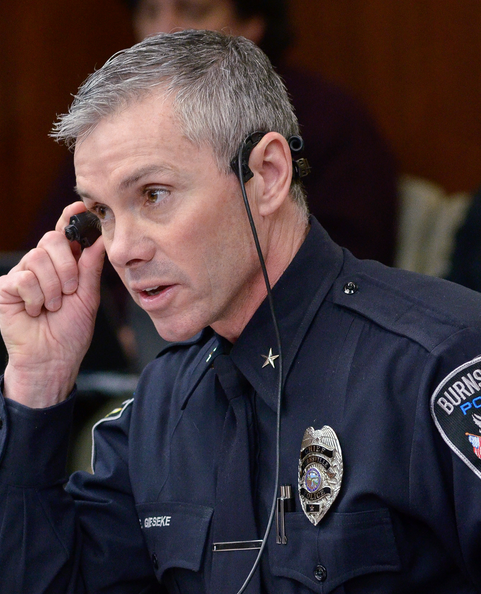
Minnesota faces complicated questions about how to handle video from police body cameras, the House Civil Law and Data Practices Committee heard at an information-only meeting Tuesday.Burnsville Police Chief Eric Gieseke, who said his department was a pioneer in the use of body cams, brought several models from the past to show the devices’ evolution. From the time of the city’s first homicide scene caught on responding officers’ body cams, “we were believers,” he said. The video “preserved evidence in such a way that it helped us build our case.”Don Gemberling, Minnesota Coalition on Government Information board member, said the body camera data falls under the state’s data practices law, with the presumption that all government data is public unless the Legislature makes exceptions.Videos showing multiple people raise special problems, he said, when some of those shown are protected under state privacy laws and others are not. Gieseke said responding to a public data request meant two days of work for his department to blur and redact 13 minutes of body cam video.Rep. Debra Hilstrom (DFL-Brooklyn Center) expressed concern about videos classified as public data that show children or people who are naked or partly undressed. She said a website outside of Minnesota streams body cam video obtained through an ongoing public-data request.The concern about video from first responders at private homes becoming public data was personal for Rep. Nick Zerwas (R-Elk River). Continue Reading

Governor’s proposed pre-K options get mixed reaction

House members, in a joint hearing of the education and health and human services finance committees, pulled out their metaphorical magnifying glasses Wednesday to take a closer look at Gov. Mark Dayton’s proposed $130 million increase over the next biennium in early education opportunities for pre-K children of low-income families.The reaction to the proposal was mixed.Last month the governor unveiled in his 2016-17 biennial budget proposal, which calls for a $418 million increase in pre-K-12 spending. He targeted $109 million of that to expand pre-K learning opportunities for 31,000 children of low-income families and $19.4 million to eliminate the current 2,485-child wait list for Head Start enrollment.Rep. Mary Franson (R-Alexandria) said she was particularly concerned that only child care providers who participate in the Department of Human Services-sponsored “Parent Aware” rating system would be eligible to receive children whose families will use early learning scholarship dollars.Nearly 1,900 of more than 11,000 licensed providers across the state currently participate in the program.“It doesn’t seem like the providers want to participate in the Parent Aware program,” Franson said.Human Services Commissioner Lucinda Jesson emphasized that the Parent Aware ratings system is a voluntary program, but that providers have increased their participation since its statewide rollout in 2012.“I think you are far more likely, if you are parent, to make sure that your children are getting that kindergarten-ready experience if it is a rated program,” Jesson said.Others, like Rep. Jerry Hertaus (R-Greenfield), said they wonder whether the governor’s proposal – which includes a voluntary option for elementary schools to eventually “scale up” to include half-day, pre-kindergarten education for 4 year olds –creates unnecessary competition between public schools and the state’s already existing 11,000-plus child day care providers.The Department of Education is attempting to work with schools and providers to provide a system that leans on a multitude of early learning options, said Bobbie Burnham, director of the department’s Early Learning Services.Rep. Erin Murphy (DFL-St. Paul) praised the department’s efforts to combat the achievement gap by increasing state support for expansion of early learning opportunities for children who live in poverty.  Murphy, who supports a universal pre-school model, said she wants the education and human services departments to explore opportunities to ensure that licensed child care providers can fit into such a system if it ever came to fruition.Rep. Jenifer Loon (R-Eden Prairie) questioned the governor’s proposal to move toward school-based pre-k programs and whether such initiatives are really targeted to help low-income families or whether they would, in effect, end up launching entitlement-based programs that apply to all children, regardless of income-based need.“With resources so scarce and economic questions on these programs, why move in that direction where it’s not targeted to those most in need?” Continue Reading

Clergy: “The Few” Still Suppressing Voting Without Help Of Voter ID

Minnesota’s battle over voter photo ID may be over, but it’s not forgotten. In 2012 Republicans put a constitutional amendment on Minnesota’s general election ballot barring citizens without a photo ID from voting. It was defeated. Reverend Paul Slack says voter photo ID is just one of many ways those who control the reins of power are trying to prevent more people from voting.  

“I think (voter photo ID) is about power, in people wanting to maintain power. Continue Reading