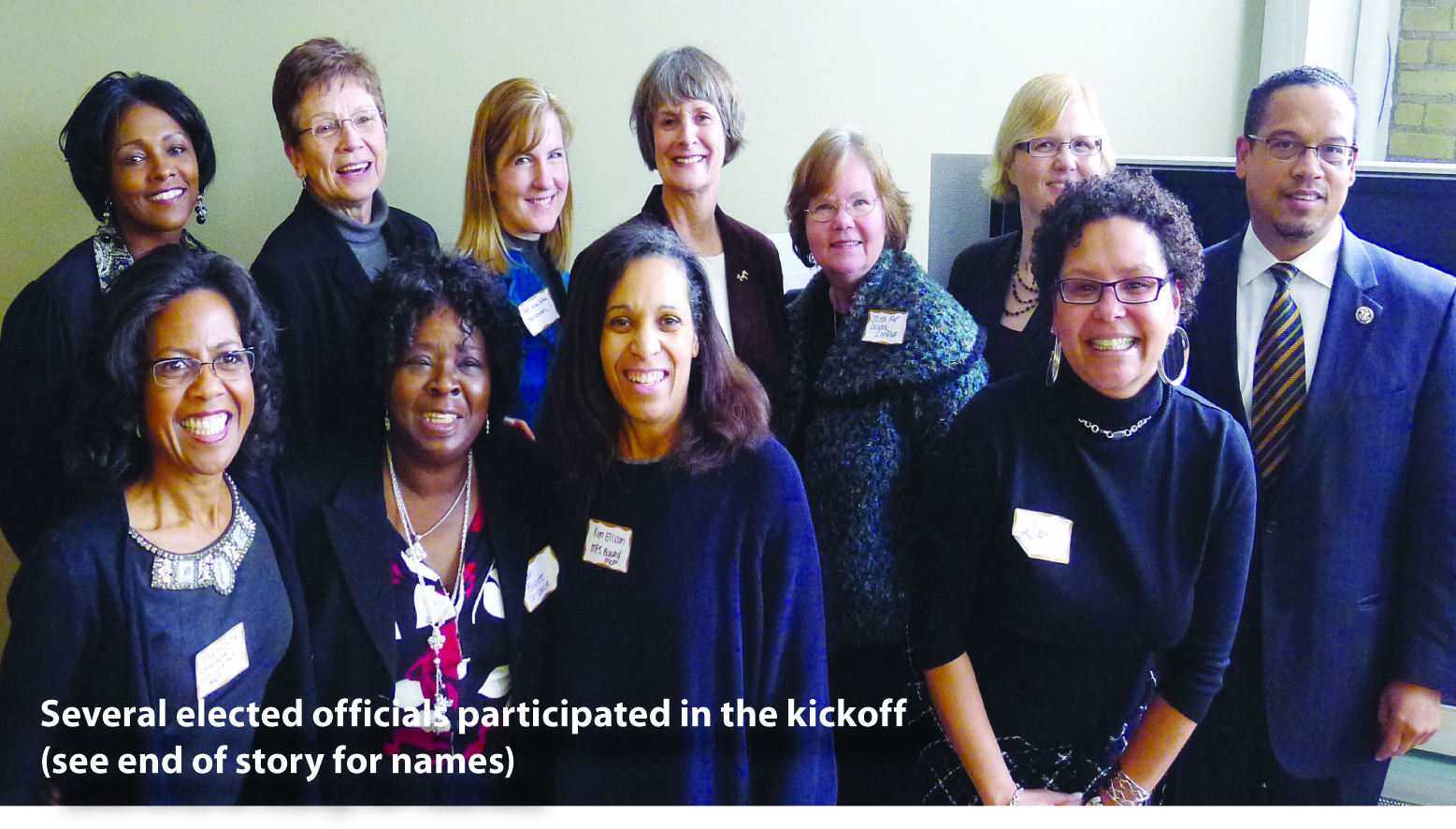
On Saturday, December 10 on the 50th floor of the IDS tower overlooking the Twin Cities skyline, approximately 300 African Americans met for the sixth African American Leadership Forum (AALF), welcomed by moderators Chanda Smith-Baker and Aasim Shabazz.Since the last full forum gathering in June, AALF work groups have been continuing to meet for about two hours per month to further the agenda on their four focus areas: health and wellness; economic development; family, culture and spirituality; and education. Saturday’s meeting was a rally for support, providing an update on what has been achieved since June.In June, the group presented a “blueprint for action,” identifying the problems that needed to be addressed. Since that time, the education work group, which has probably progressed more rapidly than other groups, released A Crisis in Our Community: Closing the Five Education Gaps detailing what causes the achievement gap.“How weary I am of mainstream organizations and leaders, and yes, even funders, who think they know better than we do about how to heal our community,” said Karen Kelley-Ariwoola, AALF member and vice president of charitable philanthropy at the Minneapolis Foundation.“I have the privilege of sitting around a lot of tables on the issues of education,” Kelly-Ariwoola continued, “and of late I have taken great joy in saying, “Did you know that there are five gaps? [That] changes the dynamic of the conversation; it adds texture and context in a way that I believe only we can do about our own community.”The five gaps are:Preparation Gap: African American students who enter kindergarten less prepared because of low-income, less-educated parents. It notes that cultural identity and health issues impact academic achievement.Belief Gap: focusing on how the expectations of those involved with a student’s success — including the student — impact the success of the student.Time Gap: recognizing that most African American students function below their grade level.Teaching Gap: placing the best teachers with students that have the greatest needs.Leadership Gap: highlighting the importance of school administrators and principals.This 30-page document, along with the Education Work Group Strategic Plan Overview, details the AALF response to closing the achievement gap based on input from Eric Mahmoud, executive director of Seed Academy/Harvest Preparatory, one of the few schools in the state where African American children are performing at grade level based on state test scores.What have they done?What the forum does is take people who are involved in organizations through employment or volunteer avenues and link them with initiatives to further the forum’s agenda. Continue Reading