A short stick for East Metro transit?

East metro leaders often complain about a lion’s share of the Twin Cities’ public resources going to the Minneapolis side of the metro. Since the Golden West, as the late Minneapolis Mayor Charlie Stenvig called it, is home to two-thirds of the region’s population and development, a similarly proportional allotment seems to make sense. Continue Reading

Freeing up transit

It was interesting, and a bit bemusing, when Michael Bloomberg, mayor of one of the world’s most transit-rich cities, opined last fall that in a perfect world, transit should be free and driving should carry a direct fee. Hizzoner doesn’t run New York’s subways and buses, so they still charge fares, but his idea is catching on elsewhere, especially in Europe, but also a few places stateside. Continue Reading

Driven to poverty in the suburbs

With their sprawling geography and spotty transit service, suburbs are a lousy place to be poor. But that hasn’t stopped people struggling to reach the poverty line from moving there. In the Twin Cities, more than half the poor now live in suburbs.

Continue Reading

Some suburbs see transit tax need

Leaders of the Twin Cities’ most exurban counties, Scott and Carver, declined to levy a quarter-cent sales tax for transit while the five other metro counties did so under the Legislature’s 2008 transportation finance law. Now Gov. Mark Dayton has proposed adding another quarter-cent in all seven counties without a local say-so. Continue Reading

Upgrades shrink Hiawatha delays

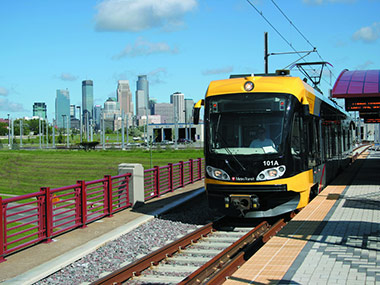
Minnesota’s first light rail line got some deserved criticism for the auto traffic delays it caused along its Hiawatha Avenue corridor in Minneapolis. Some drivers had to wait as much as 11 minutes to get a green light at street crossings when passing trains scrambled the traffic signals. Continue Reading

A safe walk in an autocentric environment

Walking, the original and most basic form of human transportation, is staging a comeback in Minnesota. Bike Walk Twin Cities reports that it increased 17 percent in the metro area from 2007 to 2010. But our growing numbers of pedestrians still face a built environment designed for car travel and little else. Continue Reading