BU (Beautifully United): a step to eliminating colorism

Race has been the forefront of conversations for a long time. However, recently with the efforts of #BlackLivesMatter and several of the racist incidents that have been picked up by mainstream media, it seems like there has been limited to no progress in racial politics. Skin color has been a topic of debate amongst African Americans since slavery.Colorism has also been recently covered in the popular documentariesDark Girls (2011) and Light Girls (2015). The skin of Africans has been on display and marveled at for centuries. It has also been ridiculed and demonized for about the same amount of time. Continue Reading

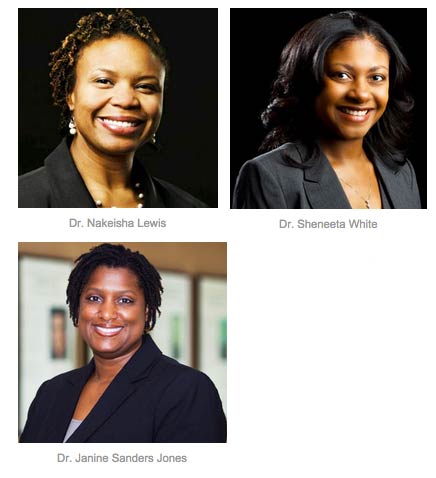
PhD Project professors Lewis, White, Jones promoted at University of St. Thomas

The PhD Project, an award-winning program to create a more diverse corporate America, announced three Project participants have been promoted to associate professors with tenure at the University of St. Thomas. Dr. Nakeisha Lewis, has been promoted to associate professor with tenure and received her Ph.D. in Advertising from the University of Texas at Austin. Dr. Sheneeta White, has been promoted to associate professor of operations and supply chain management with tenure and received her Ph.D. from Virginia Polytechnic Institute and State University. Dr. Janine Sanders Jones, has been promoted to associate professor with tenure and received her Ph.D. from the University of Minnesota.Lewis is one of only 95 female African-American marketing business school professors in the U.S. White and Sanders Jones are two of only 184, female African-American management business school professors in the U.S.The PhD Project was created in 1994. The project’s vision is to diversify corporate America by increasing the number of minority business professors (African-American, Hispanic-American and Native-American), who attract more minority students to study business in college.”These three professors have succeeded in the very difficult endeavor of being promoted to associate professors with tenure,” said Bernard J. Milano, president of The PhD Project and president of the KPMG Foundation, founder and lead funder of the program. Continue Reading

Hayden, Champion introduce legislation to address health disparities

eputy Majority Leader Sen. Jeff Hayden (DFL-Minneapolis) and Sen. Bobby Joe Champion (DFL-Minneapolis) have introduced legislation to address alarming health disparities in the African American community. The authors have introduced three major pieces of legislation: SF1871 Partnerships for Healthy Futures a grant program to build community services and providers in order to identify, coordinate and expand opportunities for improving health outcomes for communities of color, SF1701 which will require health insurance coverage for colorectal cancer screenings for high risk populations, and SF1836 which will study and provide recommendations to decrease menthol cigarette usage by African Americans. “People of color, especially African Americans and American Indians, suffer from unique health disparities compared to the broader population,” Hayden said. “This package of bills focuses on intervention and prevention of some of the chronic challenges facing our constituents. Now is the time for action, it is time we pass legislation that gets at the entrenched causes and systemic inequity which has allowed our communities to suffer too long.””We have studied the disparities facing African American and American Indian populations again and again. I am looking forward to moving from discussion to action with these bills to address higher rates of cancer, assistance and resources for improving health outcomes, and discovering the root causes of extremely high rates of menthol cigarette smoking among African Americans,” Champion said. Continue Reading

MOA outwitted after Twitter fiasco

 Black Lives Matter exposes U.S. economic hypocrisyThe Mall of America (MOA) got caught with its underwear around its ankles last week when it tried to launch a #itsmymall Twitter campaign to promote the mall and to try to overcome the black eye it gave itself after its inane, but predictable, response to the peaceful anti-police violence protest last December.MOA has been trying to prosecute, persecute and defame activists from Black Lives Matter Minneapolis, primarily because its protest took the position that the mall is public space, because it takes and receives public dollars and public subsidy. In an absolute stroke of genius, Black Lives Matter Minneapolis with its pro-Mike Brown, Eric Garner and anti-police violence protest in December, exposed the hypocrisy of private enterprise receiving public funding and public subsidy while enforcing private property rights.By hosting a protest at the mall, Black Lives Matter treated the mall as a public space, a town square, since receiving public dollars makes it, well, public. Ironically, by launching a campaign (#itsmymall), implying that the MOA is the people’s mall, it makes the point of Black Lives Matter, which is, it is a public space. So which is it, MOA, our mall or your mall?It also reveals that the MOA is experiencing financial pain as a result of the Boycott Mall of America campaign launched by Black Lives Matter. Black Lives Matter and all of us who joined the protest are correct: So-called private entities that take public monies (or public anything) that comes from taxpayers should not be afforded the rights of private property or private enterprise.What Black Lives Matter inadvertently exposed was the slick underbelly of U.S. economics, and that is that this system uses its citizens and their money to support the enrichment of big business. Continue Reading

We expect better from the StarTribune

The StarTribune article on March 18, “Nonprofit paid to help with minority hiring at stadium short of goal…Workforce Is Diverse, But No Thanks to Nonprofit That Was Hired to Help”, totally missed the mark. We expect better of the StarTribune. This story was far beneath the standards we expect from a major newspaper in a growing and diverse community. It is no secret that Minnesota has the worst racial disparities on most socioeconomic indicators in the nation. The success of minority employment hiring on the Viking Stadium construction could have far-reaching implications for the economic well-being of our community as a whole. This begs the question of why the success of the Viking’s Stadium, which is exceeding all its workforce and business development goals for people of color, is not being trumpeted. Rather than applauding and understanding this unprecedented accomplishment, the StarTribune squandered this opportunity to educate its readers concerning employment disparities in our cities.  Instead, it chose to unfairly castigate a well-respected African-American led legacy institution – Summit Academy Opportunities Industrialization Center (SAOIC) and its African-American leader Louis King.King, like many others, may have underestimated the actual effectiveness of Mortenson Construction, THOR Construction, subcontractors, the MSFA equity program and the trade unions; and therefore overestimated the actual needs on the project. Continue Reading

Theater Review: There are other worlds

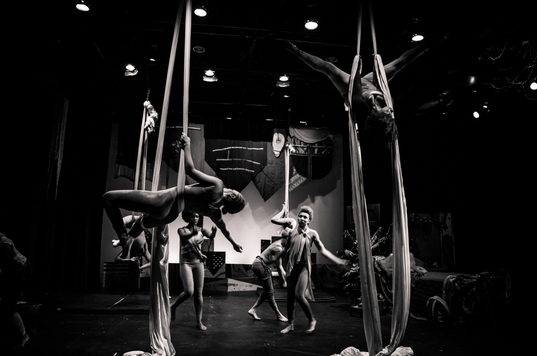
This past weekend, Free Black Dirt presented There Are Other Worlds a play written and directed by Junauda Petrus and produced by Erin Sharkey (these two form the core artistic team of Free Black Dirt). The work premiered as a work in progress at Open Eye Figure Theatre in 2013 and returns in 2015 as a fully realized play at Intermedia Arts in Minneapolis, MN.I have been carrying around this quote by Toni Morrison.  “So Ralph Ellison writes ‘Invisible Man’ and as good as that book is, I have to ask, invisible to whom?  Certainly not to me.”  She is talking so succinctly about gaze, the white gaze, the male gaze and what it means to make art and for whose gaze. Junauda Petrus’s play There Are Other Worlds is the flip side to this question.  The play is clearly written with a black female gaze in mind.  The entire cast are women of color and the power and beauty present in this play comes from that root and love of Black Women. That the rest of us are invited to witness and imbibe is a gift and we are all stronger for it.I saw the play on the closing night after six sold out, standing room only performances. Such a response speaks to the fact that there is an audience eager and willing for this kind of work.  On the political face of it we might merely say how important it is to support an emerging black woman playwright but this is art and what really matters is the actual work.  There are Other Worlds is good theater. The play uses movement, aerial arts, more traditional scenes of dialogue and a vast soundtrack that both grounds the play in the late 1990’s with hip-hop of the time and spans time with music from other eras as the two young women, Dreamah and Sarya explore current music and also discover Sun Ra, Ornette Colman and other jazz greats.  The original soundtrack created by Sarah White along with the use of aerial arts takes the play outside the day to day and into the universe/spirit realms. Joy Spika and Jordan Hamilton designed the set which is beautiful and layered.  Tree branches, paper lanterns and mask like wire sculptures hang from the ceiling.  One side of the stage is the bedroom of the teenage daughter Dreamah and is overflowing with rich color and vibrancy.  The other side of the stage is stark with a yoga mat and pile of books and serves as the jail cell for Ameri.  The stage also holds four location for the long white silks on which the women swing, climb, float, cocoon and spin doing aerial work.  The rest of the set design is beautiful, evoking stars and cosmos and quilts and mathematical calculations but was wisely abstract enough to open up the worlds that were being created.  The play centers on the frayed relationship between Ameri Akenyemi who has been in prison nine years and her two young daughters, the teenage Dreamah and the young adult Gospel.  It also revolves around the transformative relationship between Dreamah and the wildly openhearted, Sarya Rice.   Also present are ancestors, a group of talented dancers dressed in purple who appear and disappear; never speaking but evoking, dancing and at times literally holding up characters.  Although never on stage fathers are also a strong presence with Ameri’s husband who is trying to hold and protect his daughters and Sarya’s father who she is painfully separated from as he deals with mental illness.The cast is universally strong. Nisreen Dawan as the incarcerated mother Ameri Akenyemi was effortless as both a young revolutionary falling in love with a caring man in college and as a 45 year old woman in prison, taken from her husband and daughters and trying to stay whole as one can in those circumstances. ShaVunda Horsley as Dreamah Akenyemi carried a good deal of the play forward.  Her skill was apparent at being able to play Dreamah as young and innocent but not a caricature of youth.  The arc of her characters transformation and path back to her mother and new found strength was both believable and moving.Felicia Perry played Gospel Akenyemi the slightly older and angrier sister and had some of the most challenging scenes both in terms of aerial work and drama.  She is a riveting presence on stage and held the sense of anger and suffering without over acting it. Alissa Paris played Dreamah’s new found best friend Sarya Rice and had several scene stealing moments.  Her kinetic energy and joyfulness were an important part of the play both soothing some of the pain and leading Dreamah forward. All of these strong performances are in service to a beautiful script by Junuada Petrus that is multilayered and complex full of humor and a natural ear for dialogue especially between the two young women Dreamah and Sarya.  Without being preachy the script touches on a variety of intense issues around revolution and social change, white supremacy, living in a predominately white place, prison, rape, forgiveness, strength and love.  So much love.  The love of this mother for her children, the love of these young women for each other, family love, love of and love from ancestors, love of Blackness: as a people, as a source of beauty, creation and resistance. The use of aerial work was a perfect sister to the writing; the long silks were utilized by various characters and served as trees, wombs, and facilitated various journeys both physical and spiritual the characters embark on.   Junuada Petrus wrote in the program about wanting to see more women of color involved in aerial performance and also her inspiration to use aerial as a reclaiming of Black and Brown bodies suspended in space from the horror of lynching.  All but one of the actors were new to aerial work and the confidence and trust they had in their own bodies to climb essentially a long piece of cloth and wrap themselves in it and then unfurl often to the ground was beautiful to watch.There were two interconnected things I wanted that were not present.  More breath and silence and to see Ameri engaged in her yoga practice. Continue Reading

#BlackShoppersMatter: Racially profiled at Eagan outlet mall

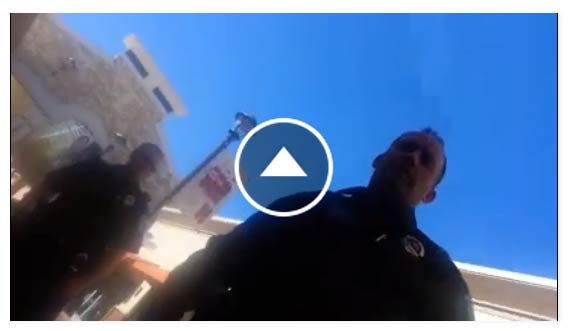
A viral video that shows four African-American shoppers being accused of theft at the Twin Cities Premium Outlets in Eagan has caused anger and outrage and sparked accusations of racism of mall personnel and of Eagan police. It’s not clear what led up to the point when the four shoppers at the mall were surrounded by police and mall security, but the feeling of the four is clear – they say it is an obvious case of racial profiling.The video, which was posted on March 11 to social media by one of the accused, Art Haggins – just hours after the stop happened – shows police questioning the shoppers in the mall courtyard about possible stolen items. According to Haggins, the group was accused of stealing $11 worth of makeup from the Makeup Outlet. Police said they were called by an employee in the mall who accused the group of shoplifting. The group was searched and showed receipts for all of their purchases and even at one point in the video it shows the contents of a purse scattered on the ground. Haggins said the contents scattered from his girlfriend’s purse as an officer pulled the purse away from her. In the video at least six Eagan police officers can be seen questioning the shoppers. Continue Reading

Gordon eyes minor crimes

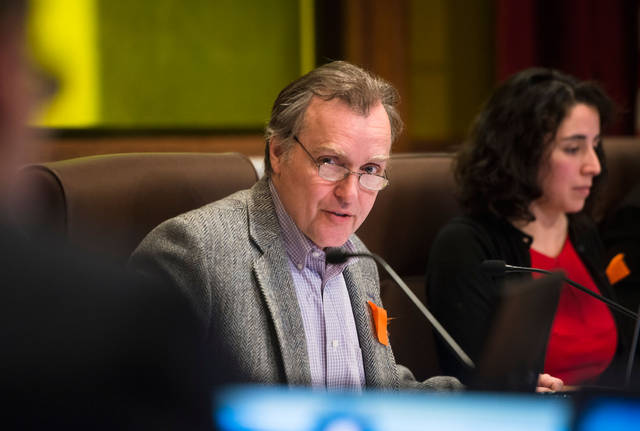
The Ward 2 Councilman wants to stop arrests for lower-level offenses like lurking or spitting.In an effort to combat racial profiling by law enforcement officials, two Minneapolis City Council members are asking the city to repeal certain low-level offenses that impact minorities at higher rates.At a City Council meeting Friday, Ward 2 Councilman Cam Gordon announced that he plans to repeal ordinances that made lurking and spitting on sidewalks illegal. Changes would go into effect after next month’s full council meeting if the measure is approved.Gordon said the need to counter racial profiling in the city is immense, and higher numbers of arrests in certain minority groups can contribute to economic inequality.“Once you get something on your arrest record, you can end up having a much harder time getting housing and finding work,” he said.Gordon and Blong Yang, who represents Ward 5, requested stop and arrest statistics from the Minneapolis Police Department in December after a report released last year showed heavy racial inequalities in the realm of low-level offenses, like lurking and spitting on sidewalks.Between 2009 to 2014, black people accounted for 59 percent of total arrests for lurking in the city, according to an analysis released by MPD earlier this month. The report also shows that blacks are arrested at significantly higher rates for marijuana possession, vagrancy and disorderly conduct.A similar report by the American Civil Liberties Union  showed that racial inequalities in arrest rates have long plagued Minneapolis.Gordon said perceived disparities in the city prompted him and Yang to request more detailed statistics from the police department, including who is arrested and stopped, as well as their age, race and location.“We’re trying to get numbers so we’re not just dealing with anecdotes and stories,” Gordon said.Understanding the racial dynamics of these crimes also includes more knowledge of who is being convicted after the arrests, Gordon said, adding that he and Yang haven’t yet received this additional data from MPD.John Elder, MPD’s public information officer, said neither of the two offenses are enforced regularly in Minneapolis.He said city officials can only determine if racial profiling is present if they know cases in which law enforcement officials were called to the scene and those that were initiated by the officers themselves.Without first differentiating between these types of stops, it could be possible to misdiagnose racial profiling, he said.Gordon said a deeper understanding of arrests and stops in Minneapolis could reveal whether racial profiling is an issue.Like MPD, University of Minnesota police officers rarely cite individuals for spitting on sidewalks, but often used lurking citations to deter other crimes, including bike thefts, said University police Deputy Chief Chuck Miner.“[Lurking] is something that we use a fair amount,” he said. “We feel it’s been a very effective ordinance for us.”Because there is no state law against lurking, he said he thinks Minneapolis should keep its lurking ordinance. [See original article here: http://www.mndaily.com/news/metro-state/2015/03/22/gordon-eyes-minor-crimes] Continue Reading

Increased Black home ownership would slice wealth gap

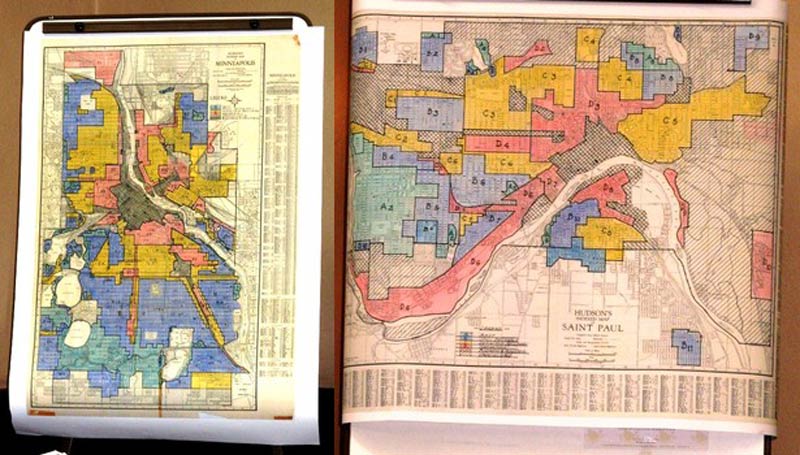
Researchers studying the affects of public policy on the racial wealth gap estimated that the median wealth of Black households would rise 451 percent if Blacks owned homes at the same rates as Whites.“With policies that advance the rate of Black and Latino homeownership to the same rate as White households, Black median wealth would more than quadruple and Latino media wealth would more than triple,” said Catherine Ruetschlin, a senior policy analyst at Demos, a public policy group that advocates for political and economic equality.A joint effort by Demos and the Institute on Assets and Social Policy (IASP), a research group that advocates for economic opportunity, security and equity for individuals and families, detailed the key factors in housing, education, and the labor market that have contributed to the racial wealth gap for generations.The report by said that the median Black household had $7,113 in wealth holdings compared to the median White household, which had $111,146 in wealth holdings in 2011.“Black households hold only 6 percent of the wealth owned by White households, which amounts to a total wealth gap of $104,033, and Latino households hold only 8 percent of the wealth owned by White households, a wealth gap of $102,798,” stated the report. “In other words, a typical White family owns $15.63 for every $1 owned by a typical Black family and $13.33 for every $1 owned by a typical Latino family.”According to the report if public policy eliminated racial disparities in income, the median Black wealth would grow $11,488 and if disparities in college graduation rates were eradicated, median Black wealth would grow $1,313.Thomas Shapiro, the director at IASP, said that the racial wealth gap is one of the most critical issues as the United States moves into the 21st century. Shapiro said that researchers designed a new tool called the “Racial Wealth Audit,” to get a real, objective handle on the impact of policy on wealth accumulation in the United States and what the racial wealth gap really looks like.Tamara Draut, the vice president of policy and research at Demos, said that while researchers and policy analysts have been heartened by the burgeoning debate surrounding rising inequality in the United States and the implications that it has for all of our standards of living, the underlying racial divide that underpins so much of the inequality in this country is less understood and less talked about.“In addition, Black and Latino college graduates saw a lower return on their degrees than White graduates: for every $1 in wealth that accrues to median Black households associated with a college degree, median White households accrue $11.49,” stated the report.Black families also experienced lower returns on the income that they earned, when compared to White families.“If households of color had the same wealth returns estimated for White families with similar incomes, the racial wealth gap would decrease by 43 percent,” said Tatjana Meschede, the research director at IASP. “To make progress in closing the racial wealth gap, policies need to address both income inequality and differential wealth returns to income.”Meschede said policy recommendations to address income inequality included raising the minimum wage, the creation of a federal jobs program and increasing unionization.“Homeownership is the largest reservoir of wealth and financial stability that American families have,” said Thomas Shapiro, the director at IASP. “It’s just that it is so inequitably distributed at this point in time in the value of wealth that it creates.”With the creation of the Federal Housing Administration in 1934, the United States government sanctioned lenders to use “redlining” to systematically deny Blacks access to that reservoir of wealth for decades.“While redlining was officially outlawed by the Fair Housing Act of 1968, its impact in the form of residential segregation patterns persists with households of color more likely to live in neighborhoods characterized by higher poverty rates, lower home values, and a declining infrastructure compared to neighborhoods inhabited predominantly by White residents,” stated the report. Continue Reading
Council on Black Minnesotans being weakened

In the new movie Selma, Martin Luther King, Jr. works tirelessly to integrate Black Americans socially (education, opportunity), economically (jobs, housing), and politically (voting, holding office). He understood “American” refers not to race, religion or country of origin, but to the ideal of “truths to be self-evident, that all men are created equal…with certain unalienable rights.”Our leaders have taken their eyes off this prize, turning the Civil Rights Movement into a rewards program for Black “leaders,” not Black communities. On March 8, 2015, this genie of truth was exposed when an “alert” message was sent by Council on Black Minnesotans (COBM) Executive Director Ed McDonald, identifying House and Senate bills calling for gutting the COBM’s power to look into the issues of diversity, affirmative action, or complaints of violations of the rights of Black Americans in Minnesota.Mr. McDonald identified the legislation and the sponsors and asked his board to authorize him to file suit in the federal district court in St. Paul. The COBM Board, with the exception of two members, refuses to endorse this legal action.Do not these actions reflect how Black American leaders and White Liberal leaders (Democrat Farm Labor/DFL Party) contributed to our Losing the Race: Self-Sabotage in Black America, and how The Dream [became] the Nightmare, as they try to shift blame in their finger-pointing at White Republicans?For a decade I have written on the failure to integrate Black Americans with White Americans in stadium and arena construction (Twins, Gophers and Vikings). Continue Reading