If we need more teachers of color, stop saying we need diversity

The state of public education in Minnesota is not looking good. According to data provided by the Minnesota Department of Education (MDE), in 2014 and 2015 more than half of 11th graders were not at grade level in math or reading. For those same years, the Minneapolis Public School District (MPS) showed no more than a third of 11th graders performed at grade level for either subject. For students of color, the numbers are even worse, giving Minnesota one of the largest achievement gaps nationally between students of color and their white peers.

There are many factors affecting why Black, Latino, Asian and Pacific Islander, and Native American kids don’t perform well here. But one key contributor is a belief gap that follows them into their classrooms, where they are viewed by predominantly white teachers as having less academic potential than their white peers. Continue Reading

On justice and Mike Freeman’s decision

For me, the issue is justice, and justice was not served by Mike Freeman’s decision. Other articulate people chose words very well: “Power at its best is love implementing the demands of justice, and justice at its best is power correcting everything that stands against love.” In saying this, Rev. Dr. Martin Luther King Jr. reminds me about the role of power (at its best). In Mr. Freeman’s decision, we had the power, but in service of an abusive and oppressive system. Mahatma Gandhi had this to say: “There is a higher court than courts of justice, and that is the court of conscience. It supersedes all other courts.” Conscience says that killing an unarmed person is wrong—period! Continue Reading

toxic stress

“I’m ready to die” Jamar Clark, school violence and toxic stress

What does it say when, within a minute of the police arriving, a young black man speaks those words? And when, within 61 seconds, that young black man lies dead? What does it say when teachers who are worried about their (and their students’) safety are labeled racist? What does it say when the vast majority of our children who grow up in worlds of “toxic stress” are low-income students and students of color? It says a lot about us, about our disregard for our children, particularly the most vulnerable. Continue Reading

equity agenda

New support bolsters racial disparities bills, but opposition looms

K.B. Brown is a father of two, engaged to be married, a lifelong Minneapolitan and co-owner of a small business in Northeast called Wolf Pack Promotionals. He dreams of being the largest promotional printer in the state and of starting a youth internship program in the Twin Cities. Along with everything else, he advocates for small business owners.

“My vision for this business is to be the No. 1 printer for the nonprofits and small businesses in the state. I’ll start with the state. The country? I’d be okay with that. But I’ll start with the state. Let’s affect my community first. I believe change is beautiful, I believe change can happen and will happen, but I believe it starts with my community first, everyone else second,” Brown said.

He, and thousands of people like him, are hoping the Minnesota Legislature takes real action this year on Minnesota’s startling racial and economic disparities. At the same time, community groups are working to develop policies, frameworks and priorities that center racial justice as their core objective for the legislature to address. Continue Reading

Three Minnesota bills addressing racial disparities you need to follow

The recession might be over, but not for Black Minnesotans. In 2014, the incomes of Black Minnesotans were the lowest they had been since 2008. With the average salary for Black Minnesotans at $27,000 per year, the rate is nothing compared to Minnesota’s average income for all residents at nearly $68,000 annually, said the Minnesota State Demographer Susan Brower who recently presented at the Legislative Working Group on Economic Disparities.

And according to a memo by Sen. Bobby Joe Champion at that same working group, about 9 percent of Black students and almost 11 percent of Latino students dropped out of Minnesota high schools last year. Further, almost 24,000 Black adults in Minnesota have not earned a high school diploma or equivalence.

Even though these statistics have persisted in some form for years, they finally have the attention of the Minnesota Legislature. In an effort to decrease these and others of Minnesota’s startling racial and economic disparities, the state legislature has introduced several proposals that they hope might be a first step towards equity for all Minnesotans. Continue Reading

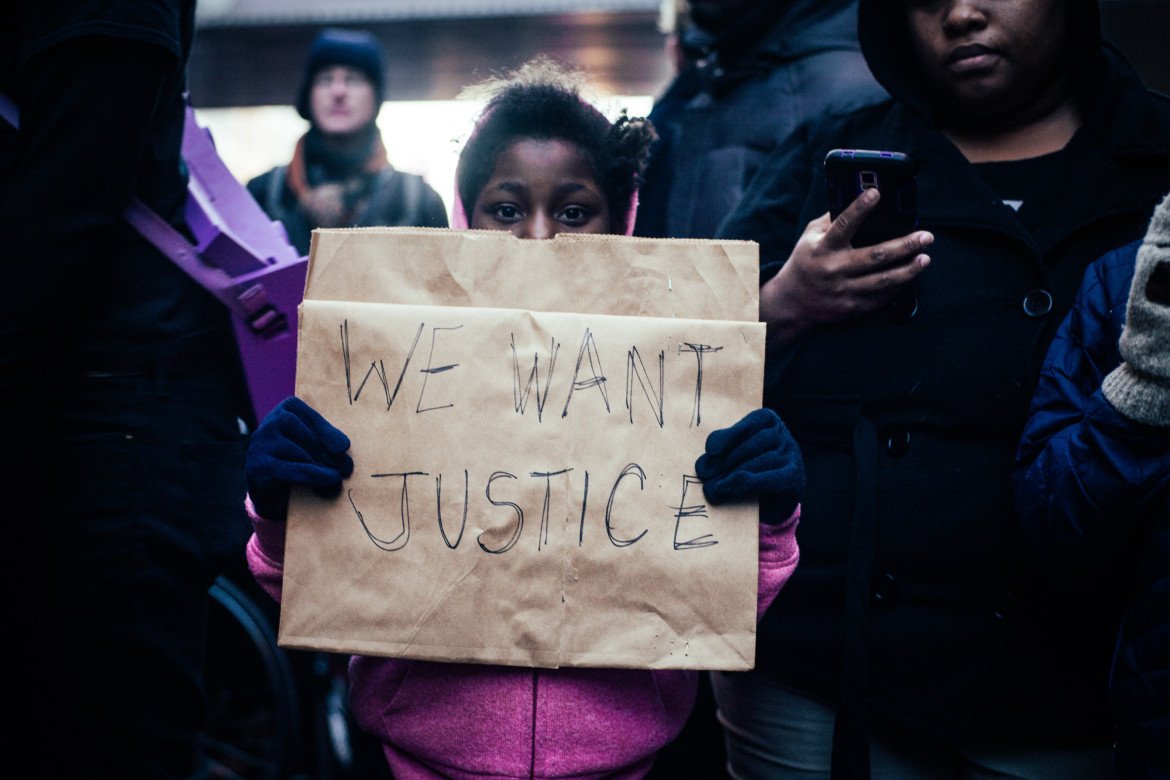
A young girl marches with protesters in downtown Minneapolis on Nov. 24

When do we #SayHerName? Examining the systems behind the death of Jamar Clark

As protesters aligned with Black Lives Matter-Minneapolis (BLM-Minneapolis) took to the streets over the past few weeks, the now-familiar message was clear: Clark did not deserve to meet his untimely death on a North Minneapolis sidewalk by a bullet in his head. His death, another tally in a string of fatal encounters between unarmed black men and law enforcement agencies across the country, was another notch in the need to address the issue of discriminatory police practices and for reform. The formulaic response to yet another police killing also meant a backlash against the narrative of who the real victim was in this fatal encounter. Continue Reading