Mash-ka-Wisen Sobriety Powwow

Native communities grapple with what it means to honor their U.S. military veterans

Emmy Her Many Horses said there are a great many reasons why Native people choose to join the U.S. military, but that regardless of their motivation, they should be recognized for having served.

“For Native people there is a difficulty in trying to remain true to who we are from our tribal nations, and who we are in society today. For some, I think, they are seeking to be that warrior. For others, the military may be their best chance at getting away from their homes and finding opportunity. The military is also an opportunity that will help pay for school, allow travel, and teach new skills. Many are following a family tradition, a cultural tradition.” Continue Reading

Local comic book artist claims violation by TSA agents

Z.M. Thomas, a Minnesota-based comic book writer and publisher, claims to be a victim of First Amendment violations by the Transportation Safety Agency at Philadelphia International Airport. Upon returning from his round trip Delta Airlines flight to Wizard World ComicCon in Philadelphia, he discovered severe damage to most of his copies of his title “Bible 2”. Additional non-religious titles in his baggage were left undamaged. Among the titles that were left undamaged was his latest book “Sioux Falls”. This book is a retelling of his families’ experiences during the Sioux Uprising of 1862. Continue Reading

American Indian Month Kickoff

May is American Indian Month in Minneapolis. To celebrate thebeginning of the month and all the activities and celebrations that will follow, people and organizations gathered at Little Earth on Friday, May 1 for a parade through the Phillips Neighborhood. Continue Reading

Columbus Statue Celebrates Genocide and Should Be Removed

Native American activist groups in Minnesota would like people to learn the real history of Christopher Columbus and quit putting him up on a pedestal at the State Capitol.“We all know in 1492 he sailed the ocean blue,” said American Indian Movement Chair Mike Forcia. “And in 1493 he stole all that he could see.”For more than 83 years a statue of Columbus has gazed from the Capitol toward Minnesota’s Justice Center. For Forcia, real justice would be removing the statue.“We need to deport Columbus,” said Forcia. “We can’t be celebrating genocide anymore.”Genocide isn’t a word most history books associate with Columbus, but he enslaved Native Americans. As governor of the large island he called Espanola (today Haiti and the Dominican Republic), Columbus’ programs reduced the native population from as many as eight million at the outset of his regime to about three million in 1496.Minnesota’s legislature is considering a bill that would change the engraving on the statue from “Discoverer of America” to “Christopher Columbus landed in America.” A co-sponsor of the House bill includes Rep. Dean Urdahl (R-Grove City), who taught high school government classes 35 years.That change misses the point, say Native Americans who marched through downtown St. Continue Reading

Sing Our Rivers Red raises awareness of missing and murdered Indigenous women

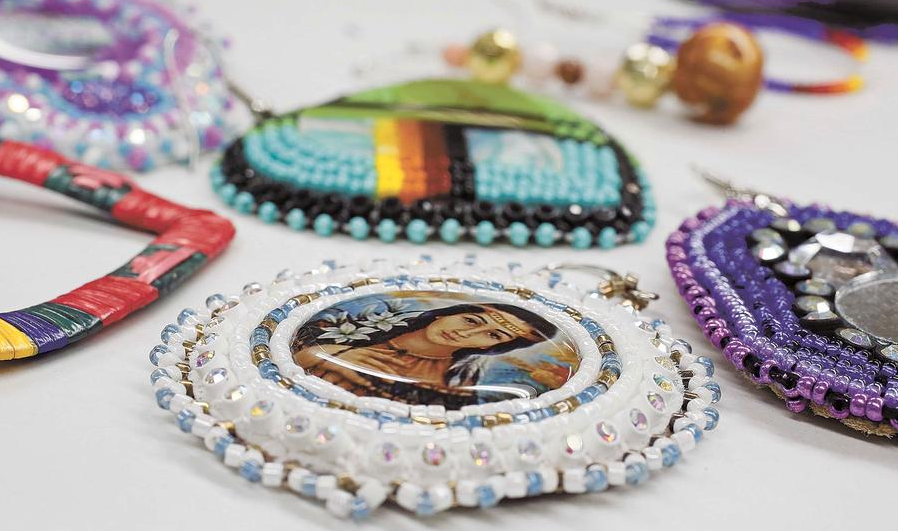
The smell of roasting espresso and justified indignation greeted visitors of the Pow Wow Coffee shop, and adjoining All My Relations art gallery on Friday, April 10th. In collaboration with the Sing Our Rivers Red (SORR) foundation, All My Relations Arts and the Native American Community Development Institute are asking people to donate earrings a part of the SORR Traveling Earring Exhibition. SORR is a foundation dedicated to raising awareness for missing Native American women in Canada and the U.S. Event organizer Susan Horne detailed an example in the death of “August Osage County” actress Misty Upham.“She went missing, and the police questioned her personal state of mind more than they spent time actually looking for her. When the coroner finally released the report, it was ruled a homicide due to blunt force to the back of the head.“Since then, they haven’t covered that it was a homicide, that she was ultimately killed. And it’s stuff like that… this is a Native American woman, 32 years old, goes missing, nothing is accounted for. Continue Reading

U, tribe aim to improve Native diets

Health problems tied to poor diets and nutrition have persistently plagued Native American communities across the country.  To help alleviate this issue, the University of Minnesota is partnering with the Shakopee Mdewakanton Sioux Community in its $5 million “Seeds of Native Health” campaign to improve the health and nutrition of indigenous people nationwide. Research has shown that poor nutrition has led to increased rates of obesity, diabetes and chronic health problems in Native communities. Diabetes is one of the leading causes of death among American Indians and Alaska Natives, according to the U.S. Department of Health and Human Services’ Office of Minority Health. The campaign will address these issues by improving health programs that are already in place and funding new research to identify what types of programs could be createdto alleviate the health disparities, said SMSC secretary and treasurer Lori Watso, who championed the idea for the campaign. She said she hopes individual Native communities will then use the programs and apply them to their specific health needs. Watso said her background in public health and education, along with the work she’s done related to healthy food in her community, has given her an insight into the health issues Native communities are facing, especially regarding their diets. “Through all of that work, I’ve seen firsthand the detrimental effects of poor nutrition,” she said. “I’ve really come to believe that our nutrition is the foundation for everything.” Lori Watso said SMSC selected the University as a partner because of the school’s work in related research and ability to better understand issues at a national level. College of Food, Agricultural and Natural Resources Sciences Dean Brian Buhr said the college has worked with the Shakopee Mdewakanton Sioux Community in the past. The school has also done nutrition-related research and programming across diverse populations, and Buhr said he hopes CFANS can use that research as a starting point in the partnership. He said the University’s role in the campaign will likely be to research strategies to improve Native nutrition and assist in planning a series of annual conferences on the topic. Though Buhr said the partnership’s specifics are yet to be defined, he said the  University has started identifying and uniting people who are doing similar research.  “[Change] does require true partnership,” Buhr said. “I think that’s the exciting part — is to have that opportunity to think about how we can really work together to create some solutions to this.” In addition to partnering with the University, SMSC is working with nonprofit organizations First Nations Development Institute and the Notah Begay III Foundation. Both have a history of working to solve nationwide Native health issues. First Nations Development Institute President Michael Roberts said his Colorado-based organization has a large portfolio in food systems initiatives and a history of research and policymaking. In 2012, the nonprofit gave out $905,000 in grants to organizations aimed at improving health in Native communities. SMSC secretary and treasurer Watso said she’s hopeful that the campaign will finally begin to address some of the issues that have been present in Native communities for many years. “Native people are so disproportionately affected in all health and socio-economic indicators,” she said. Continue Reading

Two students work for more Native Americans in the sciences

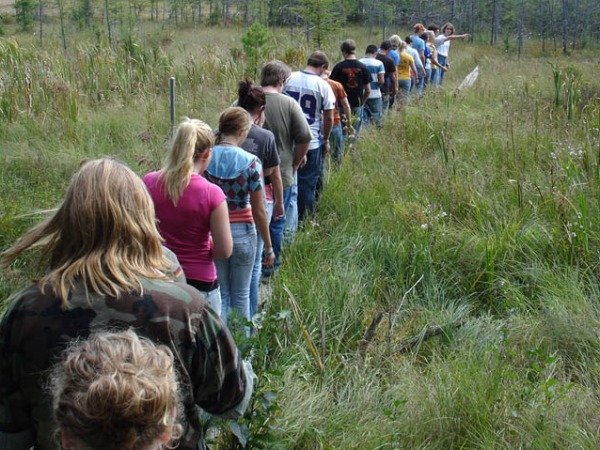
Two students work for more Native Americans in the sciencesByEthan NelsonApril 07, 2015 Native American students have traditionally had difficulties breaking into science-related fields, like biology and engineering.Two University of Minnesota students, Jake Grossman and Siddharth Iyengar, are working to change that.The ecology, evolution and behavior doctoral students are helping oversee a summer research and mentorship program that will help Native American students recognize their heritage in a field that doesn’t often reflect the values of their culture.Grossman and Iyengar are working on a summer program called Our Earth Lodge, a NASA-funded project aimed at encouraging Native American undergraduates to study climate change and potentially pursue science or engineering as a profession. Applications to participate in the students’ research will close Friday.The three accepted students will assist Grossman and Iyengar with their research in plant ecology during the program, which will be set at University-owned Cedar Creek Ecosystem Science Reserve in East Bethel, Minn.The research will intersect Ojibwe traditions and experiences with biology by allowing Native American students to design their own studies.“Science and engineering research reflects our understanding, but it’s mostly a Euro-American perspective,” said Wren Walker Robbins, vice president of the Midwest’s chapter of the American Indian Science and Engineering Society, which is partnering with NASA on the project.Walker Robbins said a lot of people don’t realize that research can lack objectivity, which can discourage Native American students from entering the field if the perspectives shared in it don’t reflect their cultures.“When we look at research experience for undergraduates nationwide, Native Americans are underrepresented significantly,” Walker Robbins said.Grossman and Iyengar attended camps earlier this spring at the Fond du Lac Tribal and Community College in Cloquet to inform their mentoring approach.Neither Iyengar nor Grossman are Native American, and neither had worked with Native students before, they said.“We want to be sensitive and not ignore Ojibwe environmental knowledge,” Grossman said.He said students could do research on topics like how biodiversity affects decomposition or productivity in forests.Iyengar said students will also be introduced to a broad research community.Eric Seabloom, an ecology professor who does research at Cedar Creek, said the center is world-renowned in biology research.“Bringing students into a setting where they’re meeting foremost researchers is really exciting,” he said.The program also includes a three-day STEM summer camp held at Cedar Creek for K-12 Native American students.“They’re learning about science through the tribal lens,” said Mary Spivey, Cedar Creek’s education and outreach coordinator. “It’s a whole different way of looking at the world.” Continue Reading
Guide to the Importance of Powwow Dances

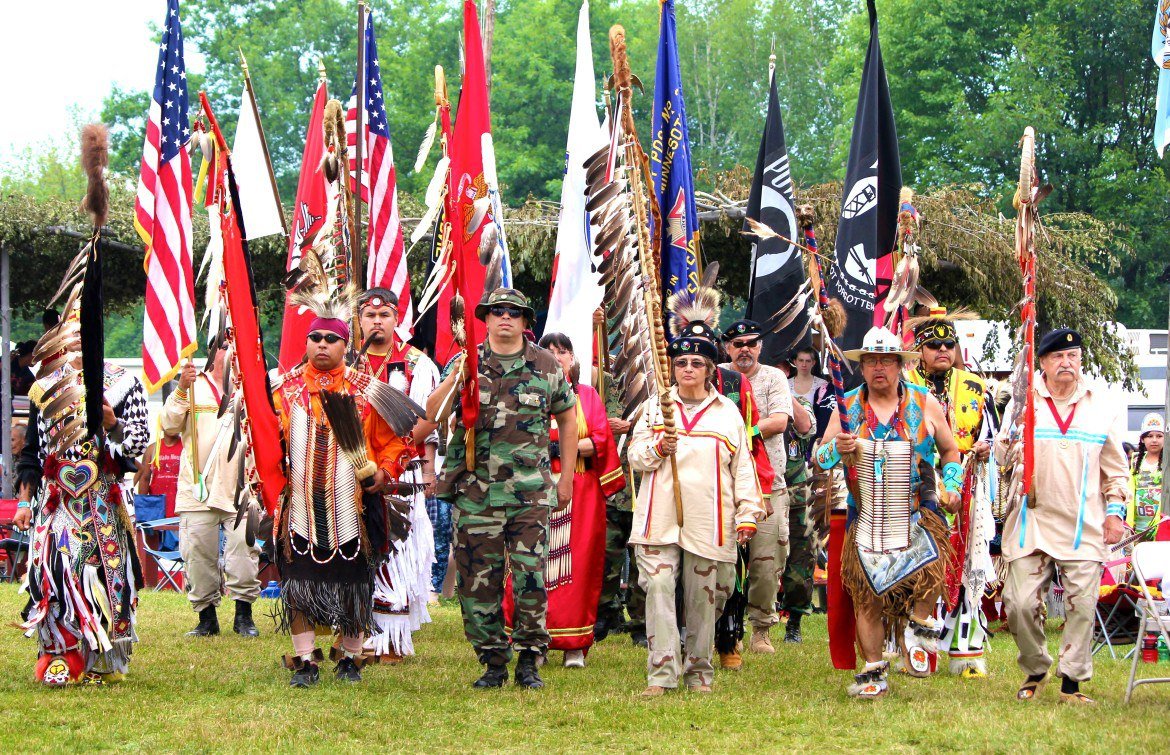
World champion jingle dress dancer Willow Abramson (Shoshone-Bannock) faced difficult challenges in her life. In 2005, she and her family were involved in a car crash; her baby daughter and husband did not survive. She found healing in dancing.She believes the energy and life on the powwow circuit helped her find strength to raise her son. She encourages her fellow dancers, “Some of us dance to forget, some of us dance to remember, some of us dance to heal, but whatever the reason, just dance with your heart and your spirit: we see it shine when you dance.”It’s officially Powwow Season in Indian Country! The anticipation and excitement dancers and singers built up throughout the winter months will be unleashed within many traditional and contest powwows throughout the country this year. Continue Reading

7th Annual Augsburg Powwow

Augsburg College held its 7th annual traditional powwow on Saturday, March 28 in the Si Melby Gymnasium on campus in Minneapolis. The event was hosted by the Augusburg American Indian Student Association and American Indian Student Services. Continue Reading

In the sugar maple grove, things are sweeter than ever

Sugarbushing begins in February when the snow is still on the ground and the sap in the sugar maple trees begins to rise. At the the Wozupi Tribal Gardens’ grove in Prior Lake, that still means it’s time to get to work. But, it no longer means pulling out the metal taps, the stainless steel buckets and the kettles.“Buckets are for hobbyists,” said Rebecca Yoshino, the director of the Wozupi Tribal Gardens and the maple syrup operation for the Shakopee Mdewakanton Sioux Community. “The bucket system is very labor intensive. You had to put the buckets up and take them down every year. Continue Reading