Yesterday evening, I boarded a route 50 bus at Minnesota and 6th Street in downtown Saint Paul at 4:43 p.m. and rode it to the University of Minnesota campus, getting off at Oak Street and Washington Avenue. That was at 5:29 p.m., or 46 minutes after I had boarded in Saint Paul. The bus still had about three miles to go before ending its run in downtown Minneapolis. Under a schedule posted last weekend, the Green Line is supposed to make an equivalent trip (Central station to East Bank station) in 31 minutes. The bus was 48% slower than the current expectation for LRT (and the 50 is a limited-stop route—the 16 is even slower). Continue Reading
On June 14th, the Central Corridor “Green Line” Light Rail project will open, ushering in a new era in transit for the Twin Cities metropolitan area.The Met Council has tallied at least $2.5 billion in development, including 121 new construction and redevelopment projects planned, under construction or completed within a half-mile of the $957 million line.But the long term effect of light rail on low income communities along the route is still open to debate.St. Paul and Ramsey County officials gathered recently at a meeting of the St. Paul Chamber of Commerce to talk with business leaders about development changes that are underway, and those yet to come.Rico Morales has a report. Listen to the audio here. Continue Reading
With the recent news about Green Line training and test trains taking long amounts of time to travel end-to-end from Saint Paul Union Depot to Target Field in Minneapolis, I thought it would be useful to take a look at how long it takes to travel a similar distance on existing buses (according to the published schedules). Routes 16, 50, and 94 each connect the two downtowns. The 16 is the main service, an urban local route along University Avenue which runs at all hours of the day, 7 days a week. The 50 is a limited-stop service overlaid on the 16 route, primarily operating during peak periods and only running on weekdays. The 94 is an express bus running along Interstate 94, also operating 7 days a week, roughly 20 hours per day—its 94B and 94C variants make stops at Snelling Avenue, but the 94D goes directly between the two downtowns (some westbound 94D buses also stop at the oddball Huron Boulevard station—but there is no facility at all for eastbound connections). Continue Reading
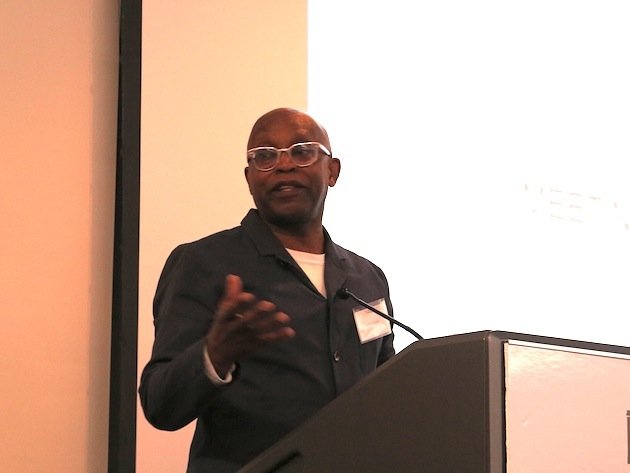
After five years of getting ready, the Central Corridor Funders Collaborative says yes: we’re ready and the Green Line is (finally) almost here. Business, jobs, housing, transit access and investment were all up for discussion April 23 as the Collaborative presented the 2014 Central Corridor Tracker Report at its fifth annual stakeholder event at St. Paul’s Union Depot.St. Paul Mayor Chris Coleman said the Green Line represents a fundamental transformation. “I realize that it didn’t happen by accident. Continue Reading
As the June 14 launch date for the Green Line approaches, over 80 representatives from the government, local businesses and non-profit organizations attended the Midway Economic Development Summit on April 16.
Smoke, first responders and volunteers faking injuries will fill Stadium Village early on Tuesday, March 18, during a Light Rail Transit derailment simulation, while many University of Minnesota students are away on spring break.
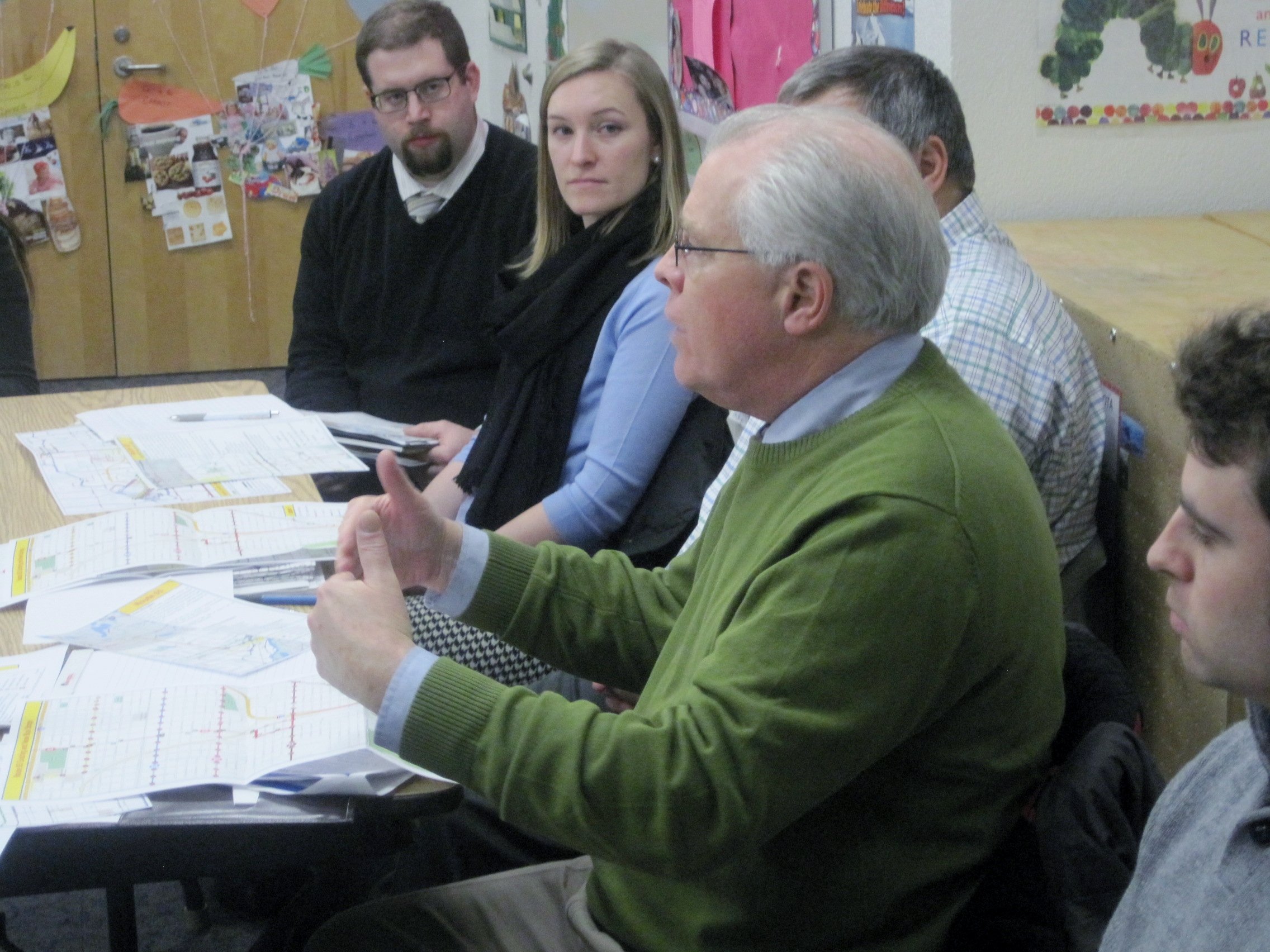
Two dozen residents turned out January 13th at the Linwood Rec Center to hear the final Metro Transit plan for helping Summit Hill residents and others south of University access the Green Line LRT by bus…. and many of them liked what they heard.
A bowling alley, a water park, a community center for the elderly, a pharmacy, hospice care, and green space were just some of the many ideas that residents came up with for the redevelopment of the largest vacant site in Saint Paul’s Frogtown neighborhood.On Wednesday, February 19, the University Buffet was transformed from a restaurant into a city planning workshop for 18 Frogtown area residents, two city workers, and 13 Corridor Development Initiative staff and consultants. “Are we ready to create and envision what our community is going to look like?” asked workshop facilitator Sheronda Orridge, as she started the meeting. The Frogtown Neighborhood Association, Local Initiatives Support Corporation (LISC), and the City of Saint Paul have teamed up to put on four workshops about the redevelopment of the Saxon Ford lot, located at 253-255 University Avenue in St. Paul. The city bought the lot a few years ago. The goal of these workshops is to provide the city with information about what Frogtown residents want to see in their community.The next workshop will take place on Wednesday, March 5 and will include a panel of developers. The fourth and final workshop will be on Wednesday, March 19 and will be used to summarize the information gained in the first three meetings into developmental guidelines and to get a consensus from the participants on these guidelines. Continue Reading
The Green Line’s opening is four months away, but the train has already brought rent increases for Frogtown renters.Organizations working closely with Frogtown have been worried about rent increases for years, and recent data from HousingLink shows that these fears may be justified.According to Minnesota Housing Link’s third quarter analysis, median rent listings for the “shadow market” in Frogtown — duplexes, condos, single-family housing, and townhomes — have risen remarkably in the last year. In 2011, the median rent was $807. In 2012 it rose to $850, and by 2013, the median rent had jumped to $995. Rent listings for multi-unit apartment buildings have remained unchanged.The rent increase for duplexes, condos, single-family housing, and townhomes is particularly significant for Frogtown. According to the Minnesota Housing Preservation Project (MHPP)’s Before the Train report, 43 percent of the housing in the Midway East area (which roughly corresponds to Frogtown) is single family or duplex housing. Continue Reading
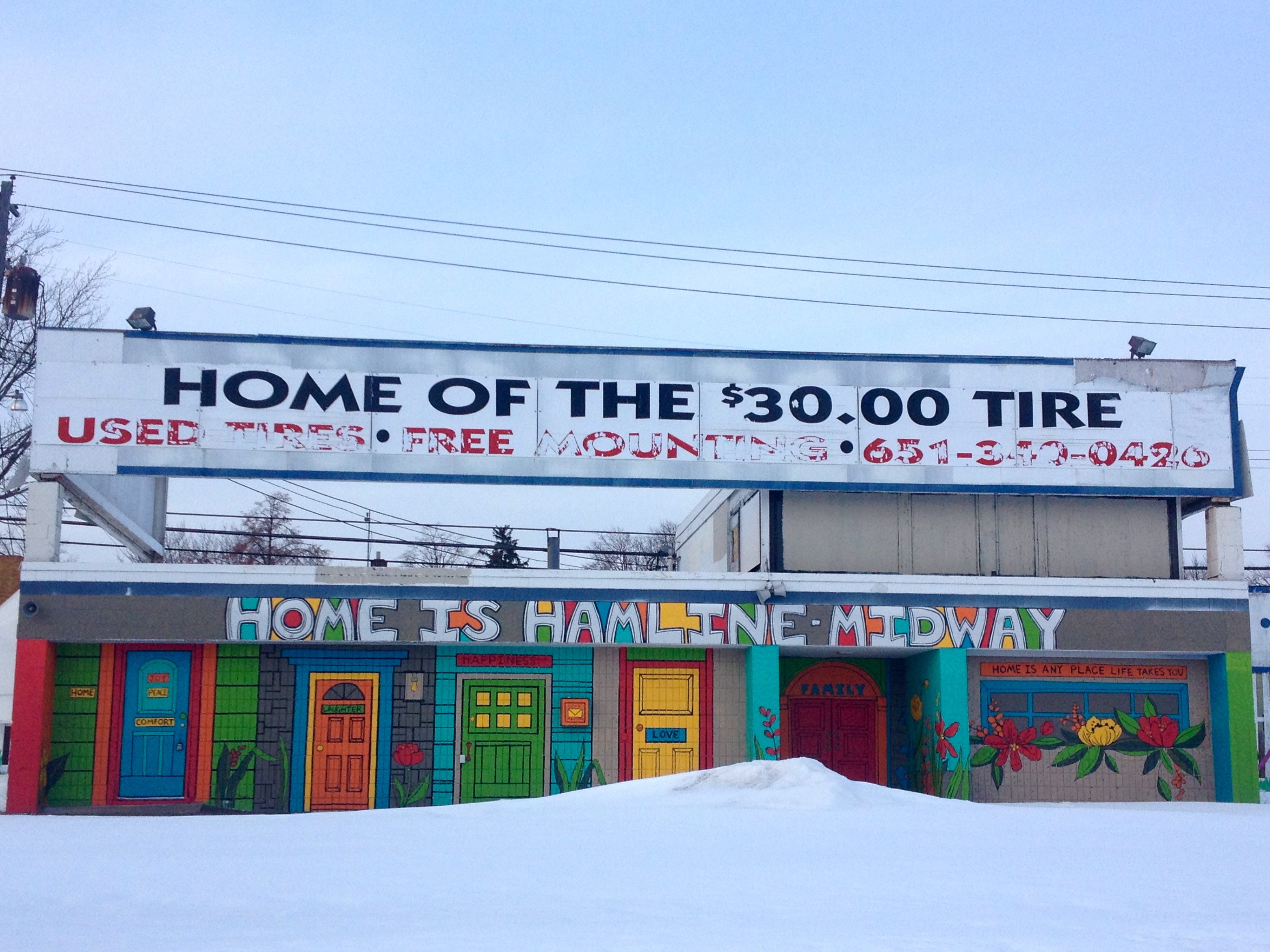
For Lucy Whitley Mott, 10, home is “where I have a roof over my head.”For Julie GebbenGreen, 47, home is less location-specific and more “sacred.”Whitley Mott and GebbenGreen traced projected images of the spaces they think of as “home” onto green canvases at a community art project on February 11. They met at the Hamline Midway Library as part of Artify’s THIS IS HOME community art project. Their work is currently on display on the 1300 block of University Avenue at the future location of a Project for Pride in Living (PPL) affordable housing development.Witt Siasoco, who runs the THIS IS HOME project with fellow Minneapolis-based artist, Mischa Kegan, was inspired by Artify’s theme of “Home is…” and his previous work with teens at Project Offstreets, a homeless-drop in shelter. “I had been working there for a year trying to figure out a project that would really speak to them,” he said. “And I came up with an idea about them talking about places they’ve lived and places that have felt safe to them.”Siasoco said that the THIS IS HOME project is similar to his work at Project Offstreets because it’s people “talking about where they’re from, and what feels like home to them.”All of the 22 participants are residents of the Hamline-Midway or Frogtown-Rondo neighborhoods. Continue Reading