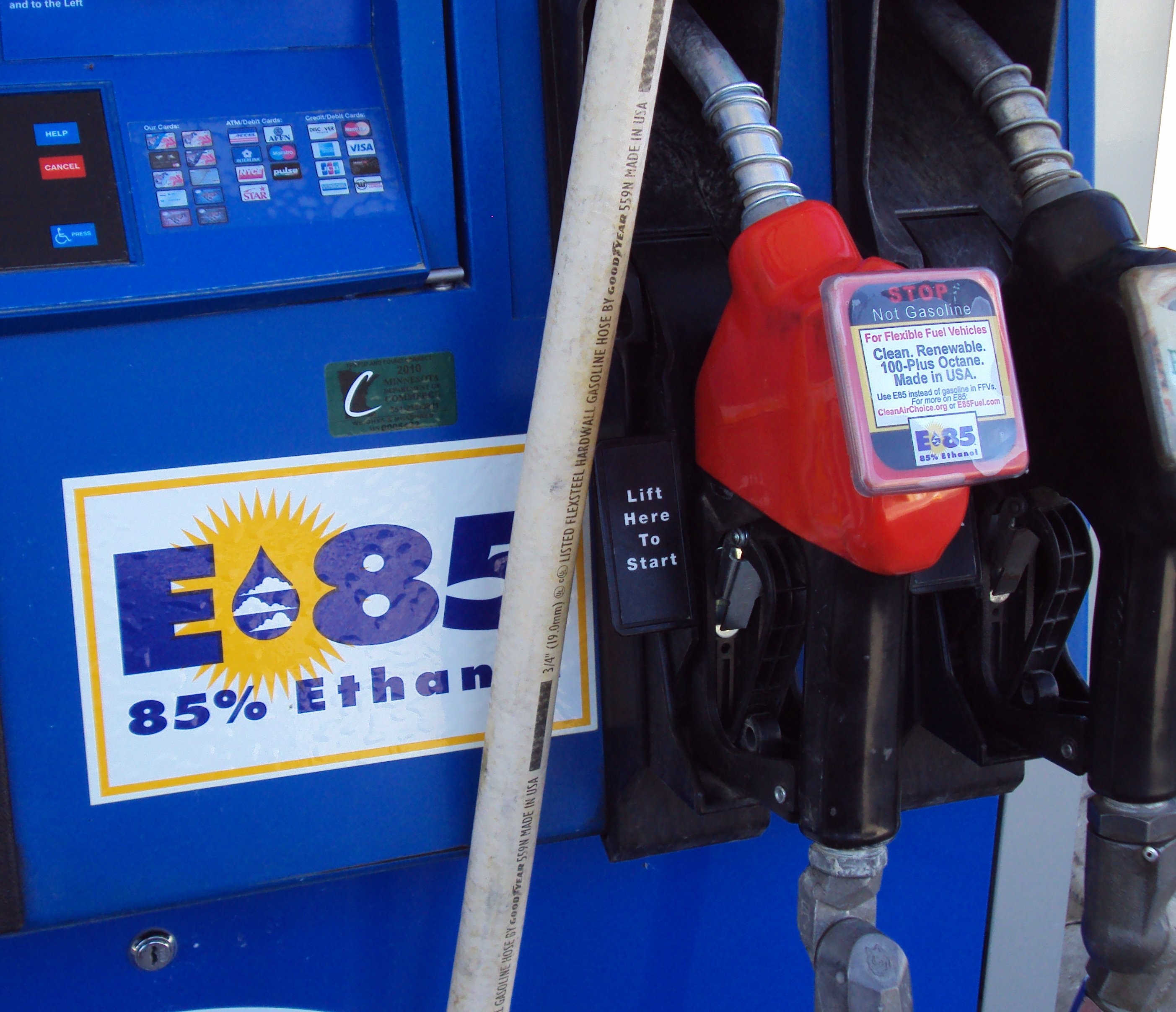
In Minnesota, ethanol has become part of our everyday lives. It is blended into our gasoline and is available for flex fuel vehicles in the form of E85, with the intention of lowering our fossil fuels dependence. Ethanol also helps keep corn demand and prices high to support our farmers. But corn ethanol is increasingly becoming a controversial topic. Continue Reading
In response to “Ethanol is a not long term solution,” I’ll begin by saying the author made some valid points. No, ethanol is not an environmental, economic and political cure-all, nor is it the sole solution to our nation’s fossil fuel addiction. However, the post did fail to address one key question that should be asked of all alternatives to traditional petroleum fuels: “are ethanol blend fuels better than traditional petroleum fuels?”The American Lung Association in Minnesota believes the answer to that question is “yes.” Using E85 in a flex fuel vehicle significantly reduces tailpipe emissions as well as lifecycle greenhouse gas emissions; the 10 percent ethanol added as an oxygenate in our gasoline helps the fuel burn cleaner and reduces the amount of oil we need to import from other states and other countries.Before we critique ethanol, let’s take a closer look at the traditional transportation fuels most of us still use every day. A large percent of the gasoline, diesel and aviation fuels consumed in Minnesota are derived from the Tar Sands region of Alberta, Canada. The partially degraded bitumen used to make our fuels is strip-mined or steamed out of the soil, using processes that require enormous amounts of water and fossil fuels. Continue Reading
District 12’s Energy Resilience Group is leading a grassroots effort to consider what we can do to limit climate change, enhance the local economy and strengthen our sense of community.Several action groups were formed at the community meetings last winter.Here is a snapshot of their work and opportunities to get involved.Local power and foodVolts! Amps! Watts up? Community Solar! This refrain at the Fourth of July parade down Como Avenue highlighted the SAP Community Solar action group, which plans to limit our carbon footprint by generating local, sustainable electricity.The group is drafting budgets and plans for large solar photovoltaic arrays to be installed on the roofs of large local buildings with funds from St. Continue Reading
So what, exactly, did John Kline vote for when he and his regressive colleagues passed HR 2642, the House version of the Farm Bill? It is already known that he voted against the Food Stamp (“SNAP”) program. But what else did he vote for (or against)? Continue Reading
The Minnesota GreenStep Cities program includes 28 best practices that cities strive to achieve, some of which involve making energy efficient changes to both existing buildings and infrastructure and new developments. Although progress can be tracked within the program by how many best practices have been achieved, hard data of the improvements has been lacking—until now. Recently, Diana McKeown, Metro CERT Director, sat down with Rick Carter, the Senior Vice President of LHB, Inc., to find out how the data gap is being bridged through the Regional Indicators Initiative. Continue Reading
The Bureau of Land Management (BLM) is a part of the Department of the Interior. The BLM has proposed a draft of new gas and oil drilling rules. At this point the rules are very fracking-friendly. Fracking is the short-hand for hydraulic fracturing which is a process the gas/oil industry forces massive amounts of a toxic cocktail into oil/gas seams to force out the oil or gas. Continue Reading
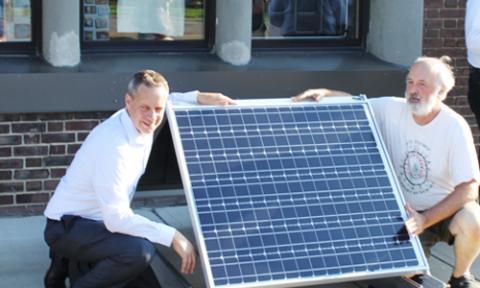
Metro CERT Director Diana McKeown recently caught up with Scott Cramer, owner of Northern Sun in south Minneapolis (pictured on right side of photos), to ask him about the community solar garden that will be installed on the roof of his business. Continue Reading
The Monticello Nuclear Power Plant is a 600 MW boiling water reactor built in the late 1960s on the Mississippi River, 40 miles upstream from Minneapolis. It is owned and operated by Xcel Energy. The reactor design is virtually identical to the Fukushima reactors that melted and exploded during the Japanese disaster that began in 2011. Monticello was licensed by the Nuclear Regulatory Commission (NRC) to operate until 2010, and has since been re-licensed to operate until 2030. This article examines the wisdom of society’s commitment to continue operating this old plant instead of available and cost-effective modern technologies.
Since 1949, Enbridge Energy has been transporting crude oil through its more than six pipelines from Alberta, Canada through northern Minnesotan reservations and across the US. These pipelines, which transport tar sands oil, pass directly through the Leech Lake Reservation, the Fond du Lac Reservation, and the Red Lake reservation.