COMMUNITY VOICES | Grassroots pressure crucial to Xcel’s environmental credentials

While sitting through the August 1, 2013 public hearing at city hall on authorization of a community owned utility, I noticed the sticker that the opponents of the resolution were wearing was “don’t mess with success”The irony is that much of the success that Xcel takes credit for is actually a result of the success of people-powered grassroots efforts like Minneapolis Energy Options. Minneapolis Energy Options has already had a success of its own in reaching an unprecedented memorandum of understanding with our gas utility Centerpoint in preparation for franchise renegotiations next year.I have a personal story to tell to make this point. Working for the Minneapolis Energy Options campaign is deja vu to my life because I have prior experience in Colorado working for a successful ballot initiative that Xcel was also campaigning against. After repeated unsuccessful attempts to get a renewable energy portfolio standard though the state legislature, clean energy advocates took advantage of the citizen’s petition process. I personally helped gather enough signatures to put the initiative onto the ballot as Amendment 37. Continue Reading
Municipal energy heating up in Minneapolis

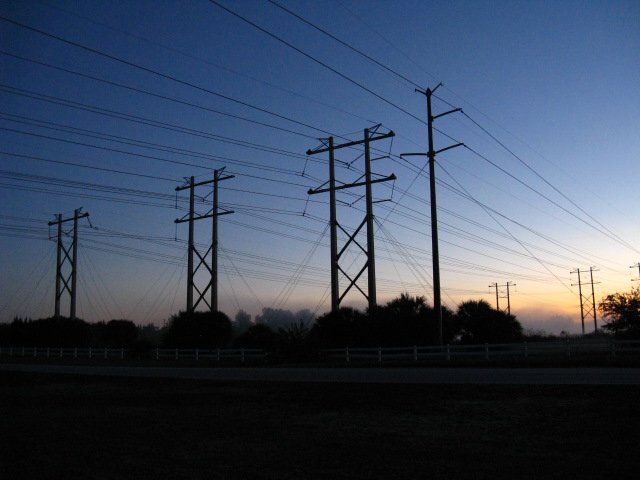
The debate over city-owned energy is heating up, and this morning (Wednesday, 8/1) the City Council will hold a public hearing on whether the question of municipal power should be added to November’s ballot for voter approval.Two opposing camps are forming quickly. Advocates claim that municipal energy will reduce energy costs, increase local jobs, and allow for more reliance on renewable energy. Opponents contend that city-owned energy will cost taxpayers billions and question the ability of the city to provide reliable and affordable gas and electric service to Minneapolis customers.Infrastructure CostsIn a letter to its customers, Xcel Energy claimed that the cost to residents and taxpayers to acquire its property would be in the billions. Lake Street Council Executive Director Joyce Wisdom explained in separate a letter that if Minneapolis decides to create its own utilities, it would be responsible for purchasing all of the assets used to provide service in the City such as utility poles, wires, substations, and piping. She added that it would also be responsible for the cost of additional upgrades to meet environmental standards it sets.Municipal energy advocate and Council Member Cam Gordon wrote that Boulder, CO was also quoted a billion dollar price tag by Xcel when they were looking to create a municipal utility. Continue Reading

COMMUNITY VOICES | Minneapolis’ energy future: What will our options be?

IntroductionThe City of Minneapolis has adopted aggressive goals for dealing with the most pressing environmental problem of our time, global climate change. But our current electricity provider is not doing enough to help Minneapolis residents and businesses to reduce our energy use and increase the percentage of our energy we get from clean, renewable energy sources. They are continuing to raise rates even as consumption falls, and those rates are going in part into questionable investments in outdated nuclear plants, private jets and corporate profit. Reliability is not improving, and the electrical grid is more sensitive to external shocks than it needs to be.It would be irresponsible for us not to seize this moment to put our energy economy on a different path, either by improving the behavior of our existing utilities or by forming one of our own. Other cities have their own energy utilities, and by and large they do as well or better than investor-owned for profit utilities like Xcel on key performance measures like cost, reliability, and renewable energy. Continue Reading

COMMUNITY VOICES | Where should Minneapolis get electricity?

UPDATED 8/12/13 | Should Minneapolis sign a new multi-year contract with Xcel Energy? Or should it set up a public municipal utility to provide energy for the city? The city council held a public hearing on August 1, and by August 9, Xcel had made new commitments, in a letter to Mayor R.T. Rybak, to pursue clean energy goals. Everyone from the mayor and council members to Minneapolis Energy Options then agreed that the municipal utility question should not go on this year’s ballot. In a press release, Dylan Kesti, campaign manager for Minneapolis Energy Options, wrote: Minneapolis Energy Options agrees with Mayor Rybak that the Minneapolis City Council should not place a municipal utility question on this year’s ballot, so the City can try to get the utility to live up to these commitments as part of franchise negotiations next year.“ This is a step forward, but we need accountability to hold the utility to these commitments,” remarked Dylan Kesti. Continue Reading

City of Minneapolis to hold public hearings August 1 on forming a municipal power utility

Minneapolis is weighing the option of taking public control of its utilities, similar to the way the University of Minnesota does.City leaders are looking into forming a public option for electrical and gas utilities by purchasing necessary infrastructure, but some question the plan’s feasibility.The University already operates similarly to a municipal power utility by buying its energy from private companies and distributing it, which University Energy Management Director Jerome Malmquist said saves money and provides a more reliable system.For the current fiscal year, the University budgeted about $48 million for electricity and gas. Malmquist said the University is responsible for the operation and distribution of nearly all its energy, including ownership of power lines and responsibility for maintenance.The Minneapolis City Council will hold public hearings on August 1 to discuss the potential for publicly owned utilities and commission a $250,000 study in April from the Center for Energy and Environment to examine how a municipal power utility would work in Minneapolis and how much it could potentially cost.If the city were to provide publicly owned utilities, it would also be responsible for maintenance. The University currently does most of its own maintenance work and has purchased and built necessary infrastructure like underground power cables and distribution centers, Malmquist said.“It is very expensive to purchase, maintain and upgrade an electrical distribution system,” Malmquist said. “That is no small cost, and it takes a fleet of very talented people to do that.”The University, one of the Xcel Energy’s largest customers in the state, would have to decide whether it would join the city or keep purchasing energy on its own.Xcel Energy and CenterPoint Energy currently supply almost all of Minneapolis’ power. Both companies’ contracts with the city are up next year.Minneapolis would need to purchase assets and facilities from the city’s power companies to provide a public energy option, which Xcel Regional Vice President Laura McCarten said could cost billions.She said the City Council is giving itself momentum to change energy policy in a way that could negatively affect customers.“It’s not just creating options, it’s directing the city on a course of action,” she said. Continue Reading

Bigger isn’t always better

This time of the year, window air conditioners can be a blessing – but the cost of running them can be a curse. Luckily, you can avoid overspending simply by having the right size A/C for the room. The main idea to keep in mind is that a larger A/C unit doesn’t necessarily cool your room any better.The crux of the A/C size issue is the time it takes your A/C to remove moisture from the air. An oversized A/C tends to run for shorter periods of time, lowering its ability to reduce humidity – resulting in very cold, very damp air. It may seem counter-intuitive, but smaller A/Cs that run a little bit longer at first are much better at reducing humidity and keeping rooms at a comfortable temperature. Continue Reading

OPINION | Electric Avenue: No freeway to a clean future

The Sisters of St. Joseph who live across the street from me in south Minneapolis tend their lawn with an electric mower. One of them, a brilliant Ph.D., boasted of the corded machine’s zero emissions. “That’s nice for us here,” I replied from the back of my gasoline-powered mower. “But what about the stuff they’re burning up the river to run that thing of yours?”

Continue Reading

Minneapolis: A community solar garden for Longfellow

In South Minneapolis, we’re all about community-based projects. We’ve got a community garden, a co-operative grocery store, and now we’ll have community solar.Community Solar Comes to LongfellowIn 2014, Longfellow’s first community solar garden will be installed on East Lake Street business Northern Sun with the help of local energy company Applied Energy Innovations. According to AEI, Northern Sun’s rooftop will produce 40 kilowatts of solar energy, which is enough to power 8-10 homes. Northern Sun owner Scott Cramer will lease out a portion of the rooftop panels to subscribers, something that he wouldn’t have been able to do prior to the Solar Energy Jobs Act that was passed this spring.Subscribing to SolarThe new legislation will allow Xcel customers to subscribe to community solar gardens and receive credits on their electrical bill from the energy that the panels produce. This provides access to solar to community members who otherwise might not benefit from the technology – those who live in an apartment building or who don’t have access to enough rooftop sunlight.According to energy organization Fresh Energy, the bill allows “any group or organization to develop a solar garden, and there’s no limit on the number of projects or combined capacity of solar gardens within the utility’s service territory. Continue Reading

Zombie apocalypses and other stormy tales

As a certifiable disciple of zombies and imaginary apocalypses, I often pose questions about the End of Times to T. My favorite is, “Which stores would you loot if the zombies were coming?” We pretty much agree on the pilfering route we’d take. We’d start at the sturdy hardware store across the street from our house, loading up on tools and camping items and food that has a mid-century expiration date. Then we’d move on to the pawn shop a few blocks down the road. They advertise “GUNS! WEAPONS! AMMO!” Not being a gun toter, I suppose if the zombies do make it to the Twin Cities I’ll have to stifle my inner pacifist and learn to lock and load. Then, time allowing, we’d make a final run to stock up on groceries, pharmaceuticals, sundries, and liquor. Maybe we’d grab some smokes to use as trade leverage (isn’t that what they use in prison?). Continue Reading