
Cutting pills in half and waiting for MNsure
|
For Leslie (who preferred we just use her first name), managing health care costs has included cutting pills in half, skipping doses of her medications, hoarding free samples from a neurologist, an
Twin Cities Daily Planet (https://www.tcdailyplanet.net/tag/affordable-care-act/page/4/)
For Leslie (who preferred we just use her first name), managing health care costs has included cutting pills in half, skipping doses of her medications, hoarding free samples from a neurologist, an

“People in their hard luck have a history of being frustrated and don’t reach out and explore their options. Then they lose out…there’s a lot of poverty here and people making choices that aren’t real great for their well-being,” said Tanya Beyer, an uninsured full-time worker from Duluth.In Beyer’s case, she lost out on what would have been a beneficial health insurance plan offered by her employer. She is now without health insurance. After 2 1/2 years on Minnesota Care, her coverage expired just as the open enrollment period ended for her employer’s health insurance plan. Beyer explained, “A lot of us look at charts and get kind of boggled by them. Continue Reading

Reverend Sarah Campbell’s faith compels her to fight for health reform. “It’s completely unjust,” she said of the current health care system. Campbell is the lead minister of Mayflower Church in Minneapolis. Every minister can tell stories, she said, about challenges their parishioners have faced trying to obtain health care. She told the story of a man who had insurance and recently needed urgent heart surgery. Continue Reading
One of the options under the federal Patient Protection and Affordable Care Act is for states to provide basic health care coverage to people earning between 133 and 200 percent of the federal poverty level. For an individual, that amounts to between $15,000 and $23,000 of income per year.

Minnesota’s version of the federal Patient Protection and Affordable Care Act is now state law and has an official name — MNsure: ‘Where you choose health coverage.’
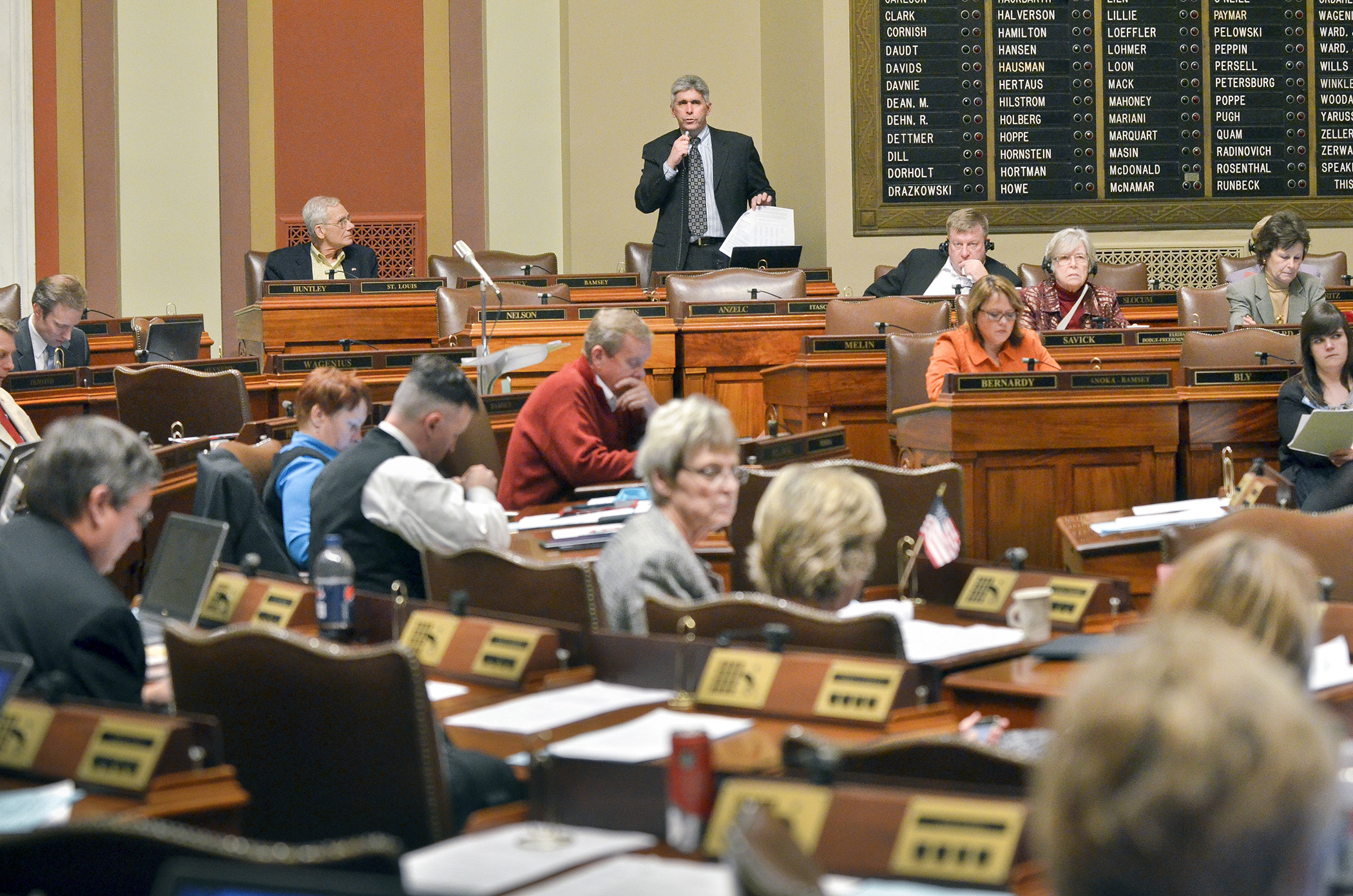
Conferees for the proposed Minnesota Insurance Marketplace went into meetings this week at odds over funding a new state agency that would run a health care exchange. They emerged Wednesday night with a compromise they admittedly said would be a tough sell to the full House and Senate.That prediction came true Thursday, when House members debated the conference committee report for two hours before recessing so committees could continue their bill reviews in time for Friday’s first deadline. They reconvened at 9:45 p.m. and voted 72-61 just after midnight to adopt the conference committee report. The Senate is expected to vote Monday.“It’s been a very respectful and thoughtful debate throughout,” said Rep. Joe Atkins (DFL-Inver Grove Heights), the House sponsor.HF5*/ SF1, also sponsored by Sen. Tony Lourey (DFL-Kerrick), would enable Minnesota to operate its own health exchange rather than defer to a federally-run exchange, under the federal Patient Protection and Affordable Care Act.2014 premium withhold lowered The marketplace — a new state agency that would work in tandem with insurance carriers who would sell plans through a state website — is projected to cost $60 million annually to run. The Senate wanted to use the tobacco tax to pay for operations, while the House proposed a withholding fee on each policy sold through the exchange.Conferees now recommend that legislators accept the House position, a withholding fee on each policy sold, rather than the tobacco tax, which goes into the General Fund.“We don’t have that money to spend,” Atkins said.The rate of the withholding fee was lowered from 3.5 percent to 1.5 percent for 2014, the first year of the exchange. Continue Reading

The Affordable Care Act (ACA) mandates that beginning in 2014, each state either must have a health exchange available that allows qualified individuals to buy coverage, or join with other states to create regional exchanges. Or can let the federal government do it. It is intended not only to offer affordable health insurance to consumers, but also to increase competition among private insurers, giving their prospective consumers the ability to choose from at least four different levels of policies.Minnesota’s new health insurance exchange is now a couple of steps from becoming reality after the Minnesota House last week voted 72 to 58 on a health insurance exchange bill. Minnesota is among 17 states plus the District of Columbia that are setting state-based exchanges.A State report released in February on the impact of the ACA and the exchange on Minnesota projected the effects on insurance coverage, pricing and budgets says:The number of uninsured persons is projected to decrease by nearly 300,000 or 60 percent by 2016: “[R]oughly 46 percent” will receive tax subsidies and 20 percent will receive coverage through a public health insurance program.There will be little change in employer-provided coverage.The new exchange will enroll an estimated 1.3 million persons.After the tax subsidies are applied, overall premium costs “for those in the individual market” will fall by an average of 34 percent, and approximately 70 percent either will experience no change or premium decreases.The State-commissioned report concludes, “The ACA and the exchange will both greatly increase insurance coverage in Minnesota and cause a large rise in individual market coverage.”The unresolved issues surrounding the establishment of the State exchange include developing consumer assistance programs. According to Stairstep Foundation CEO Alfred Babington-Johnson, these programs should be uniquely designed to address the specific needs of diverse populations, especially those with the worst health disparities and highest uninsured rates.These problems “aren’t solved by a passing of a bill,” Babington-Johnson told the MSR last week after the health insurance exchange bill was passed. He was a member of the Health Insurance Exchange Advisory Task Force, established by Minnesota Governor Mark Dayton in 2011. Continue Reading
Just 27 days before the federal government requires a decision on whether Minnesota will move forward with a state-run health care insurance exchange, the House passed legislation Monday that would create a Minnesota Insurance Marketplace. States may choose to operate their own exchange or defer to a proposed federally-run exchange.
Every Minnesotan will be required to have some form of health care insurance beginning Jan. 1, 2014, as a result of the federal Patient Protection and Affordable Care Act passed in 2010. States can operate their own health care exchange, or defer to a national exchange run by the federal government.
If Minnesota ever adopts a single-payer heath care system, the work of Dr. Elizabeth Frost will be remembered as one of the key reasons for its passage.Together with her friend, Dr. Ann Settgast, Frost co-founded the Minnesota Chapter of Physicians for a National Health Program (PNHP) five years ago. The group holds rallies and speaks at hospitals across the state to recruit new members to its cause — and now boasts more than 1,000 members in Minnesota. Frost also has the ear of state lawmakers such as Sen. John Marty and Rep. David Bly, who hope to expand healthcare access in Minnesota.“Single-payer” healthcare would make health care universal and ensure equal access to best treatment, expanding President Obama’s Affordable Care Act. Under single-payer, everyone would be entitled to the best available care, no matter the size of their wallet. Citizens could keep their health insurance coverage even if they lost or changed jobs, and be allowed to retain their preferred doctor or caregiver. Continue Reading