Following up on a couple recent posts, with the definition of “recent” being arguable in one case:
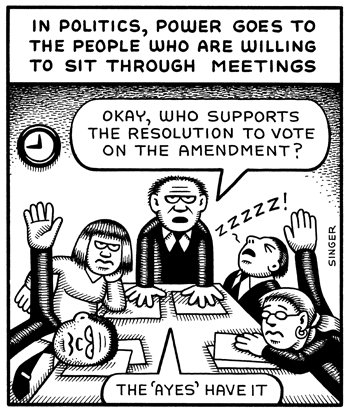
In a recent post on the two charter amendments on the ballot in Minneapolis, I spent most of the post on the increase in election filing fees because I understood that issue, but had to leave readers with just the text of the food requirements for wine licenses because it was Greek to me. Or French or Californian, I don’t know what kind of wine it was. Minnpost has an article explaining it. Essentially, the city council and the charter commission felt that the rules for restaurants that serve wine or beer don’t make any sense given changes in the restaurant industry, especially as regards craft beers. The council passed a replacement ordinance unanimously, and removed an archaic ordinance, but some rules are in the city charter and thus the need for a charter amendment. It probably seems ironic if you’re a conservative that this liberal city coucil is acting to simplify and modernize regulations to encourage business development. I’m going to vote “yes” just to watch some conservative heads explode. Feel free to drown your sorrows in a craft beer at a Minneapolis neighborhood restaurant. Continue Reading
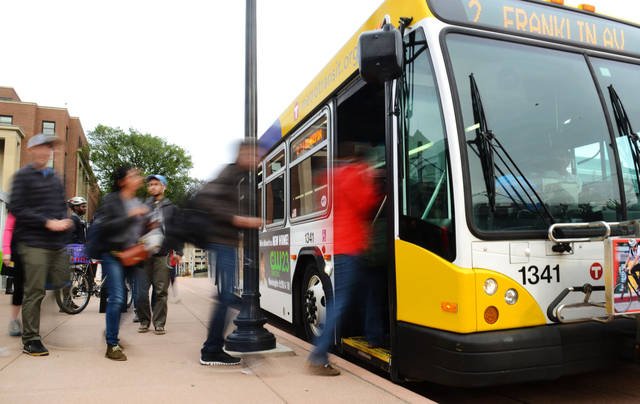
Crowds of commuters flocked to the Coffman Union bus stop, patiently waiting for their ride to arrive, headphones distracting many of them from the buzz of the world.
For you, what’s the most obvious sign that time is passing and has passed? Like when you look around at the average scene in your everyday environment, and you’re able to determine that it’s not the same as five years ago, or a decade ago, or twenty years ago? With one notable exception, I’d have to say that for me, it’s gotta be cars. Cars! Continue Reading
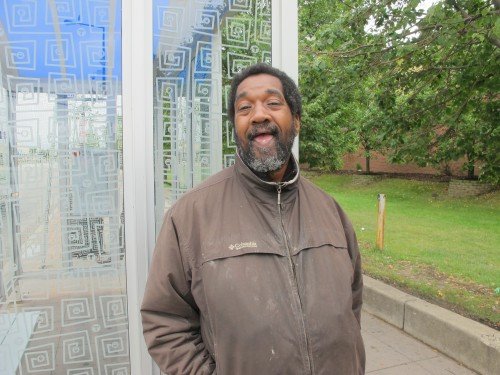
“I love MTC!”George stands at a bus stop on University Avenue on a blustery, 50 degree day, finishing his cigarette. He had been shopping at Wal-Mart. Continue Reading
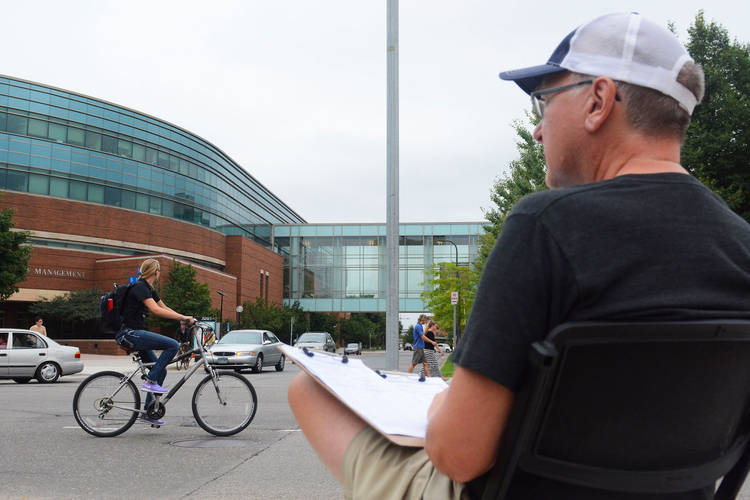
Standing on the corner of Cedar and Riverside avenues Tuesday afternoon, Jacob Knight stared intently at each passing bicyclist and pedestrian.As each one passed, he checked them off, remaining largely unnoticed by the world around him.The urban and regional planning master’s student was volunteering for Minneapolis’ annual survey to see how many of its citizens walk and bike.Since 2007, the city has monitored bicyclists at 30 main locations, with intersections near the University of Minnesota reporting consistently high counts. The method helps transportation officials monitor and plan bicycling initiatives based on traffic patterns, and bike traffic citywide has spiked in recent years.City staff members and about 100 volunteers will complete their three-day count Thursday, tallying bicyclists and pedestrians in small time increments over the course of two hours, said Simon Blenski, a Public Works Department bicycle planner.The Washington Avenue Bridge and two spots in the Dinkytown area have ranked among the top five most frequented bicycle locations since 2011.Citywide, an 11 percent increase in bicycle traffic between 2012 and 2013 followed a cumulative 56 percent increase in the five years before.This year, Blenski said the city doesn’t expect an increase in bicyclists that exceeds 10 percent.“I would expect it to keep pace,” he said.To conduct the study, volunteers sign up and complete a short, online training course that prepares them to count and tally every passing bicycle by hand, Blenski said.“It’s a lot to organize, but we’ve found a pretty streamlined way to do it,” he said.Knight said he decided to volunteer because he wanted to help create valuable data to inform city planning.Dave Paulson, a city volunteer who bikes to work daily, said he thought counting bicycles would be a good way to contribute to new bicycle infrastructure.“I think [bicyclists are] an underserved population in the city,” he said.Minneapolis has a few automated locations to count passing bicycles, Blenski said, but they are expensive, require calibration and aren’t completely accurate. Using volunteers and staff members to supervise has provided consistent results, he said.Keeping track of bicyclist numbers helps the city evaluate the success of its infrastructure goals and plan new ones, like bike trails and green-painted bike lanes, he said.“All those goals are tied to hard data,” Blenski said, adding that bicycle infrastructure helps the city become more sustainable.Minneapolis officials watch for traffic changes after implementing a bike lane, Blenski said — like increased bicyclists and fewer bicycles riding on the sidewalk — so they can make adjustments in the future.Anecdotal evidence shows students are reaping the benefits.Noah Wilson, president of the University’s Cycling Team, said he doesn’t have a problem getting around campus on his bike.“From my experience, cycling is pretty popular on campus, and I would say fairly accessible as well,” he said.Grant Flick, the team’s vice president, said he’s excited to see the types of bike paths the city will implement in response to the survey.“It all comes down to infrastructure,” he said.Despite the accumulation of seven years of bike traffic counts, Blenski said experts sometimes cannot make definitive conclusions for up to several years.“We would like to think that [the biking increase is] primarily due to infrastructure investments,” Blenski said.In order to continue promoting increased bicycle use around Minneapolis and the University, the city works to create connections with the campus, he said.The University will conduct its own bicycle and pedestrian traffic counts for the East Bank, West Bank and St. Paul campuses later this month, said Jacqueline Brudlos, communications manager for Parking and Transportation Services. Continue Reading
A group of Minneapolis environmental activists, concerned residents, and lawyers gathered at the Hennepin County Government Center to unveil a lawsuit against the city of Minneapolis and the Federal Transit Administration.The Lakes and Parks Alliance is challenging the legality of votes by the Metropolitan Council and the Minneapolis City Council to approve what could become the most expensive public project in Minnesota history.KFAI’s Rico Morales has a report. Links to audio below.Group Files Suit Over Southwest LRTOil Trains Cause Concern Continue Reading
In response to widespread public outrage about rutted, ice-clad streets, and jolting potholes throughout the City of Saint Paul in the winter and spring of 2014, Mayor Chris Coleman has proposed a plan to resurface eleven of the “Terrible Twenty” worst arterial streets before the end of the fall construction season. Continue Reading
It’s urbanist dogma that you can build a city for either cars or people, but not both. Now there’s evidence to question that dualistic assumption. Continue Reading
In January this year, when the Draft Saint Paul Bikeways Plan was released to the public, people in the media called to ask me what I thought of the plan and why I thought Minneapolis was so far ahead of Saint Paul when it came to bicycle infrastructure. I couldn’t comment on the plan because I hadn’t seen it but I told them that, unlike Saint Paul, Minneapolis had the “Holy Trinity” of forces necessary to get stuff done– an eager mayor and elected officials, a willing Public Works Department, and lots of money. Minneapolis also had more bicycle culture and a public that supported cycling. Continue Reading
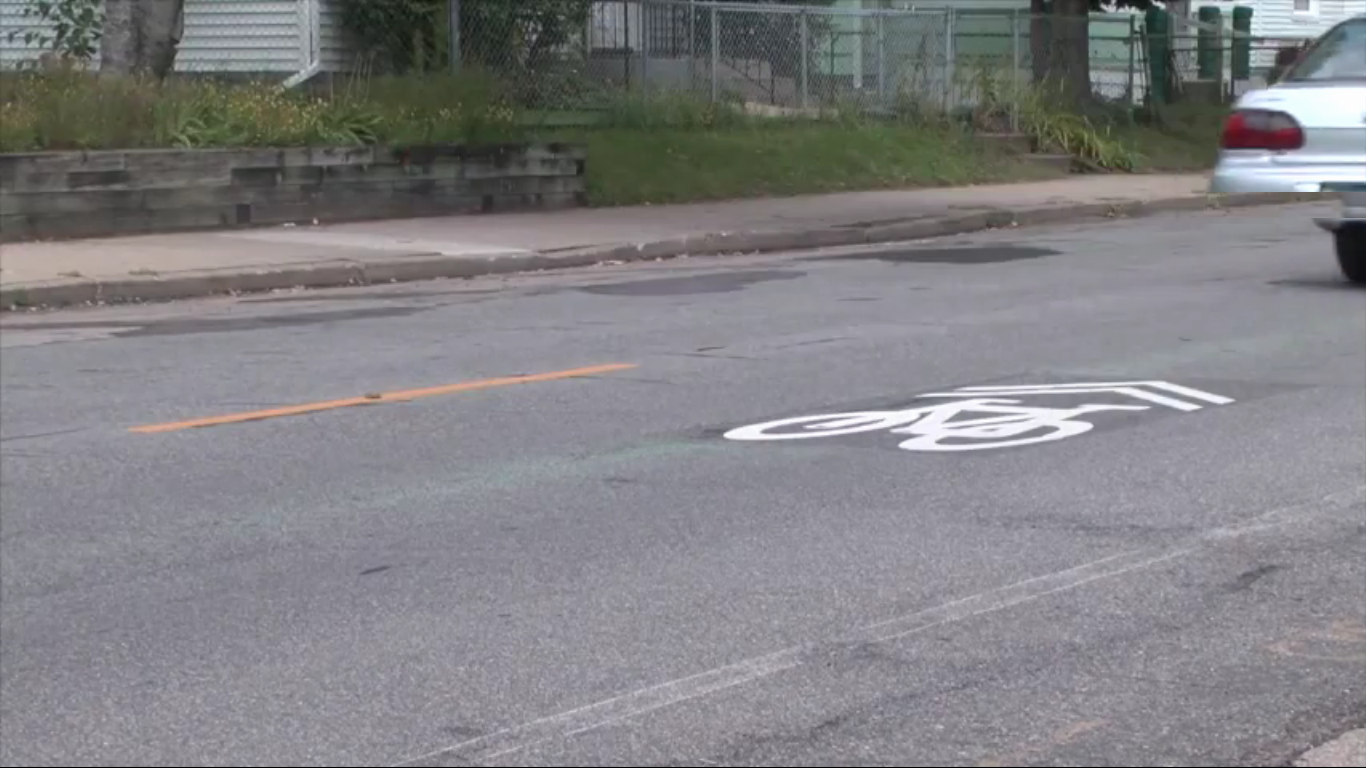
Making bikers feel safe and recognized on the road has become a priority for policy makers in the Twin Cities. By implementing protected and buffered bikeways, bicyclists gain more elbow room and separation from cars. There have been a number of different changes to bikeways in the Twin Cities over the past few years with more in the works, so it’s important for drivers and cyclists alike to understand these changes.