
How do you get women’s voices heard?
|
“[There is power in] writing down your own words and speaking and performing them in public. Continue Reading
Twin Cities Daily Planet (https://www.tcdailyplanet.net/category/work-economy/page/4/)
“[There is power in] writing down your own words and speaking and performing them in public. Continue Reading

On January 1, we had a big change: SPOKES (the community bike center just east of the LRT on 22nd Street) merged with Cycles for Change, a community bike center headquartered in St. Paul. The two community bike centers have very similar programs. Also, Cycles for Change provided fantastic support to SPOKES when it was starting two and a half years ago.We will keep SPOKES great staff, location, programs, and hours. (details at www.SpokesConnect.org) • Our Open Shop (where we help you fix your bike) stays on Saturday afternoons and Wednesday evenings,•Our Earn-a-Bike course continue,• Our Learn-to-Ride course will start again this spring• Our volunteer nights stay the same,• The Hub Mini Store @SPOKES will actually add hours this spring (adding Sunday to sell reconditioned used bikes) SPOKES is actually merging with an old friend. There has been a long history of collaboration between SPOKES and Cycles for Change (as long as that a two and a half year old program can have):• Most of SPOKES’ programs and policies were designed using Cycles for Change’s programs as a template.• For its first year, SPOKES contracted with Cycles for Change to provide staff support for the Learn-to-Ride program and Open Shop.• SPOKES has been a branch of Cycles for Change’s Community Partners Bike Library Program for the last two years. In addition, SPOKES is joining with a couple old friends: Cycles for Change’s current Executive Director (Jason Tanzman) and current board president (Katya Pilling) were the two people responsible for the original idea of starting a community bike center in Seward. Continue Reading

The recently released Making Strides 2014 Accessibility Survey provides a wealth of data about the challenges faced by members of the disability community as they seek to access the Green Line. The report also makes clear why it’s so important to make sure that people with disabilities can get to the station safely and easily.Background data drawn from Minnesota Compass research shows we’re not dealing with just a small number of people. Currently, approximately 10% of Minnesotans have a disability, and in some areas of the Twin Cities that percentage almost doubles; for example, in downtown Saint Paul, more than 18% of the population has a disability . There are also heavy concentrations of people with disabilities living along the Green Line where 44% (7 of 16) of Saint Paul Public Housing Hi-Rise buildings are located.Another reason it’s important to make sure people with disabilities can get to the station is that many are regular transit riders who depend on the bus or the light rail to get around independently and participate in the community. The report cites Metro Transit numbers that show heavy use of the Green Line: “In September 2014, the third full month of Green Line service, seven of the fourteen stations in Saint Paul had more than 1,000 boardings by people with disabilities, …and more than 2,000 boarded at Central Station.”Waiting to board the light railThe 2014 Accessibility Survey was planned and carried out by the District Councils Collaborative (DCC) in partnership with members of the disability community, some of whom had also participated in the DCC’s 2012 Walkability Survey. Continue Reading

It has been a while since we have talked about what is supposed to be the greatest employment story in the history of Minnesota: the new Vikings stadium, with its price tag of over a billion dollars and thousands of jobs.In terms of dollars added to the local economy, it is a success. In terms of jobs for Whites, it is a success. But in terms of jobs for Blacks, it is a disaster. Worse, it is another scam our Black leadership pulled on our own Black community.Black leaders are as corrupt as White leaders. Not the kind of integration and equality we were looking for. Continue Reading

The first committee deadline has passed in a flurry of bills and late-night hearings, and the 2015 session will keep picking up steam next week with the release of two key pieces to this year’s legislative puzzle.First comes the Republican transportation plan, set to be released during a 9 a.m. news conference on Monday. Funding transportation has emerged as one of the key issues of the session, and how far apart plans put forward by Gov. Mark Dayton and Senate DFLers are from what is announced by Republican leaders could have a big impact on the next two months at the Capitol.The governor and Senate have expressed support for raising the state’s gas tax to pour billions of dollars into fixing Minnesota’s roads and bridges, as well as upping a metro-area sales tax dedicated to funding mass transit projects.Republican leaders, on the other hand, have said they want to construct a package that spends existing state dollars and focuses on roads and bridges, not transit.Budget targets dueTuesday is the deadline for the House Ways and Means Committee to OK a budget resolution bill. Rep. Jim Knoblach (R-St. Cloud), committee chair, told Session Daily last week that the Monday release of Republicans’ transportation bill was one reason he expected the committee would act on the deadline day. After Tuesday, each finance committee will have a budget target — essentially, a maximum for the total spending in the bills they approve.On the floorMonday on the House floor lawmakers are scheduled to take up HF 1027, a bill sponsored by Rep. Pat Garofalo (R-Farmington) that would set a lower minimum wage for tipped employees, such as waiters, who earn $12 per hour or more in combined wages and tips in a pay period.Chris Steller contributed to this story. Continue Reading
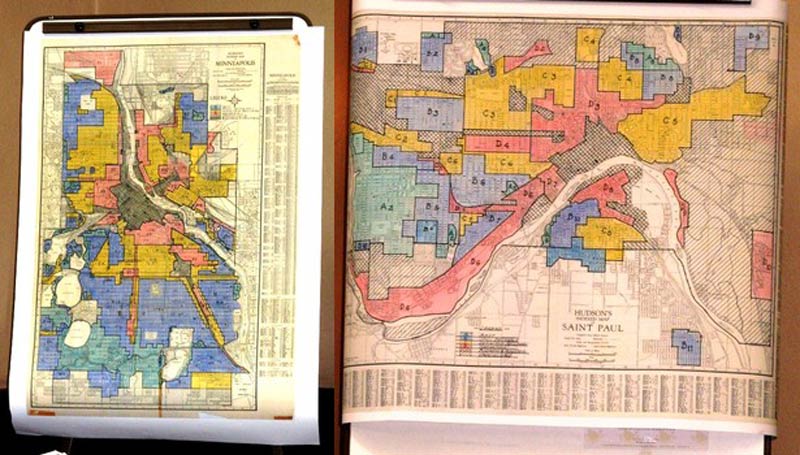
Researchers studying the affects of public policy on the racial wealth gap estimated that the median wealth of Black households would rise 451 percent if Blacks owned homes at the same rates as Whites.“With policies that advance the rate of Black and Latino homeownership to the same rate as White households, Black median wealth would more than quadruple and Latino media wealth would more than triple,” said Catherine Ruetschlin, a senior policy analyst at Demos, a public policy group that advocates for political and economic equality.A joint effort by Demos and the Institute on Assets and Social Policy (IASP), a research group that advocates for economic opportunity, security and equity for individuals and families, detailed the key factors in housing, education, and the labor market that have contributed to the racial wealth gap for generations.The report by said that the median Black household had $7,113 in wealth holdings compared to the median White household, which had $111,146 in wealth holdings in 2011.“Black households hold only 6 percent of the wealth owned by White households, which amounts to a total wealth gap of $104,033, and Latino households hold only 8 percent of the wealth owned by White households, a wealth gap of $102,798,” stated the report. “In other words, a typical White family owns $15.63 for every $1 owned by a typical Black family and $13.33 for every $1 owned by a typical Latino family.”According to the report if public policy eliminated racial disparities in income, the median Black wealth would grow $11,488 and if disparities in college graduation rates were eradicated, median Black wealth would grow $1,313.Thomas Shapiro, the director at IASP, said that the racial wealth gap is one of the most critical issues as the United States moves into the 21st century. Shapiro said that researchers designed a new tool called the “Racial Wealth Audit,” to get a real, objective handle on the impact of policy on wealth accumulation in the United States and what the racial wealth gap really looks like.Tamara Draut, the vice president of policy and research at Demos, said that while researchers and policy analysts have been heartened by the burgeoning debate surrounding rising inequality in the United States and the implications that it has for all of our standards of living, the underlying racial divide that underpins so much of the inequality in this country is less understood and less talked about.“In addition, Black and Latino college graduates saw a lower return on their degrees than White graduates: for every $1 in wealth that accrues to median Black households associated with a college degree, median White households accrue $11.49,” stated the report.Black families also experienced lower returns on the income that they earned, when compared to White families.“If households of color had the same wealth returns estimated for White families with similar incomes, the racial wealth gap would decrease by 43 percent,” said Tatjana Meschede, the research director at IASP. “To make progress in closing the racial wealth gap, policies need to address both income inequality and differential wealth returns to income.”Meschede said policy recommendations to address income inequality included raising the minimum wage, the creation of a federal jobs program and increasing unionization.“Homeownership is the largest reservoir of wealth and financial stability that American families have,” said Thomas Shapiro, the director at IASP. “It’s just that it is so inequitably distributed at this point in time in the value of wealth that it creates.”With the creation of the Federal Housing Administration in 1934, the United States government sanctioned lenders to use “redlining” to systematically deny Blacks access to that reservoir of wealth for decades.“While redlining was officially outlawed by the Fair Housing Act of 1968, its impact in the form of residential segregation patterns persists with households of color more likely to live in neighborhoods characterized by higher poverty rates, lower home values, and a declining infrastructure compared to neighborhoods inhabited predominantly by White residents,” stated the report. Continue Reading

In the new movie Selma, Martin Luther King, Jr. works tirelessly to integrate Black Americans socially (education, opportunity), economically (jobs, housing), and politically (voting, holding office). He understood “American” refers not to race, religion or country of origin, but to the ideal of “truths to be self-evident, that all men are created equal…with certain unalienable rights.”Our leaders have taken their eyes off this prize, turning the Civil Rights Movement into a rewards program for Black “leaders,” not Black communities. On March 8, 2015, this genie of truth was exposed when an “alert” message was sent by Council on Black Minnesotans (COBM) Executive Director Ed McDonald, identifying House and Senate bills calling for gutting the COBM’s power to look into the issues of diversity, affirmative action, or complaints of violations of the rights of Black Americans in Minnesota.Mr. McDonald identified the legislation and the sponsors and asked his board to authorize him to file suit in the federal district court in St. Paul. The COBM Board, with the exception of two members, refuses to endorse this legal action.Do not these actions reflect how Black American leaders and White Liberal leaders (Democrat Farm Labor/DFL Party) contributed to our Losing the Race: Self-Sabotage in Black America, and how The Dream [became] the Nightmare, as they try to shift blame in their finger-pointing at White Republicans?For a decade I have written on the failure to integrate Black Americans with White Americans in stadium and arena construction (Twins, Gophers and Vikings). Continue Reading

Fresh fruits and vegetables grown right here in Minnesota are a staple of farmer’s markets, so allowing low-income consumers to use their Supplemental Nutrition Assistance Program vouchers to purchase fresh, healthy foods at the markets makes sense, according to Rep. Sarah Anderson (R-Plymouth).Anderson sponsors HF352, which would appropriate $2 million in the next biennium to create the “Healthy eating, here at home” grant program. Nonprofit organizations could apply for grants to work with Minnesota-based farmer’s markets to provide $10 vouchers to SNAP participants who use their electronic benefits transfer card to make healthy purchases.The bill was laid over by the House Health and Human Services Finance Committee Wednesday for possible omnibus bill inclusion. SF316, a companion sponsored by Sen. Jeff Hayden (DFL-Mpls), is scheduled for a March 18 hearing by the Senate Finance Committee.Grocery stores could also accept vouchers for the purchase of fresh fruits and vegetables if a federal waiver is obtained from the U.S. Department of Agriculture.“This is something I strongly support,” said Rep. Rod Hamilton (R-Mountain Lake), chair of the House Agriculture Finance Committee.Pilot programs have proved successful and now it’s time to expand the program statewide, said Colleen Moriarity, executive director of Hunger Solutions Minnesota. The program could help up to 495,000 SNAP participants, Moriarity said.Shopping at farmer’s markets is a great way to socially engage in the community while supporting local agriculture, she added.[See originl piece here: http://www.house.leg.state.mn.us/sessiondaily/SDView.aspx?StoryID=5582] Continue Reading

Nearly 200 community members gathered at the Neighborhoods Organizing for Change office for a forum on workers’ rights in Minneapolis and throughout the state, including a need for earned sick and safe time, fair scheduling, a living wage, and ending wage theft on Saturday, February 28. “When I was working at McDonald’s, I had a baby and had to go back to work ten days later or lose my job–even though I had a C-section,” said Octancia Adams, an organizer with Neighborhoods Organizing for Change. “They wouldn’t give me paid time off. We need earned sick and safe time for all workers.”Rosa Garcia Perez, a cook at McDonald’s organizing with Centro de Trabajadores Unido en la Lucha (CTUL), spoke about the difficulties of raising a family in a low-wage job. “I have to work the overnight shift by myself–and sometimes I don’t even have time to go to the bathroom or drink water,” said Rosa. “I’m currently four months pregnant, so I need to do both of those things a lot. Continue Reading

Over the past few years, the City of Minneapolis and its partners made major investments in a new traffic signal management system and other equipment to slash wait times for vehicles along and crossing Hiawatha Avenue. Drivers who use Hiawatha know firsthand how traffic flow can be disrupted by the Metro Transit’s Blue Line. Nowhere else in the country can you find a fast (45 mph or faster) commuter train running parallel to a highway, forcing frequent stops to side street traffic along the way. Now, the City is reexamining traffic in light of those investments and changes to see if any additional improvements can be made.Traffic signal operation improvements along Hiawatha in 2013 included the addition of 160 in-pavement traffic detectors, the activation of a traffic signal control system that wasn’t available when the light-rail line started service in 2004 and a revision of traffic signal sequences. These investments drastically improved traffic flow with average delays decreased by 32 percent and the number of vehicles waiting two minutes or longer cut in half.This spring the City of Minneapolis will reexamine the systems to see if additional adjustments could further improve traffic signal operation affected by the Blue Line. Continue Reading