Let’s face it, America has not done a very good job of reconciling its ugly and painful history of racism and oppression against African Americans and other people of color. The predominant attitude seems to be that what happened in the past stays in the past and that history has little to no bearing upon current happenings within our society. Sadly, as illustrated in the tragic murder of Trayvon Martin and in the aftermath of the acquittal of George Zimmerman, this could not be further from the truth. In this case, race played a significant role in the fact that Trayvon Martin, a young African American male, was profiled and stereotyped by Zimmerman as a criminal who was “up to no good,” as he walked in the rain through a gated community in Sanford, Florida.The lingering perception of the Black man as criminal and suspicious has plagued young African American men since the days of slavery and beyond. In fact, throughout the South following the abolition of slavery, laws were created that made standard behavior by Black men a crime and led to high rates of incarceration for that segment of the population. Continue Reading
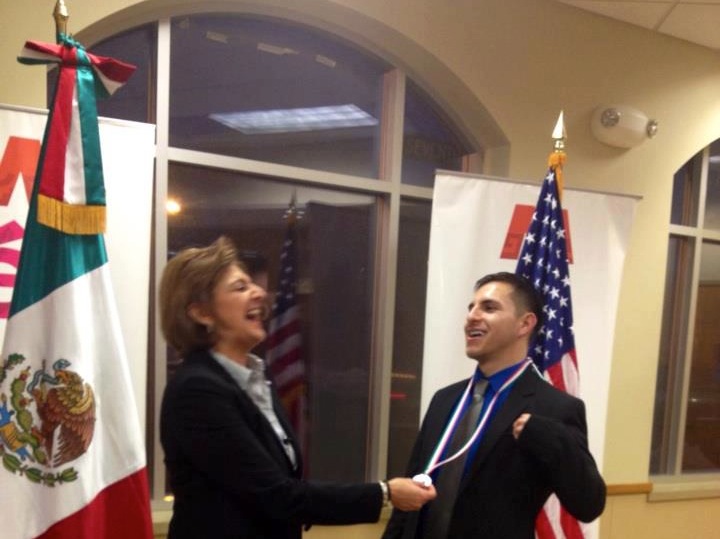
At 25, Juventino Meza is much younger than the typical recipients of the Ohtli Award and the Immigrant of Distinction Award. Meza was honored in a ceremony at the Mexican Consulate in St. Paul on March 7, with the Ohtli Award from the Mexican government. He received the Immigrant of Distinction Award on March 14 from the Minnesota/Dakotas Chapter of the American Immigration Lawyers Association, at the Hubert H. Humphrey School for Public Affairs of the University of Minnesota during a community forum on immigration reform.Ohtli is Nahuatl (an indigenous language in Mexico) for “path.” Meza has done much to improve the path of young immigrants in his community. Continue Reading
Early Friday morning, you may see Jane Perry hanging out on a street corner. She has been distributing VFW “Buddy” Poppies as a Member of the VFW Ladies Auxiliary for over 40 years. “It means a lot to me,” she said. “Buddy Poppies raise money to help veterans, their families, and our community. The VFW has been a rewarding place to volunteer.” Continue Reading
“On a normal day, I get up at 5 in the morning. After getting dressed I reach my shop, open the oven and start preparing the meat at around 7 to 7:30 a.m. depending on the traffic,” explains Chai, seated at the dining area near the restaurants at Hmongtown Marketplace. “I try my best to get everything ready before customers arrive at around 9.”Chai is the co-owner of Chai’s Cooking, one of many Hmong-owned restaurants at Hmongtown Marketplace. She runs the restaurant with the help of her husband Cha, who works at the Boston Scientific Corporation for about 8-9 hours daily. Together they opened the restaurant in September last year as Chai wished to co-own a shop with her husband. Continue Reading
Kimberly Nightingale is a woman who is following her passion and living her dream. The key to her success: Commitment. “Ask if you are committed to your community, are you committed to caring for and listening to your community,” she advises on the topic of starting a datebook/ story collection. Kimberly Nightingale is the editor of the Saint Paul Almanac whose mission is to create opportunities for understanding, learning, and building relationships through sharing people’s stories. She values each person’s contribution to what the Almanac terms “a literary campfire,” whether they are an emerging or a professional writer.The Saint Paul Almanac as a literary organization is in its seventh year. Continue Reading
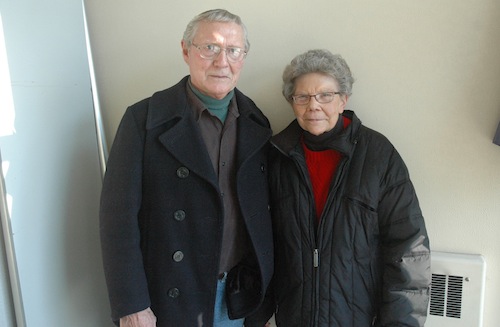
Bob and Pat Tammen rolled into the Twin Cities in their sturdy mobile home on January 5 to attend the Parents United for Public Schools legislative kickoff. They planned to stay in town over the weekend so that they could head to the capitol to make some noise about an issue that both of them care deeply about: making sure Minnesota doesn’t go ahead with a land swap deal that would open up national forest land to mining companies in exchange for funding for Minnesota public schools. The Land SwapBill H.R. 544 was initiated by former Congressional representative Chip Cravaak last May. The bill directs the U.S. Secretary of Agriculture to complete a land exchange between state-owned land within the Boundary Waters Canoe Area and federally-owned lands in Lake Superior National Forest. The deal would allow revenue gathering activities (read: copper mining) to benefit the public school system. Though it passed the house, was killed in the Senate in September. Continue Reading
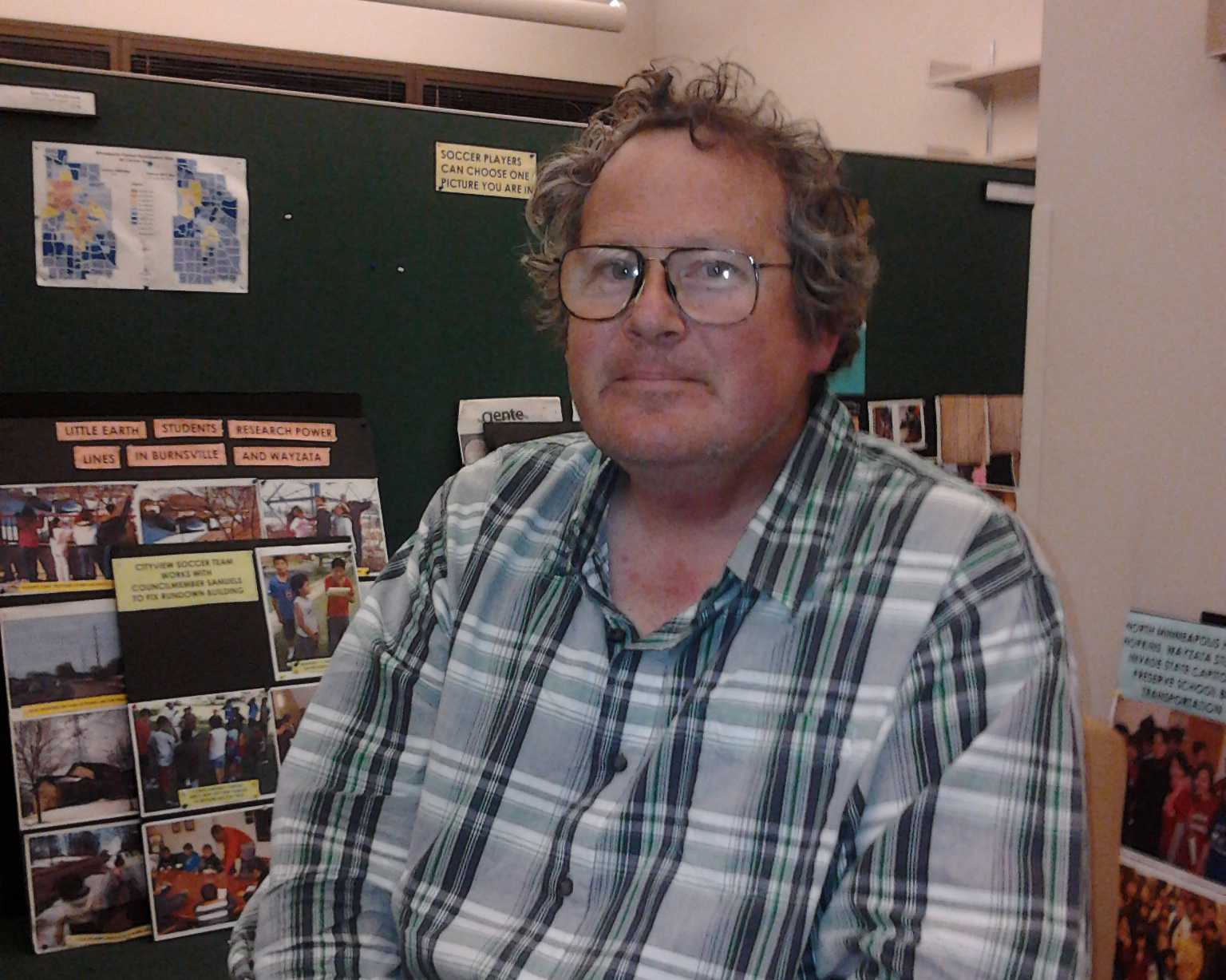
Alan Shilepsky likes talking, especially about politics and books. You can sit hours and hours with him in a good coffee shop and discuss politics and the world without getting bored. Shilepsky has strong opinions and does not hesitate to share them. He knows that he puts people’s backs up but it seems not to bother him.I first met Shilepsky before the election to discuss the Voter ID Amendment, which he supported. In his years as an election judge, he always appreciated when people would show an ID, especially when they had complicated names. Continue Reading
One of the most common dilemnas that dog owners face is how to train a dog to greet guests to their home in an orderly fashion. This is especially true around the holidays. Instead of trying to get out of hosting festivities at your home, wouldn’t it be nice if your pooch was the envy of the family? Your dog just may surprise you at their manners by adding in a few steps next time your door bell rings.We have been sharing our dwellings with dogs for at least 15,000 years. It is no wonder your dog barks and runs to the door when someone new enters. Protecting the home is the basic job description of your domesticated dog. This skill has been reinforced from generation to generation. The best way to refine the door greeting, is to work with your dog when there are no guests to keep the excitement to a minimum. The first step is to teach your dog to sit and stay on a preferred location. Choose a spot that is far enough from the door that he will be out of the way so you can sign for packages and greet your guests in peace. Place a dog bed or rug at the location. The dog should be able to see the door; remember that is his job to make sure people entering are safe.Practice being able to place your dog at his spot. My own dog goes to her bed with the command, “Park It”. Good things happen at her special place. Use a sealed container for treats that is in a convenient location near the door. When you come back from the door each time, give your dog a treat in a calm, genuinely appreciative manner. If you can take down the excitement with the door, your dog’s excitement will be reduced, too. We all think Ed McMahon is waiting outside with a check form the Publisher’s Sweepstakes. Slow down with the routine of opening the door and even going to the door. Add in opening the door with your dog at their location. Trust your dog will stay on their place. Set your dog up for success. Make sure you can do this many times and add in the door bell when you have this perfected.With your dog in a seated position, your guests should be able to arrive and enter without the usual chaos. Tell your guests you are training your dog and ask them to not be too excited, also. Eventually, your guests can give your dog the treat or you may add in shake or High 5 for your guests. Pretty soon, your dog will learn how nice it is to be appreciated by you when they are doing their natural role in the house.The final picture is this: The door bell rings and your dog barks. Tell him, “Thank you, (dog’s name). That’ll do. Park It. They go to their dog bed, you answer the door. Upon completion, you get a small biscuit from the treat jar by the door, walk over to his bed and hand it to him gently as you tell him what a good boy and how proud you are of him. Stroke his ear in appreciation.I have taught this to hundreds of dog owners. Each one is surprised at how well their dog responds to being thanked for doing their job which used to be a frustrating experience for both. Your dog will become more confidant when they know how much they are appreciated. Having a clear picture of what you want your dog to do when the door bell rings is an important aspect of this exercise. Transforming a frustrating activity to a new skill is the best way for you and your dog to form a deeper bond and continue to live in harmony.Free Speech ZoneThe Free Speech Zone offers a space for contributions from readers, without editing by the TC Daily Planet. This is an open forum for articles that otherwise might not find a place for publication, including news articles, opinion columns, announcements and even a few press releases. The opinions expressed in the Free Speech Zone and Neighborhood Notes, as well as the opinions of bloggers, are their own and not necessarily the opinion of the TC Daily Planet. Continue Reading
Jay Clark, the Director of the Minnesota Center for Neighborhood Organizing (MCNO), a program of the University of Minnesota’s Center for Urban and Regional Affairs (CURA), thinks that everybody should be involved with their neighborhood group, whether they are rich or poor. “It’s so American and so needed and not done in a lot of contexts,” he said. As opposed to other kinds or organizations, where people are preselected depending on their ideology or belief, neighborhood groups allow a voice for every person. “We need it badly,” he said. “There are too many forces that pull us apart.” Neighborhood groups “work on issues that affect your life,” Clark said, “as well as huge issues.” Whether you have a drug dealer next door, or a missing stop sign at the end of the block and people are getting into accidents, neighborhood groups work on those important issues, and get people involved who aren’t normally involved. Clark decided to become a community organizer when he was attending graduate school at the University of Chicago, studying history, and living in Hyde Park. Continue Reading
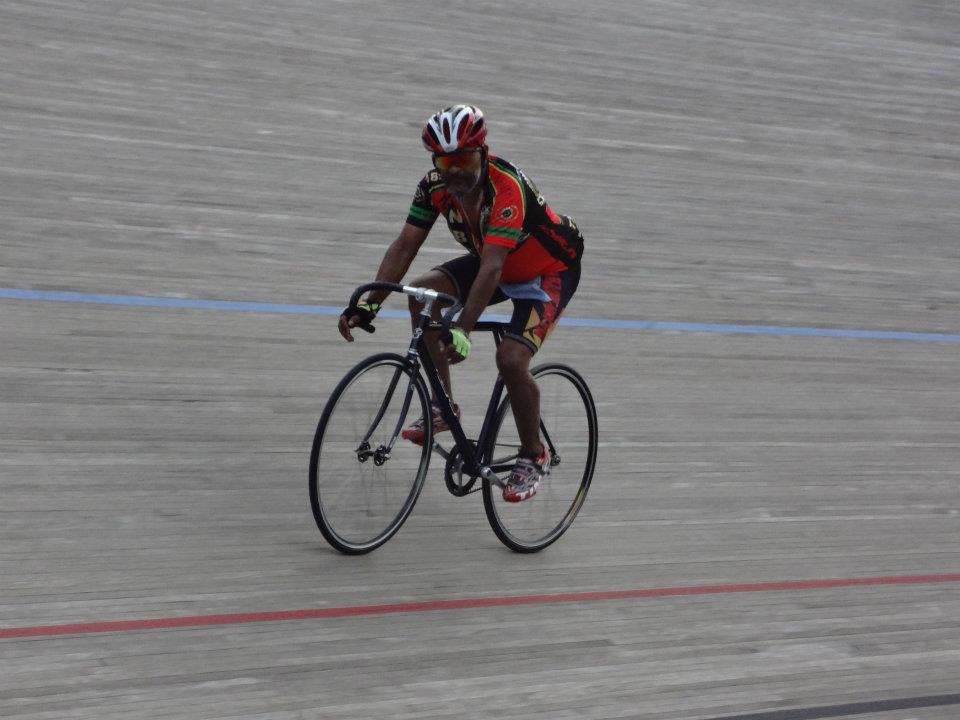
At the ago of 71, Louis Moore bikes at least once a week with 40 members of the Major Taylor Bicycling Club, which he founded in 1999. Moore is still the president of the club. He is retired, after working 19 years in the district office of former U.S. Congressional Representative Martin Olav Sabo.Moore says, “I am interested in doing something that I can physically get out and do in a regular basis.” Instead of playing basketball as he did in high school and college, he sees bicycling as an alternative both for transportation and for daily exercise. Moore did some bicycling racing in the 80s and cross state long distance races in the 90s.In 1999, he felt the need to promote regular physical activities because of health issues in African American community. “And bicycling is the simplest,” Moore said. Continue Reading