
Mr. and Mrs. Phanthavong: Life in the Lao community of North Minneapolis
|
In the cozy dim-lit townhome of Mr. Phouxay and Mrs. Continue Reading
Twin Cities Daily Planet (https://www.tcdailyplanet.net/category/raceethnicity/page/13/)
In the cozy dim-lit townhome of Mr. Phouxay and Mrs. Continue Reading

The political implications of the nation’s changing demographics are already being felt in many states across the country. These implications are addressed in a new issue brief, “The Changing Face of America’s Electorate,” released today by the Center for American Progress, which examines 2016 election trends and patterns for voters of color.The CAP analysis identifies what the electorate is projected to look like in 2016 for key battleground states—including vital states such as Ohio, Florida, Colorado, Virginia, and North Carolina—and estimates the racial and ethnic makeup of the 2016 eligible voting population. Based on those projections, the brief demonstrates the potential political impact of electoral demographic changes through two election simulations.“Demographic changes have only become more acute in the United States since 2012,” said Vanessa Cárdenas, Vice President of Progress 2050 at the Center for American Progress. “As people of color become a larger share of states’ electorates, the political implications for both political parties are evident: To win the presidency and many of the U.S. Senate races in the 2016 election, candidates will need to substantially engage voters of color.”The first simulation explored in the CAP analysis looks at how the demographic shifts will affect the 2016 election if voters across all racial and ethnic groups turn out and have the same party preferences as they did in 2012. In the second simulation, CAP holds voter turnout rates constant from 2012 but assumes that racial and ethnic groups revert to party preferences they showed in 2004. Continue Reading

If there is one thing that can be said about Sundraya (Sunny) Kase, it’s that she really loves her job. Kase is the director of community initiatives for the Minnesota Private College Council, an organization that represents 17 Minnesota private colleges, and assists students in enrolling in them and finding funding.She has been in her position for close to a decade, before which she was involved with community engagement and development with St. Paul’s Minnesota Minority Education Partnership. Kase explained that in her current position she works with all 17 campuses.Some of the colleges are Augsburg, Macalester, Concordia College, Concordia University, Gustavus Adolphus, Hamline and St. Olaf. Continue Reading
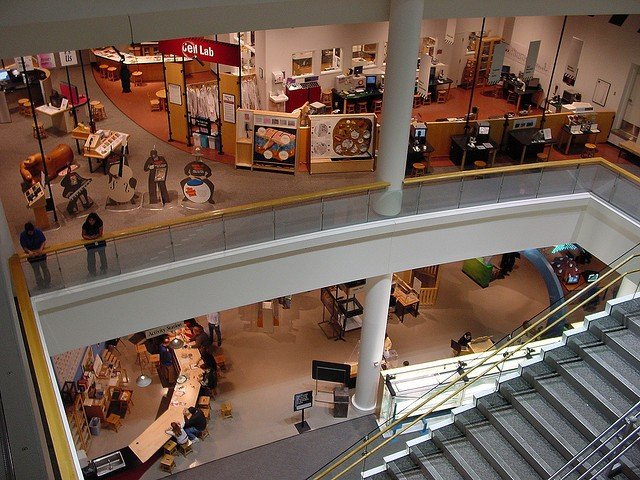
Omnifest 2015 isn’t the only thing beginning this weekend at the Science Museum of Minnesota.Beginning this Saturday, January 10, science, culture and opportunity will meet during the Science Museum’s popular Science Fusion event series. This long-running event series, taking place on four Saturday afternoons in January and February, focuses on the accomplishments of members of the Twin Cities’ Asian American, African American, American Indian and Latino and Hispanic communities in the areas of science, technology, engineering and math (STEM).During each Science Fusion event, science and education professionals from leading Twin Cities companies will present displays that demonstrate their passion for their work and highlight the contributions they’ve made to science and innovation. Visitors of all ages will get a memorable, hands-on look at the scientists’ areas of expertise in a science fair-style setting that is the perfect atmosphere for in-depth, one-on-one interaction between visitors and presenters.In addition, eight students from around Minnesota will be formally recognized and awarded the 2015 Donaldson Science Award, which recognizes outstanding student effort and achievement in the STEM disciplines.The 2015 Science Fusion events are:African Americans in Science: Saturday, January 10First celebrated in 1992, African Americans in Science was the pioneer Science Fusion and has become a beloved Science Museum tradition. Visitors will meet science and educational professionals from USDA Forest Service, Boston Scientific, the University of Minnesota Medical School, 3M, the Association of Genetic Technologists, and other organizations, learn about what they do through interactive displays and presentations, and discover the inspiring contributions they’ve made to technology, education, health care, and innovation.Amantes de la Ciencia!: Saturday January 24Amantes de la Ciencia (Lovers of Science) introduces visitors to science and education professionals from the Twin Cities’ Latino and Hispanic communities. Companies and organizations represented this year include Academia Cesar Chavez, Ecolab, General Mills, and the Society of Hispanic Professional Engineers. Continue Reading

One of my favorite parts of Minnesota is the consistent exposure to new ideas and theories. Continue Reading

2014 was a year of outrage. With national protests led by communities of color in cities all over the country, there has been a palpable urgency demanding an end to the status quo. Incidents like the death of Michael Brown or Eric Garner or racist team names or institutional disparities are nothing new. It wasn’t the fact of racism that marginalized voices grew in sonancy, it was the organizing and leadership in response to recent incidents that reached a fever pitch.Is it possible, as we float into 2015, 50 years after the Selma to Montgomery marches that led to the Voting Rights Act of 1965 and also the year that Malcolm X was assassinated, that we are entering into a new Civil Rights Era?In the Twin Cities we saw these voices rise in powerful actions such as shutting down 35W, a large-scale protest at the Mall of America, a protest at a football game that drew thousands of people and even a packed City Council meeting demanding our local leaders follow through on the promise of racial equity.These dramatic moments inspired conversations online and in print and most importantly in personal conversations with family members and friends and acquaintances. Conversations about structural racism leaked out of academia and into the mainstream. Continue Reading

This fall, in the wake of the shooting death of Michael Brown, and in the face of the mounting Black body count at the hands of law enforcement, ChangeLab put out a call for a Model Minority Mutiny. We called on Asian Americans to stand up against the model minority myth as an act of self-liberation from a humiliating, trivializing, and dehumanizing stereotype that has, for too long, been used as a justification for labeling Black communities as “problem” minorities, and excluding and criminalizing Black people.

After meeting with Generation Next staff, it was obvious to me that while everyone had a significant role in the program’s success, the role of Jeremiah Ellis, director of outreach and partnerships, was most essential. As stated in a previous article (“Five big steps across the achievement gap,” MSR, Dec. 11, 2014), Victor Cedeño, director of networks and education policy for Generation Next, attributed a huge portion of their success to “a powerful table of people who are coming together saying, ‘We want to be responsible for this. We want to do whatever it takes.’”

The achievement gap. It’s a common term in education that refers to the disparity in academic performance between groups of students.
For black teens, it means congratulating them for getting a C in their classes—as if that’s all they’re good enough to do.

Navell Gordon became famous when KSTP-TV blurred his face in a photo where he was standing next to Minneapolis Mayor Betsy Hodges and broadcast it because police said the two were flashing gang signs by pointing at each other. Social media dubbed the story #Pointergate. Gordon says he is not a member of the kind of gang KSTP-TV insinuated he belonged to. “I’m a member of the NOC gang,” he says with a laugh. “Knocking on doors, and organizing and getting more people involved.”