Minneapolis councilmember Cano meets with 2909 Bloomington Ave. S. families

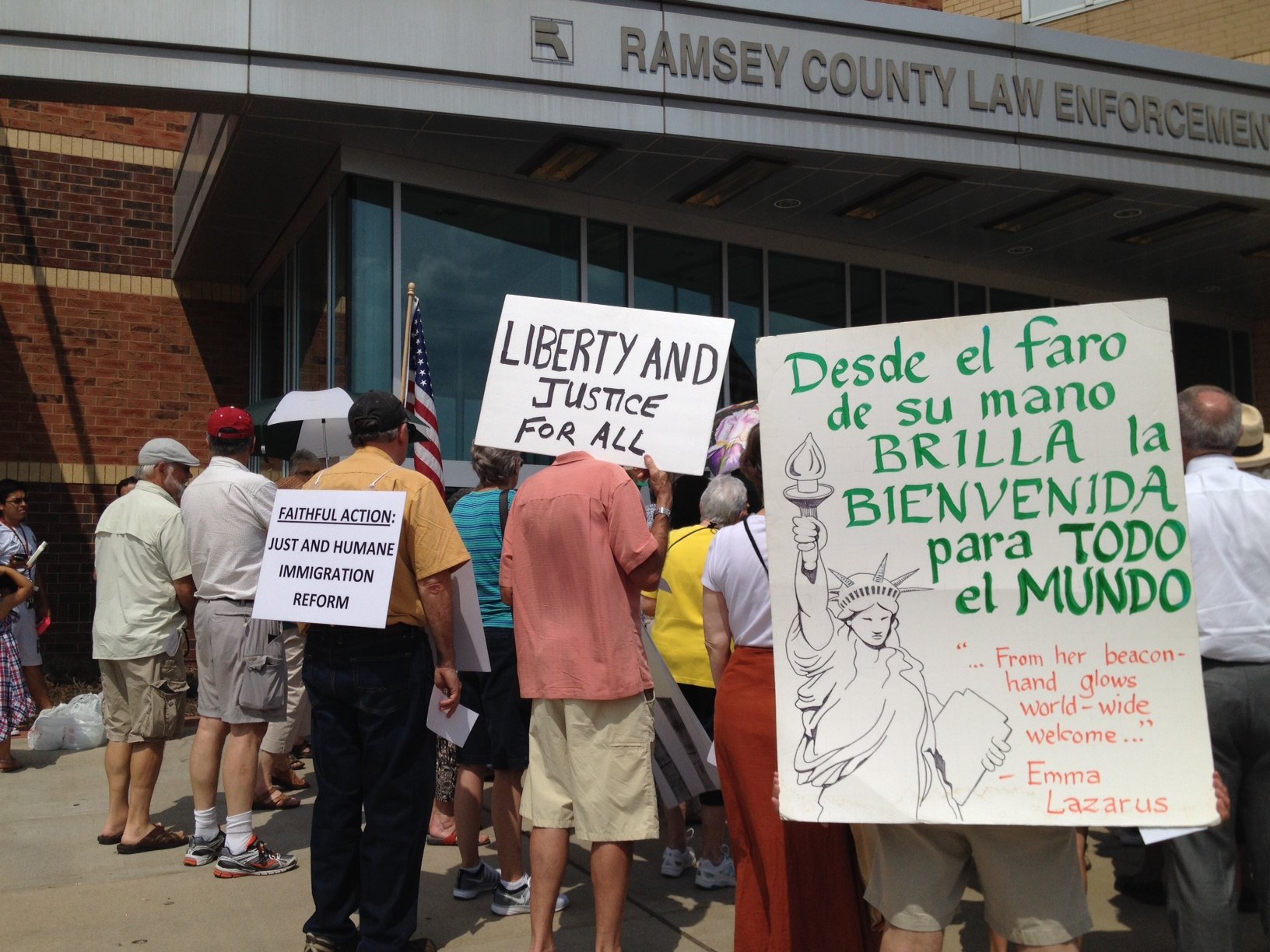
On August 7, councilmember Cano met with over 50 family members living at 2909 Bloomington Ave. S., to hear about safety concerns and work with residents to get problems fixed.This is a Community Voices submission and is moderated but not edited. The opinions expressed by Community Voices contributors are their own and do not necessarily reflect the opinions of the TC Daily Planet.Also participating in the meeting was Minneapolis police officer Abubakar Muridi, along with several other MPD officers and staff, and board members from the East Phillips Improvement Coalition.2909 Bloomington soccer players tell councilmember Cano they would like a soccer goal, basketball hoop in backyardBefore the meeting, councilmember Cano was given a tour of the backyard by soccer players living at 2909 Bloomington. They talked about problems with cars speeding down the alley, and said they would like a fence put up to separate alley car traffic from the youth playing in the back yard. They also hoped for more green grass, a basketball hoop and a soccer goal, a bigger playground, and speed bumps.2909 Bloomington families hope to replace this backyard dirt and rocks with green grass and a fenceThe soccer players then escorted councilmember Cano into the front lobby of 2909 Bloomington, where over 50 residents young and old talked with the councilmember about problems plaguing the building and surrounding neighborhood.Minneapolis police officer Muridi and councilmember Cano talk safety with 2909 Bloomington familiesMost of the complaints focused on safety and security. Continue Reading
Back from observing Ukraine election, Minneapolis resident works to preserve heritage in Northeast

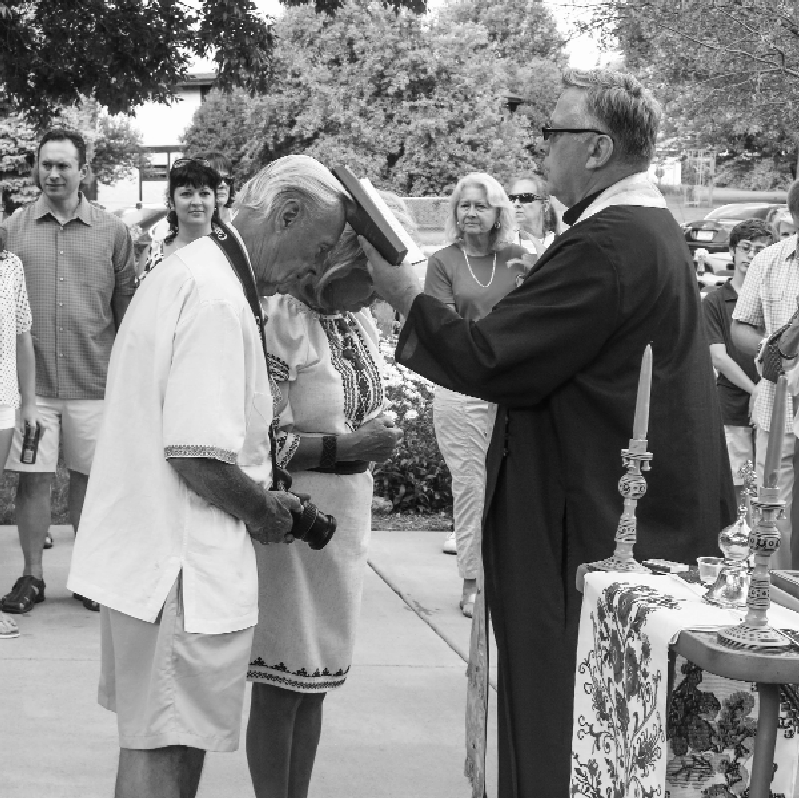
Although Luba Lewytzkyj was born in the United States, she retains close ties with Ukraine, her parents’ homeland. Her father, the Very Reverend Dr. Wolodymyr Lewytzkyj, was a priest at St. Michael’s & St. George’s Ukrainian Orthodox Church in Northeast, from 1955 to the mid-1960s. He represented the 10th generation in his family to serve as a priest.

Continue Reading

Somali president visits Twin Cities, receives mixed welcome

It was completely dark by the time Somali president Hassan Sheikh Mohamud arrived at Northrop Auditorium on the University of Minnesota campus on Aug. 9. But the lack of light didn’t stop protesters, many of whom had been demonstrating for hours, from rushing to the curb and chanting “Down, Hassan, down!” as the president arrived.President Mohamud’s visit to the Twin Cities is part of his attempt to build relationships with the strong Somali population in Minnesota, but his reception was met with mixed feelings. More than 100 protesters showed up among the several hundred attendees at the event, attacking the president for his current policies, which protesters say lack adequate security improvements and fail to keep promises.“Somalis back in Somalia, they have been in civil war for 24 years and they don’t have a voice,” said protest organizer Abdirizak Jama. “President [Mohamud] is ignoring the federal system, the federal constitution.”Back in May more than 100 Somali lawmakers asked the president to resign for failing to deliver more tangible change, like improving security in a nation struggling to rebuild after two decades of war.President Mohamud’s support also doesn’t accurately represent the Somali-American community in Minnesota, Jama said, which he estimates at more than 25,000.The U.S. Census Bureau estimates about one in three of the 85,700 people with Somali ancestry in the United States live in Minnesota, according to their most recent data.Said Mohamed said he’s frustrated by the lack of government funds used to educate the people of Somalia about the dangers of the extremist ideology perpetrated by terrorist groups like Al-Shabab.President Mohamud is responsible for the death of Somali parliament member Saado Cali Warsame, who was killed last month in a drive-by shooting in Mogadishu, Mohamed said. Continue Reading

Kahn, Noor set for tight primary in University area

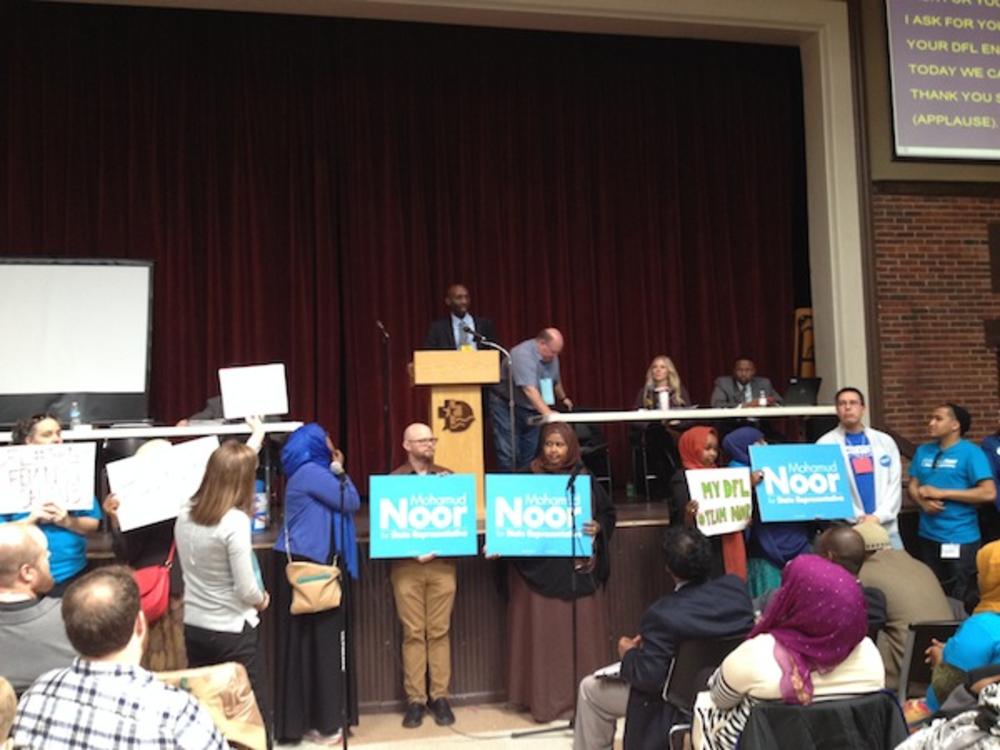
The end of the divisive race between 42-year incumbent Rep. Phyllis Kahn, DFL-Minneapolis, and Somali-born Mohamud Noor to represent the University of Minnesota’s area at the Capitol is on the horizon.On Tuesday, voters will decide which Democratic-Farmer-Labor candidate has the most support to represent House District 60B at the state Legislature next session. While Noor says the area’s needs are changing and new representation is needed, Kahn says her long, successful career shows that she’s the right person for the position.District residents from around the University of Minnesota area will vote in the primary election Aug. 12 and choose which candidate should advance to the general election in November. Both Noor and Kahn are running to win over the historically left-leaning district without their party’s endorsement.And along the candidates’ campaign trails, Noor has ignited a new form of political activism from Somali-Americans in the Cedar-Riverside neighborhood, heightening pressure on Kahn, a 21-term legislator, to prove she’s fit for the role.Over the last few months, tension has stirred between the candidates and their supporters. Both Kahn and Noor have dealt with allegations of voter fraud, a neighborhood caucus that ended in chaos and other claims aiming to hinder the political process.“I think we’re seeing each side looking for an advantage,” said Humphrey School of Public Affairs professor Larry Jacobs. Continue Reading

Lao heritage and the emerging generation of culture-builders

I remembered Lao School like it was yesterday. Getting frustrated at how my stiff little fingers never bent gracefully during ‘fawning’. Crushing packages of Mama instant noodles for lunch and eating it like chips with my friends during class. Passing time with Lao ‘then yang’ (jump rope game) and always feeling too short to jump high enough. Lao heritage was part of my life growing up. I wanted to fit in being American so badly that I forgot how much I missed paying attention to my elders as a child. Continue Reading

Fighting terrorism by creating ‘terrorists’

Adel Daoud was the teenage son of immigrants, attending a neighborhood Islamic high school when the FBI started talking to him online. According to his mother,

“Daoud required extra assistance in school, and was heavily dependent on her: ‘He’s not the person with a complete mind. He didn’t talk until five. He was the last one of my kids to talk. He doesn’t even talk Arabic….like the rest of our family, because he’s slow.’” Illusion of Justice, p. 28 Continue Reading