Five years since the housing bubble burst, and more than two years after a deadly tornado swept through, hard hit areas of North Minneapolis and nearby neighborhoods in the west metro region are still struggling with an enormous loss of home wealth, expensive and hard-to-find rental housing, and lagging incomes.
Dinkytown has been in the news again recently about a large-scale redevelopment proposal on one of the core blocks. There is much controversy over density, lost parking (perceived or real), and preservation. Those are all relevant issues with no absolute right or wrong answer but some very good possible solutions. But let’s not forget the pedestrian realm and the building facades that face it. By that measure, we need to send the Doran Companies proposal back to the drawing board, since adding a new curb cut and a large garage door, plus a transformer, facing 4th Street, is unacceptable. Continue Reading
Sharla Gardner met a mother who feared she’d lose her children if people learned of her homelessness and a man who was sure he’d lose his job for the same reason. She talked with people who preferred sleeping outside rather than in public shelters. She learned about the scarcity of affordable housing in Duluth.
And then, Duluth City Councilor Gardner said, she heard homeless people say they felt invisible and powerless.
Other than a few isolated pockets of Minnesota, housing costs are far outpacing salaries. Just take a look at the camouflage-looking maps below. Most of the state is gold and orange, showing that the percent change in housing costs have increased anywhere from 5 to 100 times more than the percentage increases in salaries in 2013 dollars. In some areas of Minnesota, the gap is greater than 100. Continue Reading
As citizens, we establish neighborhood organizations to advocate on our behalf and hold meetings to ensure that our public health and safety needs are being met. What are we left with when the city’s agenda pushes forth a project against the sentiment of neighborhood organizations, particularly in instances where such projects are partially funded with public money?
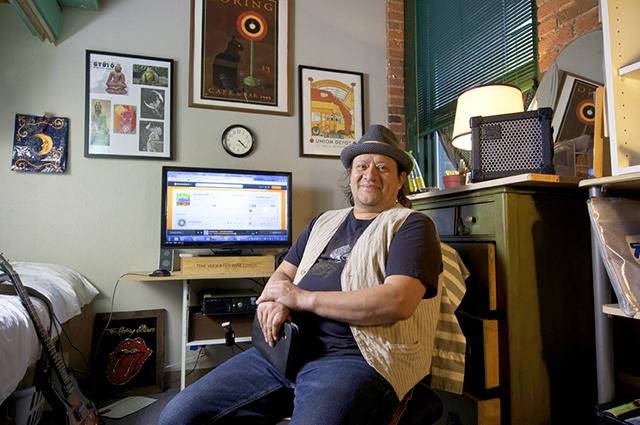
Living in his car, sleeping on buses, hunkering down with friends, for at least 25 years Lorenzo Vasquez had no place to call his own.Now at 61, he proudly unlocks the door to his very own place, a single room he’s outfitted with his own stuff.For him, the room at American House on the edge of Mears Park in downtown St. Paul is not only the end to homelessness but also a springboard to a new life and a steady job as a hairdresser.“They hand you the keys to your room; it’s like keys to a Rolls Royce,’’ he said.For state officials, Vasquez is a symbol of success on a continuing path toward housing Minnesota’s homeless.That’s a goal they see as more attainable since last month when the Minnesota Interagency Council on Homelessness — a team of representatives from 11 state agencies running the gamut from Corrections to Housing to Human Services, Transportation and Veterans Affairs — with Gov. Mark Dayton’s support announced their coordinated “Heading Home: Minnesota’s Plan to Prevent and End Homelessness.” Drafted in consultation with community stakeholders, the plan combines homelessness prevention strategies and housing construction.Community Sketchbook, reported and written by Cynthia Boyd, focuses on the economic and social challenges facing communities, especially low-income communities and communities of color, and how people are trying to address them. It is made possible by sponsorship support from The Minneapolis Foundation. Community Sketchbook articles may be republished or distributed, in print or online, with credit to MinnPost and the foundation.The effort isn’t “just about ending homelessness but changing the systems that have a role in preventing it,’’ explained Cathy ten Broeke, the state’s director to Prevent and End Homelessness. The problem is there are barriers to systems working together, she said.‘Disconnect’ between programsToo often, ten Broeke said, there’s a “disconnect” between programs that would enable people to make stable lives. Continue Reading
“We must talk about poverty, because people insulated by their own comfort lose sight of it,” Dorothy Day said. We must also talk about homelessness, because it’s still here — right here in St. Paul (and also, of course, in Minneapolis and the rest of the state.)In St. Paul, the Dorothy Day Center says it served 81 percent of the homeless men in Ramsey County in 2012. But that’s not enough. Continue Reading