Backers push for vote on driver’s licenses for undocumented immigrants

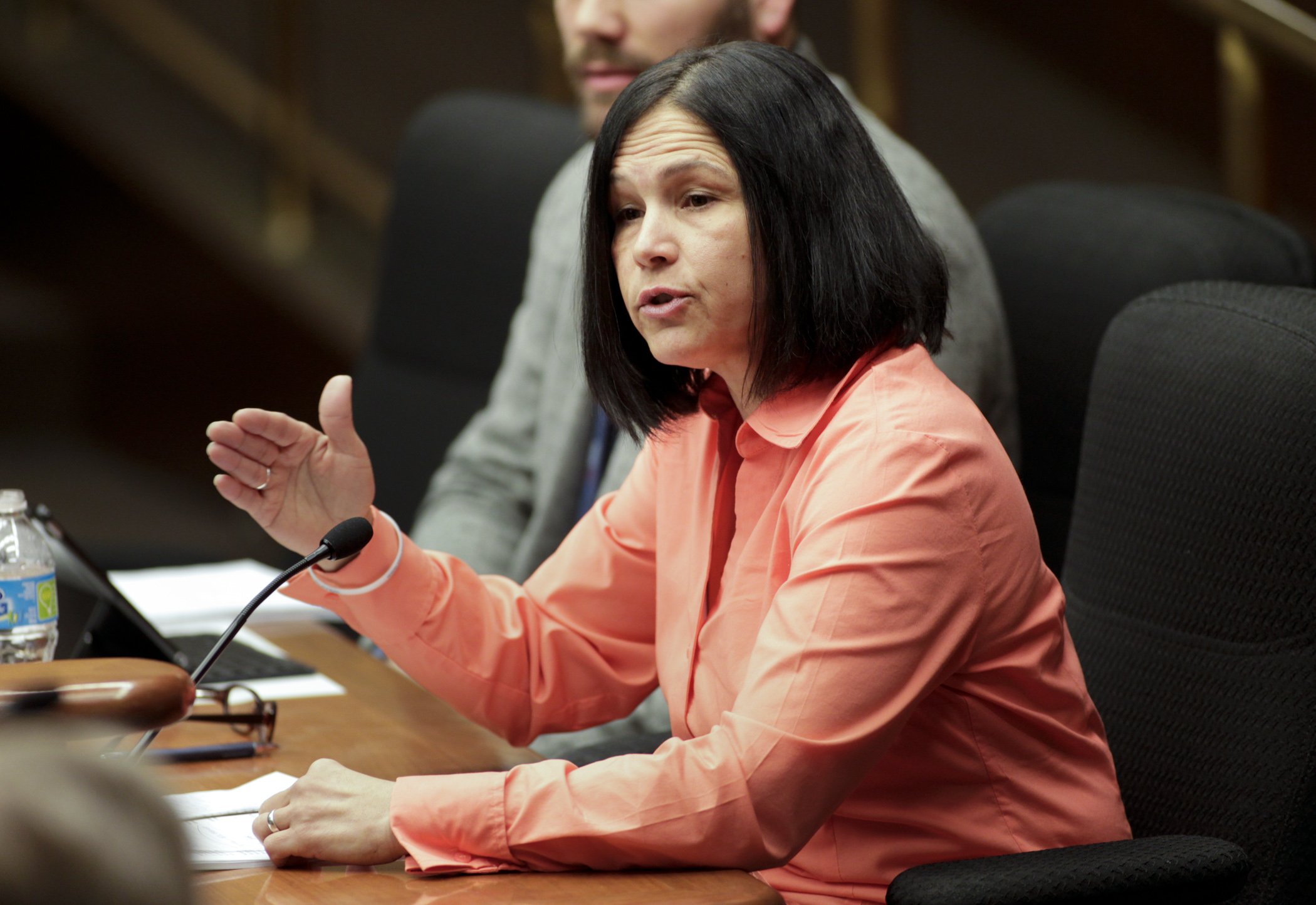
Maria Negreros says she risks breaking the law each day to drive her children to preschool.Jovita Morales told lawmakers that in August 2007 it took hours to reach her two children who had been inside a bus that fell along with the Interstate 35W bridge into the Mississippi River.Anna Serrano wants to see her parents — owners of a new restaurant — to be able to get behind the wheel legally and stop relying on others for rides.All testified Wednesday during an informational hearing of the House Transportation Policy and Finance Committee packed with supporters lobbying for a vote on legislation that would make driver’s licenses available to the state’s thousands of undocumented immigrants.All testified Wednesday during an informational hearing of the House Transportation Policy and Finance Committee packed with supporters lobbying for a vote on legislation that would make driver’s licenses available to the state’s thousands of undocumented immigrants.“I want my parents to drive safely to work without worrying about being pulled over,” said Serrano, an 18-year-old college student from Willmar who emigrated with her parents from Mexico as a small child.Sponsored by Rep. Rod Hamilton (R-Mountain Lake), HF97 would eliminate the need for proof of lawful residency in the United States to obtain a driver’s license or state identification card, something the sixth-term lawmaker and a diverse coalition of supporters said would mean more insured drivers and safer Minnesota roads.No vote was taken on the bill, nor on identical legislation sponsored by Rep. Karen Clark (DFL-Mpls), HF98. A pair of Senate committees have already approved a companion sponsored by Sen. Bobby Joe Champion (DFL-Mpls). SF224 now awaits action by the Senate Rules and Administration Committee.‘Bigger than a license’Immigrant rights advocates packed a State Office Building committee room for the afternoon hearing, as well as an overflow space where they listened to live audio. While it’s an issue typically fraught with politics, Hamilton told the committee that driver’s licenses for undocumented immigrants is a good idea for a simple reason.“We would have an individual who would go through trainings, would receive a license, then purchase car insurance and drive on our roads,” he said.But following more than an hour of emotional testimony from a list of backers that included immigrants and the children of immigrants, supporters representing business interests and labor groups, police departments and the church, Hamilton acknowledged the issue of letting undocumented immigrants drive legally on the state’s roads is about more than that, too.“If you listen to the testimony closely, it’ll boil down to one thing,” he said. “The Declaration of Independence, and the moral belief that it is a right; that we’re born equal to pursue life, liberty and the pursuit of happiness. Continue Reading

House passes lower minimum wage for tipped employees

Some waiters and other tipped workers could earn a wage lower than the state minimum, under a bill the House passed 78-55 late Monday.HF1027, sponsored by Rep. Pat Garofalo (R-Farmington), would set a minimum wage of $8 an hour for workers whose combined tips and wages come to $12 an hour or more during a one-week pay period.Lowering the wage would preserve waiter jobs at restaurants offering full table service, Garofalo said. “Right now, businesses that are doing table dining, we are providing a regulatory incentive for them to move to fast-casual.”[Watch the floor debate]The proposed lower-tier wage is a dollar less than the new $9 an hour minimum that goes into effect Aug. 1, 2015, as part of a law enacted last year stipulating a series of wage increases. Employees whose tips amount to less than $4 an hour during a work week would make the higher minimum wage. The bill would repeal a part of current statute that prohibits the counting of employee tips toward the minimum wage. The bill now goes to the Senate, where Sen. Gary Dahms (R-Redwood Falls) is the sponsor. Rep. Jason Metsa (DFL-Virginia) called the bill “wage theft” and said Republican backers of Garofalo’s minimum-wage bill were adopting Walmart’s “rollback” pricing policy.“Freezing wages for waiters and waitresses will not make our economy stronger,” said Rep. Ryan Winkler (DFL-Golden Valley), calling the bill “a penalty on people who earn tips for their hard work.”Rep. Abigail Whelan (R-Anoka), citing her own experience as a barista as well as the service-industry work experience of her mother and sister, said the bill would help struggling restaurants and “keep as many people employed as possible.” After misguided minimum-wage increases, Rep. Glenn Gruenhagen (R-Glencoe) said HF1027 is “a step back in the right direction.”The House adopted Garofalo’s delete-all amendment 77-56. Continue Reading

Stadium update: Where are the true numbers?

It has been a while since we have talked about what is supposed to be the greatest employment story in the history of Minnesota: the new Vikings stadium, with its price tag of over a billion dollars and thousands of jobs.In terms of dollars added to the local economy, it is a success. In terms of jobs for Whites, it is a success. But in terms of jobs for Blacks, it is a disaster. Worse, it is another scam our Black leadership pulled on our own Black community.Black leaders are as corrupt as White leaders. Not the kind of integration and equality we were looking for. Continue Reading

Looking ahead: Republican transportation plan, budget targets due next week

The first committee deadline has passed in a flurry of bills and late-night hearings, and the 2015 session will keep picking up steam next week with the release of two key pieces to this year’s legislative puzzle.First comes the Republican transportation plan, set to be released during a 9 a.m. news conference on Monday. Funding transportation has emerged as one of the key issues of the session, and how far apart plans put forward by Gov. Mark Dayton and Senate DFLers are from what is announced by Republican leaders could have a big impact on the next two months at the Capitol.The governor and Senate have expressed support for raising the state’s gas tax to pour billions of dollars into fixing Minnesota’s roads and bridges, as well as upping a metro-area sales tax dedicated to funding mass transit projects.Republican leaders, on the other hand, have said they want to construct a package that spends existing state dollars and focuses on roads and bridges, not transit.Budget targets dueTuesday is the deadline for the House Ways and Means Committee to OK a budget resolution bill. Rep. Jim Knoblach (R-St. Cloud), committee chair, told Session Daily last week that the Monday release of Republicans’ transportation bill was one reason he expected the committee would act on the deadline day. After Tuesday, each finance committee will have a budget target — essentially, a maximum for the total spending in the bills they approve.On the floorMonday on the House floor lawmakers are scheduled to take up HF 1027, a bill sponsored by Rep. Pat Garofalo (R-Farmington) that would set a lower minimum wage for tipped employees, such as waiters, who earn $12 per hour or more in combined wages and tips in a pay period.Chris Steller contributed to this story. Continue Reading

OLA: For public safety’s sake, Board of Nursing needs to react quicker

The Board of Nursing has taken too long to suspend nurses when there is a threat to public safety, according to an evaluation report released Thursday by the Office of the Legislative Auditor.The board has made better use of its authority to suspend nurses last year, when seven received suspensions. It will use the findings to support its ongoing work to improve efficiencies, Board President Deborah Haagenson told the House Health and Human Services Finance Committee.The auditor examined the board’s complaint resolution process after a series of 2013 media articles criticized nurses returning to practice following suspensions. Project Manager Jo Vos said half of the recommended changes affect the board, while the other changes would take legislative action.Among its in-depth look, Vos said the office looked at four characteristics of board actions: timeliness, fairness, consistency and reasonableness.Timeliness to process cases neededOn average, the board receives nearly 2,000 complaints per year, which amounts to about 1.5 percent of all licensed nurses in the state. Complaints can be categorized as practice related, such as making treatment mistakes, or more serious complaints such as drug or alcohol abuse/addiction.A majority of cases investigated are dismissed; others may include disciplinary action, such as a letter of reprimand in a personnel file; and the board may also opt for revoking a license.In substance abuse cases, a nurse has the option of self-reporting and entering an alternative disciplinary monitoring program called the Health Professionals Services Program.The program enables a nurse to continue practicing at some level during their recovery, with HPSP oversight for up to three years. There are varying reasons why a nurse may not finish the program, in which case HPSP notifies the board that the nurse is noncompliant and their license is suspended. Continue Reading

MN GOPers tout anti-transgender bills in emails to constituents

In emails to constituents, Republicans are seeking to drum up support for a bill that would bar school from adopting transgender inclusive policies and would repeal a policy by the Minnesota State High School League that allows transgender students to participate in high school sports based on gender.Many of the Republican lawmakers are touting a mysterious poll conducted by Republican polling firm Public Opinion Strategies, and paid for by an anti-LGBT group, the Minnesota Child Protection League. The Column has repeatedly sought information about the poll including methodology and specific language that was asked of those participating in the poll. The Minnesota Child Protection League has refused to respond to multiple inquiries.Below are excerpts from emails sent to constituents that were obtained by The Column. We will continue to update the list as more are identified.Sen. Paul Gazelka (PDF version):Reinforcing our children’s safety and privacy at school On Monday, Senate Republicans introduced the “Student Safety and Physical Privacy Act” to address serious concerns regarding a controversial new policy from the Minnesota State High School League (MSHSL).Last December, the MSHSL issued a new ruling allowing transgender students to play on a sports team other than the team of the student’s biological sex. In effect, it allows male students who identify as female to play on female sports teams. The ruling was met with resistance from parents and families who were worried about what effect it would have on locker room and shower situations, and how the ruling would impact private and nonpublic schools. Continue Reading

Educators praise Dayton proposal to invest in pre-K and other services

Education Minnesota, the organization representing 70,000 educators across the state, is praising Governor Mark Dayton’s plan to invest the projected state budget surplus in public schools, including free pre-kindergarten programs for all four-year-olds.The forecast from Minnesota Management and Budget released in late February showed the state’s previously forecast $1 billion surplus for the next biennium has jumped to nearly $1.9 billion. Dayton proposes to spend much of the projected surplus on education.Education Minnesota President Denise Specht said the plan calls for “significant new investments in pre-K, special education and expanding the teaching workforce.”“Gov. Dayton is investing education dollars where they’re needed – diversifying and expanding the teaching corps, reducing the unfunded mandates for special education services and preparing our youngest students for kindergarten and beyond,” Specht said. “Smart priorities like these are why he’s known as the ‘education governor.’”“We’re excited to learn more about the governor’s teacher workforce and retention program,” Specht said. “We’ve supported loan forgiveness programs for teachers in hard-to-staff areas in the past. Our local in St. Continue Reading

Education Department bill hones in on reducing standardized tests

Gov. Mark Dayton believes students are losing valuable instructional time as the number of standardized test they are required to take continues to increase. He told legislators last week he wants to cut the number of such tests by one-third.That opinion made its appearance in bill form Thursday as the House Education Innovation Policy Committee began dissecting HF1591, sponsored by Rep. Sondra Erickson (R-Princeton). The proposed legislation serves as the Department of Education’s policy bill and contains a number of wide-ranging proposed policy reforms brought forward by Department Commissioner Brenda Cassellius.The committee is expected to resume its hearing on the bill Thursday evening with a motion to send it next to the House Education Finance Committee. Its companion, SF1495, sponsored by Sen. Chuck Wiger (DFL-Maplewood), awaits action in the Senate Education Committee.Focus on testingDiscussion focused almost solely on the proposed standardized testing reforms.The proposal represents “a reasonable approach to making testing more efficient and effective, so that teachers can better prepare our children for a competitive global marketplace,” Dayton wrote in a March 5 letter to chairs of the House and Senate K-12 education committees.“The disproportionate amount of time and test preparation that has resulted from the federal No Child Left Behind law and additional state requirements has stifled teachers’ creativity and ability to impart information to students,” he noted.Preserving ability to track progressUnder current law, the average student in Minnesota schools will take 21 standardized exams between grades three and 12. Tests subjects include math, reading and science that are administered multiple times at different grade levels, along with “career and college ready” exams students must currently take while in high school. Continue Reading

Fed Should “Freeze Interest Rates, Involve Citizens” Says Neighborhoods Organizing For Change

Not everybody is benefiting equally from the economic recovery. A new report shows in Minnesota blacks are suffering disproportionally to whites when it comes to employment.Anthony Newby, Executive Director of Neighborhoods Organizing for Change (NOC), delivered a report of about the current economic state of people of color in Minnesota and specifically the current and possible role of the Federal Reserve Bank. The new report from the Center for Popular Democracy says since 2000, wages in Minnesota have declined by 4.5%, current unemployment rate for blacks is 10.9% vs a white rate of 2.8%.This is the link to the full report “Wall Street, Main Street, and Martin Luther King Jr. Boulevard:Why African Americans Must Not Be Left Out of the Federal Reserve’s Full-Employment Mandate”Newby argues that the Fed in addition to controlling interest rates, can control the rate of unemployment. He and Rev. Paul Slack, ISIAH President, ask that interest rates be kept at the current levels and that the Fed work to reduce unemployment.Why there is a Federal ReserveThe nation’s central bank, the Federal Reserve, was created on December 23, 1913, with the enactment of the Federal Reserve Act, largely in response to a series of financial panics. There had been strong resistance to a central bank since the founding of the nation. Continue Reading