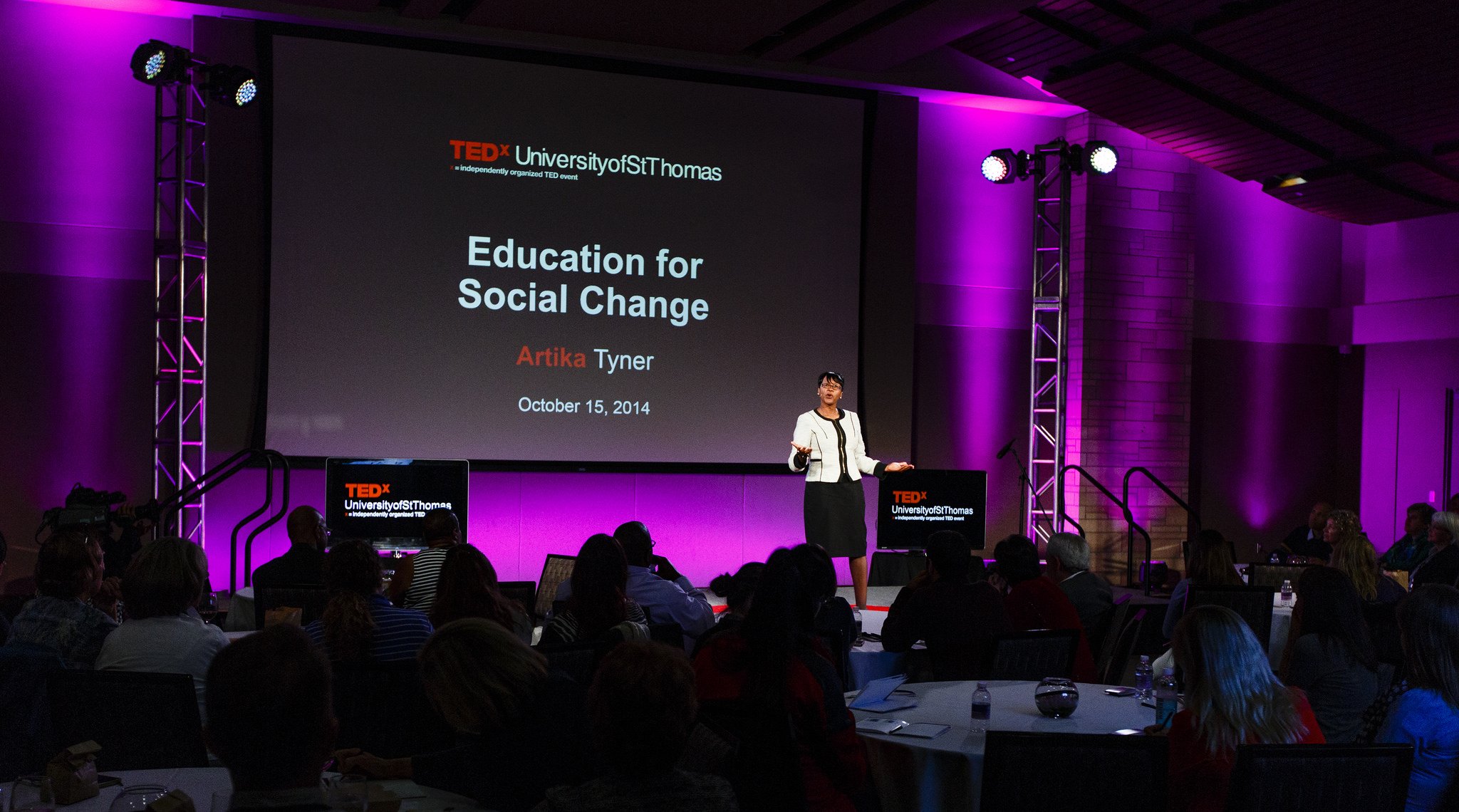
How to Change the World in Six Minutes or Less
|
If you can dream it and believe it, anything is possible. Continue Reading
Twin Cities Daily Planet (https://www.tcdailyplanet.net/category/education/page/3/)
If you can dream it and believe it, anything is possible. Continue Reading
Last week, 40 North Minneapolis soccer players poured into Farview park for the Sanneh Foundation spring soccer clinic.Most of the soccer players were Hmong and Latino. Many of the Hmong soccer players were born in Thai refugee camps.Several times during the year, the Sanneh foundation comes to north Minneapolis and provides training for players from poor families who could not normally afford this type of coachingSanneh Foundation fits donated soccer shoes on the feet of North Minneapolis soccer playersIn addition, the Sanneh Foundation has donated soccer shoes, soccer balls, water bottles, backpacks and shirts to the players. The Sanneh soccer camps emphasize soccer as a fun part of a healthy lifestyle of exercise and good eating. Both veteran soccer players and those trying soccer for the first time enjoy coming to the clinics. This April, in addition to learning soccer skills, players learned about good sportsmanship, and even learned a little Italian. In October, the Sanneh foundation combines its soccer clinic with a Halloween party. Sanneh Foundation Halloween Party and Soccer ClinicIn the fall, the North Minneapolis Hmong and Latino soccer players play in the Minneapolis Parks League, for the Farview Park and Bethune Park soccer teams. All the players have gotten training and soccer balls from the Sanneh Foundation, and most wear soccer shoes donated by the Sanneh Foundation.2014 Farview 13u soccer team celebrates winning Minneapolis Parks regular season championshipWith the Sanneh Foundation’s help, the Farview Park soccer team has won two city-wide tournaments and six regular season championships in the past three years, and the Bethune soccer team has won two city-wide tournaments and been runners-up in a third city-wide tournament.2014 Bethune 13u soccer team, finalists in Minneapolis Parks city-wide tournamentEach March, the Sanneh Foundation holds its major fundraiser, Gala4Goals. And every year the Farview soccer team comes down and tells the participants how the Sanneh Foundation helps North Minneapolis soccer players.Farview soccer players at Sanneh Foundation’s Gale4Goals fundraiserIt is the soccer players’ way of saying Thank You Sanneh Foundation. Continue Reading
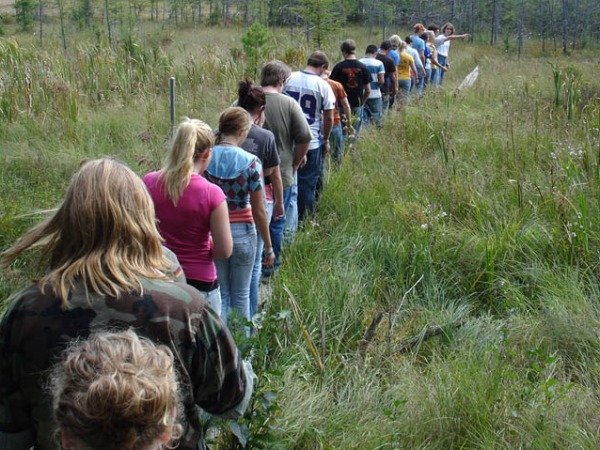
Two students work for more Native Americans in the sciencesByEthan NelsonApril 07, 2015 Native American students have traditionally had difficulties breaking into science-related fields, like biology and engineering.Two University of Minnesota students, Jake Grossman and Siddharth Iyengar, are working to change that.The ecology, evolution and behavior doctoral students are helping oversee a summer research and mentorship program that will help Native American students recognize their heritage in a field that doesn’t often reflect the values of their culture.Grossman and Iyengar are working on a summer program called Our Earth Lodge, a NASA-funded project aimed at encouraging Native American undergraduates to study climate change and potentially pursue science or engineering as a profession. Applications to participate in the students’ research will close Friday.The three accepted students will assist Grossman and Iyengar with their research in plant ecology during the program, which will be set at University-owned Cedar Creek Ecosystem Science Reserve in East Bethel, Minn.The research will intersect Ojibwe traditions and experiences with biology by allowing Native American students to design their own studies.“Science and engineering research reflects our understanding, but it’s mostly a Euro-American perspective,” said Wren Walker Robbins, vice president of the Midwest’s chapter of the American Indian Science and Engineering Society, which is partnering with NASA on the project.Walker Robbins said a lot of people don’t realize that research can lack objectivity, which can discourage Native American students from entering the field if the perspectives shared in it don’t reflect their cultures.“When we look at research experience for undergraduates nationwide, Native Americans are underrepresented significantly,” Walker Robbins said.Grossman and Iyengar attended camps earlier this spring at the Fond du Lac Tribal and Community College in Cloquet to inform their mentoring approach.Neither Iyengar nor Grossman are Native American, and neither had worked with Native students before, they said.“We want to be sensitive and not ignore Ojibwe environmental knowledge,” Grossman said.He said students could do research on topics like how biodiversity affects decomposition or productivity in forests.Iyengar said students will also be introduced to a broad research community.Eric Seabloom, an ecology professor who does research at Cedar Creek, said the center is world-renowned in biology research.“Bringing students into a setting where they’re meeting foremost researchers is really exciting,” he said.The program also includes a three-day STEM summer camp held at Cedar Creek for K-12 Native American students.“They’re learning about science through the tribal lens,” said Mary Spivey, Cedar Creek’s education and outreach coordinator. “It’s a whole different way of looking at the world.” Continue Reading
All around Minneapolis proof of the economic boon can be seen with the recently developed or under development commercial and residential sites – everywhere except north Minneapolis. The new Vikings stadium is taking shape nicely, transforming the downtown landscape. Over the past few years Uptown has become unrecognizable from its former self with a plethora of upscale multi-use commercial and residential buildings now dotting the area. Development is all around it seems, with the exception of north Minneapolis. Outside of the recently completed Minneapolis Public Schools (MPS) headquarters on West Broadway Avenue, development on the Northside has been stagnant … to put it mildly.To drive down West Broadway in many ways looks like a trip back to the 1960s or 1970s but there seems to be a renewed interest in developing north Minneapolis and West Broadway in particular. Continue Reading

According to the U.S. Department of Labor, the number of Americans who have had contact with the criminal justice system has increased dramatically in recent decades.The agency estimates that about one in three adults has a criminal record. However, the records often consist of a non-violent crime, an arrest that did not lead to conviction or the convicted person was not sentenced to a term of incarceration.Judges can seal, or expunge, criminal records, including arrests, prosecutions and convictions for people who have demonstrated changed behavior after completing punishment.Expungement is especially helpful for job seekers whose offenses may show up on criminal background checks.Criminal records that remain sealed for those applying for teaching positions concerns Rep. Sondra Erickson (R-Princeton). She thinks it would put children at risk.She sponsors HF1401 that would require school districts to unseal expunged criminal records for prospective teachers. Continue Reading

Students at Phalen Lake Hmong Studies Magnet use a whiteboard to draw things that they enjoy or that are important to them. One student talks about her identity formation, and another student explains one of her favorite family memories.This video was made by youth at Phalen Lake Hmong Studies Magnet, as part of the Hmong Pioneers Project, with help from SPNN Youth Projects Coordinator Kao Choua Vue.Youth Participants: Tristan, Sophia, Beautiful, Kang, Micky, Edison [See original post here: http://spnn.org/video/hmong-drawings] Continue Reading
Rep. Jim Davnie just started his new job as executive director of SciMathMN, an advocacy organization that promotes science, technology, engineering and mathematics education.According to its website: “SciMathMN is Minnesota’s statewide coalition for standards-based systemic improvements in K-12 science and mathematics education. The coalition came into official existence in 1993 with its incorporation as an IRS-approved nonprofit educational entity and with significant annual funding from the State of Minnesota. As a coalition, SciMathMN represents a variety of organizations and individuals, and it has functioned much like the statewide systemic initiatives that flourished in other states under National Science Foundation support in the early to mid-1990s. SciMathMN is led by a board of directors whose composition reflects the basis of the coalition—education, business and policy representatives. In 2002 SciMathMN moved into a new phase, having lost its state funding and resulting staff support but newly energized by volunteer involvement and emerging strategic partnerships.”It seems that two of SciMathMN’s primary strategic objectives would be to lobby the State Board of Education and the legislature on improving the standards for teaching science and math and to lobby the legislature to restore funding so they could rehire staff.It’s perfectly legal for a state legislator to also be a lobbyist, because it’s the state legislature that writes the laws determining what’s legal. On Feb. Continue Reading

The School of Nursing has plans to move forward with a new admissions policy that could limit access to the program while hurting its diversity.
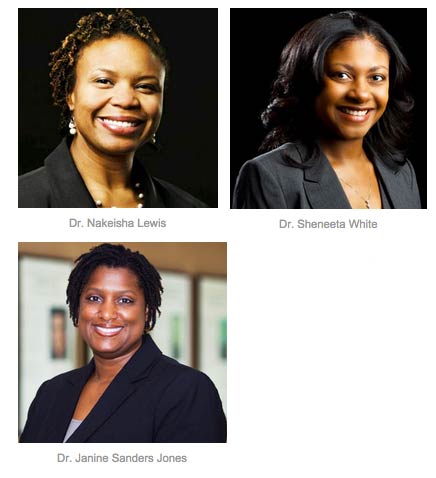
The PhD Project, an award-winning program to create a more diverse corporate America, announced three Project participants have been promoted to associate professors with tenure at the University of St. Thomas. Dr. Nakeisha Lewis, has been promoted to associate professor with tenure and received her Ph.D. in Advertising from the University of Texas at Austin. Dr. Sheneeta White, has been promoted to associate professor of operations and supply chain management with tenure and received her Ph.D. from Virginia Polytechnic Institute and State University. Dr. Janine Sanders Jones, has been promoted to associate professor with tenure and received her Ph.D. from the University of Minnesota.Lewis is one of only 95 female African-American marketing business school professors in the U.S. White and Sanders Jones are two of only 184, female African-American management business school professors in the U.S.The PhD Project was created in 1994. The project’s vision is to diversify corporate America by increasing the number of minority business professors (African-American, Hispanic-American and Native-American), who attract more minority students to study business in college.”These three professors have succeeded in the very difficult endeavor of being promoted to associate professors with tenure,” said Bernard J. Milano, president of The PhD Project and president of the KPMG Foundation, founder and lead funder of the program. Continue Reading

“One Minneapolis” was the central theme in Minneapolis Mayor Betsy Hodges’s State of the City Address on April 2, at the American Swedish Institute, where she discussed how the community working together can address challenges the city of Minneapolis is currently facing.“The genius we have now, right here, will make us the great city of the 21st century if we are willing to do what it takes to make sure we leave none of that genius on the table,” Hodges said.In her second State of the City Address, Hodges made a call-to-action to encourage community leaders to become graduation coaches for young men. She wants to narrow the gap between low-income and middle class families through collective bargaining in the private sector. She wants to raise the minimum wage and launch the Minneapolis Climate Champs Challenge, which will provide steps and tips as to how citizens in Minneapolis can help stop climate change.“Minneapolis, the question before us now is how much genius are we going to leave on the table?” Hodges asked.Hodges set her sights on early education, bridging the divide when it comes to income inequality and addresses climate change.Education In order to efficiently use the genius of people in the community, Hodges said it starts when a child in the community is young. When it comes to youth development, Hodges cited the fact that 80% of a person’s brain is developed by the age of 3.“What we do for our kids early on matters,” Hodges said.The city will budget $1 million for housing so many children who are low-income, could have stable living conditions. She said the focus on child development is to make sure they are ready for the workforce; however, she also wants them to be engaged in their community.“We need our kids to be more than workforce ready, we needs kids who are ready to build one Minneapolis. Continue Reading