Group guides flow of foundation dollars to Mpls North Side

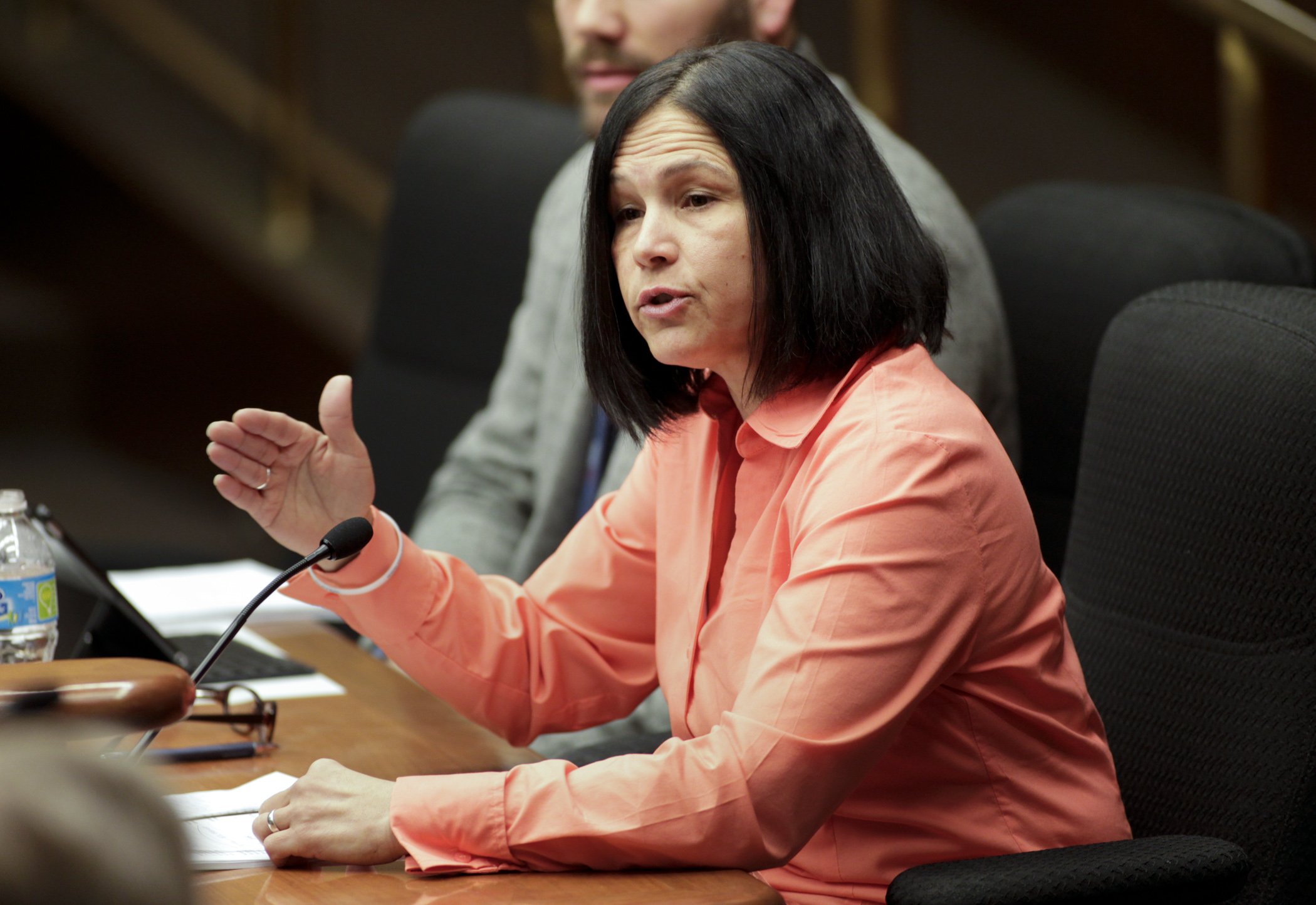
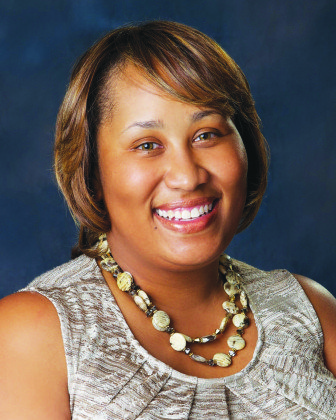
Tawanna Black has been the executive director of Northside Funders Group (NFG) since 2013. Although NFG has been around since 2008, she is their first executive director.Black explains NFG is “a collaborative of 19 corporate, family and community foundations, including the City of Minneapolis, Hennepin County and the State of Minnesota, who are working to align strategies and investments in North Minneapolis.” They have three focus areas: building social capitol, workforce and economic development, and building thriving learning communities (in-school and out-of-school-time resources).NFG is located in Heritage Park Senior Service Center, near Glenwood and Dupont in North Minneapolis. Their staff work with foundations to invest in nonprofits on the North Side, getting better outcomes for families and building a better community.The members currently invest about $15 million a year in Northside organizations just in these three focus areas. Black says that many will agree that “to date, we are still not producing the level of outcome we would like to see for Northsiders… [There are] a lot of people who are not employed, [have] no access to high-quality schools, and we still have families who do not have secure housing and financial security. Although $15 million sounds like a lot, it is not achieving the outcomes we wish to see.”NFG works to help funders be smarter about their investments do a better job partnering with nonprofits, Black explains, “so they can meet families where they are and provide services in a way that works for the families, organizations and funders, so we can achieve equity at a faster pace.”From a funding perspective, Black adds, “Our members pool and align funds to approach grant-making in new ways. Continue Reading

Twin Cities Hmong community seeks help in closing achievement gap

Advocates from Minnesota’s Hmong community want to ensure their children are not left behind as legislators continue to tackle the state’s well-publicized achievement gap.HF1930, sponsored by Rep. Rod Hamilton (R-Mountain Lake), would provide funding for the Department of Education to create outreach programs that help Southeast Asian immigrant and refugee families better access early childhood care and education resources, developmental screening and early reading assessments.The House Education Innovation Policy Committee approved the bill Thursday and sent it to the House Education Finance Committee. Its companion, SF1781, sponsored by Senate President Sandy Pappas (DFL-St. Paul), has been laid over by the Senate E-12 Budget Division for possible omnibus bill inclusion.Recent research conducted by the Twin Cities-based Hmong National Development, Inc. indicates that Hmong students in early education score two standard deviations below the national average on reading assessments. That gap follows these students when they transition to K-12 education, said Zha Blong Xiong, a professor of college education and human development at the University of Minnesota.About half of Hmong students in the Twin Cities are considered proficient in MCA reading exams, Xiong told lawmakers. Many of these students would have qualified for programs like early learning scholarships, but their parents aren’t aware of the opportunities, he said.“We believe that family engagement efforts are needed to ensure the hardest to reach populations, like Southeast Asian population, are gaining access to these wonderful early child education resources to close the achievement gap.”Sinying Lee is a working mother to three young children, two of whom attend a St. Continue Reading

Bill could boost funding for Somali youth

The funds would go to a partnership between the U and a nonprofit group. State lawmakers want to lend additional support to Somali youth in Minnesota who may be at risk of gang violence, drug abuse and radicalization.A bill introduced this session would appropriate state money to Ka Joog, a nonprofit that focuses on reducing adverse experiences and increasing educational opportunities for Somali youth.The legislation would expand the afterschool program the Takeoff 4H STEAM Club, which Ka Joog runs in partnership with the University of Minnesota. In addition, the bill would allocate funding for Ka Joog to start a pilot program that would create internship opportunities and job readiness training for youth.“It’s all about getting youth engaged and involved and giving them the skills to be productive adults,” said Sen. Kari Dziedzic, DFL-Minneapolis, author of the bill.The bill, which has already passed two legislative committees, would provide $1.9 million over the next biennium to expand the partnership program between Ka Joog and the University to other cities in Minnesota.Mohamed Farah, executive director of Ka Joog, said the proposed state funds would allow the program to reach other parts of Minnesota with large Somali populations, like Willmar, Rochester and St. Cloud.“We’ve had a lot of success in the Twin Cities, so we’re trying to take that where you have a high population of Somalis,” he said.Farah said Ka Joog was created in 2007 when a group of Somali youth met and discussed the problems their community was facing.“They wanted to create a foundation that does two things: One, get young people away from all negative influences, and two, put them in the right direction, which was and still is education,” Farah said.Jennifer Skuza, an assistant dean of the University’s Extension office, which helps run the program with Ka Joog, said the organizations partnered in 2014 to start the after-school program with funds from private and federal grants.The program allows kids to meet daily and work on projects related to science, technology, engineering, the arts and math, she said.“On a given day, they’ll be working on an engineering project. They’ll be working on a performance arts project, so you’ll see a content focus to it, but also there’s time for young people to have some tutoring as well as some homework help,” she said.The program, which currently exists in Eden Prairie, enrolled 25 members, but there are many more on a waiting list, Skuza said.With current funding sources, Skuza said the University and Ka Joog will bring the after-school program to schools in St. Paul and Minneapolis starting this summer.Farah said the organization also wants to establish more of an international presence, and it’s currently opening locations in East Africa.“It’s not just in Minnesota, but it’s also working with the international community to make sure that young people are thriving everywhere,” Farah said. Continue Reading

Breakfast smoothies a hit at Cooper High School

Students at Cooper High School were given a new option on the breakfast menu last week, and if the first few days are any indication, smoothies have hit the spot. The fruit and yogurt smoothies were first served on March 4, when 100 of the beverages sold out in the first eight minutes of serving. During breakfast on March 6, 175 smoothies sold out in less than 10 minutes.”This week is National School Breakfast Week, and it was our goal to serve the smoothies for the first time this week,” said Child Nutrition Program Assistant Michelle Sagedahl. “Cooper has worked hard to get the program up and running. Child Nutrition works hard to offer choices that are popular with students and that coincide with current trends. A wide variety of options were already being offered daily for breakfast, but smoothies offer one more choice for students.”The school is able to provide the smoothies due to a partnership with the Action for Healthy Kids, a national nonprofit that fights childhood obesity, undernourishment and physical inactivity by helping schools become healthier places. Continue Reading

Educators praise Dayton proposal to invest in pre-K and other services

Education Minnesota, the organization representing 70,000 educators across the state, is praising Governor Mark Dayton’s plan to invest the projected state budget surplus in public schools, including free pre-kindergarten programs for all four-year-olds.The forecast from Minnesota Management and Budget released in late February showed the state’s previously forecast $1 billion surplus for the next biennium has jumped to nearly $1.9 billion. Dayton proposes to spend much of the projected surplus on education.Education Minnesota President Denise Specht said the plan calls for “significant new investments in pre-K, special education and expanding the teaching workforce.”“Gov. Dayton is investing education dollars where they’re needed – diversifying and expanding the teaching corps, reducing the unfunded mandates for special education services and preparing our youngest students for kindergarten and beyond,” Specht said. “Smart priorities like these are why he’s known as the ‘education governor.’”“We’re excited to learn more about the governor’s teacher workforce and retention program,” Specht said. “We’ve supported loan forgiveness programs for teachers in hard-to-staff areas in the past. Our local in St. Continue Reading

Education Department bill hones in on reducing standardized tests

Gov. Mark Dayton believes students are losing valuable instructional time as the number of standardized test they are required to take continues to increase. He told legislators last week he wants to cut the number of such tests by one-third.That opinion made its appearance in bill form Thursday as the House Education Innovation Policy Committee began dissecting HF1591, sponsored by Rep. Sondra Erickson (R-Princeton). The proposed legislation serves as the Department of Education’s policy bill and contains a number of wide-ranging proposed policy reforms brought forward by Department Commissioner Brenda Cassellius.The committee is expected to resume its hearing on the bill Thursday evening with a motion to send it next to the House Education Finance Committee. Its companion, SF1495, sponsored by Sen. Chuck Wiger (DFL-Maplewood), awaits action in the Senate Education Committee.Focus on testingDiscussion focused almost solely on the proposed standardized testing reforms.The proposal represents “a reasonable approach to making testing more efficient and effective, so that teachers can better prepare our children for a competitive global marketplace,” Dayton wrote in a March 5 letter to chairs of the House and Senate K-12 education committees.“The disproportionate amount of time and test preparation that has resulted from the federal No Child Left Behind law and additional state requirements has stifled teachers’ creativity and ability to impart information to students,” he noted.Preserving ability to track progressUnder current law, the average student in Minnesota schools will take 21 standardized exams between grades three and 12. Tests subjects include math, reading and science that are administered multiple times at different grade levels, along with “career and college ready” exams students must currently take while in high school. Continue Reading

Bloomington’s ‘Special Presentation’ on Black History involved no Blacks

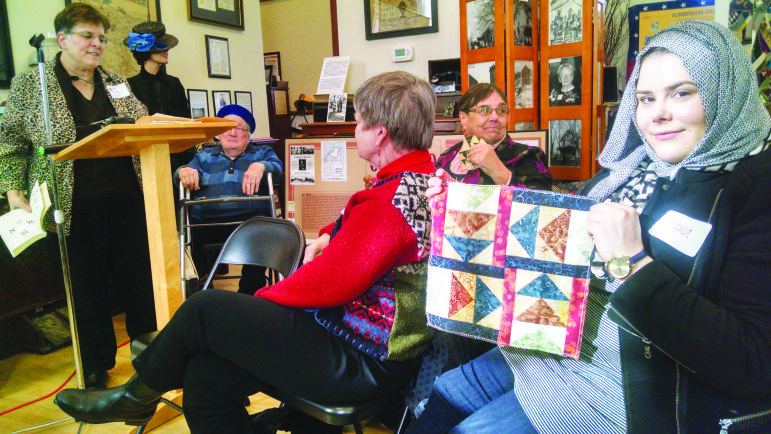
An all-White crowd heard about slavery and the Underground Railroad from an admittedly uninformed White presenterOn Sunday, February 22, in honor of Black History Month, the Bloomington Historical Society and the Human Rights Commission of Bloomington, Minnesota invited the public to a free “Special Presentation” on the use of quilts by slaves seeking their freedom via the Underground Railroad. Deb Meyer, from Henderson, MN was hired by the Bloomington Historical Society to present and unravel the mystery behind quilts and the coded patterns sewn on them to guide slaves along the Underground RailroadThe room in Bloomington’s Old Town Hall, 10200 Penn. Ave. S., was filled to capacity with just over 100 people, 90 percent of them women. Besides the MSR writer covering the event, there was only one other African American present. Continue Reading

House considers uniform sexual assault policy for state’s colleges and universities

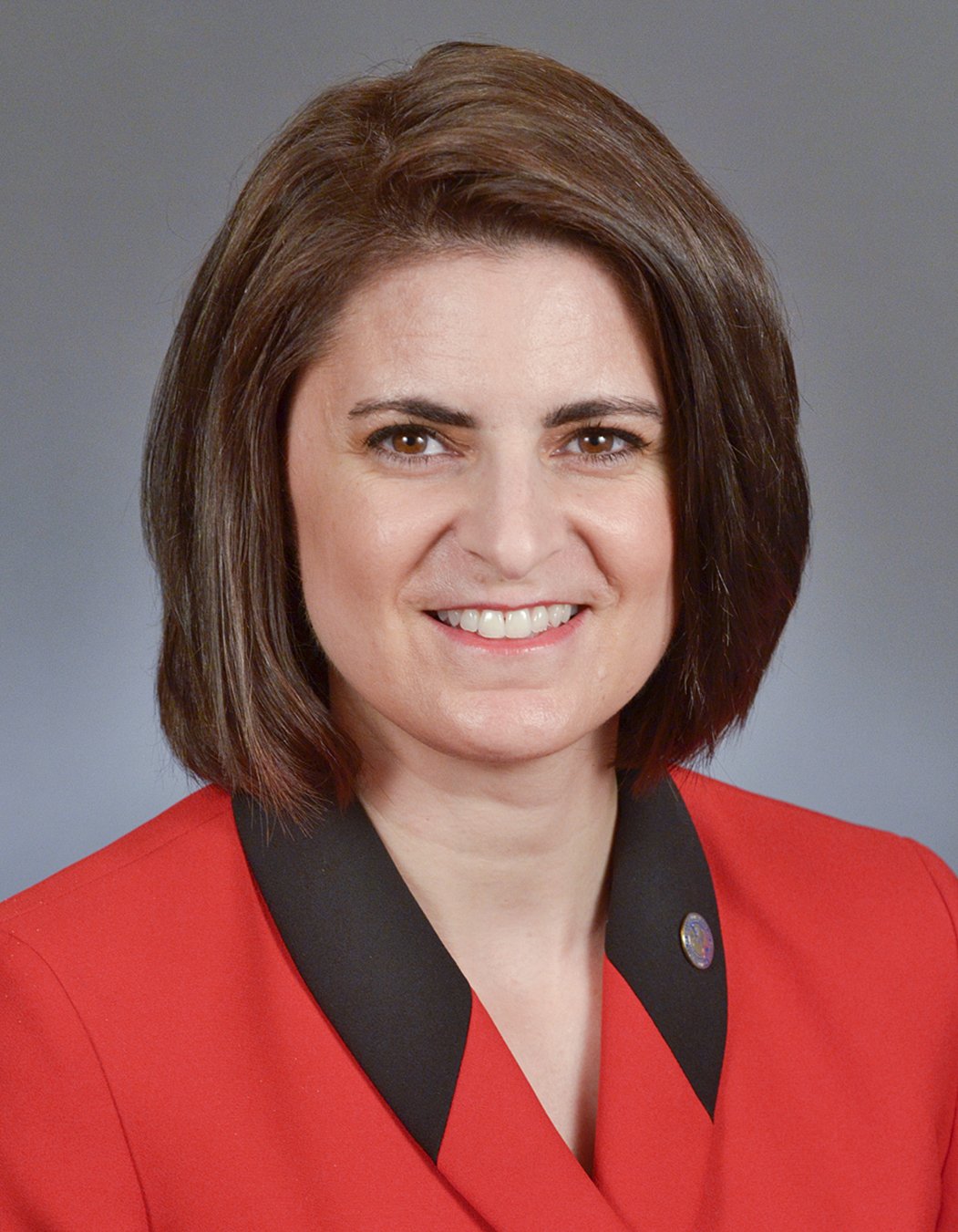
 Courtney Blake said the first time she was sexually assaulted, it took her more than a week and a half before she could muster the courage to report the incident to University of Minnesota authorities.“I was afraid of confirming what happened to me,” the university student told the House Higher Education Policy and Finance Committee on Tuesday. She supports HF742, which would require public and private universities and colleges across the state to enact uniform sexual assault prevention, reporting and victim support policies.Rep. Marion O’NeillSponsored by Rep. Marion O’Neill (R-Maple Lake), the bill would also mandate that such policies on sexual harassment and sexual violence apply to incidents occurring at activities, programs, organizations or events sponsored by post-secondary institutions.Approved by the committee, the bill was sent to the House Public Safety and Crime Prevention Policy and Finance Committee. Its companion, SF1300, sponsored by Sen. Michelle Benson (R-Ham Lake), awaits action by the Senate Higher Education and Workforce Development Committee.The bill would require postsecondary institutions to create an online reporting system through which students may report incidents — including anonymously — of sexual harassment and sexual violence. Blake said such a reporting tool would go a long way toward helping victims of sexual assault to take the important step of telling someone.Schools could not sanction students who make good faith reports of sexual harassment or violence for violating the institution’s student conduct policy on drugs and alcohol.A provision that would require new students to take a course on sexual assault prevention within 10 days of beginning class is included in the proposal.The bill strikes an important balance in ensuring accountability on behalf of colleges and its students without being overly burdensome to college campuses across the state that vary in size and resources, said Joelle Stangler, president of the University of Minnesota Student Association.“This really does support victims by making sure postsecondary institutions are doing all they can to work with law enforcement agencies to address this topic and provide resources,” Stangler said.Other provisions would require the following from all public and private postsecondary institutions recognized by the Office of Higher Education:comprehensive training on preventing and responding to sexual violence to campus security officers, campus administrators, and individuals responsible for receiving reports of sexual assault;a memorandum of understanding must be entered into with local law enforcement that details procedures for responding to allegations of sexual assault;collection and reporting a number of different pieces of data about sexual assault on campus.restricted access to the data collected through the online reporting system;a requirement that students complete an online training on sexual assault prior to registering for class;development and implementation of a policy that requires student health providers to screen students for incidents of sexual assault; anddesignation of an existing student health worker as a confidential advocate  Continue Reading