Twins’ new season comes with new Black coach

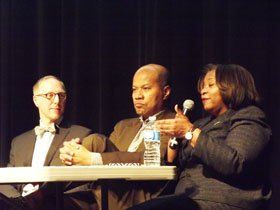
The Minnesota Twins earlier this week opened its 2015 season with a new manager and its first Black coach since 2012. Butch Davis was hired in January as first base coach.Photo courtesy of the MN TwinsButch DavisDavis worked for 20 seasons in the Baltimore Orioles organization as a minor league coach after eight seasons as a major league baseball player (1983-1994). This is his first major league coaching job.“I’m very easy to get along with,” said Davis during a conference call with reporters, including the MSR, shortly after his hiring.Twins General Manager Terry Ryan said he brought Davis on board for his base-running teaching expertise.When asked, Davis downplayed the fact that he is the team’s only Black on staff. “I’m not adding to the diversity,” he told the MSR. “I like to think I am just one more staff member. I just want to be on the staff to help make the Twins better.”Ryan, however, didn’t shy away from the question when asked later: Having more diversity on the staff “was one of the objectives to make sure that we covered all the areas,” responded the Twins GM. Continue Reading

The Rural Poetry of Tired Moonlight: Paul Dickinson on Starring in the Local Festival Hit

Tired Moonlight is local filmmaker Britni West’s first film as a director, and it’s  coming to the Minneapolis St Paul International Film Festival tomorrow. The film is an delicate atmospheric  homage to life in rural Montana, filled with soft touches, and introspective look at relationships in small towns. I really enjoyed it!Most films that depict rural poverty in America – think about a film like Winter’s Bone – paint a bleak picture of life at the margins. Tired Moonlight manages to make the world of back roads Montana seem lovely, without resorting to the usual nostalgic clichés. It was one of the most honest meditations on small town life I’ve seen, and almost made me wish I’d grown up in a place like Kalispell.The film also stars long-time Saint Paul punk musician, poet, book seller, and professor Paul Dickinson, who owns the Dead Media bookstore and runs the Riot Act Reading Series. Continue Reading

Mainstream Media Misses the Point on Green Line Fare Enforcement

You’re probably reading the various news stories out there regarding the Metro Transitstudy finding between 4.6 and 9 percent of Green Line Riders evade their fares in some way. Blue Line evasion rates are lower, between 2.6 and 3.6 percent. Go ahead and read the click-bait articles for a bit more information, and as always read the study itself to understand the methodology and conclusions.Articles like these bring out the region’s finest; excellent terms like “hoodlum,” “Shiny Toy Train,” “free-loaders,” and “bums” are de rigueur for any worthy internet commenter. But how does the Green Line stack up against other transportation systems?Well, for starters, we know fare evasion on proof-of-payment transit systems is extremely common. The report points out that 1994 fare evasion in the NYC Subway – a completely closed system with turnstiles and transit police – had fare evasion rates between 2.3 and 2.6 percent.Los Angeles had fare evasion rates of 6% before spending millions installing turnstyles with marginal results. Continue Reading

New bicycle advocacy group aims at students, protected bikeways

From improving existing bike lanes to giving city officials suggestions on upcoming projects, a new advocacy group at the University of Minnesota is working to address cyclists’ concerns.The group is a collaboration between members of the Minneapolis Bicycle Coalition and the Minneapolis Public Interest Research Group. It aims to formulate plans for improving campus-area infrastructure and raise people’s awareness of bicyclists’ issues.“Our goal is to have bike infrastructure that works for students and connects them to the rest of the city,” said Daniel Lubben, an urban studies junior and co-leader of the group.He said the group is focusing on several bike projects that city officials are pushing forward in the coming years, including the Oak Street Southeast Bikeway — a city-funded project that will begin construction this year. The project will create a bike path along the west side of the street. According to a city report, the road carries more than 1,100 bicyclists a day.The group met earlier this month to discuss the new bikeway and examine its potential problems.“It is important to get the earliest generations of bike lanes correct,” said Steve Sanders, the University’s alternative transportation manager.Sanders suggested the group discuss challenges the new bike lane could pose at the busy intersection of Washington Avenue and Oak Street.Lubben said members of the bike coalition asked him and Bailey Shatz-Akin, an environmental science policy and management junior, to lead the bike advocacy group.Shatz-Akin said the group will also focus on proposing updates to the Minneapolis Bicycle Master Plan, a plan aimed at improving bicyclists’ safety and increasing the amount of them in the city.She said the group will analyze the plan and offer suggestions to city officials.About 30 students and bike advocates showed up for the group’s first meeting on March 12. Laura Kling, Minneapolis Bicycle Coalition’s community organizer, said the turnout represents the high amount of involvement people have in cyclists’ issues on campus.Among those who attended the meeting was Rob DeHoff, owner of Varsity Bike and Transit in Dinkytown.DeHoff said he hopes the group can expand on existing bike projects in the University’s area, like the 15th Avenue Southeast bike lane.Chris Stanley, a neuroscience sophomore and member of the group, said the group’s goals will ultimately benefit everyone traveling in the campus area.“We’re a community of people who want to improve the way our street systems work by making it friendly for both cars and bikes,” he said.[See original post here: http://mndaily.com/news/campus/2015/04/08/new-group-rides-student-bicyclists] Continue Reading

Somali students protest hostile racial school climate

Somalis are under attack in St. Cloud because of their race (they are Black), their religion (they are Muslims), and their immigration/refugee status (they are perceived to be untrustworthy aliens).In the 1990s Somalis began to trickle into the city, and now they are probably the largest Black ethnic group, surpassing the number of Black Americans. Like Black Americans, they also experience intense racial and cultural animus. As compared with the White population, Somalis are sharply different in four categories: race (White European vs. Black African), religion (Christian vs. Continue Reading

Two students work for more Native Americans in the sciences

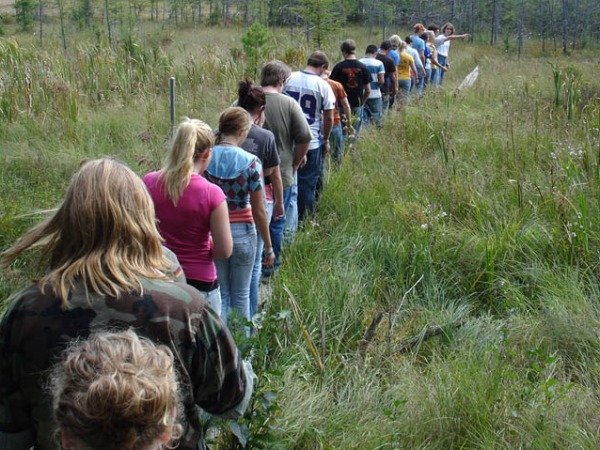
Two students work for more Native Americans in the sciencesByEthan NelsonApril 07, 2015 Native American students have traditionally had difficulties breaking into science-related fields, like biology and engineering.Two University of Minnesota students, Jake Grossman and Siddharth Iyengar, are working to change that.The ecology, evolution and behavior doctoral students are helping oversee a summer research and mentorship program that will help Native American students recognize their heritage in a field that doesn’t often reflect the values of their culture.Grossman and Iyengar are working on a summer program called Our Earth Lodge, a NASA-funded project aimed at encouraging Native American undergraduates to study climate change and potentially pursue science or engineering as a profession. Applications to participate in the students’ research will close Friday.The three accepted students will assist Grossman and Iyengar with their research in plant ecology during the program, which will be set at University-owned Cedar Creek Ecosystem Science Reserve in East Bethel, Minn.The research will intersect Ojibwe traditions and experiences with biology by allowing Native American students to design their own studies.“Science and engineering research reflects our understanding, but it’s mostly a Euro-American perspective,” said Wren Walker Robbins, vice president of the Midwest’s chapter of the American Indian Science and Engineering Society, which is partnering with NASA on the project.Walker Robbins said a lot of people don’t realize that research can lack objectivity, which can discourage Native American students from entering the field if the perspectives shared in it don’t reflect their cultures.“When we look at research experience for undergraduates nationwide, Native Americans are underrepresented significantly,” Walker Robbins said.Grossman and Iyengar attended camps earlier this spring at the Fond du Lac Tribal and Community College in Cloquet to inform their mentoring approach.Neither Iyengar nor Grossman are Native American, and neither had worked with Native students before, they said.“We want to be sensitive and not ignore Ojibwe environmental knowledge,” Grossman said.He said students could do research on topics like how biodiversity affects decomposition or productivity in forests.Iyengar said students will also be introduced to a broad research community.Eric Seabloom, an ecology professor who does research at Cedar Creek, said the center is world-renowned in biology research.“Bringing students into a setting where they’re meeting foremost researchers is really exciting,” he said.The program also includes a three-day STEM summer camp held at Cedar Creek for K-12 Native American students.“They’re learning about science through the tribal lens,” said Mary Spivey, Cedar Creek’s education and outreach coordinator. “It’s a whole different way of looking at the world.” Continue Reading

Groundbreaking set for Long-Vacant Dealership, to Become Northside Center

All around Minneapolis proof of the economic boon can be seen with the recently developed or under development commercial and residential sites – everywhere except north Minneapolis. The new Vikings stadium is taking shape nicely, transforming the downtown landscape. Over the past few years Uptown has become unrecognizable from its former self with a plethora of upscale multi-use commercial and residential buildings now dotting the area. Development is all around it seems, with the exception of north Minneapolis. Outside of the recently completed Minneapolis Public Schools (MPS) headquarters on West Broadway Avenue, development on the Northside has been stagnant … to put it mildly.To drive down West Broadway in many ways looks like a trip back to the 1960s or 1970s but there seems to be a renewed interest in developing north Minneapolis and West Broadway in particular. Continue Reading

Bill proffered to unseal expunged criminal records for prospective teachers

According to the U.S. Department of Labor, the number of Americans who have had contact with the criminal justice system has increased dramatically in recent decades.The agency estimates that about one in three adults has a criminal record. However, the records often consist of a non-violent crime, an arrest that did not lead to conviction or the convicted person was not sentenced to a term of incarceration.Judges can seal, or expunge, criminal records, including arrests, prosecutions and convictions for people who have demonstrated changed behavior after completing punishment.Expungement is especially helpful for job seekers whose offenses may show up on criminal background checks.Criminal records that remain sealed for those applying for teaching positions concerns Rep. Sondra Erickson (R-Princeton). She thinks it would put children at risk.She sponsors HF1401 that would require school districts to unseal expunged criminal records for prospective teachers.   Continue Reading

Hmong Drawings from Phalen Lake Magnet School

Students at Phalen Lake Hmong Studies Magnet use a whiteboard to draw things that they enjoy or that are important to them. One student talks about her identity formation, and another student explains one of her favorite family memories.This video was made by youth at Phalen Lake Hmong Studies Magnet, as part of the Hmong Pioneers Project, with help from SPNN Youth Projects Coordinator Kao Choua Vue.Youth Participants: Tristan, Sophia, Beautiful, Kang, Micky, Edison [See original post here: http://spnn.org/video/hmong-drawings] Continue Reading

Dueling State of the City Events Reveal Rift Between Rhetoric and Reality of Inequality

These days it’s hard to tell whether Minneapolis is united about being divided. Last week, two contrasting “state of the city” events — Mayor Betsy Hodges official speech at the American Swedish Institute, and a rally the next morning organized a North-side grassroots group — illustrated the ongoing tension between the rhetoric and reality of racial inequality in Minneapolis.Hodges’ speech, an annual tradition for mayors across the country, emphasized the themes that led her to an easy victory in the 2013 election. As Gino Terrell wrote on the Daily Planet earlier this week, Hodges stressed education, income inequality, and climate change, as part of her plans for the upcoming year. But the well-received speech comes only months after Hodges’ efforts to devote city resources to addressing inequality became surprisingly contentious. During budget debates at City Hall, Hodges’ plans to address racial inequality sparked a small controversy, particularly in parts of the city that are struggling the most with foreclosures and racial inequality. While debating the budget, Council Members Yang and Warsame and other Council Members  voted to defund part of Mayor Hodges’ key proposals in favor of more “meat and potatoes” issues that impact neighborhoods like Jordan or Cedar-Riverside, home to many  of the highest proportions of people of color in the city. Continue Reading