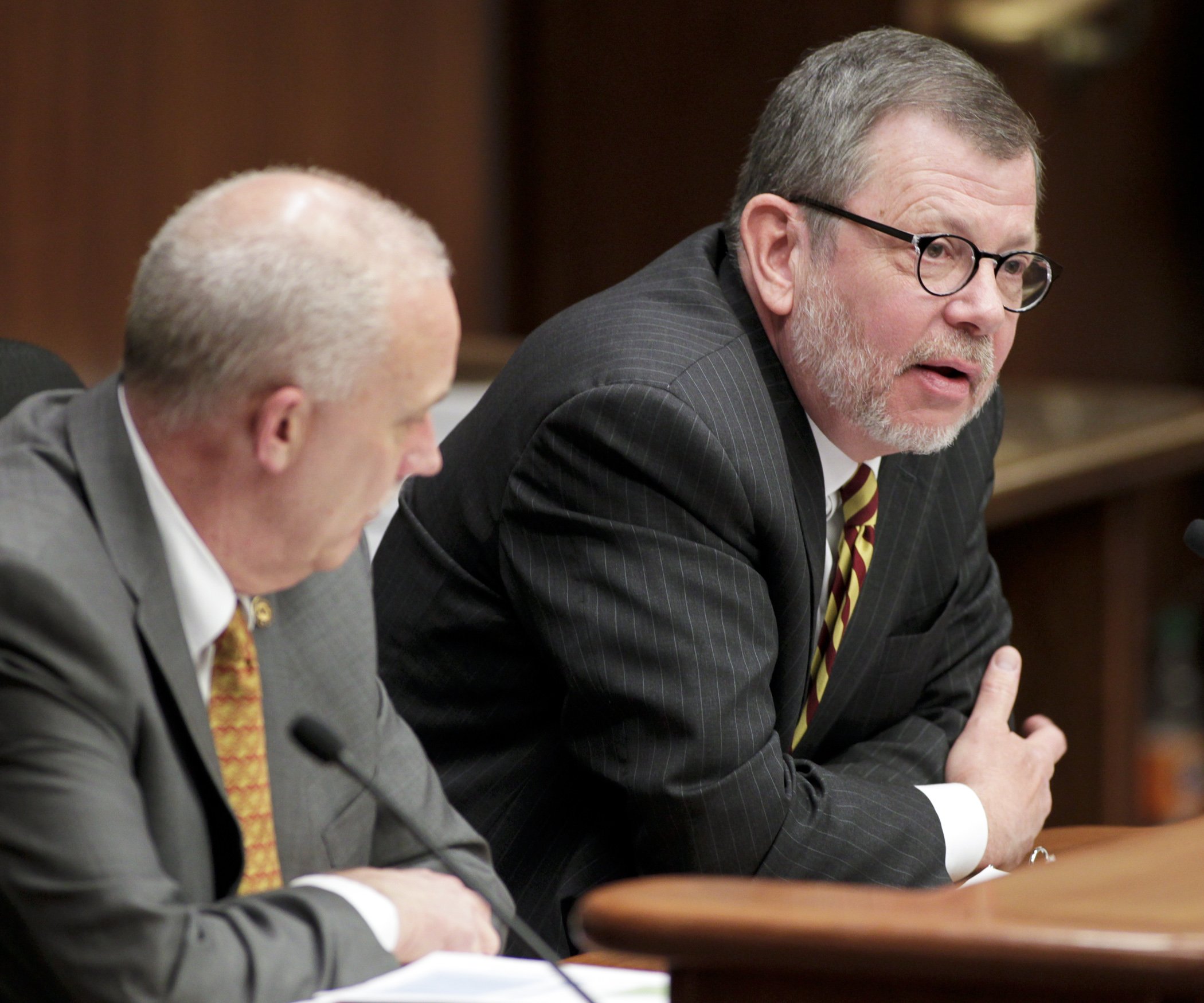
Educators and lawmakers are divided over a proposal that would cut funding for developmental courses at state-run colleges ST. PAUL, Minn. – College students in remedial classes at state colleges and universities may find themselves taking college-level courses under a proposal that would cut funding for remedial programs.The proposal would not require Minnesota State Colleges and Universities (MnSCU) to eliminate remedial courses, but courses that do not earn college credit would be ineligible for grants and financial aid starting in 2017. This has some administrators and legislators split.While lawmakers say the proposal would improve how many students finish their degree faster and improve enrollment retention, some educators and college administrators feel it could deter students from graduating by placing them in courses beyond their skill level.On average, students pay almost $1,000 for remedial courses and 28 percent of MnSCU students are currently taking remedial courses, according to the Office of Higher Education. Of these students, only 20 percent graduate in less than three years.“We don’t want to put [students] in a situation where they get so discouraged and drop out when a two-year degree takes three years to earn,” said Sen. Greg Clausen, DFL-Apple Valley, who is spearheading the proposal. Continue Reading
[Central high school on Marshall Avenue.]Saint Paul’s school board is often viewed as less contentious than its Minneapolis counterpart. Fewer families have left the city for charter schools and suburban options, and the School Board meetings have seemed more cooperative between administratos, teachers, and parents. But that might be changing, as the School Board race has become very heated this year. Issues like superintendent pay, the district’s new “mainstreaming” inititive (placing most students in the same classrooms), the (oft-maligned) iPad program, and contract requirements aimed at improving student-teacher ratios. On top of the close race, Superintendent Silva’s recent headlines about a job offer in Florida place added pressure on the election as a test of party support for different kinds of reform.Jess Banks is one of the candidates challenging the incumbent board members this year, and seeking the endorsement at this weekend’s City DFL Convention. Continue Reading
The House Higher Education Policy and Finance Committee approved an omnibus higher education bill Wednesday that would increase spending by $53.4 million —to $2.95 billion — over the next biennium.But absent from HF845 are funds that would have covered a tuition freeze for students at public four-year universities, much to the dismay of University of Minnesota President Eric Kaler.In light of a $1.9 billion budget surplus, “I believe a zero-percent increase is not an acceptable outcome,” Kaler told committee members Wednesday. The bill was referred to the House Ways and Means Committee.Kaler said that inflationary increases, much needed technology upgrades and the university’s commitment to recruiting and retaining a world-class roster of faculty and staff are major factors in its request for $148 million in increased funding over the next biennium.About $65 million of that requested increase would be allocated to freezing tuition for students at all five of its campuses through 2017. Instead, under provisions of the bill, undergraduate students at the U of M would see a 3 percent increase in tuition and graduate students can expect a 3.5 percent increase, Kaler said.While DFLers expressed disappointment in the bill’s failure cover a tuition freeze, several Republican legislators grilled the president about the university’s professed inability to find more funds anywhere else but in the form of tuition increases.Rep. Bob Barrett (R-Lindstrom) asked Kaler why the university hasn’t considered increasing the price of tuition for non-resident students, which was lowered in recent years in an effort to attract more out-of-state students..“If we just correct that situation there is millions of dollars available at your disposal,” Barrett said. “Would it cover (the) total amount (needed to offset a tuition freeze)? Probably not. Continue Reading
All week long, tantalizing aromas have been wafting from the doors of African Paradise Restaurant as they’ve rehearsed for their grand opening, Friday, March 20. The freshly painted walls and ceiling finished from earthy ocher pigments and ample seating split between the sunny front window and the shadowy, more intimate back section provided a choice for dine-in customers.I had the luxury of a sneak-peek sampling from their Mediterranean platter. A large rectangular dish arrived at my table filled with grilled beef and chicken cubes seasoned mildly. Mixed in with the meats were bell peppers and onions. Complementing the meat dish, a vegetarian entrée appeared with spiced peppers and black beans. Continue Reading
Everyone, regardless of status, has the right to obtain an unmarked identification card. And if an individual meets the requirements (passing the driver’s test) an individual should be able to obtain a driver’s license as well. Currently, there are a few organizations that are fighting for the rights of undocumented individuals to obtain an identification card or driver’s license. Each year, this request has been rejected from the state and legislators. Currently, the bill has passed the Senate, but at this time, it’s in the hands of the House of Representatives. Now, there is a division between organizations because of the problematic issue of whether identification cards and driver’s licenses for undocumented individuals should be marked or if these cards should look similar to a normal card that a United States citizen obtains. Some organizations believe if the cards are marked, it will cause more discrimination problems against undocumented individuals. Others believe that having the identification cards are fine, as long as individuals are able to obtain one. Continue Reading
The April 13 article by Star Tribune Reporter Alejandra Matos, “Minneapolis Urban League Under Fire for Potential Double Billing” was intentionally misleading and failed to share the true facts. We were quite disappointed to read Ms. Matos’ final product after spending hours with her and providing her with copies of contracts and reports. We even offered to make available students and program participants to tell the tremendous impact that the Urban League Academy Alternative School and the Urban League 13th Grade Program has had on their lives. Ms. Matos rejected our offer and ignored the pages of material we presented documenting our great work with these programs. Sadly, she chose to present a biased and cynical fairy tale masquerading as a news story. The bottom line–The Minneapolis Urban League did not break any rules, did not “double bill”, and has not been “under fire” for violating our contracts with either Minneapolis Public Schools or the Minnesota Department of Education. This purposefully vague article ignored our positive outcomes that have been officially recognized by both the Minneapolis Public Schools and the Minnesota Department of Education. Fact: The Urban League Academy is a 40-year partnership between the MUL and MPS. Continue Reading
The Minneapolis City Council has agreed to pay an additional $24.5 million to renovate the Target Center so Glen Taylor can charge more for admission. Taylor is the publisher of the Star Tribune and owner of the Minnesota Timberwolves—the worst team in the NBA. They are so bad a running joke on “Saturday Night Live” is the threat to trade someone to the Timberwolves. Taylor won’t put any money into the team to buy good players, but he wants the City of Minneapolis to fix up the arena so he can charge more for tickets. Glen Taylor has a brilliant business plan for the Timberwolves: Turn our elected officials upside down and see how much of the taxpayer’s money falls out.The Ways and Means Committee of the City Council voted four to two to approve the new beauty treatment for Taylor. John Quincy, Elizabeth Glidden, Linea Palmisano and Blong Yang voted for the project and Lisa Bender and Andrew Johnson voted against it. The full Council voted 11 to 2 in favor of the giveaway. Only Lisa and Andrew voted against it.We asked Council Member Johnson if he wanted to comment on the vote. He said, “I believe the referendum requirement should be followed, but most of my colleagues don’t believe it’s applicable because the Target Center is owned by the city.”Twice the citizens of Minneapolis have amended their charter to require a referendum on city funds being used for a sports stadium. The first, Chapter 15, Section 9, says: “any such obligations or indebtedness to be issued or incurred for any improvement, including but not limited to acquisition, development, construction or betterment, of any public building, stadium, or other capital improvement project, shall in all phases from inception to completion exceed Fifteen Million Dollars ($15,000,000.00), the Board of Estimate and Taxation shall not issue or sell any bonds or other obligations nor incur any indebtedness for such purpose without the approval of a majority of the electors voting on the question of issuing such obligations or incurring such indebtedness at a general or special election.”In other words, if the city wants to spend more than $15 million on a public building or stadium, they have to let the voters decide the question. Chapter 15, Section 13, says:“Putting Professional Sports Facility Financing Before the Voters. The City of Minneapolis, Minneapolis Community Development Agency, or any city department, agency, commission, or board, shall use no city resources over $10 million dollars for the financing of professional sports facilities without the approval of a simple majority of the votes cast on the question, in a ballot question put to the public at the next regularly scheduled election.”The charter provision makes no reference to a public or private facility. It is quite clear. No money more than $10 million shall go to financing a professional sports facility without the approval of the voters.Andrew Johnson continued: “I’ll tell you why I think contributing another $24.5 million to the project was a bad idea. If the Council had voted no to this $24.5 million additional funding request, the renovation of the Target Center would still have moved forward under the nearly $100 million funding package passed by the Council before ours. But because of this vote, we’ll now need to redirect more than $1.2 million of sales tax revenue per year over the next 20 years into paying off the $24.5 million in additional funding, revenue which otherwise would have gone toward capital projects and economic development activities across our city. Instead of it going where it’s most needed, it will now go largely if not entirely towards the aesthetic appearance of the Target Center’s exterior, giving it a ‘cool new look’ for passersby. With a $15-20 million annual shortfall in basic road maintenance and some of the worst disparities in the nation, I believe this was the wrong choice.” Perhaps faithful readers might remember my original critique of funding for the Timberwolves beauty treatment. I was analyzing the budget proposal of Betsy Hodges and R T Rybak that stripped funding from the Neighborhood Revitalization Program and killed the most successful citizen participation in the nation and transferred that money to renovate Target Center:“That money was originally earmarked for neighborhood organizations, but Mayor Rybak and then-chair of the Ways and Means Committee, Betsy Hodges, decided to let the money go straight into the city treasury. That process of bankrupting the neighborhood organizations ended with the total elimination of the Neighborhood Revitalization Program. Continue Reading
Health problems tied to poor diets and nutrition have persistently plagued Native American communities across the country. To help alleviate this issue, the University of Minnesota is partnering with the Shakopee Mdewakanton Sioux Community in its $5 million “Seeds of Native Health” campaign to improve the health and nutrition of indigenous people nationwide. Research has shown that poor nutrition has led to increased rates of obesity, diabetes and chronic health problems in Native communities. Diabetes is one of the leading causes of death among American Indians and Alaska Natives, according to the U.S. Department of Health and Human Services’ Office of Minority Health. The campaign will address these issues by improving health programs that are already in place and funding new research to identify what types of programs could be createdto alleviate the health disparities, said SMSC secretary and treasurer Lori Watso, who championed the idea for the campaign. She said she hopes individual Native communities will then use the programs and apply them to their specific health needs. Watso said her background in public health and education, along with the work she’s done related to healthy food in her community, has given her an insight into the health issues Native communities are facing, especially regarding their diets. “Through all of that work, I’ve seen firsthand the detrimental effects of poor nutrition,” she said. “I’ve really come to believe that our nutrition is the foundation for everything.” Lori Watso said SMSC selected the University as a partner because of the school’s work in related research and ability to better understand issues at a national level. College of Food, Agricultural and Natural Resources Sciences Dean Brian Buhr said the college has worked with the Shakopee Mdewakanton Sioux Community in the past. The school has also done nutrition-related research and programming across diverse populations, and Buhr said he hopes CFANS can use that research as a starting point in the partnership. He said the University’s role in the campaign will likely be to research strategies to improve Native nutrition and assist in planning a series of annual conferences on the topic. Though Buhr said the partnership’s specifics are yet to be defined, he said the University has started identifying and uniting people who are doing similar research. “[Change] does require true partnership,” Buhr said. “I think that’s the exciting part — is to have that opportunity to think about how we can really work together to create some solutions to this.” In addition to partnering with the University, SMSC is working with nonprofit organizations First Nations Development Institute and the Notah Begay III Foundation. Both have a history of working to solve nationwide Native health issues. First Nations Development Institute President Michael Roberts said his Colorado-based organization has a large portfolio in food systems initiatives and a history of research and policymaking. In 2012, the nonprofit gave out $905,000 in grants to organizations aimed at improving health in Native communities. SMSC secretary and treasurer Watso said she’s hopeful that the campaign will finally begin to address some of the issues that have been present in Native communities for many years. “Native people are so disproportionately affected in all health and socio-economic indicators,” she said. Continue Reading
Bring up student loans anywhere near a college campus and you’re sure to get more than a little nervous laughter. Despite their commonality — 61 percent of University of Minnesota students graduated with debt in 2013 — little is known about student loans. How big are they, really? How many University fees, outside of tuition, are students accountable for? And how are we ever going to get out of debt? When you enroll in college, those answers aren’t easily found. Minnesota lawmakers have introduced several bills this session that seek to make the answers to these questions more accessible. Continue Reading
I start quite deliberately with the scare quotes above because it is one of my primary objectives here to articulate my discomfort with the way the term “homelessness” is conventionally used. I will argue that it is a crude and inadequately descriptive piece of shorthand that we use when we really mean visible urban poverty. I believe that our reliance on this euphemism reflects a general and problematic queasiness about confronting the real experiences of the poorest members of our community. At the same time, it diminishes our capacity to understand and adequately address the problems we are trying to describe.The Twin Cities metro area, and especially Hennepin County, offers some of the best services for homeless people available anywhere in the United States. The combination of our brutal winter climate and our somewhat unique social and political history has made our metro, perhaps paradoxically, one of the safest places to live without a permanent address. Continue Reading