Happy 30th anniversary, Minnesota Women’s Press!

“What if women were in charge of public words and the news? What if our voices were being heard?” These questions became the impetus for a women’s newspaper when it was just a dream in the head of Mollie Hoben in 1983. At the time, she was on leave from her job as a teacher of vision-impaired students. She was working as editor of the Park Bugle, a community newspaper in St. Paul, and was taking classes in feminist studies in literature at the University of Minnesota. Continue Reading

We Can Make 28th Avenue Better for People

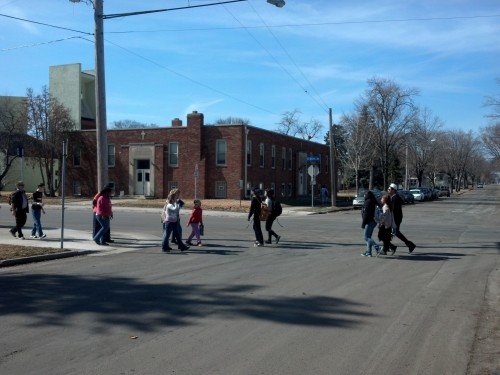
Driving 28th Avenue from 38th Street to Minnehaha Parkway in south Minneapolis is a pleasure, a little too much so. Traffic is relatively light compared to so many busy streets in the city, the speed limit is 30 MPH, the road surface was repaved last year and is nice and smooth. The only likely place you have to stop is the signal at 42nd Street, but even there you have close to 50/50 odds of a green light. There is the occasional cyclist trying to cross at the Minnehaha Creek crosswalk. Otherwise 28th Avenue is clear sailing. Continue Reading

Bill could boost funding for Somali youth

The funds would go to a partnership between the U and a nonprofit group. State lawmakers want to lend additional support to Somali youth in Minnesota who may be at risk of gang violence, drug abuse and radicalization.A bill introduced this session would appropriate state money to Ka Joog, a nonprofit that focuses on reducing adverse experiences and increasing educational opportunities for Somali youth.The legislation would expand the afterschool program the Takeoff 4H STEAM Club, which Ka Joog runs in partnership with the University of Minnesota. In addition, the bill would allocate funding for Ka Joog to start a pilot program that would create internship opportunities and job readiness training for youth.“It’s all about getting youth engaged and involved and giving them the skills to be productive adults,” said Sen. Kari Dziedzic, DFL-Minneapolis, author of the bill.The bill, which has already passed two legislative committees, would provide $1.9 million over the next biennium to expand the partnership program between Ka Joog and the University to other cities in Minnesota.Mohamed Farah, executive director of Ka Joog, said the proposed state funds would allow the program to reach other parts of Minnesota with large Somali populations, like Willmar, Rochester and St. Cloud.“We’ve had a lot of success in the Twin Cities, so we’re trying to take that where you have a high population of Somalis,” he said.Farah said Ka Joog was created in 2007 when a group of Somali youth met and discussed the problems their community was facing.“They wanted to create a foundation that does two things: One, get young people away from all negative influences, and two, put them in the right direction, which was and still is education,” Farah said.Jennifer Skuza, an assistant dean of the University’s Extension office, which helps run the program with Ka Joog, said the organizations partnered in 2014 to start the after-school program with funds from private and federal grants.The program allows kids to meet daily and work on projects related to science, technology, engineering, the arts and math, she said.“On a given day, they’ll be working on an engineering project. They’ll be working on a performance arts project, so you’ll see a content focus to it, but also there’s time for young people to have some tutoring as well as some homework help,” she said.The program, which currently exists in Eden Prairie, enrolled 25 members, but there are many more on a waiting list, Skuza said.With current funding sources, Skuza said the University and Ka Joog will bring the after-school program to schools in St. Paul and Minneapolis starting this summer.Farah said the organization also wants to establish more of an international presence, and it’s currently opening locations in East Africa.“It’s not just in Minnesota, but it’s also working with the international community to make sure that young people are thriving everywhere,” Farah said. Continue Reading

Franklin Avenue, a Past and Future Native Home: An Interview with NACDI’s Andy Hestness

[Image at right: Rendering of the coming Anpetu Was’te cultural market on Franklin Avenue.] Franklin Avenue was once the border of Minneapolis, marking the edge of the city. Before that it was home to the Dakota people, and since the 1950’s post-“relocation era”, it is the site of the Little Earth community, the country’s only Indian-preference affordable housing site. But Franklin Avenue, which is controlled by Hennepin County, is also one of the most danerously designed streets in the city, home to a disproportionate amount of bicycle and pedestrian accidents. In particular, the corner of Franklin, Riverside, and Hiawatha, around the light rail station, has long been a dark, unpleasant place for people to walk and divded communities around. Transforming Franklin from a dangerous eyesore into a welcoming home for the surrounding Native community is one of the top priorities for Andy Hestness, vice president of the Native American Community Development Institute (NACDI), which runs the All My Relations gallery on Franklin Avenue and works as an intermediary for the Twin Cities Native Amerian people. We caught up with him last week to talk about how Native American’s are starting to challenge and transform how sideawlks, buses, and bikes work in and around Franklin Avenue, Minneapolis’ most neglected busy street. Continue Reading

MOA spying must be curtailed now

The Mall of America used highly inappropriate measures to spy on Black Lives Matter protesters. This included making a fake Facebook account to befriend organizers and obtain their personal information and photos, according to a report last week from the Intercept, a security news outlet started by the journalists who first published classified documents leaked by Edward Snowden.While it is understandable that the mall is pressing charges against the protesters for illegally assembling on private property, these so-called security measures allude to a disturbing culture that breaches acceptable ethical boundaries.The Facebook account, which carried the name Nikki Larson, was reportedly created in 2009 and had liked pages involved with Ferguson activists, a labor union, Occupy Minneapolis and anti-police brutality movements, the Intercept reported.The Mall of America has gone as far as creating its own counterterrorism unit called Risk Assessment and Mitigation, which used aggressive tactics in attempts to boost security.The mall is no doubt a potential target for terrorists, and security must be taken seriously. But MOA officials have proven they will go too far in this endeavor. The FBI once questioned a Pakistani-American for simply leaving his cellphone at a food court table in the mall, an incident that alludes to serious racial bias.Black Lives Matter protesters couldn’t be further from terrorists, but the mall seems to be treating them as such. The Mall of America should immediately curb its extreme measures in surveilling for rather mild protests. Continue Reading

#BlackShoppersMatter: Racially profiled at Eagan outlet mall

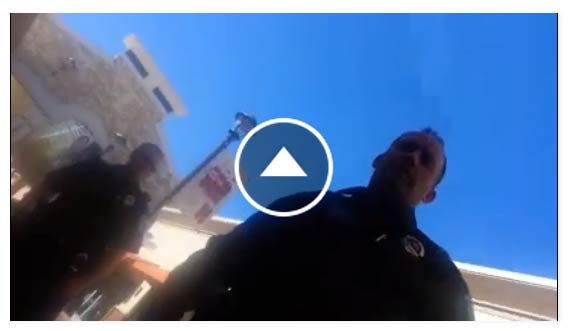
A viral video that shows four African-American shoppers being accused of theft at the Twin Cities Premium Outlets in Eagan has caused anger and outrage and sparked accusations of racism of mall personnel and of Eagan police. It’s not clear what led up to the point when the four shoppers at the mall were surrounded by police and mall security, but the feeling of the four is clear – they say it is an obvious case of racial profiling.The video, which was posted on March 11 to social media by one of the accused, Art Haggins – just hours after the stop happened – shows police questioning the shoppers in the mall courtyard about possible stolen items. According to Haggins, the group was accused of stealing $11 worth of makeup from the Makeup Outlet. Police said they were called by an employee in the mall who accused the group of shoplifting. The group was searched and showed receipts for all of their purchases and even at one point in the video it shows the contents of a purse scattered on the ground. Haggins said the contents scattered from his girlfriend’s purse as an officer pulled the purse away from her. In the video at least six Eagan police officers can be seen questioning the shoppers. Continue Reading

Gordon eyes minor crimes

The Ward 2 Councilman wants to stop arrests for lower-level offenses like lurking or spitting.In an effort to combat racial profiling by law enforcement officials, two Minneapolis City Council members are asking the city to repeal certain low-level offenses that impact minorities at higher rates.At a City Council meeting Friday, Ward 2 Councilman Cam Gordon announced that he plans to repeal ordinances that made lurking and spitting on sidewalks illegal. Changes would go into effect after next month’s full council meeting if the measure is approved.Gordon said the need to counter racial profiling in the city is immense, and higher numbers of arrests in certain minority groups can contribute to economic inequality.“Once you get something on your arrest record, you can end up having a much harder time getting housing and finding work,” he said.Gordon and Blong Yang, who represents Ward 5, requested stop and arrest statistics from the Minneapolis Police Department in December after a report released last year showed heavy racial inequalities in the realm of low-level offenses, like lurking and spitting on sidewalks.Between 2009 to 2014, black people accounted for 59 percent of total arrests for lurking in the city, according to an analysis released by MPD earlier this month. The report also shows that blacks are arrested at significantly higher rates for marijuana possession, vagrancy and disorderly conduct.A similar report by the American Civil Liberties Union  showed that racial inequalities in arrest rates have long plagued Minneapolis.Gordon said perceived disparities in the city prompted him and Yang to request more detailed statistics from the police department, including who is arrested and stopped, as well as their age, race and location.“We’re trying to get numbers so we’re not just dealing with anecdotes and stories,” Gordon said.Understanding the racial dynamics of these crimes also includes more knowledge of who is being convicted after the arrests, Gordon said, adding that he and Yang haven’t yet received this additional data from MPD.John Elder, MPD’s public information officer, said neither of the two offenses are enforced regularly in Minneapolis.He said city officials can only determine if racial profiling is present if they know cases in which law enforcement officials were called to the scene and those that were initiated by the officers themselves.Without first differentiating between these types of stops, it could be possible to misdiagnose racial profiling, he said.Gordon said a deeper understanding of arrests and stops in Minneapolis could reveal whether racial profiling is an issue.Like MPD, University of Minnesota police officers rarely cite individuals for spitting on sidewalks, but often used lurking citations to deter other crimes, including bike thefts, said University police Deputy Chief Chuck Miner.“[Lurking] is something that we use a fair amount,” he said. “We feel it’s been a very effective ordinance for us.”Because there is no state law against lurking, he said he thinks Minneapolis should keep its lurking ordinance. [See original article here: http://www.mndaily.com/news/metro-state/2015/03/22/gordon-eyes-minor-crimes] Continue Reading

The Disability Community is “Making Strides” Toward Better Transit Access

The recently released Making Strides 2014 Accessibility Survey provides a wealth of data about the challenges faced by members of the disability community as they seek to access the Green Line. The report also makes clear why it’s so important to make sure that people with disabilities can get to the station safely and easily.Background data drawn from Minnesota Compass research shows we’re not dealing with just a small number of people. Currently,  approximately 10% of Minnesotans have a disability, and in some areas of the Twin Cities that percentage almost doubles; for example, in downtown Saint Paul, more than 18% of the population has a disability . There are also heavy concentrations of people with disabilities living along the Green Line where 44% (7 of 16) of Saint Paul Public Housing Hi-Rise buildings are located.Another reason it’s important to make sure people with disabilities can get to the station is that many are regular transit riders who depend on the bus or the light rail to get around independently and participate in the community. The report cites Metro Transit numbers that show heavy use of the Green Line: “In September 2014, the third full month of Green Line service, seven of the fourteen stations in Saint Paul had more than 1,000 boardings by people with disabilities, …and more than 2,000 boarded at Central Station.”Waiting to board the light railThe 2014 Accessibility Survey was planned and carried out by the District Councils Collaborative (DCC) in partnership with members of the disability community, some of whom had also participated in the DCC’s 2012 Walkability Survey. Continue Reading

Breakfast smoothies a hit at Cooper High School

Students at Cooper High School were given a new option on the breakfast menu last week, and if the first few days are any indication, smoothies have hit the spot. The fruit and yogurt smoothies were first served on March 4, when 100 of the beverages sold out in the first eight minutes of serving. During breakfast on March 6, 175 smoothies sold out in less than 10 minutes.”This week is National School Breakfast Week, and it was our goal to serve the smoothies for the first time this week,” said Child Nutrition Program Assistant Michelle Sagedahl. “Cooper has worked hard to get the program up and running. Child Nutrition works hard to offer choices that are popular with students and that coincide with current trends. A wide variety of options were already being offered daily for breakfast, but smoothies offer one more choice for students.”The school is able to provide the smoothies due to a partnership with the Action for Healthy Kids, a national nonprofit that fights childhood obesity, undernourishment and physical inactivity by helping schools become healthier places. Continue Reading

Education Department bill hones in on reducing standardized tests

Gov. Mark Dayton believes students are losing valuable instructional time as the number of standardized test they are required to take continues to increase. He told legislators last week he wants to cut the number of such tests by one-third.That opinion made its appearance in bill form Thursday as the House Education Innovation Policy Committee began dissecting HF1591, sponsored by Rep. Sondra Erickson (R-Princeton). The proposed legislation serves as the Department of Education’s policy bill and contains a number of wide-ranging proposed policy reforms brought forward by Department Commissioner Brenda Cassellius.The committee is expected to resume its hearing on the bill Thursday evening with a motion to send it next to the House Education Finance Committee. Its companion, SF1495, sponsored by Sen. Chuck Wiger (DFL-Maplewood), awaits action in the Senate Education Committee.Focus on testingDiscussion focused almost solely on the proposed standardized testing reforms.The proposal represents “a reasonable approach to making testing more efficient and effective, so that teachers can better prepare our children for a competitive global marketplace,” Dayton wrote in a March 5 letter to chairs of the House and Senate K-12 education committees.“The disproportionate amount of time and test preparation that has resulted from the federal No Child Left Behind law and additional state requirements has stifled teachers’ creativity and ability to impart information to students,” he noted.Preserving ability to track progressUnder current law, the average student in Minnesota schools will take 21 standardized exams between grades three and 12. Tests subjects include math, reading and science that are administered multiple times at different grade levels, along with “career and college ready” exams students must currently take while in high school. Continue Reading