Advocates for poor register homeless voters, worry about ID amendment

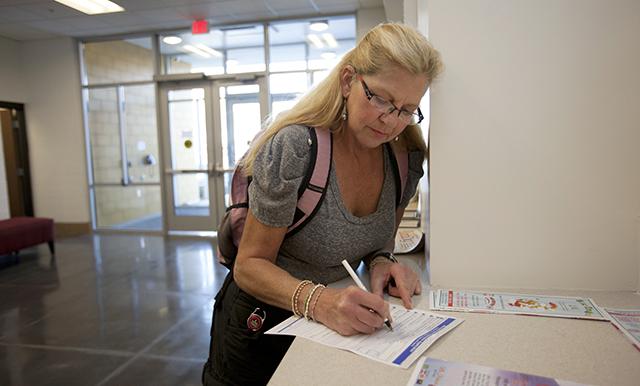
Like many Americans, Deborah Handley has had a lot on her mind lately to distract her from the upcoming elections: her joblessness, newly diagnosed diabetes, a past battle with cancer and, oh, yes, her homelessness.That’s changing. Settled a few weeks ago into an efficiency apartment at Higher Ground on the outskirts of downtown Minneapolis, the 58-year-old former waitress and bartender is working to get her life together – and that includes preparing to vote in next month’s elections.She is among hundreds of homeless and formerly homeless people across the state filling out Minnesota Voter Registration Applications so they can vote in the November election.Community Sketchbook focuses on the economic and social challenges facing communities, especially low-income communities and communities of color, and how people are trying to address them.It is made possible by support from the John S. and James L. Knight Foundation, The Minneapolis Foundation, and some Minneapolis Foundation donor advisors.Community Sketchbook articles may be republished or distributed, in print or online, with credit to MinnPost and the foundations.Her issue? She’s worried about losing Social Security. “I don’t have a pension,’’ she says.Advocates for the homeless hope to bring 1,000 more voters to the election rolls this fall — not an insignificant number in a state with the recent history of a very close U.S. Senate election – as part of a statewide effort that includes smaller private shelters as well as the big players such as People Serving People, Catholic Charities of St. Paul and Minneapolis and the Minnesota Coalition for the Homeless.High stakesOrganizations working with the transient poor have been helping to register homeless people living in temporary housing and recently homeless voters for more than a decade. Continue Reading

For students, poverty is more complicated than our categories

I was driving from Roseville to St. Cloud a week and a half ago when the big thunderstorms hit. Twice, I got off the highway to park somewhere safe because I didn’t feel comfortable on the road. The following weekend I was heading down to Rochester and it was raining again. This time, the rain was less intense and I didn’t need to stop. Continue Reading

Farming programs help immigrants get out of poverty

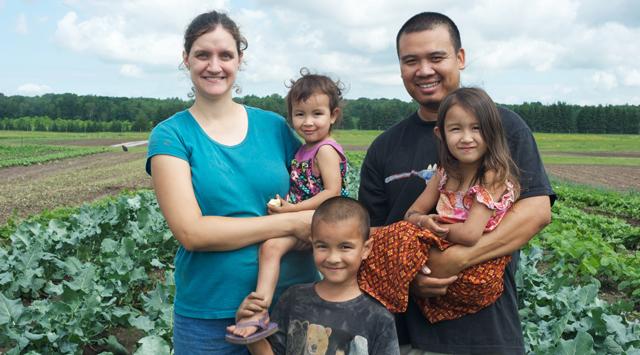
He was born in mountainous Cambodia and dreamed of owning a farm. She was born to the far-reaching plains of the Midwest and flourished in an urban setting of coffee shops and poetry readings.Now, immigrant Proeun and Amy Doeun are married, have four children, a herd of goats and 85 chickens as well as their own 40-acre farm in Rush City. That’s thanks in large part to the Minnesota Food Association, a farm entrepreneurship program she calls “our alma mater.’’That program is but one of many to be highlighted at an upcoming national conference with a title as long and as self-explanatory as many a non-fiction book.Community Sketchbook focuses on the economic and social challenges facing communities, especially low-income communities and communities of color, and how people are trying to address them. It is made possible by support from the John S. and James L. Knight Foundation, The Minneapolis Foundation, and some Minneapolis Foundation donor advisors.Community Sketchbook articleMinnesota 2020s may be republished or distributed, in print or online, with credit to MinnPost and the foundations.“Grassroots and Groundwork: Working Together to Reduce Poverty and Build Prosperity” will showcase both tested and emerging models for helping low-income as well as immigrant and refugee populations to get out and stay out of poverty, planners say. More than 400 people are expected to attend the event sponsored by the Northwest Area Foundation June 6- 8 at Mystic Lake Casino Hotel in Prior Lake.“We believe all communities can prosper,’’ says Kevin Walker, president and CEO of the foundation.Presenters from around the country, including Oregon, Seattle, Philadelphia and the Twin Cities, will talk about programs working to stamp out hunger and poverty. Continue Reading

OPINION | Food deserts

I wasn’t surprised to learn that Saint Paul’s East Side lies within a food desert. I was surprised to learn that Walnut Grove, Minnesota, my home town, does too. In fact, so does much of southwestern Minnesota, home to some of Minnesota’s highest corn producing counties. Food deserts are a state-wide Minnesota issue, not an urban or rural problem.A food desert is an area underserved by large grocery stores or supermarkets. Fewer stores create barriers to a healthy diet because fresh fruits, vegetables and greens are harder to find in smaller, convenience stores. Continue Reading

Identifying who’s poor in Minnesota and why

Angela Baerthel wants off of public assistance, but that’s proved difficult. She was laid off her job in 2010 and even a small business effort hasn’t worked out. “I don’t want my kids to be on welfare,’’ she says.Renee Barron headed to college when her children started school, but a divorce and the Great Recession, threw her off balance. A recent four-year graduate of the University of Minnesota, she can’t find employment.Community Sketchbook focuses on the economic and social challenges facing communities, especially low-income communities and communities of color, and how people are trying to address them. It is made possible by support from the John S. and James L. Knight Foundation, The Minneapolis Foundation, and some Minneapolis Foundation donor advisors.Community Sketchbook articleMinnesota 2020s may be republished or distributed, in print or online, with credit to MinnPost and the foundations.“We went from middle class to low income, and it’s been a struggle ever since. What I see is a lot of people who don’t have jobs,’’ says Barron.Baerthel and Barron, whom I met Wednesday at Opportunity St. Continue Reading