Touchstone Mental Health brings a holistic approach to the care of mental illness

Touchstone Mental Health Rising Cedar Apartments is a new living and wellness building in Seward that is designed to help people living with mental illness overcome significant obstacles – housing instability, isolation and unemployment, and a life expectancy that is 25 years less than the general population. The building is home to both Rising Cedar Apartments and a Community Health and Wellness Center, and it takes a holistic approach to the care of people living with mental illness.From the outset the project has been unique, explained Touchstone’s senior director Jessica Ryan. An advisory committee of nearly 150 people with mental illness helped design elements of the building. “We asked clients for key feedback around what defines a home for them,” she said. “Clients have been in and out of hospitals, state shelters, and some have been homeless so it was really important to get feedback. Continue Reading

Play for all in Minneapolis: Minnehaha’s new universal access playground

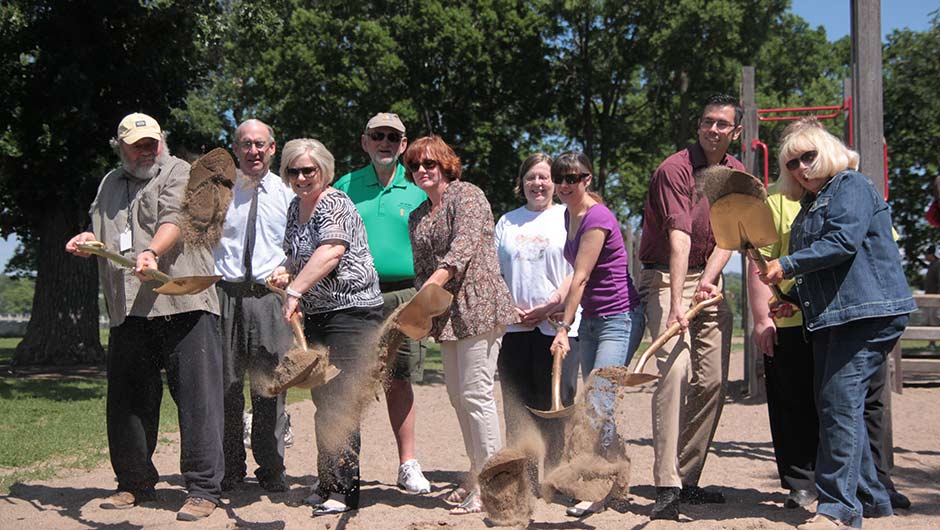
Wednesday afternoon, Park Board commissioners, Falls 4 All committee members, donors, and other members of the community gathered to celebrate the groundbreaking of the new universal access playground coming to Minnehaha Falls Park, as well as a second playground planned for the North Plateau Picnic area of the park (located near Sea Salt Eatery). The grand opening for both playgrounds is scheduled for next spring.Peggy Halvorson, chair of Falls 4 All, spoke at the groundbreaking. Falls 4 All raised $450,000 to help make the playground accessible. It was also named volunteer group of the year this spring by the Park Board.“The childhood experience is play,” said Peggy Halvorson, chair of Falls 4 All, at the groundbreaking ceremony. “Children grow and learn on the playground in their experience with others in ways not taught in classrooms. The benefits of unstructured play are profound. Continue Reading

Inequality in disaster recovery

As Xcel Energy crews diligently work to restore power after the weekend’s storms, I can’t help but reflect on the similarities and differences between the recovery response this weekend and the recovery response after the 2011 North Minneapolis tornado. Continue Reading

A bit of reassurance

In general I tend to be ambivalent about art or social commentary that singles out people with disabilities or differences. It isn’t easy to create a statement that doesn’t feel like pointing and staring. So when I saw the news story about a fashion photographer “reframing beauty” by photographing people with genetic disorders, I steeled myself for mixed emotions. Continue Reading

Mother of autistic child fights for equal care, says proposed laws could disadvantage Black and low-income people

“State legislators want to create two different healthcare policies for kids with autism: one that generously covers the privately insured, and the other that gives minimal coverage to the poor and publicly insured, but both using state funds,” says Idil Abdull of Burnsville and mother of a 10-year-old son with autism.At age 11, when Abdull came to the United States from her native country of Somalia, she knew very little English and very little about American politics. “The only thing I knew about America was Superman and Rocky [the movie], she says.”Some 20 years plus since arriving on North American shores, Abdull is now very fluent in both English and the parlance of American politics. “If nothing else, I know how to be loud,” she says.Like many other families, Abdull says she went through a period of denial about autism. “I couldn’t say the word for many years, because in Africa there is shame around having a disability like autism. But fortunately, I was able to get the help I needed for my son, and he has made great strides in meeting developmental milestones.“At age two, he walked on his toes, and by age three he still couldn’t talk. Continue Reading

Jody Hauer: Review of special education reveals difficult cost-control issues

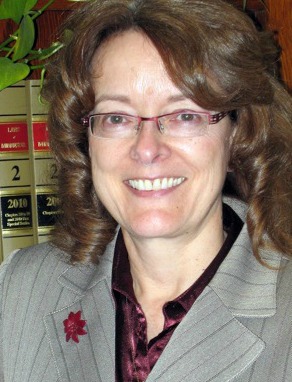
Summary: As of 2011, nearly 112,000 students in Minnesota were receiving special education, 13.6 percent of all students in grades K-12, according to Jody Hauer, principal evaluator for the Office of the Legislative Auditor. Hauer, project manager for the Auditor’s March 2013 evaluation of special education, points out that special education revenues in 2011 amounted to $1.8 billion. She discusses the four main lines of inquiry of the evaluation: funding; state and federal legal requirements for special education; legal compliance monitoring and enforcement; and characteristics of the students receiving special education. She reports that the per student costs for providing services to children in 13 different disability categories vary widely by category, from $2,583 to $47,252. Hauer also points out the rise in special education costs and the impact of that increase on local school districts. Continue Reading