Ethanol, antibiotics and what we don’t know
|
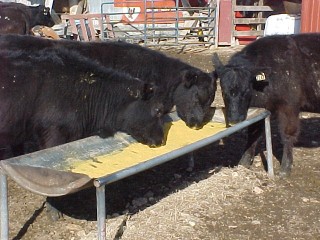
Alarming research coming out of the University of Minnesota raises concerns over the public health impacts of antibiotic use in ethanol production.
Twin Cities Daily Planet (https://www.tcdailyplanet.net/tag/agriculture/page/24/)
Alarming research coming out of the University of Minnesota raises concerns over the public health impacts of antibiotic use in ethanol production.

Many of us can remember that moment while eating fresh broccoli, sweet corn or kale and we were struck by how incredibly delicious vegetables taste. It is as if we were eating vegetables for the first time in our lives. Continue Reading
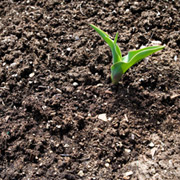
Minnesota farmers are back in their fields preparing land and planting new crops, spurred on by extremely warm and dry winter weather leaving April fields inviting for heavy farm tractors and equipment.Rarely have prospects for the new growing season and for the rural Minnesota economy looked this bright. But history proves that prospects don’t always produce results; anyone with a long-term view of the complexities of the farm economy should approach this year with great caution.In 1972 word leaked out that the then Soviet Union was making unprecedented purchases of American grain. That news sent commodity markets and grain prices on an explosive three-year climb.Editors for a newspaper chain (Ridder Publications) assigned this writer to watch international trade and commodity markets. What transpired changed the Minnesota, national and global economies forever.Consider where we are today: The Minnesota’s rural economy looks solid. The University of Minnesota and the Minnesota State Colleges and Universities system released data last week showing 2,400 commercial farms enrolled in farm financial programs had 2011 median farm income of $123,000.This median income was for well-educated, good-size farm operators and may not be representative of a median for all Minnesota farms. It does show, however, that 2011 was a record year for most major sectors of agriculture.In another important report released, USDA’s National Agricultural Statistics Service (NASS) said farmers across the nation indicate they will plant 4 percent more acres in corn this year, the largest acreage in corn since 1937.The Minnesota office of NASS said Minnesota farmers intend to plant a record 8.7 million acres in corn, up 7 percent from a year ago, while cutting back soybean plantings by 3 percent and our Northern grown Hard Red Spring Wheat crop by 10 percent.Most of these decisions are based on prospective price signals from commodity markets. Continue Reading

The importance of the Farm Bill’s Research Title is hard to overstate. It may not have a direct impact on people’s lives as the food assistance programs and farm programs do, but it is a crucial driver in the long-term direction of U.S. agriculture. Its impact goes far beyond the USDA research institutions and also drives research at land grant universities and many other entities.

Farming is a business fraught with financial risks, including severe weather, pest and disease outbreaks, and dramatic fluctuations in both costs and prices paid to farmers and ranchers. It’s reasonable that federal policy would reduce some of the risk of agriculture and support a safe and abundant food system.
Shopping for spring garden supplies and landscape materials would be easier under provisions passed in the omnibus agriculture and rural development bill.Sponsored by Rep. Paul Anderson (R-Starbuck), HF2398 would define “non-hardy” as a plant that cannot be expected to survive or produce flowers in certain growing zones and requires non-hardy nursery stock to be labeled as such.Similarly, nursery stock collected from the wild must be labeled as such when sold; unless it has been grown in nursery rows at least two years; vegetable and flower seed packets could list the number of seeds in the packet, instead of the net weight.Passed 102-20 by the House, the bill now moves to the Senate, where Sen. Doug Magnus (R-Slayton) is the sponsor.The Department of Agriculture’s nursery and plant inspection and enforcement powers would expand to include the department’s Wholesale Produce Dealer, Grain Buyer/Grain Storage and Warehouse oversight responsibilities. The department could enter sites, inspect and sample products, issue commissioner’s orders, and pursue administrative and criminal penalties for failure to follow laws.Also referred to as the Food Safety Bill, it would move enforcement of food safety regulations into a new chapter of law and grant authority for the department to issue civil penalties, in addition to criminal or administrative penalties.Other provisions would:exempt commercial feed producers from paying inspection fees on the portion of feed they use themselves;establish a Dairy Research, Teaching and Consumer Education Authority; andenable the remaining portion of a 2010 Lutheran Social Services appropriation for disaster and mental health relief in rural communities to be expanded to more counties until spent.On the House floor, there was lengthy debate regarding two amendments.Rep. John Persell (DFL-Bemidji) introduced — and ultimately withdrew — an amendment that would have allowed for the home delivery of raw milk. There was bipartisan support and opposition on the topic, which focused on freedom of choice and protecting the integrity of the food supply.An amendment unsuccessfully offered by Rep. Phyllis Kahn (DFL-Mpls) would have urged the president and Congress to remove the trade and travel embargo with Cuba.“The Pope just went to Cuba. Why can’t we go to Cuba too?” Kahn asked. Continue Reading

The U.S. food aid program is hugely important at the global level. At $2.3 billion in 2010, the U.S. provides just over half of emergency food aid deliveries to millions of beneficiaries around the world suffering from famine, natural disaster and conflict.1 There is little doubt that food aid has saved countless lives, but with significant improvements, it could save countless more.

In the last year, the U.S. has experienced some of the most severe floods and droughts in recent history. According to climate scientists, the future holds more droughts, more floods and more heat waves. Continue Reading

The local foods movement in the United States has grown by leaps and bounds over the last decade, but still represents a small portion of the overall food system. How can local food systems continue to grow and remain sustainable?

The 2010 Census showed there are 313.2 million Americans and 5,344,861 Minnesotans. Except for those among us who will go hungry today, all are involved in “the farm program.”It was Wendell Berry, the Kentucky author, essayist, poet, sometimes farmer and English professor, who reminded his agrarian fans, “Eating is an agricultural act.”That point was revisited a week ago with a mostly urban audience at The Theater of Public Policy in Minneapolis. The improv group hosted, and sometimes roasted, this writer in a discussion and performance on what is called “the farm bill” and why we should all care.That performance won’t be revisited here although you can see portions of it in the accompanying video. Rather, some points relevant to Minnesota are summarized here.Congress is again writing a “farm bill.” The current federal farm program is set to expire on Sept. 30. Continue Reading