
Workers to hold week of action to demand higher wages
|
Low-wage workers in a variety of Minnesota workplaces plan a week of action Nov. 28 to Dec. 5 around demands for a $15-an-hour minimum wage and improvements in working conditions.
Twin Cities Daily Planet (https://www.tcdailyplanet.net/category/work-economy/page/16/)
Low-wage workers in a variety of Minnesota workplaces plan a week of action Nov. 28 to Dec. 5 around demands for a $15-an-hour minimum wage and improvements in working conditions.
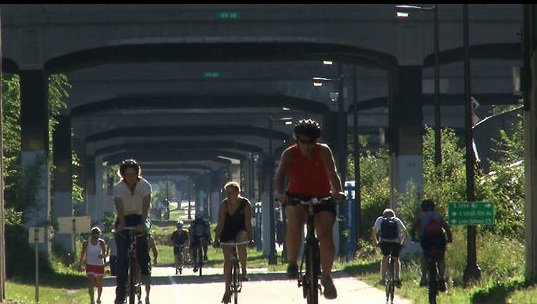
If you’re a millennial and you’re looking for a job in a new city, you might have read (or want to read) the November 19th article in The Atlantic about “why it’s so hard for millenials to find a place to live and work”. The problem, it seems, is that the cities with the most upward mobility and the highest median incomes are also the cities with the least affordable housing. Continue Reading
What image comes to your mind when you think of a “food chain worker?” Is it the efficient functionary at the super store? Or a friendly neighborhood organic grocer? Or do you take a more holistic approach and envision the field worker who plants and harvests your favorite veggies? Or the truck driver who gets the food to market? The packer at the cannery? The street vendor? Or the waiter at a neighborhood restaurant? These and scores of others are all links on the food chain – and members of the Food Chain Workers Alliance. (http://foodchainworkers.org) Continue Reading

Minnesota Republicans captured control of the Minnesota House of Representatives in part by fueling urban versus rural resentment: “Those metro-centric DFLers give everything to Minneapolis and St. Paul.” The truth is, turnout trends associated with non-presidential year elections were a much bigger reason why the DFL lost control of the Minnesota House. Continue Reading
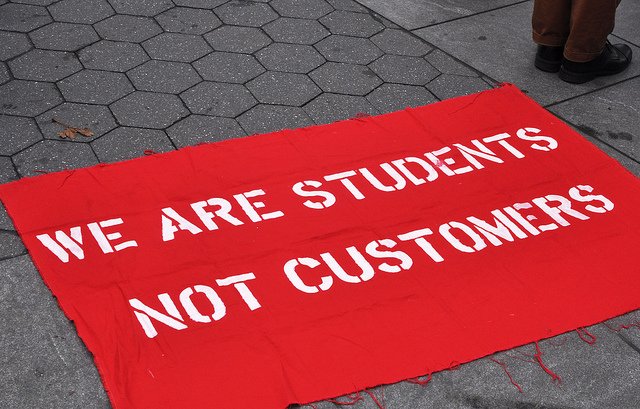
Chloe Laabs estimates it will take 20 years to pay off her student loans.
The Minnesota Student Association member and University of Minnesota biology, society, and environment sophomore said she’ll graduate with about $41,000 in debt.
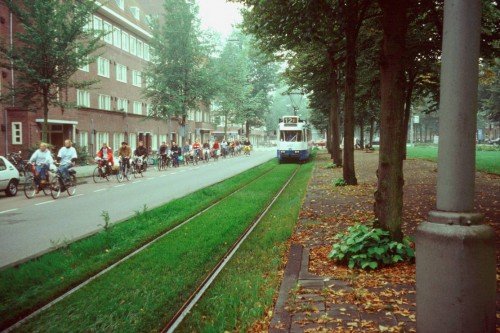
A colleague of mine (from a more urban city) recently visited. When he arrived, I offered to show him around and he wanted to see transit-oriented development (TOD). Hmm…. I wanted to impress him, but I was stumped. Despite all our attention as a city and region to TODs, I don’t believe we have any great transit villages right off the platform where we could go that would really resonate with him. There’s Nicollet Mall and Target Field Station, but I wanted him to say, “wow, this is great!,” but I didn’t feel those would produce that response. Maybe I have impossibly high standards (maybe I’m just getting old and codgery), or maybe the Twin Cities is lagging a bit in the TOD quality department. So I took him for a drive along the West River Parkway and to West River Commons, which impressed him. This begs the question what is TOD and how can we do it better? Continue Reading
The majority of Americans will be people of color by 2040, according to Policy Link’s brand-new National Equity Atlas. Through interactive maps, figures and charts, the Atlas illustrates the country’s current and projected racial demographics, and inequalities. But most importantly, this new online tool reveals the economic benefits of including diverse populations in the labor market. Minnesota, and the nation, cannot afford their exclusion. Continue Reading

In a report about Minnesota Jobs Coalition chair Ben Golnik’s new job as executive director of the Minnesota House Republican caucus, Minnesota Public Radio’s Catherine Richert reported in Monday’s article, Golnik to direct House Republican Caucus:
Golnik is leaving his post as chairman of the Minnesota Jobs Coalition, an independent political group that spent hundreds of thousands of dollars ushering in the Republican majority to the Minnesota House. Republicans won in nearly every district the group invested in. . . . Continue Reading

Just ahead of the G-20 Leaders’ Summit in Brisbane, Australia (November 15-16, 2014), India and the United States announced a breakthrough in their trade negotiations impasse over agriculture. That fight had brought trade negotiations to a crashing standstill in July after the few months of tentative optimism among negotiators that followed the eleventh-hour agreement in at the Bali Ministerial Conference in December 2013. Confidence in the multilateral rules-based trading system had reached an all-time low, and while the response was muted (an agreement between two WTO members is not the same as an agreement among all), the media coverage made it clear the news of the U.S.-India agreement was very welcome in trade circles. Continue Reading
Holding aloft a smart phone, Vergil Wibben joked to an audience of older workers recently gathered at East Side Neighborhood Services that when he had to get one for his job, he looked at the smart phone blank screen and relaxed.