PIPELINE borrows from German model
|
Minnesota’s employers and our higher education and workforce training systems are suffering from a serious disconnect. Continue Reading
Twin Cities Daily Planet (https://www.tcdailyplanet.net/category/work-economy/labor/page/5/)
Minnesota’s employers and our higher education and workforce training systems are suffering from a serious disconnect. Continue Reading
In an ever-growing list of cities, airports, and industries, the call by low-wage employees for a minimum wage of $15/hr is being heard.

It was the first real big job he had as a contractor…
Manuel had been working as a handyman getting paid by the hour, but this was a contract; one price for labor and all materials, a contract, a step towards independence in the world of construction. No longer just a laborer but now a self employed contractor. I hadn’t processed all of the above at the time, but my friend had, and our difference in perspective is where our conflict began. Continue Reading
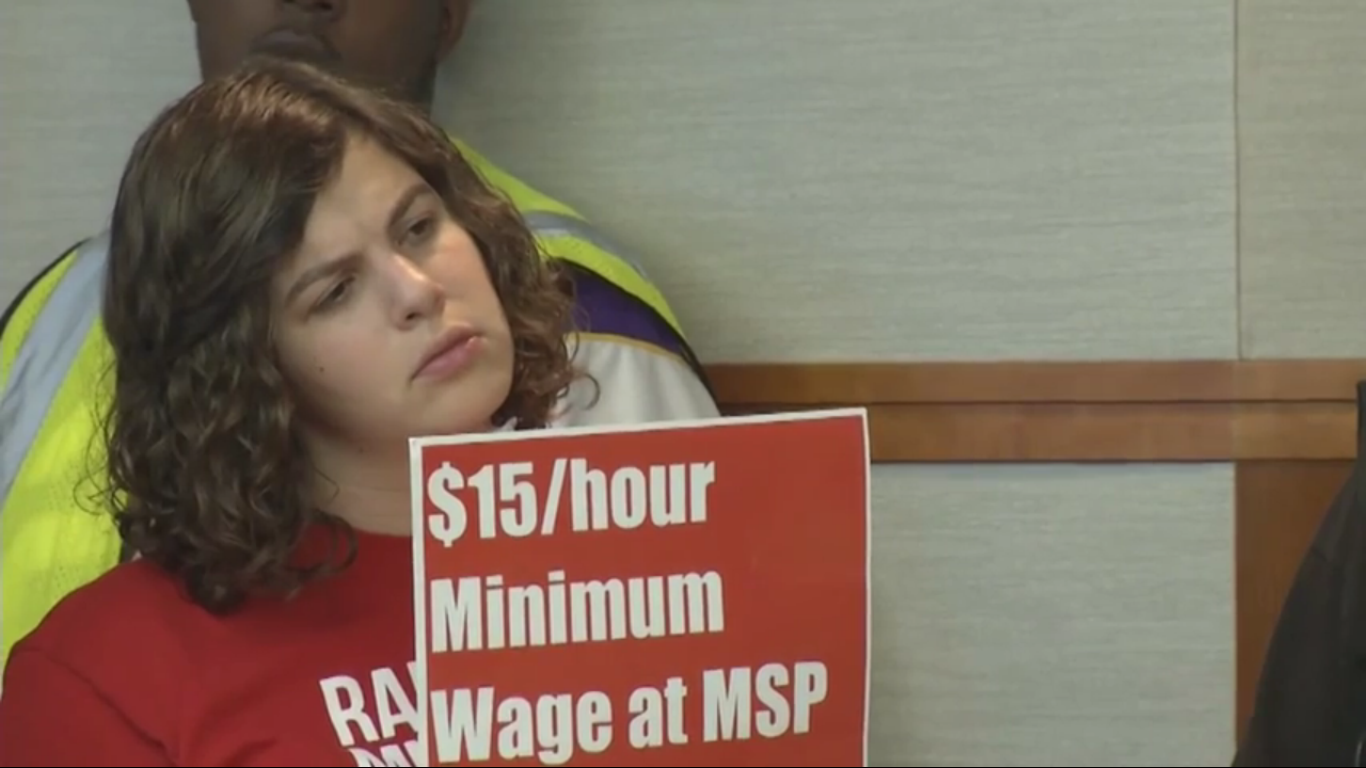
Workers at airports across the country have raised their wages to a minimum of $15 an hour and sparked wage increase campaigns in nearby cities. After Sea-Tac workers in Washington won a ballot initiative to raise their wages, a mobilization in nearby Seattle succeeded in passing a $15 an hour minimum in that city. Workers at the Los Angeles and St. Louis airports also won minimum wage increases. Workers at the Minneapolis-St. Paul Airport are organizing to do the same.

It’s hard to imagine a beautiful flower has anything to do with the ugly side of free trade and globalization. But for Josefa Gomez and other workers in the profitable flower industry of Colombia, providing bouquets for U.S. and world vases has meant increasing hours with falling pay, growing health problems and human rights violations.

When the Department of Postsecondary Teaching and Learning announced last week that it will shutter in two years, it left some faculty members worried about their future in the college.

Frank Dogbe gives his new employees from West Africa a one-year promise.

Minnesota 2020 went to the Express Bike Shop in St. Paul to learn more about Youth Express and their apprenticeship program for young adults. Youth Express, a program of Keystone Community Services, is a program created to help young adults develop entrepreneurial skills, work ethic and leadership. Keys Stone’s investment to Youth Express helps provide a paid employment opportunity for youth who are joining the work force or those who may have already had a little work history.
One of the country’s largest labor organizations’ efforts to unionize faculty at the University of Minnesota may need a clearer focus to make any headway at the school.

A new study this week from the Institute for Women’s Policy Research shows that more than a third of Minnesota’s workforce still lacks access to paid sick days.The study, which gathered and analyzed data from government surveys like the 2012 National Health Interview Survey and the 2012 American Community Survey, revealed that 41 percent of Minnesota’s workers lack access to paid sick days. According to the report, low-income workers, part-timer workers, Hispanic workers and service industry workers have the lowest access to paid sick leave in the state.“Sixty percent [of] Hispanic workers lacked access to paid sick days versus the 41 percent for the state average,” said the report’s lead author Jessica Milli. “That’s a huge disparity right there.”Milli said the data they analyzed revealed large disparities between different occupations and categories, with service industry workers having the lowest rate of access.According to the study, only 35 percent of service industry workers in Minnesota have paid sick day benefits, while 84 percent of workers in computer, engineering and science fields have access to paid sick days. The management, business and financial fields also share high rates of access with 80 percent of those workers having paid sick leave benefits.Service industry jobs include ones like food industry, daycares, and personal service and accommodation jobs, Milli said, which is particularly problematic when it comes to lacking paid sick leave benefits since those workers are the most likely to spread illness.“Not only do 40 percent of workers in general lack access [to paid sick leave],” she said. “But those workers who lack access are predominately workers in service occupations with frequent contact with the public.”It’s common that service industry workers come into the workplace sick, she said, because they can’t afford to take the day off, and it puts their customers and other employees at risk of getting sick too.The study also shows disparities between different income levels. Continue Reading