PHOTOS: Thousands protest Washington football game at U of M

Thousands of protesters gathered at TCF Stadium at the University of Minnesota on Nov. 2 to protest the Washington football team name, which they call offensive.Native leaders, artists and community members were joined by a host of politicians- including former Governor Jesse Ventura, Minneapolis Mayor Betsy Hodges, Congressman Keith Ellison, Winona LaDuke and many more in what some are calling the largest protest over a sports team name ever.While numerous sports teams have been targeted over the years for showing images of American Indians as mascots, The Washington football team has born a particular amount of criticism in the last year due to the racial slur of the team’s name.Rhonda Reese, who walked with protesters from the American Indian Opportunities Industrialization Center (AIOIC), said she was there because “Redskins” is a racial slur. “It’s a bounty they put on the Native people for their scalps,” she said. “It’s negative and it’s derogatory.”The gathering that started at AIOIC was organized by 14 different local groups including AIM of the Twin Cities, Save the Kids, OccupyMN, Protect Our Manoomin and the Minnesota Two Spirit Society. Besides speakers, hip hop artists Mic Jordan and Tall Paul performed.“I’m a modern day warrior,” Mic Jordan rapped. Continue Reading

East Side Enterprise Center houses huge walk-in cooler

Access to a huge walk-in cooler is not what I had in mind when I heard about the resources the East Side Enterprise Center (ESEC) is offering to entrepreneurs and businesses, but it turns out that the cooler and warehouse space are just what some local entrepreneurs need. In fact, when John Flory from Latino Economic Development Center (LEDC) saw the 4,000 square feet of warehouse and garage space with 2 loading docks and 5 overhead garage doors, he knew he had found the perfect site for the East Side Local Food Incubator.

Continue Reading

Dinkytown’s new alliances

If you do not change direction, you may end up where you are heading. –Lao Tzu

Ten months ago, Dinkytown was at one of those unmistakable crossroads of change rife with both crisis and opportunity. The businesses in Dinkytown are survivors of change, so this was nothing new, but this time, a perfect storm of factors came close together. On the plus side, the City of Minneapolis and Marcy-Holmes Neighborhood Association were taking much more notice of Dinkytown. But at the beginning of 2014, Skott Johnson, the longtime leader of the Dinkytown Business Association, known as DBA, closed his business at 1300 4th St. S.E., Autographics, and left the Twin Cities. The old Marshall High building, UTech, had been demolished and the House of Hanson would follow close on its heels. And local developer Kelly Doran was proposing to build a hotel on 4th Street, which would entail taking out yet more old low-rise buildings housing small shops and restaurants. It’s no exaggeration to say the future of Dinkytown’s identity was up for grabs.

Continue Reading

Stocking the staples: Minneapolis considers minimum requirements for grocery stores

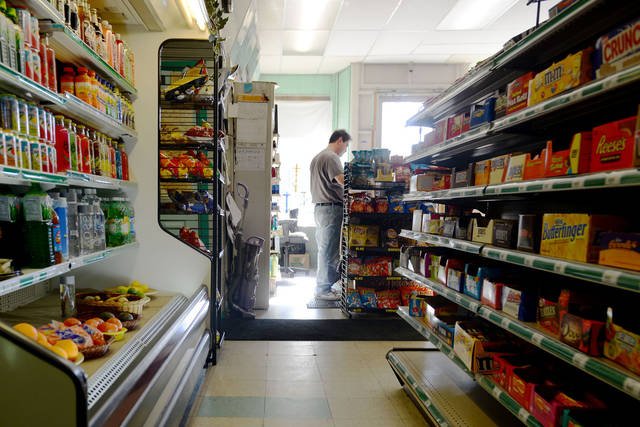
More fresh fruits, vegetables and other core food items may be coming to Minneapolis corner stores this spring.Six years after Minneapolis became the first city in the country to make stores stock staple foods — which include cheese, milk and whole grain cereal — the City Council is considering a proposal that would mandate minimum requirements for stores carrying these foods.While researchers and Minneapolis officials are hopeful the measure will improve residents’ overall health, some business owners and city leaders say the requirements may be difficult to meet.The updated staple foods ordinance would require grocery stores to stock certain amounts of produce, proteins and dairy products, among other obligations. The amendment would also redefine which stores are exempt from the policy.The changes would bring healthier food to areas that don’t have easy access to grocery stores, said Ward 2 City Councilman Cam Gordon, who authored the proposal and represents the University of Minnesota and surrounding areas.As city law stands now, stores aren’t required to carry any juice products, but the new amendment reverses that. Also, the current form of the rule doesn’t include minimum quantities for food.Abed Hassuneh, owner of the Santana Foods deli and grocery store in the Marcy-Holmes neighborhood, said the changes would pose challenges.If the amendment passes, he said, the store might have to operate as just a deli.“At that point, we’d probably have to dismiss the grocery license,” Hassuneh said.Gordon said it may be difficult for some stores to comply with the stricter guidelines.“There might be unintended consequences in lost revenue,” he said.But Gordon said a survey completed earlier this year found that a large number of stores already meet the proposed requirements.Stores would be exempt from the requirements if they sell staple foods as a supplement to their primary business, or if they sell only specialty foods and don’t accept federal benefits like food stamps.Around 20 residents and community supporters spoke at a public hearing at City Hall on Monday before a city committee unanimously approved the proposal.Around 68 stores in Minneapolis would be exempt, Kristen Klingler, a senior public health specialist for the city, said at the hearing. She noted that about 262 stores, including stores like CVS and Walgreens, would have to follow the new guidelines.Ward 8 City Councilwoman Elizabeth Glidden said at the hearing that there might be extra stress on the city’s health department staff to make sure stores comply with the new requirements.“It’s a complicated ordinance from a department that came to us just a few months ago saying that they didn’t have enough staff to meet their existing priorities,” she said.If the full City Council supports the change to the city ordinance at its next meeting on Oct. 31, the amendment will take effect in April.Melissa Laska, an associate professor at the School of Public Health, worked with the city on the amendment. Continue Reading

Hope at the end of the Rainbow? Brainstorming for soon-to-be-vacant storefront begins

“When elephants fight, the grass suffers.” Swahili proverb

The elephants have struggled. Rainbow and Cub fought for years over market share at Lake and Minnehaha, but they remained competitive, and each had their share of loyal customers. Then Target decided to open a fresh food section in their store, and that became too much. One elephant fell down. Rainbow lost the battle and is leaving the Twin Cities market, and South Minneapolis is left with an empty storefront.

Continue Reading