Black-on black violence: Pastor Voddie Baucham’s assault on black people

So God created human beings in his own image. Genesis 1:27

As black evangelical leaders, we believe it is important to respond to The Gospel Coalition’s publishing of Pastor Voddie Baucham’s Thoughts on Ferguson, a perspective we deem to be extremely anti-black. First, we condemn The Gospel Coalition’s editorial leadership for its moral and pastoral failure in publishing such an anti-black viewpoint. No Christian organization should ever participate in dishonoring the image of God in black people, especially at a time when so many black Americans are in pain. Second, we lament the internalized anti-black racism that Pastor Voddie conveyed in his article and the fact that it has been used to further support White-on-Black violence among Christians. Here, we offer a different perspective, one that we believe honors the image of God in black people. Continue Reading

Dinkytown religions influenced students’ lives

The Rev. Bill Teska, who leads a small Minneapolis Episcopalian congregation that meets in the University Baptist Church at 1219 University Ave. S.E., and Don Olson, who spent 20 months in federal prison for disrupting draft offices in 1970, led a discussion on Nov. 22, on the role of religion in the peace and civil rights movements of the 1960s.

Many of their old meeting places near Dinkytown in Minneapolis no longer exist.

Continue Reading

Minnesota imam looks at ‘caliphate’ through Islamic lens

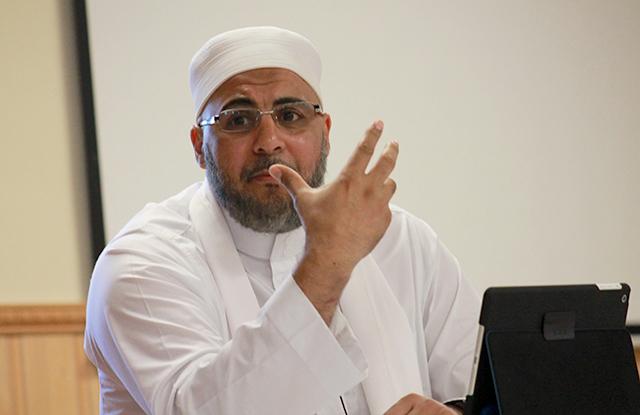
Any time a militant organization rises with violent acts in the name of Islam, some Muslim leaders grow vocal in denouncing radicalization as they distance their faith from terrorism. Often times, some of these religious leaders seem to condemn certain actions or groups because the society expects them to do so — or because they’re concerned that critics might put them in the spotlight for their silence.

Continue Reading

Big Stone County residents speak out against Islamophobic remarks by county GOP chair

Update: At the Star Tribune, Jennifer Brooks reports ‘Bigotry’ on Facebook costs Big Stone GOP chair his day job. Brooks notes:

The Minnesota Republican Party, which condemned Whitley’s remarks las week, has not yet responded to questions about whether Whitley will keep his postion as the chairman of the county GOP. [end update]

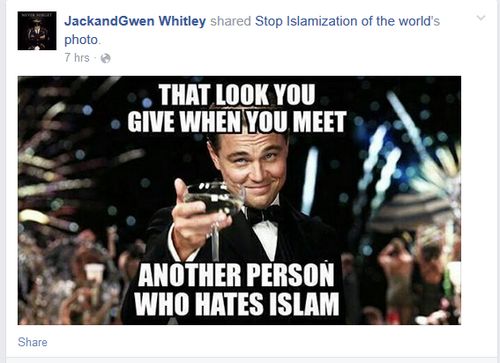
Since Bluestem posted Facebook status, Big Stone Co GOP chair calls Muslims “parasites,” writes “frag em” at Mecca, Minnesota’s branch of the Council of American-Islamic Relations (CAIR) has issued a press release calling for state and national Republican leaders to condemn county chair leader Jack Whitley’s remarks. Continue Reading

Pope Francis speaks out on the right to food access

Over the past couple of years I’ve tried to focus on the seminal issue of the human right to access to food, an issue so complex, political and gnarled that I’ve given up the quest to plumb the depths – until Pope Francis brought it up. Truth to tell, the Pontiff didn’t conjure it up out of the rarified atmosphere of the Vatican – the challenge to unravel the issue has fostered countless efforts, stymied many and challenged human rights activists for a couple of centuries. Continue Reading

In Facebook status, Big Stone Co GOP chair calls Muslims “parasites,” writes “frag em” at Mecca

UPDATE: Whitley appears to have removed his profile from Facebook, following a wave of condemnation from both Democrats and Republicans following Jennifer Brooks’ post about Whitley in the Star Tribune. We’ll be posting about the reaction shortly. [end update]

A status posted today on the personal Facebook page of the Big Stone County Republican chair Jack Whitley suggests that an understanding of the Minority Liberty Alliance’s message of inclusion hasn’t quite taken hold among conservative leadership living beside Minnesota’s western boundary waters. Continue Reading

Continuing Mount Sinai’s legacy

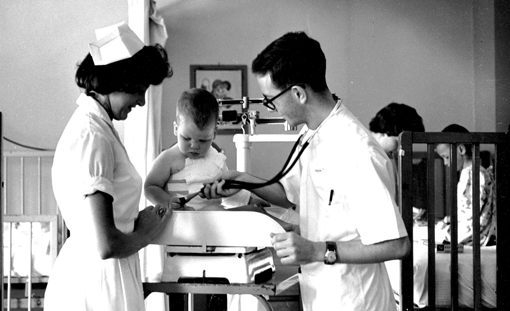
In February 1951, within a climate of local anti-Semitism, Mount Sinai Hospital opened its doors at the corner of Chicago Avenue and 22nd Street in Minneapolis. The hospital — described in the AJW as “a house of healing for all mankind” — was a gift from the Twin Cities Jewish community to serve and employ, among others, those not accepted elsewhere because of their race or religion.

Continue Reading