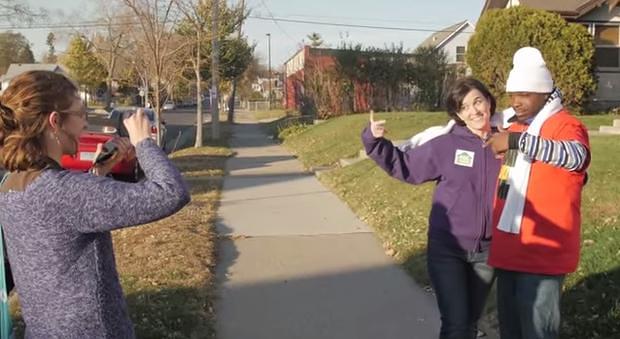
On November 24th, a grand jury in St. Louis County, Missouri announced that they would not indict the white police officer who shot and killed Michael Brown, an unarmed 18-year-old black man. Less than a week later, a grand jury in New York decided not to indict a white police officer who killed an unarmed black man named Eric Garner with an illegal chokehold, in front of witnesses and video cameras. Protests and actions have ensued.TC Jewfolk asked me if I’d like to write something about how we should feel and react as Jews. Continue Reading
In another life I was a stooge on the Minnesota News Council. At some point I, as a member in good standing, read in the press that the MNC was to be no more – no explanation, a simple affirmation that the staff person had acquired a safe position at the University of St. Thomas. Because I was too otherwise engaged to explore the roots of a decision I accepted as a done deal, closed that file, and gave complicit assent to a decision I knew was wrong. Continue Reading
Minneapolis Southwest High School student Laye Kwamina reads his poem “Letter To My Unborn Black Child” at the Human Rights Day Rally on December 6, 2014. His poem, laden with references to violence against blacks such as Trayvon Martin, Michael Brown and Eric Garner, held the crowd spellbound. In it, he contrasted the stark realities of life for blacks in America with the unending love parents have for their children. He read, “Dear unborn black child, Don’t jaywalk. Don’t eat sandwiches. Continue Reading
Local activists obtained a rare victory Wednesday evening after the Minneapolis City Council voted to reverse their decision to cut $225,000 from a racial equity program and a clean energy initiative — a cut deemed #Lattelevy.But the contentious and oftentimes emotional city council meeting highlighted a fundamental and ongoing fray between city leadership and local activists, both of whom displayed intense frustration throughout the five-hour meeting.On Dec. 10, Minneapolis City Council members voted to restore funding to the One Minneapolis Fund and the Clean Energy Partnership as well as to decrease the proposed property tax levy to 2.1 percent. In turn, they voted to cut $174,000 allocated to two new communication positions for the city.Hundreds of activists, including some of whom coordinated the headline-making I-35W rally that reduced a portion of the Minneapolis interstate to a standstill earlier this month, flooded Wednesday’s meeting to call fault to pending budget cuts targeting the One Minneapolis Fund and the Clean Energy Partnership.The cuts, which were drafted during a December 1, 2014 city council meeting, would have increased the Minneapolis property tax levy to 2.2 percent, slightly less than the 2.4 percent increase proposed by Minneapolis Mayor Betsy Hodges in her 2015 budget.That difference of about $620,000 would have — on average — decreased property taxes by about $2.50 per resident according to activists. That said, property taxes can shift in either direction depending on changes in the value of a property or neighborhood.Activists deemed that $2.50 fiscal gain “latte levy,” or the cost of a single latte, which they say some homeowners could give up in order to keep affordable housing, clean energy and racial equity programs for all. Some activists even brought paper coffee cups as props during their testimony.“There are many ways to balance a budget but saving $2.50 for homeowners in some of the wealthiest areas of the city will be in lieu of developing leadership in your community,” said one of the over 60 community members who testified during Wednesday’s meeting.“This is not a lot of money,” said Zoe Holloman during the public comment portion. Continue Reading
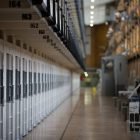
Driving away from Lino Lakes Correctional Facility late in the afternoon, I felt the ache of disconnect emerge. For the entire day, I and my colleagues, including organizers, professors, and legislators, were deeply connected with a group of 150 inmates at Lino Lakes.
This episode covers a wide range of current affairs, from police brutality and the pulse of the country to the United Nations’ ’16 Day of Activism against Gender-based Violence.’
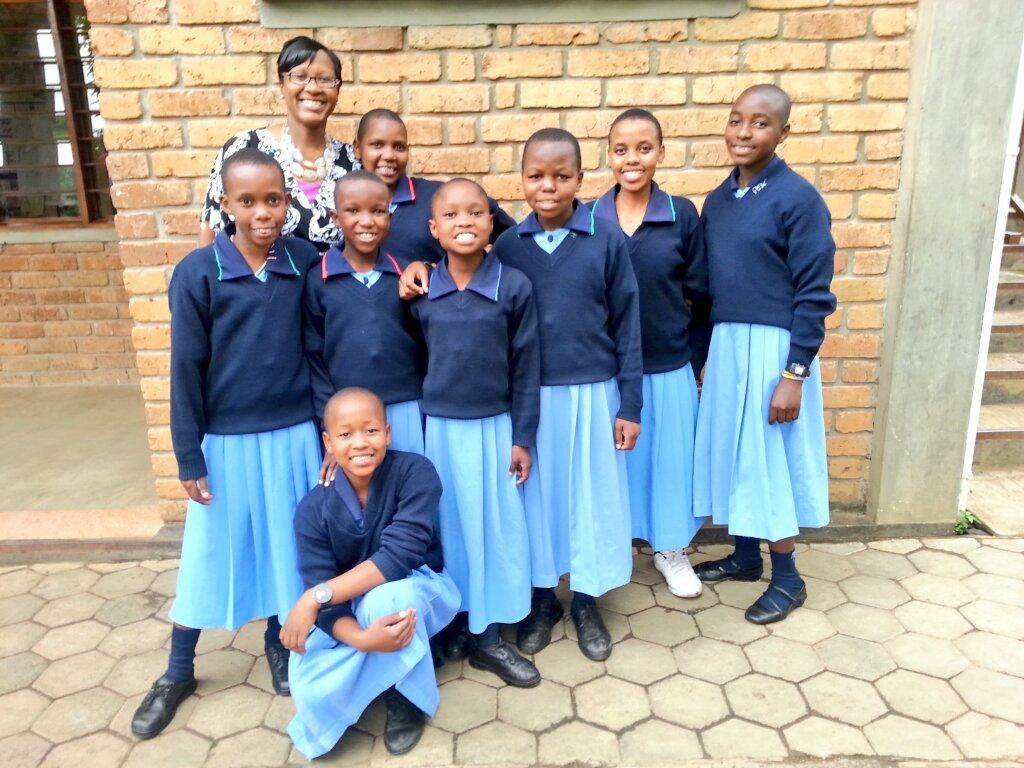
During my recent travels to Tanzania, I had the opportunity to learn more about the education system. The most important lesson I learned was community members play a key role in the building a network of support for each student. This network plays a critical role in accelerating academic achievement and advancing personal development. While visiting classrooms in Tanzania, I met aspiring doctors, lawyers, engineers and even a young woman who stated confidently, “I will be president of Tanzania.” Throughout our visit, I witnessed firsthand community members working together to help children learn, thrive and grow. I also watched as the adage that it takes a village to raise a child came alive. One example is the notion of “harambee” which means “let’s pull together.” Continue Reading
UPDATED Tuesday, December 9, 2014, 1:58 pm.The Society of Professional Journalists – Minnesota Pro Chapter, along with the Twin Cities chapters of the National Association of Black Journalists and the Asian American Journalists Association, as well as the Silha Center for the Study of Media Ethics and Law and the Minnesota Journalism Center, hosted a panel discussion on the recent Pointergate issue in our local community.KSTP-TV sent a letter, but opted not to send a representative to the panel. Minneapolis Mayor Betsy Hodges, the subject of the story, also declined to appear.The panel discussion happened at the Hubert H. Humphrey Institute of Public Affairs – Cowles Auditorium – 301 19th Ave S, Minneapolis, Minnesota 55455.See the MNSPJ, TCBJ and AAJA statement for background on the story.Read more TC Daily Planet coverage of #Pointergate. Continue Reading
Something is wrong with the law if those entrusted to enforce it repeatedly violate it. This is the troubling story of race and Michael Brown and Eric Garner, and police brutality in Cleveland, Ohio. But these three examples raise even more profound stories about the role of the law in a democratic society regarding whose legal norms are enforced and how. It is the story of legal legitimacy. Continue Reading
Racial tensions in the U.S. have reached the boiling point in the wake of the deaths of two black males at the hands of police officers, and the announcements in the last few days that grand juries declined to bring charges against either officer.18 year old Michael Brown was shot and killed by Ferguson, Missouri police officer Darren Wilson, just weeks after Eric Garner was placed in a chokehold that resulted in his death by Daniel Pantaleo in New York. Both officers are white.Read more TC Daily Planet coverage of police misconduct issues.The racial tension, already high, reached the flashpoint nationwide in the last few days following the grand jury announcements. Protests, some becoming violent, took place all over the country, including the Twin Cities, decrying a system that seems to allow police to murder black males with impunity and with no repercussion.Nationally, according to a ProPublica study done last October, black males are 21 times more likely to be shot and killed by police than their white counterparts. So the Twin Cities Daily Planet attempted to look into the Twin Cities’ police shooting records to see if the cities’ numbers reflect a similar trend. St. Continue Reading