Those We Leave Behind
|
Sitting in the theater at the beginning “Selma”, I watched the little girls in their Sunday School dresses walking down the spiral stairs of the churc Continue Reading
Twin Cities Daily Planet (https://www.tcdailyplanet.net/category/raceethnicity/page/12/)
Sitting in the theater at the beginning “Selma”, I watched the little girls in their Sunday School dresses walking down the spiral stairs of the churc Continue Reading
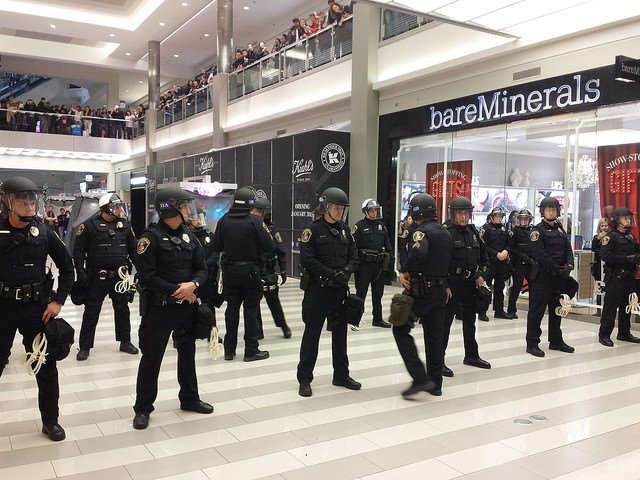
I thought law enforcement officials were supposed to be public servants. Like teachers, police and other law enforcement serve the citizens of a local area and are paid by taxpayer dollars. The latest threat to ten organizers of the December Black Lives Matter protest at the Mall of America, however, purports a different view. By charging these organizers with the cost of riot police and extra security ordered by the Mall of America, Bloomington City Attorney Sandra Johnson shifts our relationship with the police to extreme anarchist libertarianism, where citizens are individually charged for the “use” of these public servants, even when they didn’t request them.Imagine if parents were sent a bill any time their child had to stay after school for detention, or needed extra attention from their teacher. The idea is absurd, of course. Continue Reading
By now it seems inevitable if not entirely predictable that by July this year same-sex marriage will be the law of the land in the United States. Continue Reading

We’ve heard it before: Kids of color lag behind WhitesWhen it comes to Generation Next, partnerships and outreach play a key role in their hopes-for success. “We’re kind of an opt-in effort, and the more folks you get to opt-in the greater [our] likelihood [of success is]” said Jerimiah Ellis in a previous MSR article (“Outreach director brings diversity to Generation Next team: St. Paul NAACP takes a wait-and-see approach on endorsing initiative,” Dec. 25, 2014).What plays into the success of Director of Partnerships and Outreach Jeremiah Ellis? In his own words, “I rely on Jonathan to get me the right numbers” to ensure he has the right facts and data to do his job. Continue Reading

From the introduction to the report, The Minnesota Farmer: Demographic Trends and Relevant Laws (embedded below):

The recent open letter issued by the police union presidents of Minneapolis and St. Paul (1/4/15) does not indicate a readiness to listen, but to lecture those critical of law enforcement (www.mpdfederation.com/police). Like police union leaders in New York City and elsewhere, their letter seems to make the same spurious claim that protests against police brutality and discrimination may have incited Ismaaiyl Brinsley to murder two NYPD officers.In light of protesters’ just anger over the killing of unarmed Black Americans, even suggesting such a link lacks respect for the communities that law enforcement serves. Protesters are as heartsick over the tragic death of the officers as anyone. We empathize with officers’ families who lost a loved one as we do with the families of Eric Garner or Michael Brown.The institution of policing in this country is being criticized because of its own actions, attitudes and arrogance abetted by politicians who support policing practices that daily disregards the dignity and human rights of communities of color. Continue Reading

“Black Lives Matter!” The chant has echoed through America’s streets since Aug. 9, the day unarmed teenager Michael Brown was shot and killed by a white police officer in Ferguson, Mo. The Brown case focused attention on longstanding problems in black communities: racial profiling and police violence against young black men.The perceived lack of justice in these and many other cases sparked major demonstrations, including a Dec. 20 rally at the Mall of America that drew more than 3,000 protesters.But as millions rallied around the cause of human rights for African-Americans, many Indigenous people wonder if America thinks their lives matter. For every Michael Brown, for every Eric Garner, they say, there is a victim of police violence in Indian Country whose name you probably don’t know.“It’s imperative to understand that this issue is not just about black people and white people. Continue Reading

Minnesota’s One State, One License coalition got an early start, Continue Reading

The Minnesota Somali Chamber of Commerce held its first annual celebration dinner Saturday at the Safari Restaurant in Minneapolis.Bill Blazer, interim president of the Minnesota Chamber of Commerce, and other distinguished guests attended the Somali chamber’s gala dinner to celebrate and mark its achievements.Despite a slow start of the night, guests enjoyed the evening dinner and the dynamic interaction. Some of the dignitaries attending the event included Dr. Bruce Corrie of University of Concordia St. Paul, Faruk Cingilli, president of Turkish Somali American Friendship Association, Nasibu Sareva, executive director of African Development Center, as well as Unity Cooperative Council’s executive director Hussein Khatib.Mohamud Beenebeene, executive director of the Minnesota Somali Chamber of Commerce kicked off the gala dinner by thanking all the parties that have contributed to the chamber. Speaking mostly in Somali, Beenebeene shared the chamber’s history and achievements and outlined visions of the chamber going forward.The Minnesota Somali Chamber of Commerce was conceived by a group of business women and men in June 2013 and was launched in 2014. It represents more than 210 Somali businesses in Minnesota.“This initiative was formed by a group of men and women who wanted a business platform,” Beenebeene said. Continue Reading